

Contact Info
- Greensboro, NC 27406
- Call: 336-707-0498
- Text: 336-707-0498
-
Mon - Fri: 8am - 4pm
Sat - Sun: Closed
Contact Info
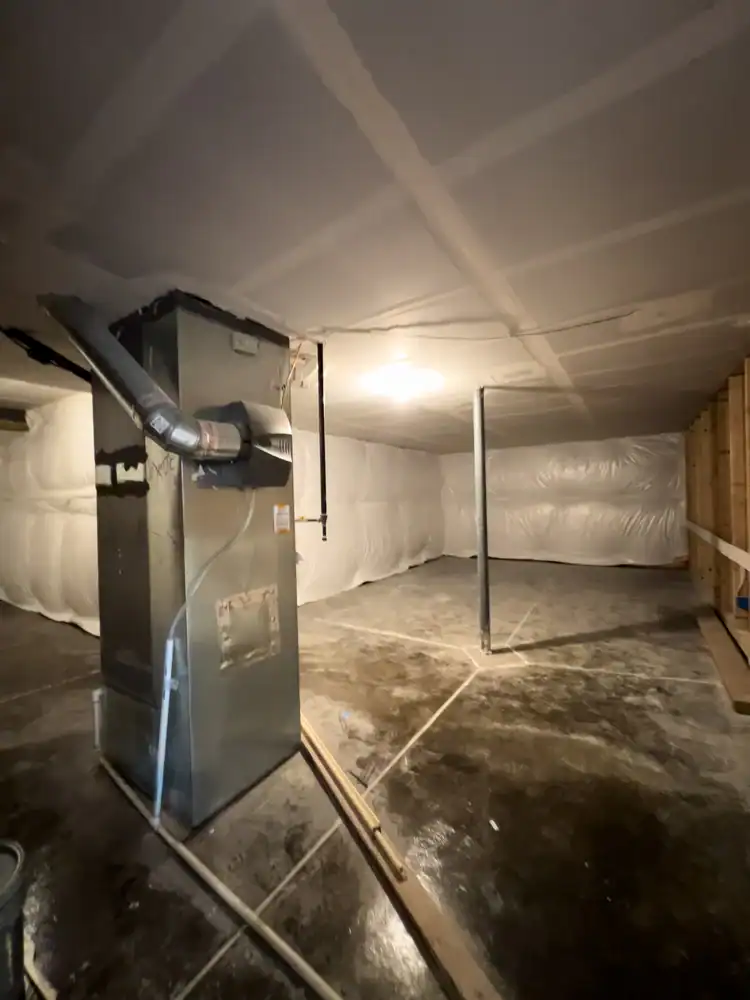
You stop smelling that musty odor coming through your vents. Your floors feel warmer in winter. Your energy bills drop because your HVAC isn’t fighting against humid air seeping up from below.
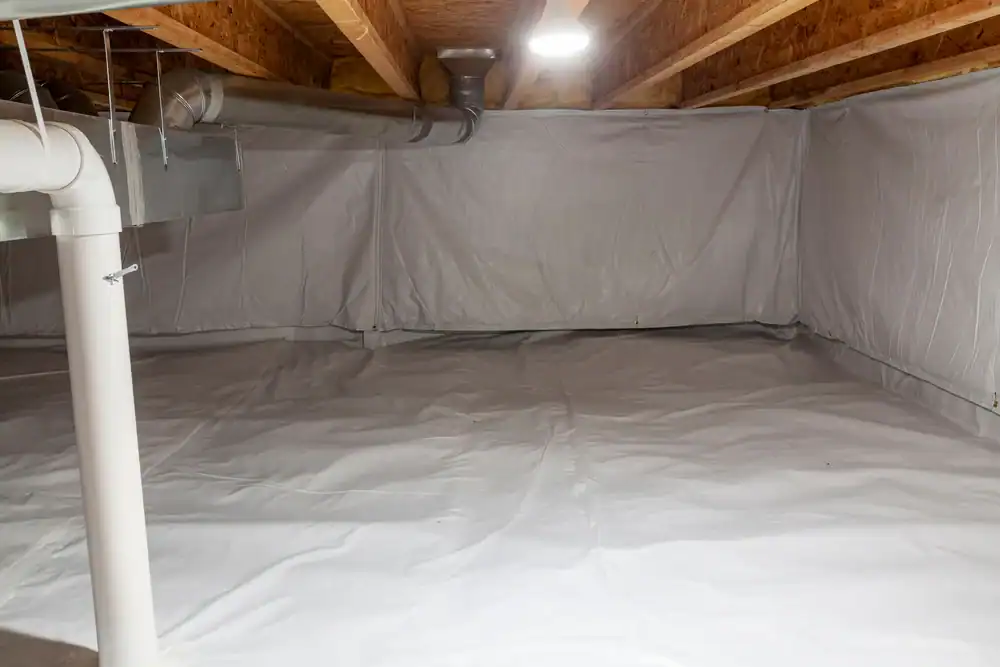
Crawl space encapsulation creates a sealed barrier between the ground and your home. That means no more moisture creeping in, no more mold spores floating into your living space, and no more wondering if something’s rotting under there.
Most homeowners in Deep River see 15-20% lower heating and cooling costs after encapsulation. That’s $300 to $400 back in your pocket every year. Your home also becomes less attractive to pests like termites and rodents who love damp, dark spaces. When you control moisture, you control most of the problems that start in a crawl space.
We’ve spent over 30 years helping North Carolina homeowners breathe easier. We started with HVAC duct cleaning and mold remediation, but we kept seeing the same root cause—crawl spaces that weren’t doing their job.
Deep River’s humid climate makes moisture control critical. Relative humidity here regularly hits 70% or higher during summer months. That’s exactly when crawl spaces become breeding grounds for mold and wood rot. We’ve seen it hundreds of times, and we know how to stop it before it spreads.
Rick Watson holds certifications from the National Air Duct Cleaners Association, and our team treats every crawl space like it’s connected to our own home. Because it is connected—to your air, your comfort, and your family’s health.
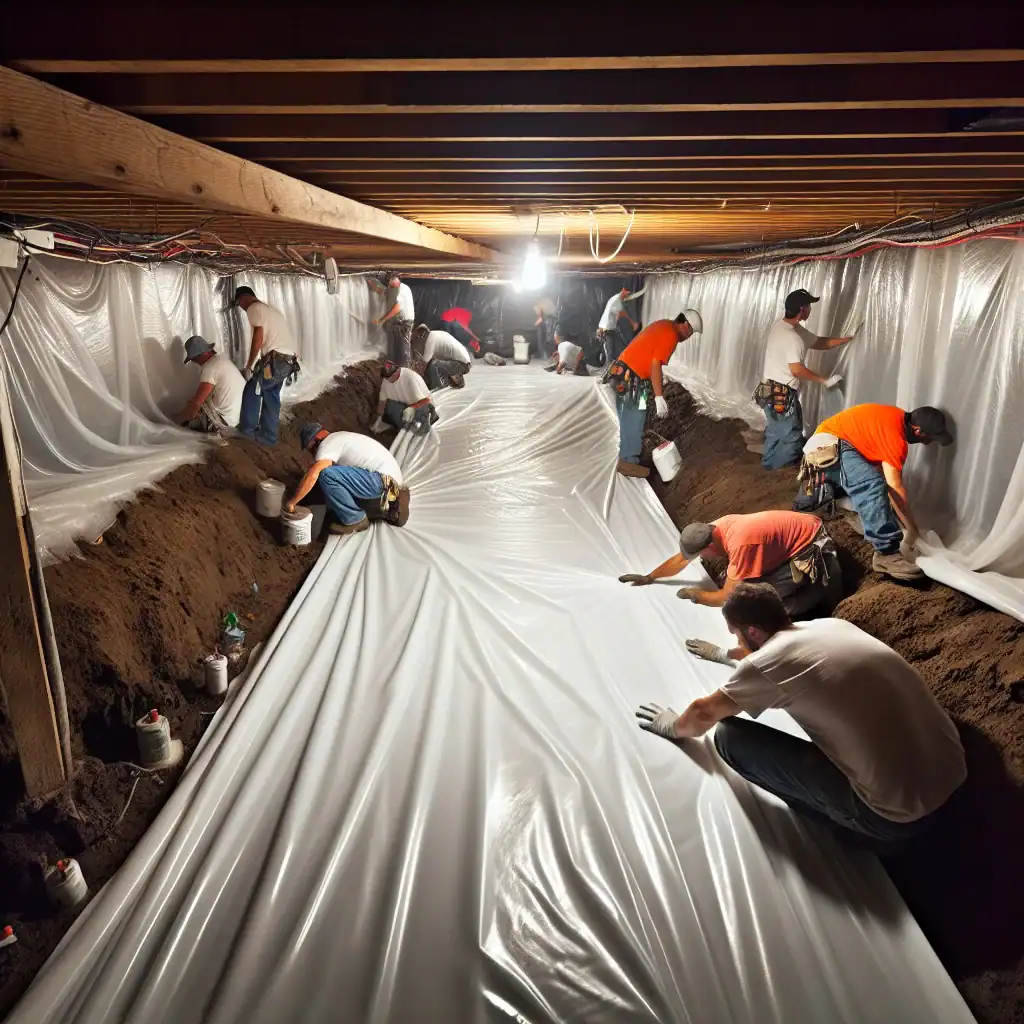
First, we inspect your crawl space to identify moisture sources, existing damage, and ventilation issues. You’ll know what we find and what it means before we touch anything.
Next comes crawl space cleaning—removing debris, old insulation, and anything that’s already compromised. We can’t seal in problems, so this step matters. Then we install a heavy-duty vapor barrier across the floor and up the walls. This isn’t thin plastic sheeting. It’s a reinforced moisture barrier designed to last.
After that, we handle crawl space insulation on the walls or rim joists, depending on your home’s needs. Finally, we install a dehumidifier if your space needs active moisture control. The dehumidifier keeps humidity below 60%, which is the threshold where mold starts growing. You’ll get a system that works together—not just a vapor barrier and a prayer.

Ready to get started?
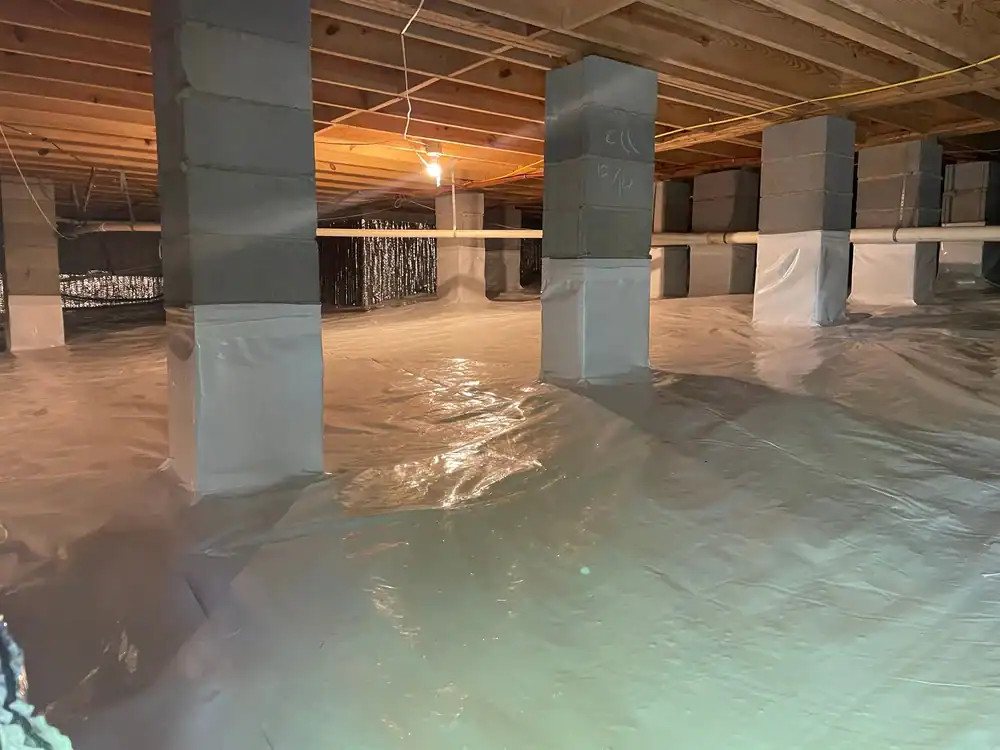
Vapor barrier installation covers every inch of your crawl space floor and extends up the foundation walls. We seal seams and penetrations so moisture can’t sneak through gaps. If your crawl space has vents, we seal those too—conditioned crawl spaces perform better than vented ones in North Carolina’s climate.
Dehumidifier installation gives you ongoing moisture control. We size the unit based on your square footage and local humidity levels, not guesswork. Crawl space insulation goes on the walls to keep your floors warmer and reduce the load on your HVAC system.
In Deep River, we also address drainage issues if water is pooling around your foundation. Encapsulation works best when water stays outside in the first place. You’ll get a system designed for this region’s weather patterns—hot, humid summers and wet springs that put constant pressure on crawl spaces. We’ve worked in enough homes around here to know what holds up and what doesn’t.
Most crawl space encapsulation projects in Deep River run between $5,000 and $7,000 for an average-sized home. Smaller spaces might cost closer to $3,000, while larger homes with drainage issues or significant mold remediation needs can reach $15,000 or more.
The price depends on your crawl space size, the condition we find it in, and what components you need. A basic vapor barrier installation costs less than a full system with insulation, dehumidifier, and mold treatment. We give you an exact quote after the inspection so there’s no guessing.
That upfront cost usually pays for itself within 10 to 15 years through energy savings alone. But the real value shows up in what you avoid—structural repairs, mold remediation, and the health problems that come with poor indoor air quality.
Yes. Field studies show that crawl space encapsulation reduces heating and cooling costs by 15-20% annually. For a 2,000-square-foot home in Deep River, that typically means $300 to $400 in savings every year.
Here’s why it works. When your crawl space is open to outside air, humid summer air makes your AC work harder to cool your home. In winter, cold air under your floors forces your furnace to run longer. Encapsulation stops that air exchange. Your HVAC system only has to condition the air inside your home, not fight against what’s seeping up from below.
You’ll also notice more consistent temperatures between rooms. Those cold spots near exterior walls usually improve once the crawl space is sealed and insulated. The savings are real, and they show up every month on your utility bill.
Most crawl space encapsulation projects take two to four days, depending on the size of your space and what we’re installing. A straightforward vapor barrier installation in a small, accessible crawl space might only take a day or two. Larger homes with crawl space cleaning, mold remediation, insulation, and dehumidifier installation can take closer to a week.
We’ll give you a timeline during the estimate so you know what to expect. The work itself doesn’t disrupt your daily routine much. We access everything from outside or through crawl space doors, so you’re not dealing with crews walking through your living areas all day.
The key is doing it right, not fast. Cutting corners on seam sealing or skipping proper insulation just means you’ll have problems later. We’d rather take an extra day and deliver a system that actually works.
In most Deep River homes, yes. North Carolina’s humidity levels stay high enough that a vapor barrier alone won’t keep your crawl space dry. Even with a sealed barrier, moisture can still enter through foundation walls or get trapped inside during installation.
A dehumidifier actively pulls moisture out of the air and keeps relative humidity below 60%. That’s the magic number. Above 60%, mold can grow. Below it, mold struggles to survive. The dehumidifier runs automatically and drains either to a sump pump or outside through a condensate line.
Some crawl spaces in very dry climates can get by without one, but that’s not Deep River. We’ve seen too many encapsulated crawl spaces develop mold problems because the homeowner skipped the dehumidifier to save a few hundred dollars upfront. It’s not worth the risk when you’re already investing thousands in moisture control.
Encapsulation prevents future mold growth, but it won’t remove mold that’s already there. If we find mold during the inspection, we treat it first with proper mold remediation before installing the vapor barrier and insulation.
Mold remediation involves removing contaminated materials, cleaning affected surfaces with antimicrobial solutions, and addressing the moisture source that caused it. You can’t just seal mold behind a barrier and hope it dies. It needs to be dealt with directly.
Once the mold is gone and the crawl space is encapsulated, the conditions that allowed mold to grow in the first place disappear. No moisture means no mold. That’s why encapsulation is one of the most effective long-term mold prevention strategies. You’re not just cleaning up the problem—you’re eliminating the environment where it thrives.
A vapor barrier is one component of encapsulation. It’s the thick plastic sheeting that covers your crawl space floor and walls to block ground moisture. Encapsulation is the complete system—vapor barrier plus insulation, dehumidification, sealing vents, and sometimes drainage improvements.
Just laying down a vapor barrier without sealing it properly or controlling humidity won’t solve your moisture problems. Water will still find its way in through gaps, vents, or foundation walls. The vapor barrier needs to be part of a larger moisture control strategy.
Think of it this way: the vapor barrier is the foundation. Encapsulation is the finished house. Both matter, but one is incomplete without the other. When we encapsulate a crawl space in Deep River, you’re getting a system designed to work together and keep moisture out for the long term.