

Contact Info
- Greensboro, NC 27406
- Call: 336-707-0498
- Text: 336-707-0498
-
Mon - Fri: 8am - 4pm
Sat - Sun: Closed
Contact Info
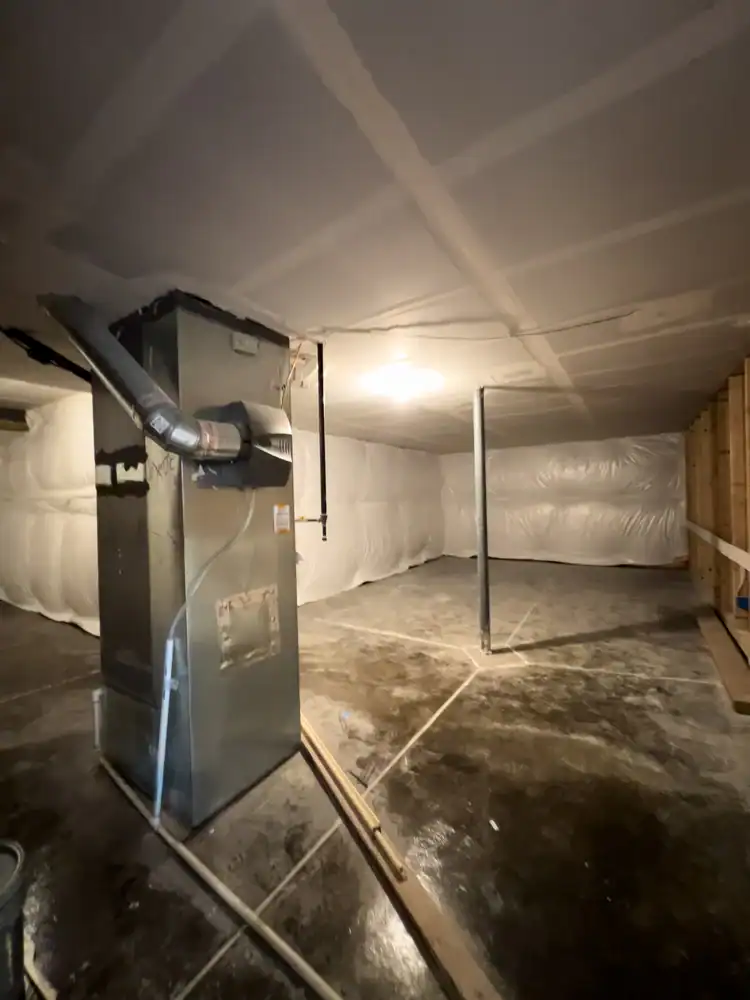
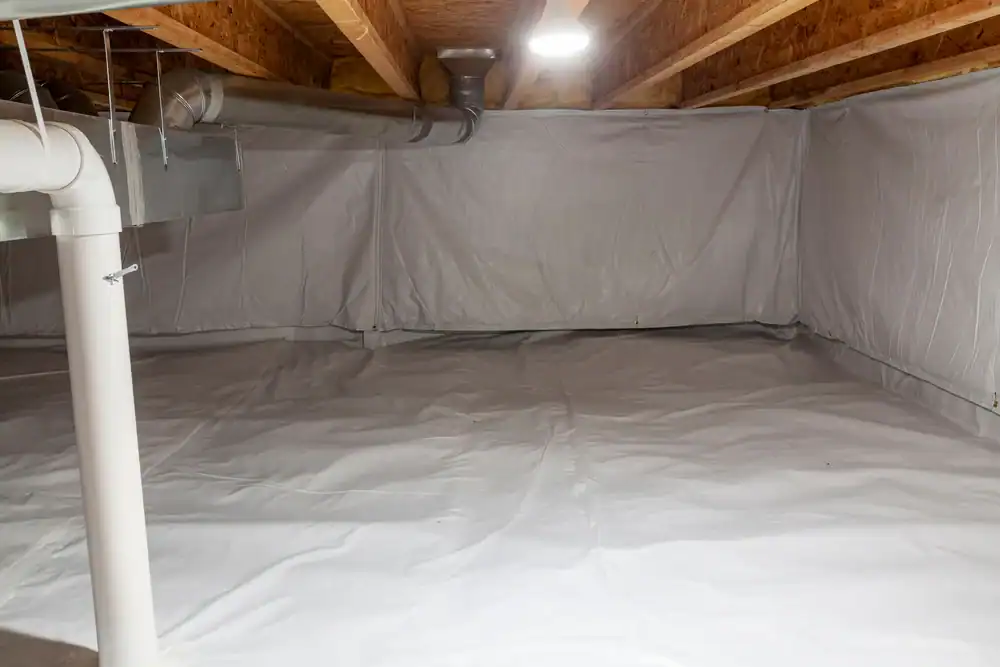
Your floors stay warm in winter. Your energy bills drop by 15-20% because your HVAC isn’t fighting against humid air seeping up through the floorboards. That musty smell disappears completely.
You stop worrying about mold growing on your floor joists or whether the wood under your feet is rotting. Your home feels more comfortable year-round because you’ve sealed off the main source of moisture, drafts, and temperature swings.
This isn’t about making your crawl space look nice. It’s about controlling the environment under your home so it stops affecting the environment inside your home. When humidity stays between 40-50%, mold can’t grow, wood doesn’t rot, and pests lose interest. That’s what proper encapsulation does.
We’ve spent over a decade handling moisture problems in North Carolina homes. We’re BBB accredited with an A+ rating because we show up, do the work right, and don’t disappear when the job’s done.
Sedgefield homes face the same humidity challenges as the rest of the Greensboro area—morning condensation, afternoon heat, and crawl spaces that turn into moisture traps. We’ve seen what happens when homeowners wait too long or try to patch the problem with a hardware store vapor barrier.
Rick Watson and our team handle crawl space encapsulation, mold removal, and dehumidifier installation. We don’t do residential dryer vents, but if it involves moisture control under your home, we’ve handled it hundreds of times.
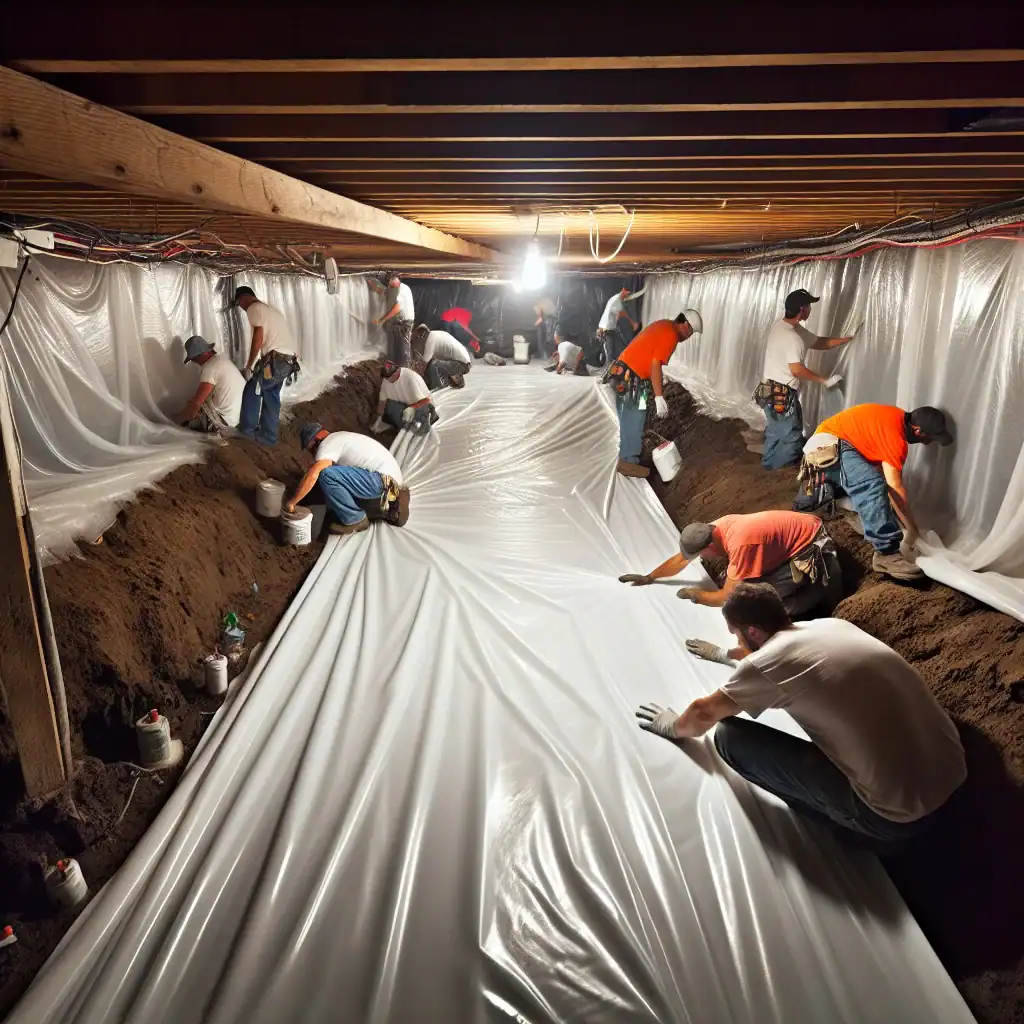
First, we inspect your crawl space to identify moisture sources, existing damage, and ventilation issues. You’ll know what’s happening under your home before we touch anything.
Next comes crawl space cleaning—removing debris, old insulation, and anything that’s already moldy or damaged. If there’s standing water or drainage problems, we address those first. You can’t seal moisture into a crawl space and expect good results.
Then we install a heavy-duty vapor barrier across the floor and up the walls. This isn’t the thin plastic you find at home improvement stores. It’s a thick, durable material that actually stops ground moisture from entering your crawl space. We seal all seams and attach it properly to your foundation walls.
After the vapor barrier installation, we handle crawl space insulation if needed and install a dehumidifier to maintain ideal humidity levels year-round. The dehumidifier runs automatically, pulling excess moisture out of the air so your crawl space stays dry even during North Carolina’s humid summers.

Ready to get started?
Crawl space encapsulation means sealing your crawl space from ground moisture, outside air, and humidity. That includes vapor barrier installation across every inch of exposed ground and foundation walls, proper sealing of all vents and openings, and dehumidifier installation to control humidity levels automatically.
In Sedgefield, temperature swings between morning and afternoon create constant condensation cycles. Warm air hits your cooler crawl space and releases moisture directly onto your floor joists. Encapsulation stops this cycle by controlling what air enters your crawl space and how much moisture stays in it.
You’re also protecting against the structural damage that comes with long-term moisture exposure. Wood rot, mold growth, and pest infestations all start because crawl spaces stay too humid for too long. When you maintain humidity below 60%, these problems don’t develop. Your home’s foundation stays solid, your indoor air quality improves, and you’re not paying to heat or cool outdoor air that’s leaking into your living space.
Most Sedgefield homeowners see the difference in their first energy bill after encapsulation. Your HVAC system doesn’t work as hard because it’s not fighting against drafts and humidity from below.
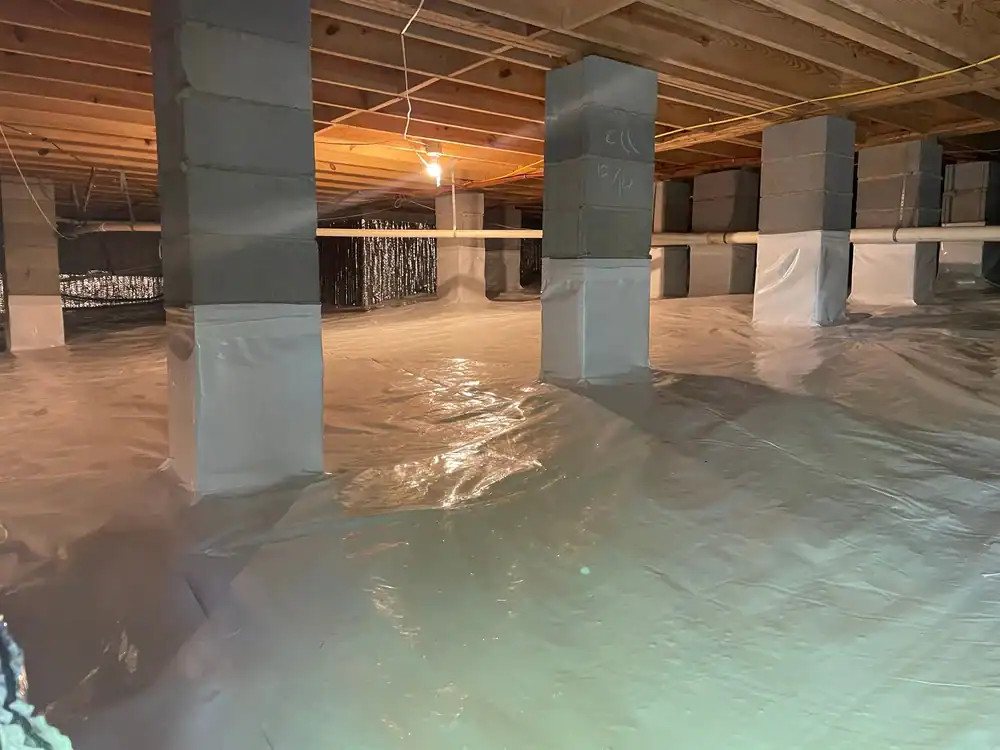
Most crawl space encapsulation projects in the Sedgefield area run between $5,000 and $15,000, depending on your crawl space size, current condition, and what needs fixing before we can seal it properly. If you’ve got drainage issues, significant mold growth, or structural damage, those get addressed first.
A basic encapsulation with vapor barrier installation and sealing runs on the lower end. Add crawl space insulation, a dehumidifier, and mold remediation, and you’re looking at the higher end of that range. The average project costs around $8,250.
Here’s what matters more than the upfront cost: your energy bills drop 15-20% after encapsulation, and you avoid the $10,000+ repairs that come with ignoring moisture problems. You’re also adding value to your home—the EPA found that every dollar you save annually on energy adds $20-24 to your home’s resale value.
Most crawl space encapsulation jobs take 1-3 days from start to finish. Smaller crawl spaces with minimal prep work can be done in a day. Larger spaces or homes with existing moisture damage, mold, or drainage issues take longer.
The timeline depends on what we find during inspection. If your crawl space just needs cleaning and vapor barrier installation, that’s straightforward. If we’re removing old insulation, treating mold, installing drainage systems, or repairing damaged wood, each of those adds time to the project.
We’ll give you an accurate timeline after inspecting your crawl space. You’ll know exactly what needs to happen and how long it takes before we start work. Most homeowners are surprised how quickly the job goes once we’re on site—we’re not dragging it out or leaving your crawl space torn apart for weeks.
Yes, and here’s why: right now, your HVAC system is heating and cooling air that’s leaking in through your crawl space. That humid summer air or cold winter air is seeping up through your floors, making your system work harder to maintain comfortable temperatures.
The Department of Energy found that crawl space encapsulation reduces energy costs by 15-20% on average. Some Sedgefield homeowners see even better results, especially if their crawl space was particularly leaky or poorly insulated before encapsulation.
You’ll notice the difference most during extreme weather—hot, humid summers and cold winter mornings. Your floors stay warmer in winter because you’re not losing heat to the crawl space. Your home cools down faster in summer because humid air isn’t constantly entering from below. Your HVAC runs less frequently, and when it does run, it’s not fighting against outdoor air infiltrating your living space.
Yes, and here’s what most homeowners don’t realize: a vapor barrier stops ground moisture from entering your crawl space, but it doesn’t remove humidity that’s already in the air or that enters through small gaps and vents. North Carolina’s climate means humidity is constant, and even sealed crawl spaces need active moisture control.
A dehumidifier maintains ideal humidity levels between 40-50% year-round. This prevents mold growth, stops condensation on pipes and ductwork, and keeps wood moisture content low enough that rot and pests aren’t issues. Without a dehumidifier, you’ve solved the ground moisture problem but not the air moisture problem.
The dehumidifier runs automatically—you’re not monitoring it or emptying buckets. It drains continuously and only runs when humidity rises above your set point. Most units are energy-efficient and cost less to operate than dealing with mold remediation or structural repairs down the road. Think of it as the final piece that makes encapsulation actually work long-term.
You can, but most homeowners who try end up paying more to fix their mistakes than they would’ve spent hiring us from the start. Crawl space encapsulation looks straightforward until you’re under the house dealing with tight spaces, uneven ground, foundation irregularities, and moisture sources you didn’t know existed.
The vapor barrier needs to be installed correctly—proper overlap, sealed seams, attachment to foundation walls, and integration with piers and posts. Miss any of these steps and moisture finds its way in. You also need to identify and fix drainage issues, treat existing mold, and install the dehumidifier in the right location with proper drainage setup.
We’ve redone plenty of DIY encapsulation jobs where the homeowner spent money on materials and time on installation, only to have moisture problems continue because the root cause wasn’t properly addressed. Most DIY attempts fail because homeowners don’t have the right materials, don’t know how to handle existing moisture problems, or don’t realize their crawl space has structural issues that need addressing first.
If you’ve got musty odors in your home, cold floors in winter, high humidity inside even when your AC is running, or visible mold anywhere in your house, your crawl space is likely the source. These are the most common signs that moisture is entering your home from below.
Other indicators include sagging floors, increased allergy symptoms, higher energy bills without explanation, or visible condensation on windows and walls. Go look in your crawl space if you can—standing water, wet insulation, mold on floor joists, or a damp smell all mean you need encapsulation sooner rather than later.
Sedgefield homes are particularly vulnerable because of North Carolina’s humidity and temperature fluctuations. Even if you don’t see obvious problems yet, an unsealed crawl space is costing you money in energy bills and creating conditions for mold and structural damage. Most homeowners wish they’d encapsulated sooner once they see the difference it makes in comfort, air quality, and monthly utility costs.