

Contact Info
- Greensboro, NC 27406
- Call: 336-707-0498
- Text: 336-707-0498
-
Mon - Fri: 8am - 4pm
Sat - Sun: Closed
Contact Info
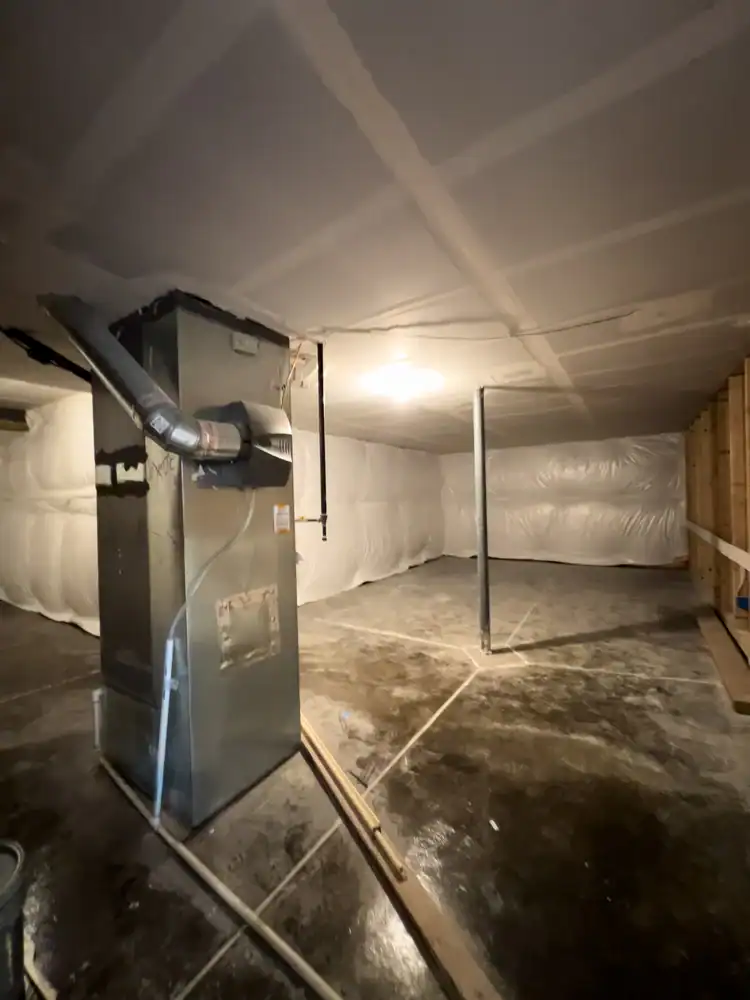
You stop smelling that musty odor coming through your vents. Your floors feel warmer in winter because cold air isn’t seeping up through the floorboards. Your energy bills drop because your HVAC system isn’t working overtime to compensate for humidity and temperature swings from below.
Here’s what most people don’t realize: about 50% of the air you breathe in your home comes from your crawl space. If that space is damp, moldy, or full of allergens, you’re breathing it. Crawl space encapsulation with a proper vapor barrier installation changes that.
You get cleaner air. You protect your home’s structure from rot and sagging. You make your space less attractive to termites and rodents who love damp environments. And if you’re planning to sell eventually, you’re adding real value—every dollar you save annually on energy can add $20 to $24 to your home’s resale price.
This isn’t about making your crawl space look nice. It’s about making your entire home healthier, more efficient, and more protected against North Carolina’s humidity, which regularly exceeds 70% in summer months.
We’ve been improving indoor air quality in the Greensboro area for over 30 years. Rick Watson and Noah Watson both hold ASCS certification through the National Air Duct Cleaners Association, and Rick is CVI certified. We’re BBB accredited with an A+ rating.
Most homes in Tobaccoville were built in the 1970s and 1980s, which means they weren’t designed with today’s moisture control standards. We’ve seen what happens when crawl spaces go unchecked in this climate—wood rot, mold growth, buckled floors, and air quality problems that affect everyone living above.
We’re not new to this. We’ve handled hundreds of crawl space encapsulation projects across the Triad, and we know exactly what works in North Carolina’s humid subtropical climate. You’re not getting a sales pitch from us. You’re getting a straight answer about what your crawl space needs and what it’ll take to fix it right.
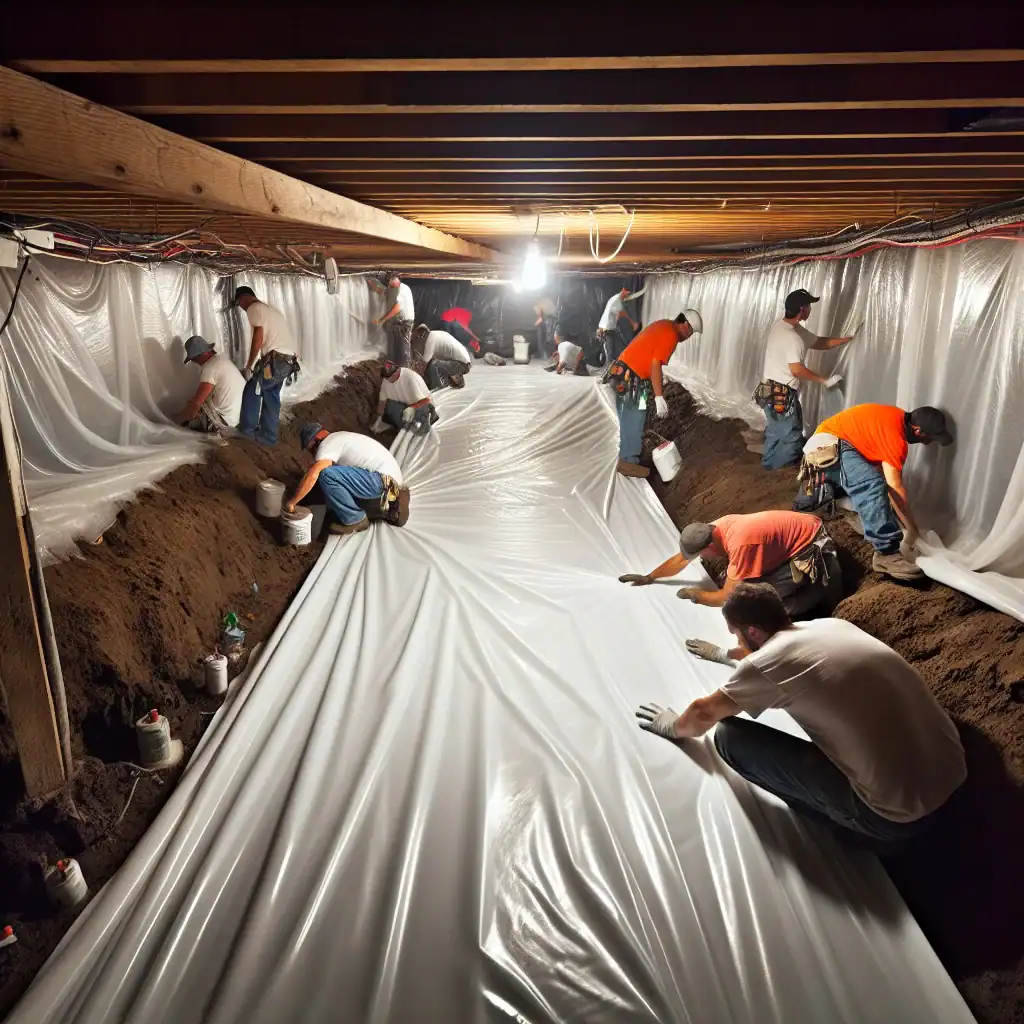
First, we inspect your crawl space to assess moisture levels, existing damage, and ventilation issues. We’re looking for standing water, mold growth, insulation problems, and structural concerns. You get a clear explanation of what we find—no jargon, no upselling.
Next comes crawl space cleaning. We remove debris, old insulation, and anything that shouldn’t be down there. If there’s mold, we remediate it properly before sealing anything up. You can’t encapsulate over existing problems and expect good results.
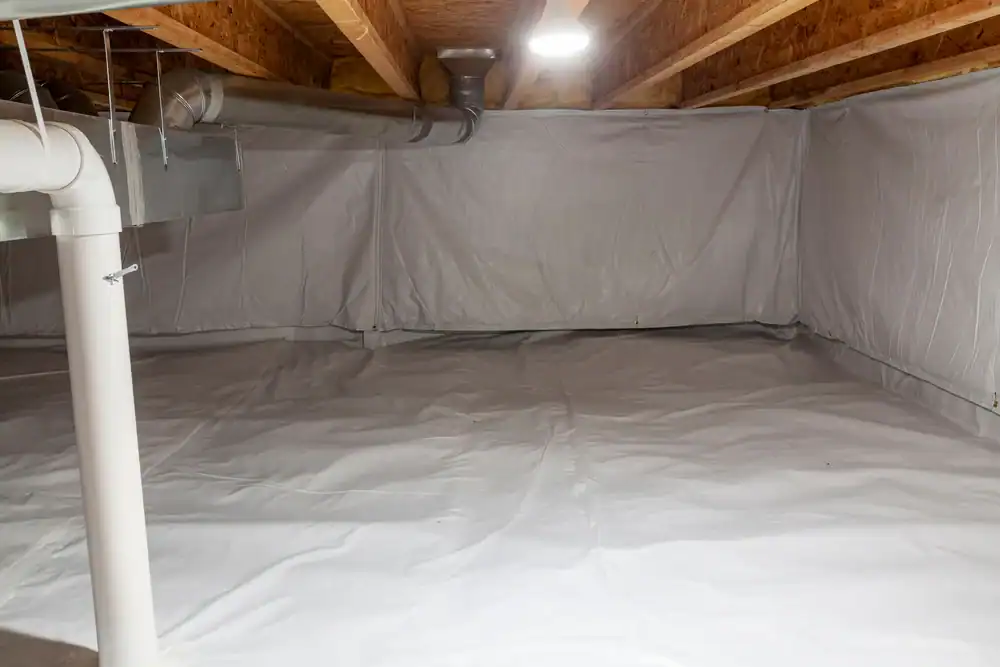
Then we install a heavy-duty vapor barrier across the floor and up the walls. This isn’t the thin plastic you’d buy at a hardware store—it’s a durable, multi-layer material designed to last 20 to 25 years. We seal all seams and attach it properly to prevent any moisture from coming up through your foundation.
After that, we handle crawl space insulation if needed, and install a dehumidifier to maintain optimal humidity levels year-round. The dehumidifier keeps relative humidity below 60%, which prevents mold growth and keeps your space dry even during North Carolina’s wettest months.
Finally, we seal vents and ensure your crawl space is a controlled environment. The whole process typically takes a few days depending on your space size and condition.

Ready to get started?
Crawl space encapsulation means a complete moisture control system. You get professional-grade vapor barrier installation that covers your crawl space floor and foundation walls. You get proper sealing at all seams, posts, and penetrations so moisture can’t sneak through.
You get dehumidifier installation calibrated for your space size. In Tobaccoville’s climate, this isn’t optional—it’s essential. Summer humidity here creates perfect conditions for mold and wood rot, and a dehumidifier keeps levels in check even when it’s 80% humidity outside.
Most crawl space encapsulation projects in this area run between $5,000 and $15,000 depending on square footage and existing conditions. That might sound like a lot until you consider what you’re preventing: structural repairs that cost tens of thousands, mold remediation, pest control, and the ongoing cost of wasted energy.
You’re also getting expertise that matters. We’ve been doing this for 30 years, which means we’ve seen every crawl space problem North Carolina can throw at a home. We know how to handle high water tables, poor drainage, inadequate ventilation, and aging construction. Your home gets a system designed specifically for the conditions it faces, not a one-size-fits-all approach.
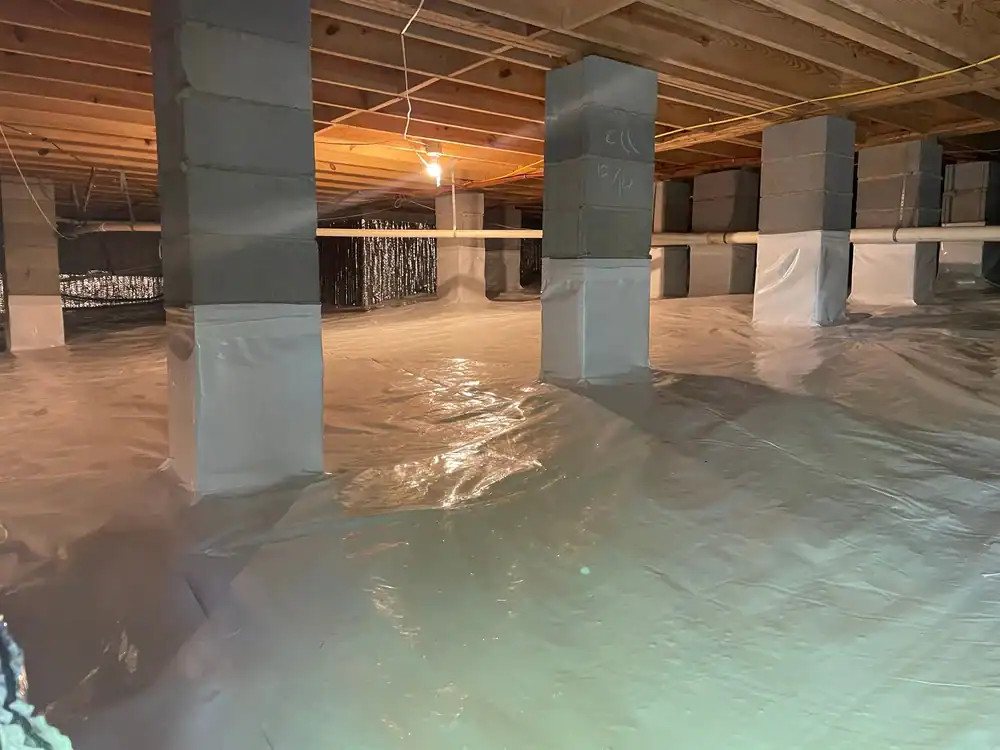
Most crawl space encapsulation projects in Tobaccoville cost between $5,000 and $15,000, or about $3 to $10 per square foot. The range depends on your crawl space size, current condition, and what needs to happen before we can encapsulate.
If you’ve got standing water, significant mold growth, or structural damage, those issues get addressed first. That affects your total cost. A 1,200 square foot crawl space in good condition costs less than an 1,800 square foot space with drainage problems and rotted floor joists.
Here’s what you’re paying for: vapor barrier materials that last 20+ years, professional dehumidifier installation, proper sealing and insulation, and labor from certified technicians who know what they’re doing. You’re also paying to avoid much bigger expenses down the road—structural repairs, mold remediation, and the 10-30% you’re currently losing on energy bills. Most homeowners see the investment pay for itself over time through energy savings and avoided repair costs.
Yes, and the savings are measurable. Most homes see a 10-30% reduction in heating and cooling costs after crawl space encapsulation, with many studies showing around 20% average savings.
Here’s why it works: right now, your HVAC system is fighting against whatever temperature and humidity is coming from your crawl space. In summer, hot humid air seeps up through your floors. In winter, cold air does the same. Your system runs longer and harder to compensate, which shows up on your power bill every month.
When we encapsulate and install a dehumidifier, we create a controlled environment that doesn’t fight against your HVAC. Your system maintains temperature more easily. Your floors aren’t cold in winter. You’re not pumping cooled air into a space that’s pulling in 80-degree humidity from outside. The savings vary based on your home size and current efficiency, but most Tobaccoville homeowners notice the difference within the first few billing cycles.
A properly installed crawl space encapsulation system lasts 15 to 25 years. The vapor barrier itself typically lasts 20 to 25 years if it’s high-quality material installed correctly. Dehumidifiers generally last 10 to 15 years with regular filter changes and basic maintenance.
The longevity depends on installation quality and material grade. Thin, bargain vapor barriers might save money upfront but they tear, shift, and fail much sooner. We use heavy-duty, reinforced materials designed specifically for crawl space conditions—moisture, temperature changes, and the occasional service person walking across it.
Your dehumidifier needs occasional attention. Change the filter as recommended, and make sure it’s draining properly. Beyond that, the system works passively. You’re not re-doing this every few years. You’re setting up a long-term solution that protects your home for decades. That’s why the upfront investment makes sense—you’re paying once for protection that lasts as long as you own the home.
Vapor barrier installation is one part of crawl space encapsulation, but encapsulation is the complete system. A vapor barrier is the plastic sheeting that covers your crawl space floor and walls to block moisture. Encapsulation includes that barrier plus dehumidification, insulation, vent sealing, and creating a controlled environment.
Some companies will lay down a vapor barrier and call it done. That’s not encapsulation. Without a dehumidifier, you’re still going to have humidity problems because moisture comes from the ground and from outside air. Without sealing vents, you’re still letting North Carolina’s humid summer air flow right in.
Real encapsulation means your crawl space becomes a conditioned space that works with your home, not against it. You get moisture control from multiple angles—blocking ground moisture with the barrier, controlling air moisture with the dehumidifier, and preventing outside air infiltration by sealing vents. All of those pieces work together. Miss one, and you’re not getting the full benefit. That’s the difference between a partial fix and a complete solution.
You can, but most homeowners who try end up calling us to fix it. Crawl space encapsulation looks straightforward until you’re actually under the house dealing with uneven ground, foundation penetrations, support posts, and trying to get a vapor barrier to seal properly in tight spaces.
The bigger issue is knowing what you’re looking at. If you’ve got mold, you need to remediate it before sealing anything. If you’ve got drainage issues or standing water, those need to be fixed first. If your insulation is damaged or your floor joists are rotting, encapsulating over the problem just hides it until it gets worse.
Professional installation also matters for the warranty and longevity. We know how to seal seams so they don’t separate. We know proper dehumidifier sizing for your space. We know building codes and what actually works in North Carolina’s climate after doing this for 30 years. DIY might save money initially, but if it fails in three years or doesn’t solve your moisture problem, you’ve wasted time and materials. Most people find it’s worth having it done right the first time.
You’ll notice signs. Musty smells coming through your vents. Floors that feel cold in winter or damp in summer. Higher energy bills without explanation. Visible mold on vents or walls. Increased allergy or asthma symptoms when you’re home.
Go look at your crawl space if you can access it safely. If you see standing water, wet insulation, mold growth on floor joists, or condensation on surfaces, you need encapsulation. If your crawl space vents are open and you’re in North Carolina, you’re likely dealing with humidity issues whether you see them yet or not.
Most homes in Tobaccoville were built in the 70s and 80s with vented crawl spaces, which was standard practice back then. We now know that vented crawl spaces in humid climates like ours actually create more moisture problems than they solve. If your home fits that profile and you’ve never encapsulated, you’re probably due. We can inspect it and give you a straight answer about what you’re dealing with and whether encapsulation makes sense for your situation.