

Contact Info
- Greensboro, NC 27406
- Call: 336-707-0498
- Text: 336-707-0498
-
Mon - Fri: 8am - 4pm
Sat - Sun: Closed
Contact Info
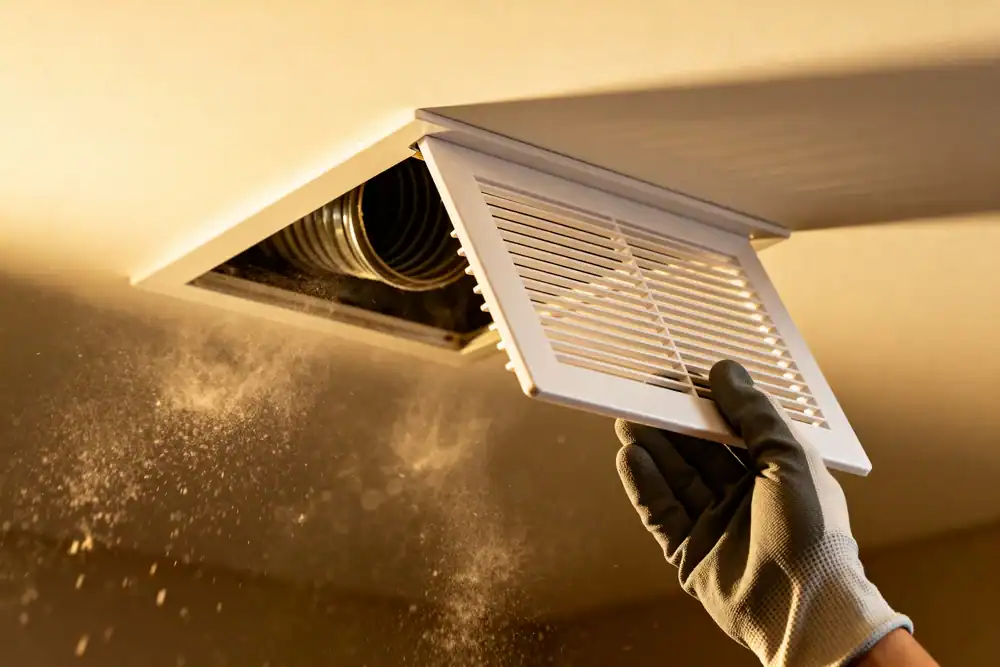
Your energy bills drop. The U.S. Department of Energy found that 25% to 40% of heating and cooling energy gets wasted when your HVAC system works harder than it should. Proper maintenance, including ductwork cleaning, can cut your energy costs by 20% to 30%.
Your air gets easier to breathe. Indoor air quality matters more than most people realize—the air inside your home can be three to four times worse than outside air. When your ducts are clogged with dust, allergens, and debris, every time your system runs, it’s circulating that contamination throughout your space.
Your HVAC system lasts longer. Well-maintained systems, including clean air ducts, can last 30% to 50% longer than neglected ones. That means an HVAC system with a typical 15-year lifespan could run efficiently for up to 20 years when you keep the ductwork clean. Fewer breakdowns, fewer emergency repairs, and more years before you’re shopping for a replacement.
We’ve been improving indoor air quality across the Greensboro area and Deep River since the early 1990s. We’re NADCA certified with ASCS and CVI certified personnel, which means we follow the industry’s highest standards for commercial and residential duct cleaning.
Deep River homes and businesses face specific air quality challenges. North Carolina’s humidity, pollen levels, and seasonal allergens mean your HVAC system is constantly filtering more than just dust. When ducts go uncleaned, that buildup doesn’t just disappear—it recirculates every time your system kicks on.
We’ve seen what happens when ductwork gets ignored for years. One customer had over an inch of debris and lint in 17-year-old ducts, causing health problems from poor air quality and mold. After our cleaning, their new HVAC installer saw no need to replace the flex duct—that’s how thorough the job was.

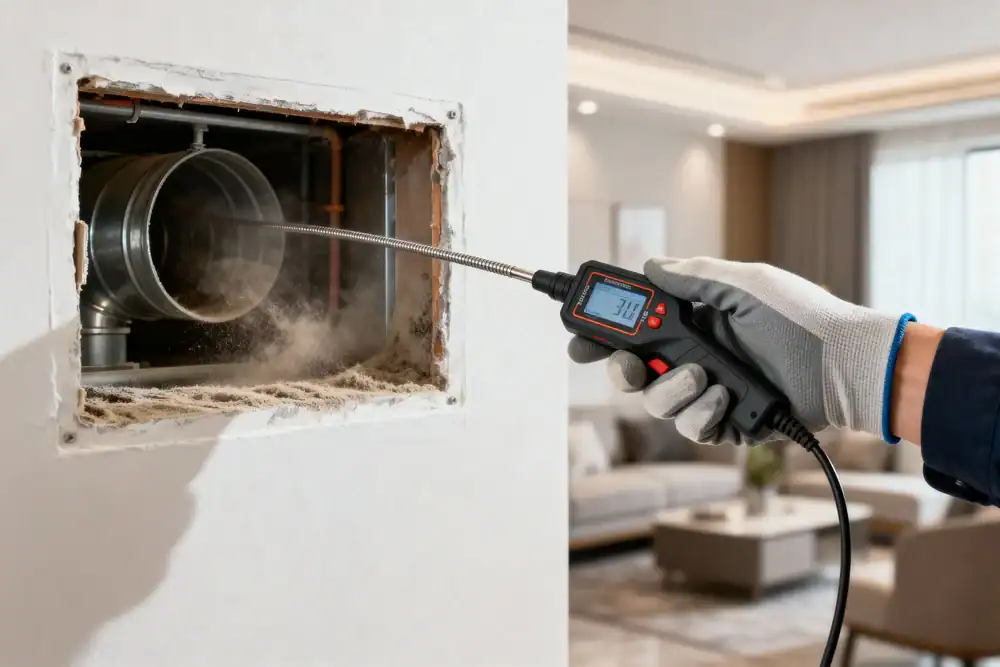
We start with a complete inspection of your HVAC system and ductwork. This isn’t a quick glance—we’re looking for mold, excessive debris, damaged sections, and airflow issues that could be costing you money. We use cameras when needed to show you exactly what’s going on inside your ducts.
Next comes the actual cleaning. We use industry-leading equipment designed to remove contaminants without damaging your ductwork. This includes powerful vacuums that create negative pressure, specialized brushes that dislodge stuck-on debris, and HEPA filtration to ensure nothing gets released back into your air. We clean supply ducts, return ducts, registers, grilles, and the air handler itself.
The process typically takes a few hours for residential properties and longer for commercial spaces, depending on the size of your system. We seal off areas we’re working on to prevent dust from spreading into your living or working space. When we’re done, we’ll walk you through what we found and what we cleaned.
After the cleaning, your HVAC system can move air the way it was designed to. Airflow improves, efficiency increases, and your system doesn’t have to work as hard to maintain temperature. Many customers notice the difference in air quality within the first day.
Ready to get started?
Every duct cleaning service we provide includes a thorough inspection, complete cleaning of all accessible ductwork, and a post-service walkthrough. We clean supply and return air ducts, registers, grilles, diffusers, heat exchangers, cooling coils, condensate drain pans, fan motors, and the air handling unit housing.
For commercial properties in Deep River, clean ductwork directly impacts your bottom line. Businesses that prioritize indoor air quality see 35% fewer employee sick days, according to research from the National Institute for Occupational Safety and Health. Poor air quality can cost companies up to $20 million annually in lost productivity. When your employees can breathe easier, they work better.
We handle both commercial duct cleaning and residential services, but we don’t do residential dryer vent cleaning—we focus on what we do best. Our commercial clients include offices, retail spaces, restaurants, and industrial facilities throughout the Deep River and Greensboro area.
North Carolina’s climate creates specific challenges. The state sees an estimated 6,000 hospital admissions for respiratory disease and 2,000 for cardiovascular disease each year due to air pollution. Soot and smog pollution cause roughly 200,000 asthma attacks annually among asthmatics in NC. Your ductwork is your first line of defense against these indoor air quality issues.

Most residential properties benefit from duct cleaning every three to five years, but that timeline shifts based on a few factors. If anyone in your home has allergies, asthma, or other respiratory issues, you’ll want to clean your ducts more frequently—every two to three years makes sense.
Homes with pets, recent renovations, or smokers should also consider more frequent cleaning. Pet dander and hair accumulate quickly in ductwork. Construction dust from remodeling projects can clog your system for years if not addressed. Tobacco smoke leaves residue that coats duct surfaces and recirculates every time your HVAC runs.
For commercial properties, the frequency depends on your business type and foot traffic. Restaurants, medical facilities, and high-traffic retail spaces often need annual cleaning. Office buildings typically fall into the two-to-three-year range. If your business has seen an increase in dust accumulation on surfaces or employees are complaining about air quality, don’t wait for the scheduled interval.
Yes, but the savings depend on how dirty your ducts are and how hard your system is currently working. The U.S. Department of Energy reports that proper HVAC maintenance, including ac duct cleaning, can reduce energy costs by 20% to 30%. That’s not a small number when you’re looking at annual heating and cooling expenses.
Here’s why it works: when dust and debris build up in your ductwork, your HVAC system has to push harder to move air through the obstruction. That extra effort means more energy consumption and higher bills. Clean ducts allow for proper airflow, which means your system reaches your desired temperature faster and runs less frequently.
Recent studies on airflow improvements after vent cleaning showed significantly less energy usage. The NADCA estimates homeowners can save up to 25% on annual HVAC maintenance costs just by keeping ducts clean. You’ll also see a 21% reduction in service calls when your system isn’t struggling against clogged ductwork. Those emergency repair visits add up quickly.
Look at your vents and registers first. If you see visible dust buildup, dark streaks around the vent openings, or debris when you shine a flashlight into the duct, that’s a clear sign. Pull off a register cover and look inside—if there’s a layer of dust or you can see debris, your ducts need attention.
Pay attention to what’s happening when your HVAC runs. Musty or stale odors coming from vents indicate mold or mildew growth inside the ductwork. Increased dust on furniture and surfaces shortly after cleaning means your ducts are circulating contamination. If family members or employees are experiencing more allergy symptoms, respiratory issues, or unexplained headaches indoors, poor air quality from dirty ducts could be the cause.
Check your energy bills too. A sudden increase without a corresponding change in usage patterns often points to HVAC efficiency problems, and clogged ducts are a common culprit. If your system is running longer cycles to reach temperature or you’re hearing whistling sounds from vents, restricted airflow from dirty ductwork is likely the issue.
NADCA certification means we follow the National Air Duct Cleaners Association’s standards, which are the industry benchmark for proper duct cleaning. This isn’t just a marketing claim—it’s a commitment to specific methods, equipment, and training that many companies skip.
Our NADCA-certified technicians, including our ASCS and CVI certified personnel, understand how HVAC systems work, how to clean them without causing damage, and how to identify problems that need attention. We use source removal methods, which means physically removing contaminants from your ducts rather than just stirring up dust or applying chemicals that mask odors.
Non-certified companies often use inadequate equipment, skip important steps, or employ techniques that can actually damage your ductwork. Some use cheap vacuums that don’t create proper negative pressure, meaning debris gets blown into your living space instead of being captured. Others focus only on the easy-to-reach sections and ignore return ducts or the air handler. NADCA certification ensures a complete, thorough job that actually improves your indoor air quality and system performance.
Absolutely. A study published in the American Journal of Respiratory and Critical Care Medicine found that homes with clean air ducts reported a 50% reduction in respiratory symptoms among residents. That includes less coughing, sneezing, and shortness of breath—symptoms that many people just accept as normal.
Your ductwork circulates air throughout your home or business dozens of times per day. When those ducts are filled with dust, pollen, mold spores, pet dander, and other contaminants, every cycle spreads those particles into the air you breathe. For people with asthma, allergies, or other respiratory conditions, this constant exposure makes symptoms worse.
North Carolina faces specific air quality challenges that make duct cleaning even more important. The state sees roughly 1,500 new asthma cases and 2,500 new chronic bronchitis cases in adults annually, many linked to poor indoor air quality. Environmental exposures don’t just worsen asthma—mounting evidence shows they may play a role in causing the disease. Clean ductwork won’t solve every health issue, but it removes a major source of indoor air contamination that affects you every single day.
Yes, older homes in Deep River often require a different approach. Many were built before modern HVAC standards, which means ductwork might be poorly sealed, improperly sized, or constructed from materials we don’t use anymore. We’ve cleaned ducts in homes with 17-year-old systems that had never been serviced—the buildup in those cases requires more intensive work.
Older ductwork is also more likely to have damage, disconnected sections, or deterioration that needs repair before or during cleaning. We inspect carefully because cleaning a damaged duct system without fixing the problems first just wastes your money. Sometimes we find that sections need sealing or replacement to actually improve your air quality and efficiency.
Newer construction comes with its own issues. Builders often leave construction debris, drywall dust, and sawdust in ductwork after installation. That contamination starts circulating the moment you turn on your system. We recommend new homeowners have their ducts inspected and cleaned within the first year, even though the system is brand new. The ductwork itself might be clean, but what got left inside during construction isn’t.