

Contact Info
- Greensboro, NC 27406
- Call: 336-707-0498
- Text: 336-707-0498
-
Mon - Fri: 8am - 4pm
Sat - Sun: Closed
Contact Info
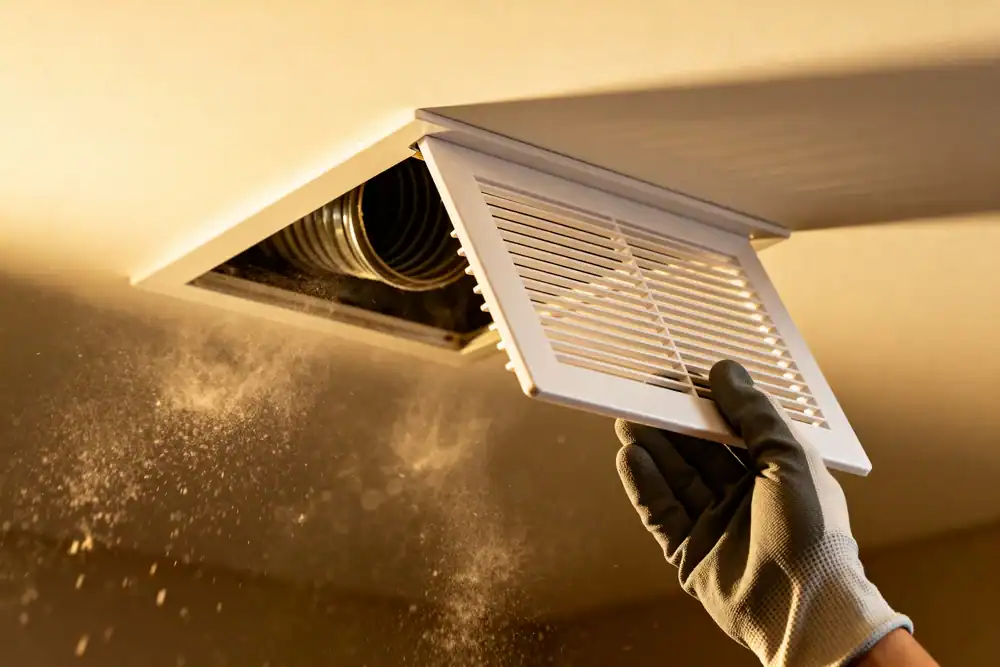
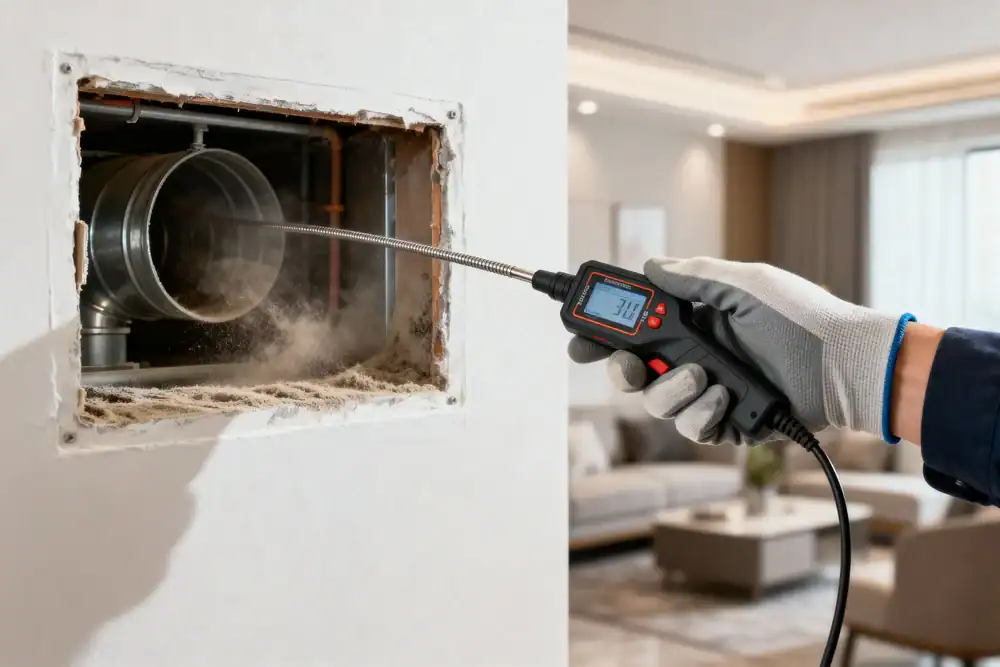
You’ll notice the difference within days. Less dust settling on furniture. Fewer allergy symptoms when you wake up. Your HVAC system running quieter because it’s not fighting through years of buildup.
North Carolina’s brutal pollen seasons mean your ductwork traps allergens year-round. Tree pollen in spring, grass in summer, weeds in fall. That’s three distinct seasons of contaminants getting pulled into your system and recirculated every time your heat or AC kicks on.
Clean ductwork also means lower energy bills. The U.S. Department of Energy reports that 25-40% of energy used for heating and cooling gets lost through dirty, restricted ducts. When airflow improves, your system doesn’t work as hard. You’ll see the difference on your next utility bill.
Your home stays more comfortable too. No more hot spots in one room and freezing temps in another. When air moves freely through clean ducts, temperature control becomes consistent throughout your house.
We’ve been serving Randleman and the greater Greensboro area since the early 1990s. That’s over 30 years of understanding exactly what North Carolina homeowners deal with when it comes to indoor air quality.
We’ve seen what happens when ducts go uncleaned for 15, 20, even 25 years. We’ve pulled out everything from construction debris to animal nests. We know the specific challenges that come with North Carolina’s humidity, pollen levels, and seasonal allergen cycles.
Our team uses industry-leading equipment to clean residential and commercial HVAC systems. We also handle crawl space cleaning and encapsulation, which matters in Randleman because moisture and mold in crawl spaces directly impact your ductwork and indoor air quality. It’s all connected.

First, we inspect your entire HVAC system. That means looking at supply and return vents, the main trunk lines, and the air handler. We’re checking for mold, excessive dust buildup, debris, and any damage that might need attention before we clean.
Next, we seal off your vents and attach high-powered vacuum equipment to your duct system. This creates negative pressure throughout the entire network. Then we go through each section with rotating brushes and compressed air tools to dislodge everything stuck to the walls of your ducts.
The vacuum system captures all of it. Dust, pollen, pet dander, mold spores, construction debris—whatever’s been accumulating gets pulled out and contained. We also clean the blower motor, evaporator coil, and drip pans because those areas collect moisture and grow mold if left untreated.
After cleaning, we sanitize the system if needed and replace your air filter. The whole process typically takes 3-5 hours depending on the size of your home and how much buildup we’re dealing with. You’ll have access to your HVAC system the entire time, and we clean up completely when we’re done.
Ready to get started?
A proper air duct cleaning covers your entire HVAC system, not just the easy-to-reach vents. We clean supply ducts, return ducts, registers, grilles, diffusers, heat exchangers, cooling coils, condensate drain pans, fan motor, and the air handling unit housing.
For Randleman homeowners, this matters because North Carolina’s high humidity creates perfect conditions for mold growth inside ductwork. If we only cleaned the visible vents and ignored the coils or drain pans, you’d still have contamination circulating through your home. We also address crawl space issues that affect your ducts, since many Randleman homes have HVAC systems with ductwork running through unconditioned crawl spaces.
Commercial duct cleaning follows the same thorough process but scales up for larger systems. Office buildings, retail spaces, and other commercial properties in Randleman need regular HVAC maintenance to meet health standards and keep energy costs manageable. Nearly 50% of commercial buildings now schedule annual duct inspections and cleaning.
We don’t handle residential dryer vents, but we do clean kitchen exhaust systems for commercial clients. Our focus stays on your HVAC ductwork and the crawl space conditions that impact your indoor air quality.

Most homes need duct cleaning every 3-5 years, but North Carolina’s pollen levels and humidity can shorten that timeline. If you have pets, someone in your home has allergies or asthma, or you’ve done recent renovations, you’ll want to clean more frequently.
Here’s a practical test: pull off a vent cover and look inside with a flashlight. If you see visible dust buildup, debris, or any signs of mold, it’s time. Also pay attention to how much dust accumulates on your furniture between cleanings. If you’re dusting constantly and it keeps coming back, your ducts are likely the source.
New construction is another factor. Builders don’t always seal ductwork properly during construction, which means drywall dust, sawdust, and other debris gets pulled into your system from day one. If you bought a newly built home in Randleman, get your ducts inspected within the first year.
Yes, if your ductwork is contaminated. When your HVAC system circulates air through ducts filled with dust, pollen, mold spores, and pet dander, you’re constantly breathing those particles. Cleaning removes the source.
North Carolina measured record-breaking pollen levels in 2025, with the highest grass pollen count ever recorded for March. That pollen doesn’t just stay outside. It gets tracked in, pulled into your return vents, and trapped in your ductwork. Every time your system runs, it recirculates those allergens.
People with asthma see the most dramatic improvement. Studies show that asthmatics exposed to dust mites, mold, and other duct contaminants have more frequent and severe attacks. Removing those triggers from your air supply makes a measurable difference. You won’t eliminate allergies completely, but you’ll reduce your exposure significantly.
Professional duct cleaning for an average-sized home typically runs between $400-$1,000 depending on the size of your system, how many vents you have, and the level of contamination. Larger homes with multiple HVAC systems cost more. Commercial duct cleaning prices vary widely based on square footage and system complexity.
The cost breaks down based on what’s involved. A straightforward cleaning of a well-maintained system takes less time and costs less. A system that hasn’t been cleaned in 15 years with heavy mold growth, animal debris, or significant buildup requires more labor, specialized equipment, and possibly antimicrobial treatment.
You’ll see companies advertising $99 duct cleaning specials. Those are usually bait-and-switch tactics. They’ll show up, tell you the advertised price only covers two vents, then pressure you into expensive add-ons. Legitimate duct cleaning takes 3-5 hours minimum and requires professional-grade equipment. If the price sounds too good to be true, it is.
Visible dust blowing out of your vents when the system starts is the most obvious sign. You’ll also notice dust settling on furniture faster than normal, even right after you clean. Musty or stale odors coming from your vents indicate mold growth somewhere in the system.
Listen to your HVAC system too. If it’s running louder than usual or struggling to maintain temperature, restricted airflow from dirty ducts might be the cause. Check your energy bills as well. A sudden increase in heating or cooling costs often means your system is working harder to push air through clogged ductwork.
Look for these specific red flags: family members experiencing more allergy symptoms indoors than outdoors, visible mold growth around vents or on vent covers, inconsistent temperatures between rooms, or if you’ve had any water damage, roof leaks, or flooding. Water intrusion almost always leads to mold in ductwork, especially in North Carolina’s humid climate.
You can’t effectively clean your own ducts. The equipment required—negative air machines, rotary brush systems, HEPA-filtered vacuums, and inspection cameras—costs thousands of dollars and requires training to use properly. Homeowner attempts with shop vacs and brushes only clean what you can reach from the vent openings, which is maybe 5% of your system.
The real contamination sits deep in your trunk lines, around bends, in the plenum, and on your evaporator coils. You need professional equipment to create negative pressure throughout the entire duct system while simultaneously agitating and removing debris. Without that setup, you’re just pushing dust around and potentially making things worse.
There’s also a safety factor. If you have mold in your ducts and you disturb it without proper containment, you’ll spread spores throughout your home. We know how to seal off your system, contain contaminants, and dispose of them safely. We also know what to look for—damaged ductwork, disconnected sections, or serious mold problems that need remediation beyond basic cleaning.
Yes, but the savings depend on how dirty your ducts were to start with. The U.S. Department of Energy found that 25-40% of energy used for heating and cooling gets wasted when ducts are clogged with debris. Clean ducts allow air to move freely, which means your HVAC system doesn’t have to run as long to reach your target temperature.
Here’s what happens: when dust and debris coat the inside of your ductwork, it restricts airflow. Your system has to work harder and run longer to push the same amount of air through your home. That extra runtime shows up on your utility bill. After cleaning, most homeowners notice their system cycles on and off more efficiently.
The savings are most dramatic if your ducts haven’t been cleaned in over a decade. One Randleman customer reported that after we cleaned their 17-year-old ducts with over an inch of debris buildup, their HVAC company said the flex duct didn’t even need replacing because our cleaning was so thorough. That level of buildup was costing them significantly in wasted energy every month.