

Contact Info
- Greensboro, NC 27406
- Call: 336-707-0498
- Text: 336-707-0498
-
Mon - Fri: 8am - 4pm
Sat - Sun: Closed
Contact Info
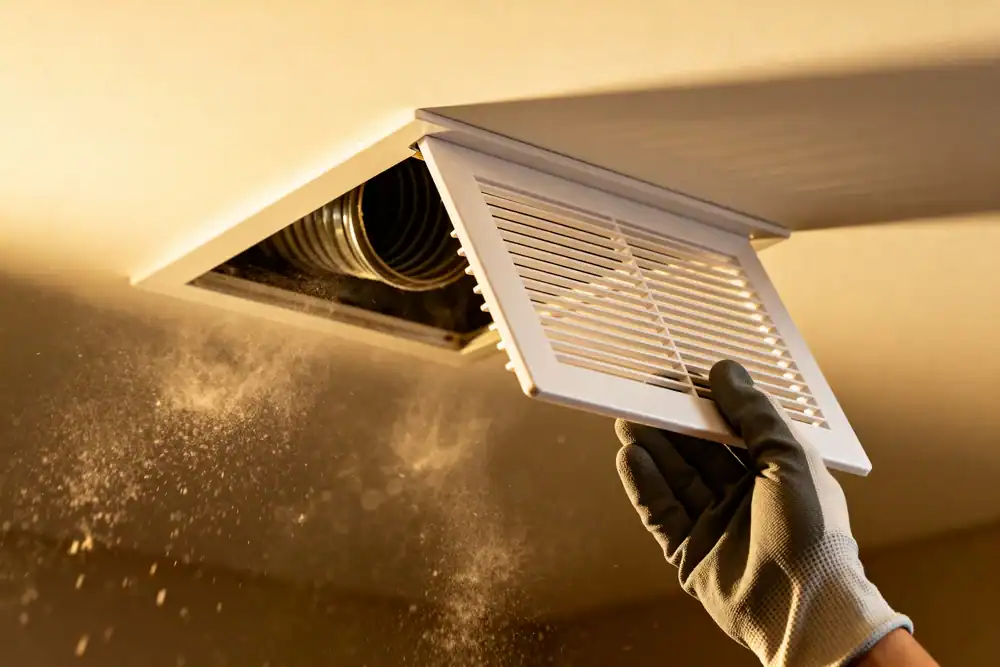
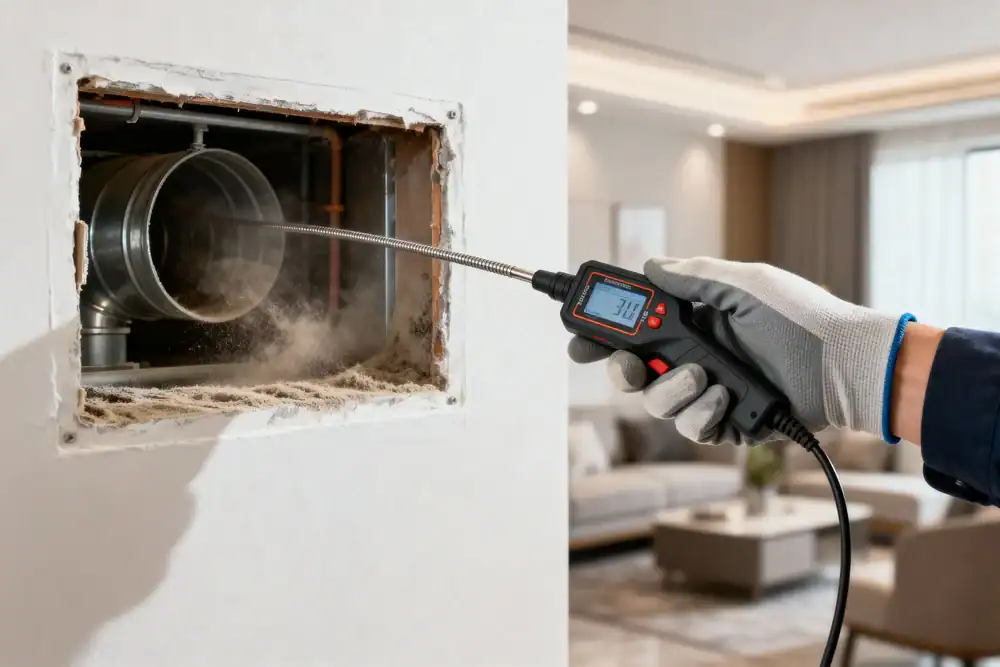
Your energy bills drop because your HVAC system stops working overtime to push air through clogged ductwork. Research shows fan and blower energy consumption drops 41% to 60% after professional cleaning, and airflow increases by 10% to 46%. That’s not marketing talk—that’s measurable performance improvement you’ll see on your utility statements.
The air quality in your building improves immediately. Allergens, dust, mold spores, and bacteria that have been cycling through your ventilation system get removed. People with allergies or asthma notice the difference first, but everyone benefits from cleaner air during the 90% of time we spend indoors.
Your HVAC equipment lasts longer because it’s not straining against buildup. Clean ducts mean less wear on components, fewer repair calls, and potentially 1-3 extra years before you’re looking at replacement costs. When you’re talking about commercial HVAC systems, that’s real money.
Temperature control evens out across your space. Those rooms that are always too hot or too cold? Often that’s a ductwork problem, not a thermostat issue.
We focus on air duct cleaning and crawl space solutions for Saxapahaw and the surrounding Alamance County area. We don’t do residential dryer vents, and we’re not trying to sell you a dozen other services. We clean commercial and residential HVAC ductwork, and we do it right.
Our approach is straightforward: show up when we say we will, explain what we’re doing and why, use professional equipment that actually works, and charge you what we quoted. No upsells for problems that don’t exist. No scare tactics about your indoor air quality.
Saxapahaw’s mix of historic mill buildings, newer commercial spaces, and residential properties means ductwork varies widely in age and condition. We’ve worked in enough local buildings to know what’s typical, what’s concerning, and what’s just normal wear that doesn’t need dramatic intervention.

We start with an inspection of your ductwork to identify buildup, blockages, and any issues that need addressing. You’ll know what we find and what we recommend before we start any work. If your ducts don’t need cleaning yet, we’ll tell you that too.
The cleaning itself uses high-efficiency equipment designed for commercial and residential HVAC systems. We access your ductwork through existing vents and create negative pressure that pulls contaminants out while we use rotating brushes and compressed air to dislodge buildup from duct walls. Everything gets captured and removed—not just pushed further into your system.
We clean supply ducts, return ducts, registers, grilles, and diffusers. The blower motor and evaporator coil get attention because buildup there directly impacts efficiency. If you want sanitization after cleaning to address mold or bacteria, that’s available, but we won’t push it if your system doesn’t need it.
After cleaning, airflow improves immediately. Your HVAC system will run more efficiently, and you’ll notice better temperature consistency. Most commercial properties should have ductwork professionally cleaned every 3-5 years, but if you’re seeing excessive dust, weak airflow, or unexplained energy bill increases, don’t wait.
Ready to get started?
You get a complete cleaning of your HVAC duct system—supply and return air ducts, registers, grilles, diffusers, heat exchangers, cooling coils, drip pans, fan motor, and the air handling unit housing. We’re not just hitting the easy-access areas and calling it done.
In Saxapahaw’s climate, where humidity can contribute to mold growth in ductwork, we pay particular attention to moisture issues and areas where biological growth is likely. Alamance County properties, especially older buildings near the Haw River, often deal with higher humidity levels that create ideal conditions for mold and mildew in ventilation systems.
The cleaning process removes accumulated dust, debris, allergens, and contaminants that reduce system efficiency and air quality. For commercial properties, this matters for employee health, customer comfort, and operating costs. For residential properties, it’s about the air your family breathes and what you’re paying to heat and cool your home.
We provide documentation of the work completed, including before and after assessments. If we identify any ductwork damage, disconnections, or issues beyond cleaning, you’ll get a clear explanation and recommendation. Some problems need repair, some don’t. We’ll tell you which is which.

Cost depends on your system size, ductwork accessibility, and how much buildup we’re dealing with. A small commercial space might run $500-$1,000, while larger buildings with complex HVAC systems can be $2,000-$5,000 or more.
We quote based on the actual work required, not a one-size-fits-all price. After we assess your system, you’ll get an exact number before any work starts. No surprises, no “we found additional problems” charges that weren’t discussed upfront.
The cost usually pays for itself through energy savings within 1-2 years. When your HVAC system is using 30% less energy because it’s not fighting through clogged ducts, that shows up in your monthly utility bills. Plus you’re avoiding the much larger cost of premature equipment replacement.
Look for visible dust buildup around vents and registers. If you’re seeing dust blowing out when your system kicks on, that’s coming from somewhere—usually your ducts.
Check your energy bills. If costs have been creeping up without explanation, your HVAC system might be working harder due to restricted airflow. Weak airflow from vents is another sign. Your system should deliver consistent air pressure; if it feels weak or uneven, buildup could be blocking ducts.
Unexplained allergy symptoms or respiratory issues that improve when you leave the building often point to air quality problems. If your system hasn’t been cleaned in 5+ years, or if you’ve had recent construction or renovation work, cleaning is probably overdue. We’ll inspect your system and show you what we find. If it doesn’t need cleaning yet, we’ll tell you that and when to check again.
It improves air quality if your ducts are actually dirty. If there’s minimal buildup, cleaning won’t change much. But if your ductwork has accumulated dust, allergens, mold spores, or debris, removing that stops your HVAC system from circulating those contaminants every time it runs.
Indoor air can be 2-5 times more polluted than outdoor air, and your ventilation system is either helping or hurting that situation. When ducts are contaminated, every heating and cooling cycle spreads whatever’s in there throughout your building.
People with allergies, asthma, or respiratory sensitivities notice the difference most clearly, but everyone benefits from cleaner air. You’re not going to eliminate all allergens or create a sterile environment, but you will remove a major source of airborne particles. The improvement is real and measurable, especially in buildings where ducts haven’t been cleaned in years.
Most commercial duct cleaning takes 4-8 hours depending on system size and complexity. Larger buildings with multiple HVAC zones can take a full day or require scheduling over multiple visits.
We can work around your business hours if needed. Many commercial clients prefer we work evenings or weekends to avoid disrupting operations. The process does require accessing vents throughout the building and running equipment, so it’s not silent, but it doesn’t require shutting down your entire operation.
Your HVAC system will be offline during cleaning, so we’ll work with you on timing. In moderate weather, that’s usually not a problem. During extreme heat or cold, we can work in sections to minimize downtime. We’ll have a plan before we start so you know exactly what to expect and when your system will be back to normal operation.
Filters catch particles before they enter your system, but they don’t address buildup that’s already in your ductwork. Even with regular filter changes, dust and debris accumulate in ducts over time. Filters also don’t catch everything—smaller particles get through and settle in your ductwork.
Think of it like this: changing your oil doesn’t clean sludge that’s already built up in your engine. Filters are maintenance; duct cleaning is addressing accumulated contamination that filters can’t reach.
Regular filter changes are essential and will slow duct contamination, but they’re not a substitute for periodic professional cleaning. Both matter. Good filtration reduces how often you need duct cleaning, but it doesn’t eliminate the need entirely. Most systems need professional cleaning every 3-5 years regardless of filter maintenance, because buildup happens even in well-maintained systems.
Yes. Buildup in your ductwork restricts airflow, which forces your HVAC system to run longer and work harder to reach temperature settings. That directly increases energy consumption—typically by 20-30% in systems with significant buildup.
University research shows that professional duct cleaning reduces fan and blower energy use by 41-60% and increases supply airflow by 10-46%. Those aren’t small numbers. On a commercial property spending $1,000-$3,000 monthly on HVAC energy, that’s $200-$900 back in your pocket every month after cleaning.
The EPA estimates that removing even half an inch of buildup from heating and cooling coils can improve efficiency by up to 21%. Your ductwork affects the entire system’s performance. When air can’t move freely, your equipment runs longer cycles, uses more energy, and wears out faster. The energy cost alone usually justifies cleaning, before you even factor in equipment longevity and air quality improvements.