

Contact Info
- Greensboro, NC 27406
- Call: 336-707-0498
- Text: 336-707-0498
-
Mon - Fri: 8am - 4pm
Sat - Sun: Closed
Contact Info
You’re not looking for another vendor to manage. You need your HVAC system to stop being a problem.
When your ductwork is clogged with years of dust, debris, and buildup, your system works harder to push the same amount of air. That means higher energy bills, more frequent breakdowns, and air quality that affects everyone in your building. Studies show dirty systems can waste 20% to 40% more energy than clean ones.
Clean ductwork means your HVAC moves air the way it was designed to. Your system runs quieter, breaks down less, and costs less to operate month after month. Most facilities in McLeansville see the cost of cleaning pay for itself within the first year through energy savings alone.
Your employees notice the difference too. Fewer complaints about stuffiness, fewer allergy issues, and better focus when the air isn’t circulating dust all day. You’re not just checking a maintenance box—you’re making your building work better for everyone in it.
We operate right here in McLeansville, NC, serving commercial facilities throughout the Greensboro area. Rick Watson and Noah Watson are both NADCA-certified Air System Cleaning Specialists—the industry standard that means we follow actual protocols, not shortcuts.
We don’t do residential dryer vents. We focus on commercial HVAC duct cleaning because that’s where the complexity is, and that’s where facility managers need someone who knows what they’re doing. McLeansville has a mix of warehouses, office buildings, medical facilities, and industrial spaces—each with different HVAC demands and different cleaning requirements.
You’re dealing with systems that can’t go down during business hours and budgets that don’t have room for guesswork. We get that. Our job is to clean your ductwork thoroughly, document what we did, and get out of your way so your building keeps running.
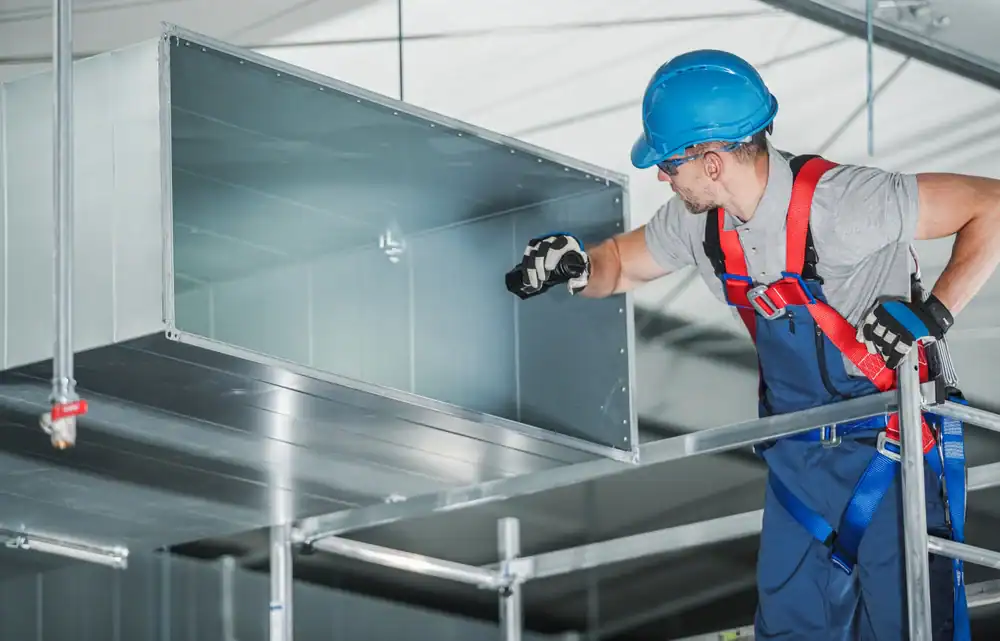
We start with a walkthrough of your facility to assess your HVAC system and identify access points. You’ll know upfront what we’re cleaning, how long it takes, and what it costs. No surprises.
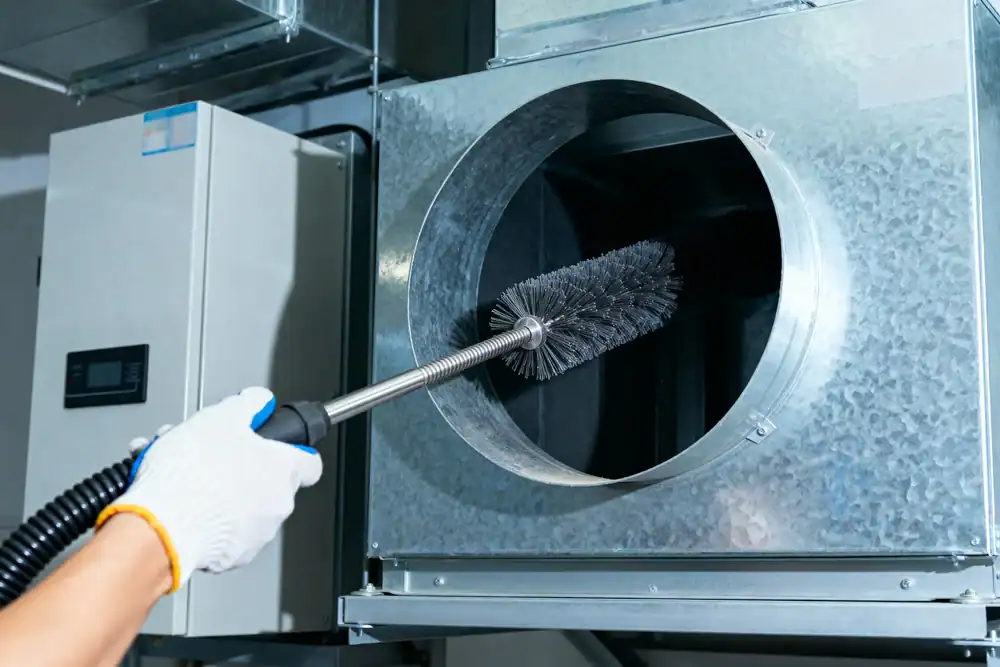
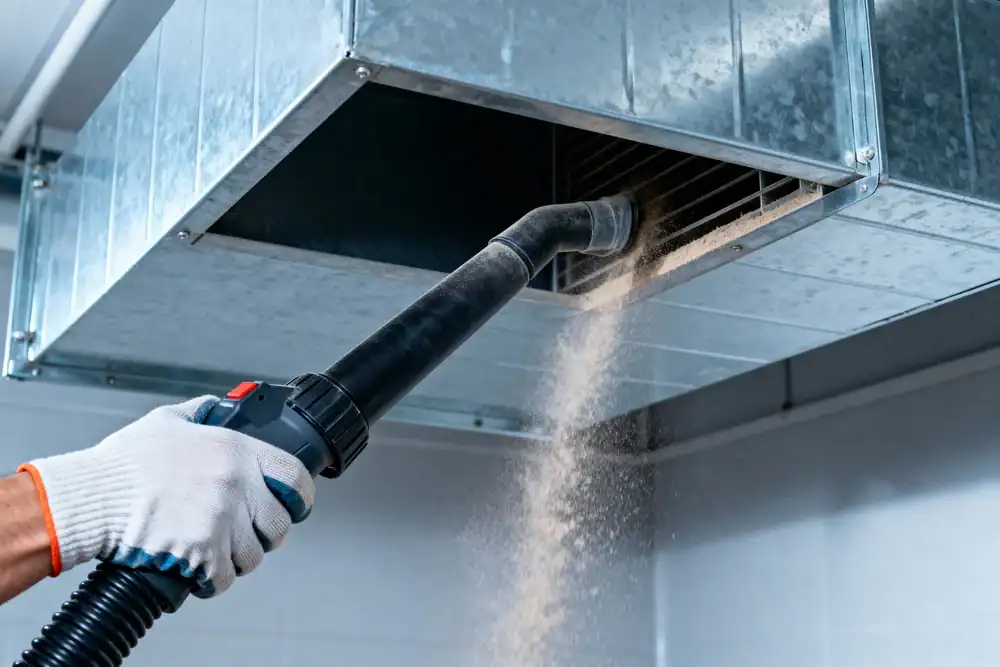
On the scheduled day, we use NADCA-approved equipment to access your ductwork through existing vents and panels. We run high-powered vacuums with HEPA filtration to contain debris while we agitate and remove buildup from inside the ducts. This isn’t a quick blow-through—we’re physically removing what’s stuck in there.
We clean supply ducts, return ducts, and the main trunk lines. We also address your air handler, coils, and blower components if they’re part of the scope. Everything gets documented with before-and-after photos so you have records for compliance or your own maintenance files.
Once we’re done, we seal everything back up, test airflow, and walk you through what we found. Most commercial jobs in McLeansville take anywhere from four hours to a full day depending on system size and building layout. We schedule around your operations so your business keeps moving.
Ready to get started?
Our commercial duct cleaning covers your entire HVAC air distribution system. That includes supply and return ducts, registers and grilles, diffusers, air handlers, coils, drip pans, and the blower motor assembly. We’re not just hitting the easy-to-reach sections and calling it done.
In McLeansville’s humid climate, moisture buildup in ductwork can lead to mold growth, especially in systems that run heavy AC loads during summer. We inspect for moisture issues and address them as part of the cleaning process. If we spot something that needs attention beyond cleaning—like damaged insulation or disconnected ducts—we’ll let you know before it becomes an expensive repair.
You’ll receive documentation that meets ASHRAE and NADCA standards, which matters if you’re in healthcare, food service, or any industry with air quality regulations. Facility managers often need this for audits, insurance, or tenant agreements. We make sure you have what you need without chasing us down for paperwork.
Most commercial facilities in the area benefit from duct cleaning every three to five years, depending on use. Warehouses with high dust levels or buildings that went through renovations might need it sooner. We’ll give you an honest recommendation based on what we see, not what maximizes our schedule.
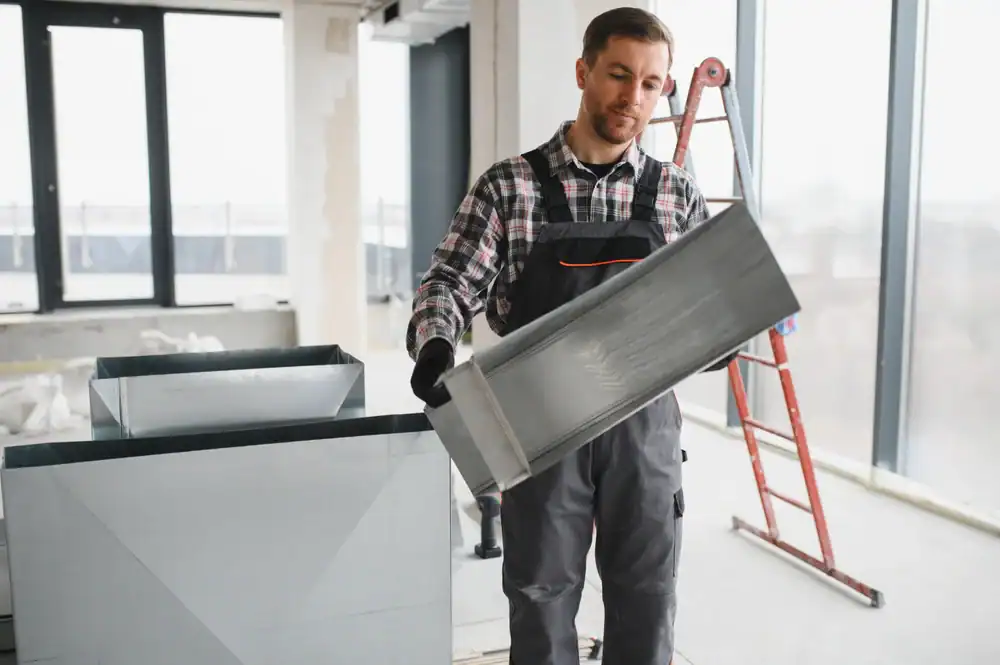
Cost depends on your building size, system complexity, and how accessible your ductwork is. A small office building with a straightforward HVAC setup will cost less than a sprawling warehouse with multiple rooftop units and hard-to-reach duct runs.
Most commercial jobs in McLeansville range from a few hundred to several thousand dollars. That sounds like a wide range, but it reflects the reality that a 5,000-square-foot office has different needs than a 50,000-square-foot distribution center. We give you a clear quote after assessing your system—no ballpark guesses that change when we show up.
The better question is what it costs not to clean your ducts. If your system is running 20% less efficiently because of buildup, and your monthly energy bill is $2,000, you’re wasting $400 a month. Over a year, that’s $4,800 in unnecessary costs. Most facility managers find that professional duct cleaning pays for itself within 12 to 24 months through energy savings alone, not counting fewer repairs and longer equipment life.
NADCA recommends inspecting commercial HVAC systems annually and cleaning them every three to five years under normal conditions. But “normal” varies a lot depending on what happens in your building.
If you run a medical office, food processing facility, or any space where air quality is regulated, you might need more frequent cleaning to stay compliant. If your building went through construction or renovation, you should clean the ducts afterward—drywall dust and debris wreck HVAC efficiency fast. Warehouses and manufacturing spaces with high dust or particulate levels often need cleaning every two to three years.
You’ll know it’s time when energy bills creep up without explanation, airflow feels weak in certain areas, or you’re getting more dust complaints from tenants or employees. Visible mold around vents or musty odors when the system kicks on are red flags that shouldn’t wait. In McLeansville’s climate, moisture issues can escalate quickly if ducts aren’t maintained. We’d rather you call for an inspection than guess and either clean too early (wasting money) or too late (causing damage).
It’s not oversold if your ducts actually need cleaning. A system clogged with dust and debris has to work harder to move air, which means higher energy consumption. EPA studies show that cleaning and maintaining HVAC systems can improve efficiency by up to 20%, and facilities often see energy savings between 10% and 15% after a thorough cleaning.
Here’s the thing: if your ducts are relatively clean, you won’t see dramatic savings because there’s not much restricting airflow. But if your system hasn’t been cleaned in years and you’re noticing weak airflow, uneven temperatures, or rising energy costs, cleaning makes a measurable difference. One study found that dirty commercial systems used 41% to 60% more fan energy than clean ones.
The ROI is straightforward. If you’re spending $3,000 a month on HVAC energy and cleaning saves you 15%, that’s $450 a month or $5,400 a year. A one-time cleaning that costs $2,000 pays for itself in under five months. Beyond energy savings, you’re also reducing wear on your equipment, which extends its lifespan and delays the need for expensive replacements. It’s not magic—it’s basic mechanical efficiency.
Look for NADCA certification. The National Air Duct Cleaners Association sets the standards for proper duct cleaning, and certified companies follow specific protocols that protect your system and actually remove contaminants instead of just stirring them up.
A NADCA-certified Air System Cleaning Specialist (ASCS) has been trained on proper techniques, equipment use, and safety standards. Both Rick Watson and Noah Watson at Clean Air LLC hold this certification. It’s not just a piece of paper—it means we use HEPA-filtered vacuums, follow containment procedures, and clean according to industry standards instead of winging it.
Ask any company you’re considering about their certification, what equipment they use, and whether they’ll provide documentation after the job. If they can’t answer clearly or they’re vague about their process, that’s a red flag. You should also ask if they inspect the system before quoting and whether they’ll show you before-and-after photos. Legitimate companies document their work because they’re proud of it. Fly-by-night operations avoid accountability and disappear when problems come up later.
Yes, but it’s not a cure-all. If your ducts are full of dust, allergens, mold spores, or debris, your HVAC system is circulating that through your building every time it runs. Cleaning removes those contaminants from the air distribution system, which improves what your employees are breathing.
Research from Harvard found that better indoor air quality in office buildings can improve cognitive function by up to 61%. Employees in buildings with clean air report fewer respiratory issues, fewer allergy symptoms, and better overall comfort. That translates to fewer sick days and better productivity—not because duct cleaning is a miracle, but because people work better when they’re not breathing junk all day.
That said, duct cleaning is one part of indoor air quality, not the whole picture. Your filters, ventilation rates, humidity control, and what’s happening inside the building all matter too. If you’re dealing with ongoing air quality complaints, cleaning the ducts is a smart first step, but you might also need to look at your filtration system or HVAC maintenance schedule. We’ll tell you honestly what we think is causing the problem based on what we see in your system.
In most cases, yes. We schedule commercial duct cleaning around your operations so your business keeps running. Depending on your system layout, we can often work in sections, cleaning parts of the building while other areas stay operational.
For some facilities, it makes more sense to schedule the work after hours, on weekends, or during slower periods. A medical office might prefer we come in on a Saturday. A warehouse might be fine with us working during the day as long as we’re not blocking critical pathways. We adapt to what works for your schedule and your building’s needs.
There are situations where we need to temporarily shut down airflow to specific zones while we’re cleaning them, but that’s usually measured in hours, not days. We coordinate with you upfront so you know what to expect and can plan accordingly. The goal is to get in, do the work right, and get out of your way with minimal disruption. Most facility managers are surprised at how smoothly it goes when it’s planned properly.