

Contact Info
- Greensboro, NC 27406
- Call: 336-707-0498
- Text: 336-707-0498
-
Mon - Fri: 8am - 4pm
Sat - Sun: Closed
Contact Info
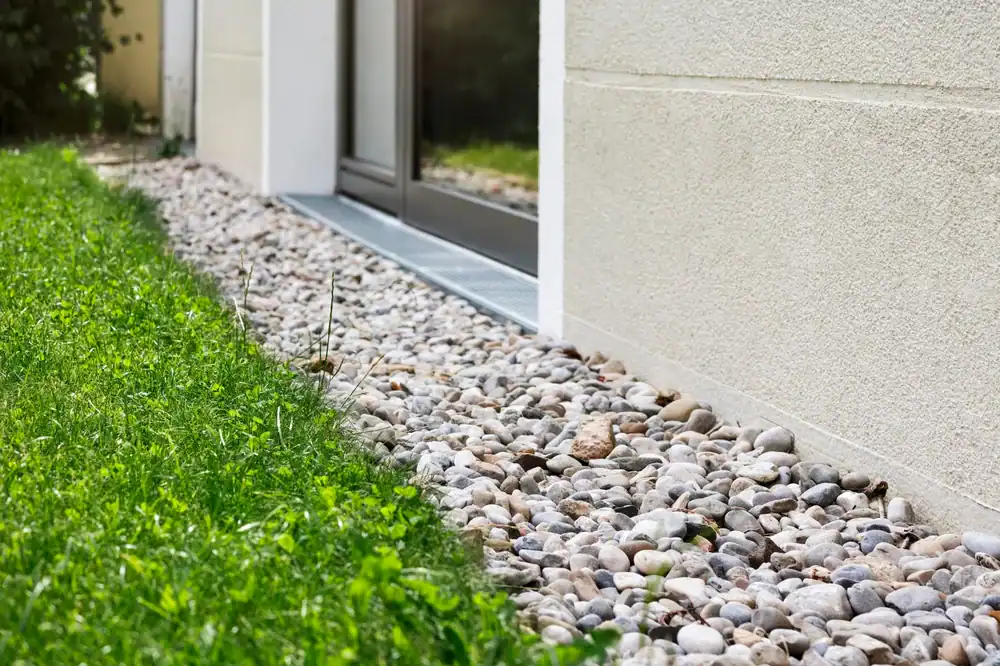
Water finds the path of least resistance. When that path leads to your foundation, you’re looking at cracks, settling, and eventually structural damage that insurance won’t cover.
A properly installed French drain system redirects water before it reaches your foundation walls. That means no standing water in your yard after storms, no moisture seeping into your basement, and no mold growing in spaces you can’t see until it’s already a problem.
The difference shows up in what doesn’t happen. You don’t get that sinking feeling when heavy rain hits. You don’t smell that musty basement odor. You don’t watch water pool against your foundation and wonder when the damage will start. The system works quietly, moving water away from your home every time it rains, which in Chapel Hill happens often enough to matter.
We’ve spent over three decades solving moisture and water problems across North Carolina. We started with crawl space and indoor air quality work, which taught us exactly how water moves through properties and where it causes the most damage.
Chapel Hill’s mix of older homes in historic neighborhoods and newer construction on varied terrain creates specific drainage challenges. The clay-heavy soil in parts of the Piedmont doesn’t absorb water quickly. Homes built on slopes face runoff issues. Properties near wooded areas deal with root systems that can compromise drainage over time.
We’ve seen what happens when drainage gets ignored or done wrong. That’s why we focus on systems that last 30 to 40 years with basic maintenance, not quick fixes that fail after the first major storm.

First, we assess where water is coming from and where it needs to go. That means looking at your property’s grade, soil type, existing drainage, and how water moves during heavy rain. We’re checking for low spots, areas where water pools, and any signs that your foundation is already taking on moisture.
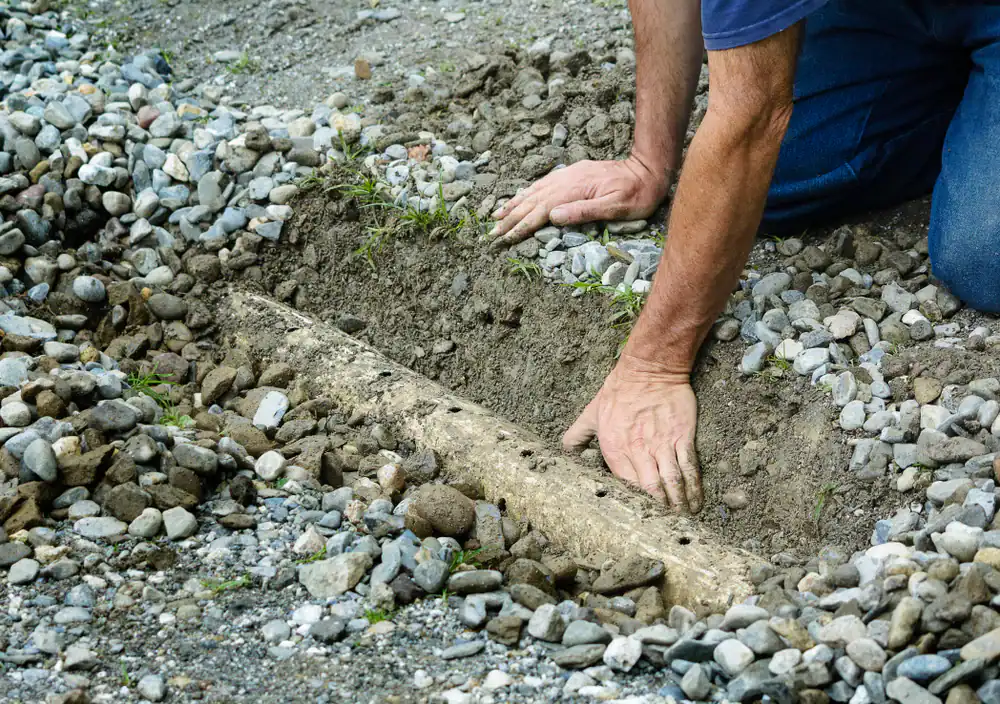
Next comes the installation itself. We trench along the problem areas, typically around your foundation perimeter or across sections of your yard where water collects. The trench gets lined with filter fabric, then filled with gravel and a perforated pipe that captures and redirects water. Everything gets wrapped properly so soil doesn’t clog the system over time.
The water needs somewhere to go, so we direct it to a safe discharge point away from your foundation. That might be a drainage easement, a rain garden, or another area where water can disperse without causing problems. With contractor-grade equipment, most installations finish in hours, not days. You get a system that handles Chapel Hill’s rainfall without turning your property into a construction zone for weeks.
Ready to get started?
A complete French drain system includes the assessment, trenching, proper materials, and installation that meets local requirements. In Chapel Hill, that means understanding when you need permits for earth-moving work, especially near streams or in areas with specific stormwater regulations.
The system itself uses commercial-grade perforated pipe, not the thin corrugated stuff that collapses under soil pressure. Filter fabric prevents soil infiltration while allowing water to pass through. Clean gravel creates channels for water to flow freely to the pipe. Everything gets installed at the right depth and slope so gravity does the work.
You also get solutions for specific problem areas. Surface drainage handles water that pools on driveways or walkways. Trench drains capture runoff before it reaches your foundation. Downspout extensions tie into the system so roof water doesn’t dump right next to your basement walls. Each property is different, so the system gets designed for your actual water problems, not a one-size-fits-all approach.
North Carolina’s flood data shows that 43 percent of flooded buildings were outside FEMA flood zones. That means standard flood maps don’t tell you if your property has drainage problems. Professional installation addresses the water issues your property actually has, based on observation and experience, not just what a map suggests.

Exterior French drains typically run $10 to $15 per linear foot for materials and labor. If you need 100 feet of drainage around your foundation, you’re looking at $1,000 to $1,500 for a basic exterior system.
Interior French drains cost more because they require breaking through your basement floor, installing the drain system, and then re-pouring concrete. Those run $50 to $60 per linear foot. For a 20×30 basement, the perimeter would need about 100 feet of drain, putting the total around $5,000 to $6,000.
The actual cost depends on your property’s specific conditions. Rocky soil costs more to trench. Systems that need to run longer distances to reach a proper discharge point cost more. Properties with multiple problem areas need more extensive solutions. But compare those numbers to foundation repair costs, which start at $2,000 and can hit $50,000 or more for serious damage. Drainage is the cheaper fix, and it prevents the expensive one.
A properly installed French drain lasts 30 to 40 years with basic maintenance. The key word is “properly.” Systems that use quality materials, correct installation depth, proper slope, and full wrapping with filter fabric hold up for decades.
What kills French drains early is soil infiltration. When dirt gets into the gravel and pipe, it clogs the system and stops water flow. That’s why filter fabric matters. It keeps soil out while letting water through. Cheap installations skip this step or use low-quality fabric that deteriorates quickly.
The other factor is installation quality. Pipes need consistent slope so water flows by gravity. Connections need to be secure so the system doesn’t separate over time. Discharge points need to be positioned where water can exit without causing erosion or other problems. When these details get handled correctly during installation, the system works for decades without major intervention. You might need to flush the pipes occasionally or clear the discharge point, but the core system keeps functioning.
A French drain stops water from reaching your basement in the first place, which is different from dealing with water that’s already inside. If water is pooling against your foundation or seeping through basement walls, an exterior French drain intercepts that water before it can penetrate.
For basements that already flood, you might need an interior French drain combined with a sump pump. The interior system captures water that makes it through your foundation and pumps it out before it floods your basement floor. This is common in Chapel Hill’s older homes where foundation walls have developed cracks over time.
The right solution depends on where your water is coming from. Surface water that runs toward your foundation during storms needs exterior drainage. Groundwater that rises during wet periods might need interior drainage. High water tables or properties near streams might need both. A proper assessment identifies your specific water source so you get a system that actually solves your flooding problem, not just part of it.
Earth-moving work or drainage projects near streams may require permits in Chapel Hill. The town’s stormwater engineers review projects to make sure drainage solutions don’t create problems for neighboring properties or local waterways.
Basic French drain installation on your property, away from streams and within normal residential scope, typically doesn’t need a permit. But if you’re moving significant amounts of earth, changing the grade substantially, or directing water in ways that affect stormwater flow, you’ll want to check first.
The permit question also depends on your property’s location. Properties in historic districts, conservation areas, or near protected waterways have different requirements. Homeowners associations might have their own rules about drainage work. We’re familiar with Chapel Hill’s regulations and can tell you what applies to your specific project before work starts. It’s easier to get clarity upfront than to deal with compliance issues after installation.
Chapel Hill averages 48 inches of rain per year, which is 10 inches above the national average. French drains are specifically designed to handle high-volume water situations, which is why they work well in North Carolina’s climate.
The system’s capacity depends on proper sizing. The pipe diameter, trench depth, and length all factor into how much water the system can move. A correctly designed French drain accounts for your property’s square footage, roof size, soil type, and typical rainfall intensity. During heavy storms, the system needs to handle peak flow, not just average conditions.
Chapel Hill also deals with occasional hurricanes and tropical systems that dump several inches of rain in short periods. We design installations with these extreme events in mind, not just typical weather. The gravel bed provides temporary storage capacity when water comes in faster than the pipe can move it. The pipe size handles sustained flow. The discharge point can handle the volume without creating erosion or backup. When all these elements are sized correctly for local conditions, the system keeps working even during the heaviest storms the area typically sees.
A French drain is a subsurface system that captures water underground and redirects it through a buried pipe. It handles water that’s already in the soil or seeping toward your foundation. This makes it ideal for foundation protection and basement waterproofing.
Surface drainage solutions like trench drains or channel drains capture water that’s flowing across your property’s surface. These work well for driveways, walkways, or areas where water sheets across the ground during storms. They grab water before it has a chance to soak into the soil near your foundation.
Landscape drainage might include dry creek beds, rain gardens, or grading changes that direct water away from problem areas. These are often combined with French drains for complete water management. The French drain handles subsurface water while landscape features manage surface runoff. Many Chapel Hill properties need multiple drainage solutions working together because water comes from multiple sources—roof runoff, surface flow from higher ground, and groundwater that rises during wet periods. The right combination depends on your property’s specific water problems and terrain.