

Contact Info
- Greensboro, NC 27406
- Call: 336-707-0498
- Text: 336-707-0498
-
Mon - Fri: 8am - 4pm
Sat - Sun: Closed
Contact Info
Your basement stays dry. That’s the first thing you’ll notice.
No more puddles after a storm. No more musty smell creeping up from the crawl space. No more worrying whether the next heavy rain is going to flood your storage area or ruin what you’ve kept down there for years.
A properly installed French drain does one thing really well: it moves water away from your foundation before it has a chance to seep through cracks, saturate your soil, or create hydrostatic pressure against your walls. That means less risk of mold, less chance of structural damage, and a lot less stress every time the forecast calls for rain.
You’re also protecting your property value. Buyers notice water problems. They see stains, they smell moisture, and they walk away or negotiate hard. A functional drainage system shows that your home has been maintained and protected.
We’ve been helping homeowners in Clemmons and the surrounding area protect their homes from moisture damage. We started with crawl space encapsulation and HVAC duct cleaning, so we’ve seen firsthand what happens when water gets where it shouldn’t.
Clemmons has clay-heavy soil that swells when it gets wet and shrinks when it dries. That cycle puts constant pressure on your foundation, creating cracks and gaps where water finds its way in. We’ve worked in enough basements here to know the patterns, the problem areas, and what actually works long-term.
We’re not the cheapest option, and we’re fine with that. You’re paying for a system that’s designed for your property, installed with the right materials, and built to last more than a few seasons.

We start with a site assessment. That means looking at where water collects, how your property slopes, and where the water needs to go. Not every yard drains the same way, and not every foundation has the same vulnerabilities.
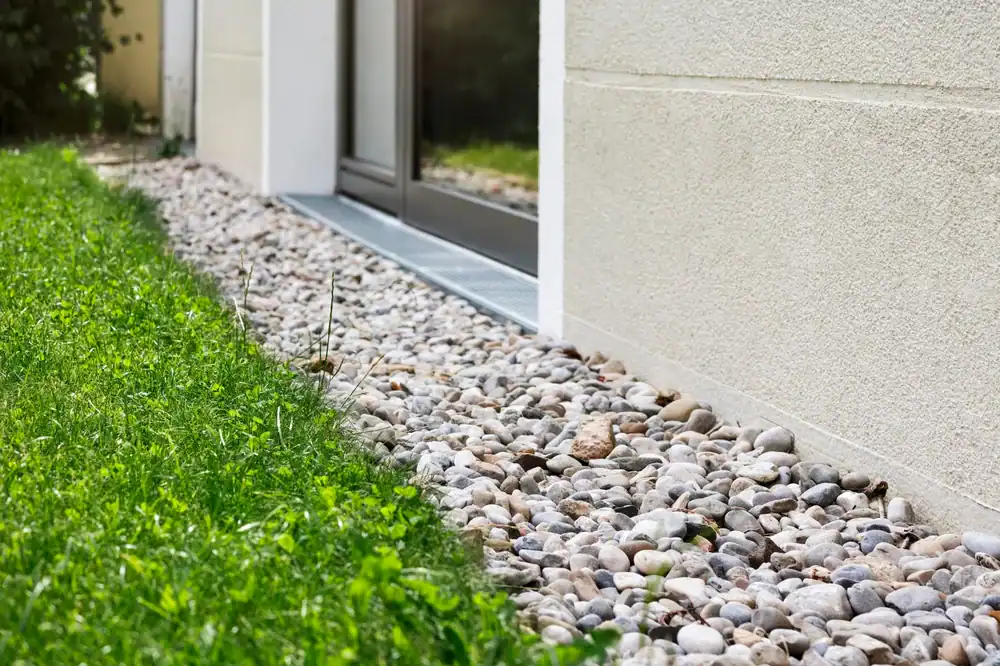
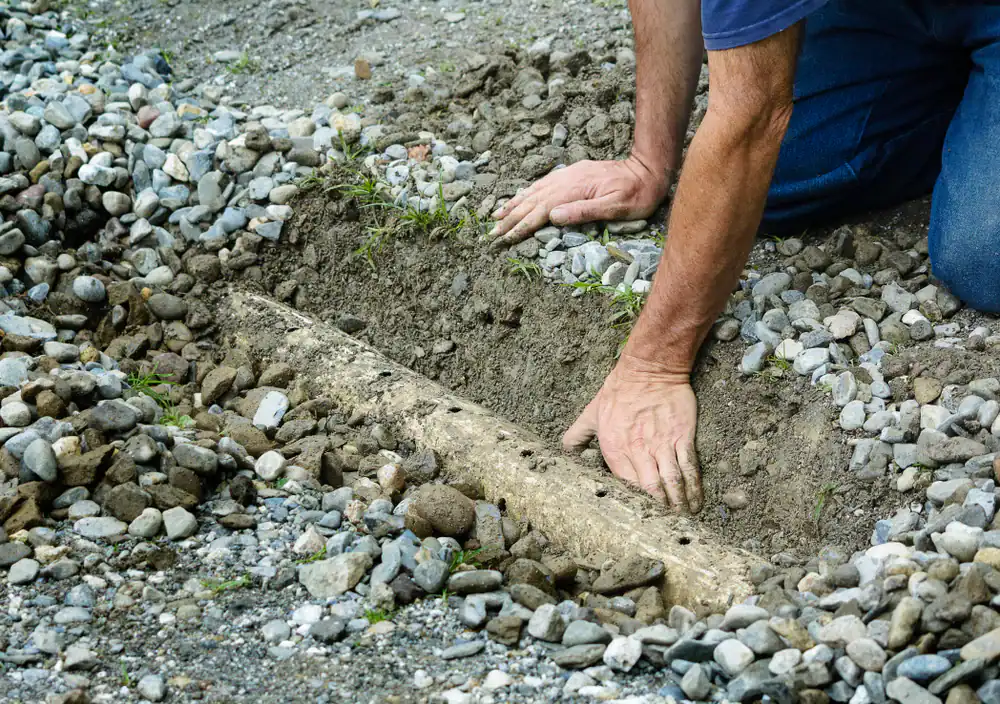
Once we know the flow pattern, we trench along the problem areas—usually around the foundation perimeter or in low spots where water pools. The trench gets lined with landscape fabric to keep soil and debris out, then filled with gravel and perforated pipe. Water flows into the pipe and gets carried away from your foundation to a safe discharge point.
We use contractor-grade equipment, so the work goes faster and cleaner than you’d expect. Most installations are done in hours, not days. After the pipe is in place, we backfill, compact, and restore the surface so it blends back into your yard.
The system works passively. No pumps, no power, no maintenance schedule. Gravity does the work. Water hits the drain, follows the slope, and exits where it won’t cause problems.
Ready to get started?
You get a system designed specifically for your property. We’re not running a generic trench and calling it done. The depth, slope, pipe size, and discharge location all depend on your soil type, water volume, and how your lot is graded.
We use perforated pipe wrapped in filter fabric, set in a gravel bed that allows water to flow freely without clogging. The fabric keeps fine particles out so the system doesn’t lose efficiency over time. Discharge points are positioned to move water away from your home and your neighbor’s property, usually into a drainage easement, dry well, or natural runoff area.
In Clemmons, where clay soil doesn’t drain well on its own, this setup makes a measurable difference. Instead of water sitting against your foundation for days after a storm, it’s gone within hours. That reduces the risk of efflorescence, foundation cracks, and moisture intrusion into your basement or crawl space.
We also handle buried downspout extensions if your gutters are dumping water too close to the house. That’s often part of the problem, and it’s an easy fix when we’re already trenching.

Most homeowners in Forsyth County pay between $900 and $6,000 depending on the length of the trench, soil conditions, and how complex the drainage issue is. If you’re dealing with a straightforward perimeter drain around a small foundation, you’re on the lower end. If the job involves multiple discharge points, difficult access, or heavy clay that requires more excavation, the cost goes up.
We give you a flat quote after the site assessment, so there’s no guessing. You’ll know what the job costs before we start, and that price includes materials, labor, and cleanup.
The real question isn’t what it costs to install a French drain. It’s what it costs not to. Foundation repairs run into the tens of thousands. Mold remediation isn’t cheap either. A drainage system is the cheaper insurance policy.
A properly installed French drain can last 20 to 30 years, sometimes longer if it’s maintained. The pipe itself doesn’t degrade. What shortens the lifespan is clogging—usually from soil, roots, or debris getting into the system.
That’s why we wrap the pipe in filter fabric and use clean gravel. It keeps sediment out and water flowing. You’re not dealing with a system that needs annual servicing or constant attention.
The only maintenance is occasional inspection. Check the discharge point after heavy rains to make sure water is exiting. If you notice slower drainage or standing water where there wasn’t any before, that’s a sign something might be blocked. Most of the time, though, you install it and forget about it.
If the water is coming from outside your foundation, yes. A French drain intercepts groundwater before it builds up pressure against your basement walls. That’s the most common cause of basement moisture in Clemmons—water pooling around the foundation after storms.
If the water is coming from a different source—like a high water table, a plumbing leak, or interior condensation—a French drain won’t solve it. That’s why the site assessment matters. We need to know where the water is coming from before we recommend a solution.
In most cases, though, exterior drainage combined with proper grading and downspout extensions will keep your basement dry. If you’ve got cracks in the foundation, those might need to be sealed separately, but stopping the water from pooling outside is the first step.
A French drain is buried underground and handles subsurface water. It’s designed to intercept groundwater before it reaches your foundation. You don’t see it once it’s installed—it’s hidden under soil or landscaping.
A trench drain sits at ground level and manages surface water. It’s the grated channel you see in driveways, patios, or along garage doors. Water flows into the grate and gets carried away through a connected pipe.
Both systems move water, but they handle different problems. If you’ve got water pooling on your driveway or patio, you need a trench drain. If your basement is damp or your foundation is cracking from hydrostatic pressure, you need a French drain. Sometimes properties need both, depending on how water moves across the lot.
You can dig a trench and lay pipe, but that doesn’t mean the system will work. French drains fail when the slope is wrong, the discharge point is poorly chosen, or the pipe isn’t protected from clogging. You also need to know local codes, utility locations, and how to avoid damaging underground lines.
A bad installation can make things worse. Water that’s misdirected can flood a neighbor’s yard, pool against a different part of your foundation, or back up into your crawl space. We’ve been called out to fix DIY jobs more than once, and it usually costs more to correct than it would have to do it right the first time.
Professional installation means the system is designed for your property, installed to code, and built to last. You’re also not spending your weekend digging trenches in clay soil.
Yes, but the installation has to account for it. Clay doesn’t drain well, which is exactly why French drains are so effective here. The system creates a path of least resistance—water flows into the gravel and pipe instead of sitting in saturated clay against your foundation.
The key is using enough gravel and making sure the pipe is properly sloped. In clay-heavy soil, we sometimes go deeper or wider with the trench to increase capacity. The filter fabric is also critical because clay particles are fine and can clog the pipe if they’re not filtered out.
Clemmons homeowners deal with foundation issues specifically because of the clay. It swells when wet, shrinks when dry, and that movement cracks foundations over time. A French drain won’t stop the soil from shifting, but it will reduce the amount of water causing that cycle in the first place.