

Contact Info
- Greensboro, NC 27406
- Call: 336-707-0498
- Text: 336-707-0498
-
Mon - Fri: 8am - 4pm
Sat - Sun: Closed
Contact Info
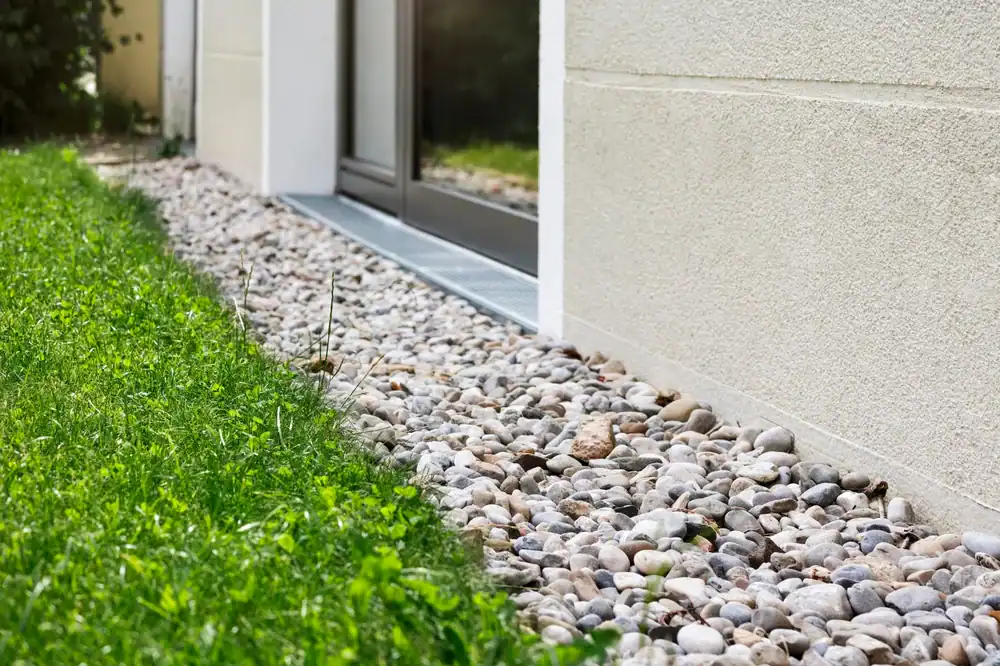
You stop checking the basement every time it rains. You stop worrying about that musty smell or whether your foundation is slowly cracking under the pressure of standing water.
A properly installed french drain system redirects both surface water and groundwater before it reaches your foundation. That means no more puddles forming against your house. No more water seeping through basement walls. No more wondering if the next storm is going to flood your finished basement or ruin stored belongings.
Monticello homeowners deal with real flooding risk. North Carolina has seen major storms in recent years, and 90,000 buildings across the state have flooded over the past two decades. Many of those properties weren’t even in designated flood zones, which means standard insurance didn’t cover the damage.
The average water damage claim runs around $11,000. Foundation repairs can cost significantly more. A french drain installation typically costs $20 to $60 per linear foot and can last up to 40 years. That’s real protection for a fraction of what you’d spend fixing flood damage even once.
We’ve spent over 30 years helping homeowners in the Greensboro area protect their properties from water damage. We’ve seen what happens when drainage problems go unaddressed, and we’ve installed systems that actually work.
We’re a licensed, insured, family-owned company. We use contractor-grade trenching equipment that gets the job done in hours, not days. Our installations come with warranty protection because we stand behind the work.
Monticello sits in an area where heavy rainfall and storm events create serious drainage challenges. We understand local soil conditions, water table issues, and how homes in this region are built. That knowledge matters when you’re designing a system that needs to perform for decades.

We start with a site evaluation. We look at where water is pooling, how your property slopes, and where the water needs to go. Not every yard is the same, and cookie-cutter solutions don’t work.
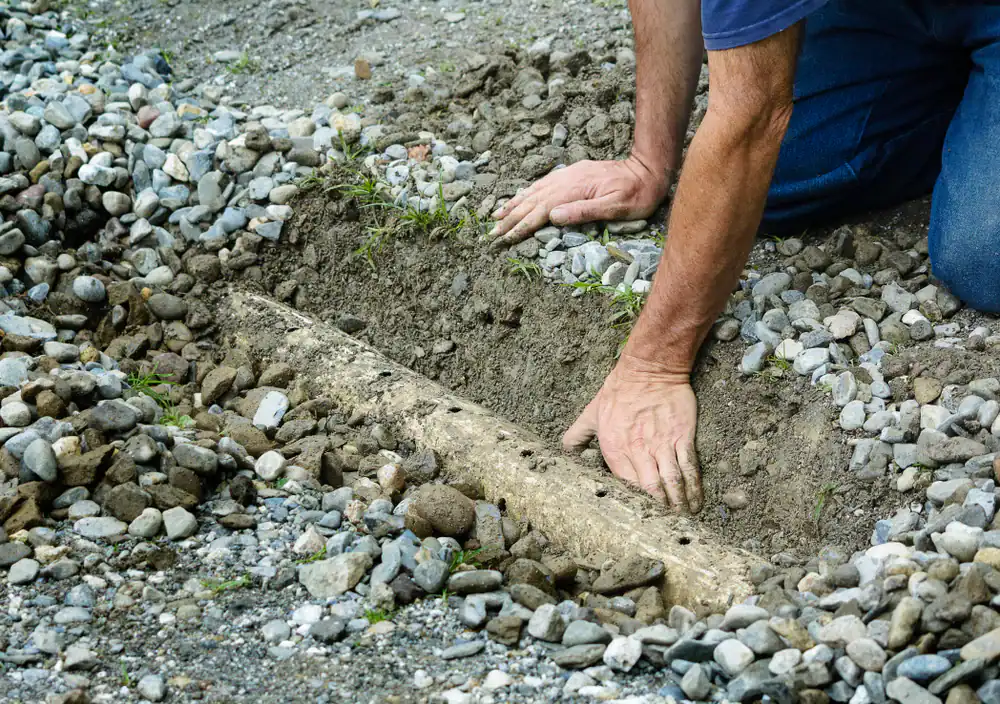
Once we’ve mapped out the drainage pattern, we trench along the problem areas using professional equipment. The trench gets lined with landscape fabric to prevent soil and debris from clogging the system. Then we install perforated pipe surrounded by gravel, which allows water to flow in and get carried away from your foundation.
The pipe directs water to a safe discharge point away from your home. Depending on your property, that might be a drainage ditch, storm drain, or dry well. We make sure the slope is correct so gravity does the work.
After the pipe is in place, we backfill the trench and restore the surface. Most installations are completed in a day. You’re left with a system that works quietly underground, managing water before you ever see it become a problem.
Surface drainage solutions and trench drains can also be incorporated if you’re dealing with water that runs across driveways or patios. The goal is comprehensive protection, not just a temporary fix.
Ready to get started?
You get a system designed specifically for your property. We don’t install the same setup on every job because every yard has different drainage challenges. Some homes need french drains around the entire foundation perimeter. Others need targeted installations in problem areas.
We handle the full installation from consultation to completion. That includes trenching, pipe installation, proper grading, and site cleanup. We use quality materials built to last, not the cheapest options that fail in a few years.
In Monticello and surrounding areas, we’re seeing more homeowners invest in drainage solutions after experiencing flooding or near-misses during heavy storms. North Carolina’s flood risk is increasing, with over 729,000 properties at substantial risk through 2050. Many homeowners don’t realize their insurance won’t cover groundwater flooding unless they’ve purchased separate flood coverage.
A french drain system also prevents foundation damage, which protects your home’s structural integrity and resale value. It stops soil erosion around your property. It eliminates the conditions that lead to mold growth in basements and crawl spaces, which is a serious health concern.
You also get the benefit of working with a company that specializes in moisture control. We install crawl space encapsulation, dehumidifiers, and sump pumps. If your drainage problem is part of a larger moisture issue, we can address it comprehensively.

French drain installation typically runs between $20 and $60 per linear foot depending on the complexity of the job, soil conditions, and how deep we need to trench. A standard residential installation around a home’s foundation might require 100 to 150 linear feet, putting most projects in the $2,000 to $9,000 range.
The cost varies based on several factors. If we’re working around landscaping, underground utilities, or difficult terrain, that adds time and labor. Deeper trenches cost more than shallow ones. Projects that require longer discharge runs or additional grading work will be on the higher end.
What matters more than the upfront cost is what you’re preventing. The average water damage insurance claim is around $11,000. Foundation repair can run significantly higher. Two inches of water in a 2,500-square-foot home causes an average of $23,720 in damage according to FEMA. A properly installed french drain system lasts up to 40 years, which means you’re protecting your home for decades at a fraction of what one flood event would cost you.
A professionally installed french drain can last 30 to 40 years when installed correctly with quality materials. The longevity depends heavily on proper installation, the type of pipe and gravel used, and whether the system was designed with adequate slope and drainage capacity.
The most common failure point is clogging. If the drain wasn’t wrapped in landscape fabric or if soil infiltrates the gravel bed, sediment can block the perforations in the pipe. That’s why we use fabric barriers and proper grading during installation. We’re preventing problems that show up five or ten years down the road.
Some systems fail early because they were installed too shallow, with inadequate grading, or with the wrong materials. Corrugated plastic pipe, for example, is cheaper but more prone to crushing and clogging than rigid PVC. We use materials designed for longevity because replacing a failed system means digging everything up again.
Regular maintenance isn’t typically required for a well-installed system, but you should keep an eye on the discharge point to make sure it’s not blocked by debris or vegetation. Beyond that, the system works on its own.
A french drain significantly reduces the risk of basement flooding by managing water before it reaches your foundation. If your basement floods because of surface water pooling around your home or groundwater saturating the soil near your foundation, a french drain addresses both issues by redirecting that water away.
The system intercepts water and carries it to a safe discharge location. That means the hydrostatic pressure against your basement walls drops dramatically. Less pressure means less water forcing its way through cracks, seams, or porous concrete.
That said, a french drain isn’t a fix for every flooding scenario. If your basement floods because of sewer backups, broken pipes, or water entering through windows during storms, you need different solutions. If you have significant foundation cracks or structural issues, those need to be repaired in addition to installing drainage.
For most Monticello homeowners dealing with water intrusion during heavy rain, a french drain combined with proper grading is the most effective solution. It’s what actually stops the water instead of just managing it after it’s already in your basement.
You can technically dig a trench and lay pipe yourself, but most DIY french drain installations fail within a few years because the details matter more than people realize. Slope, depth, gravel type, pipe placement, and fabric wrapping all determine whether your system works long-term or clogs and fails.
Professional installation uses equipment that digs cleaner, faster, and more precisely than manual digging. We use laser levels to ensure proper slope so water flows correctly. We know local soil conditions and how deep to trench based on your specific drainage problem. We also pull permits when required and make sure the discharge point is legal and effective.
A poorly installed french drain can actually make drainage worse by creating new low spots or directing water toward your neighbor’s property. It can also void your home warranty or create liability issues if it causes damage.
The cost difference between DIY and professional installation is smaller than most people think when you factor in equipment rental, materials, and the time involved. And if the DIY system fails, you’re paying twice—once for materials and your time, and again to have it done correctly. Most homeowners who call us after a failed DIY attempt wish they’d hired a professional from the start.
A french drain is installed underground and manages subsurface water and groundwater. It uses perforated pipe surrounded by gravel to collect water that’s saturating the soil and redirect it away from your foundation. You don’t see it once it’s installed because it’s buried.
A trench drain, also called a channel drain, sits at ground level and manages surface water. It’s the grated drain you see across driveways, patios, or at the bottom of sloped areas. Water flows into the grate and gets carried away through a solid pipe. Trench drains are designed to handle large volumes of water quickly during heavy rain.
Both systems solve drainage problems, but they address different issues. If water is pooling on your driveway or patio, a trench drain captures it before it spreads. If your basement is damp or you’re seeing foundation cracks from hydrostatic pressure, a french drain is what you need.
Many properties benefit from both. We often install french drains around foundations and add trench drains in areas where surface water runs across hardscaping. The combination gives you complete water management—handling both surface runoff and subsurface saturation.
Properly installed french drains require very little maintenance. The system works passively using gravity, so there are no moving parts to break or filters to replace. Most homeowners never think about their french drain after installation because it just works.
The main maintenance task is checking the discharge point once or twice a year to make sure it’s not blocked by leaves, debris, or overgrown vegetation. If the outlet gets clogged, water can back up in the system. A quick visual check and clearing any blockages takes a few minutes.
If your system includes a catch basin or cleanout access point, you can occasionally flush the line with a hose to clear any sediment buildup. This isn’t required often, but it can extend the life of the system if you’re in an area with heavy clay soil or sediment.
Systems that were installed without proper fabric wrapping or with low-quality materials may clog over time as soil infiltrates the gravel and pipe perforations. That’s a failure of installation, not a maintenance issue. When we install a system correctly from the start, you shouldn’t need repairs or significant maintenance for decades.