

Contact Info
- Greensboro, NC 27406
- Call: 336-707-0498
- Text: 336-707-0498
-
Mon - Fri: 8am - 4pm
Sat - Sun: Closed
Contact Info
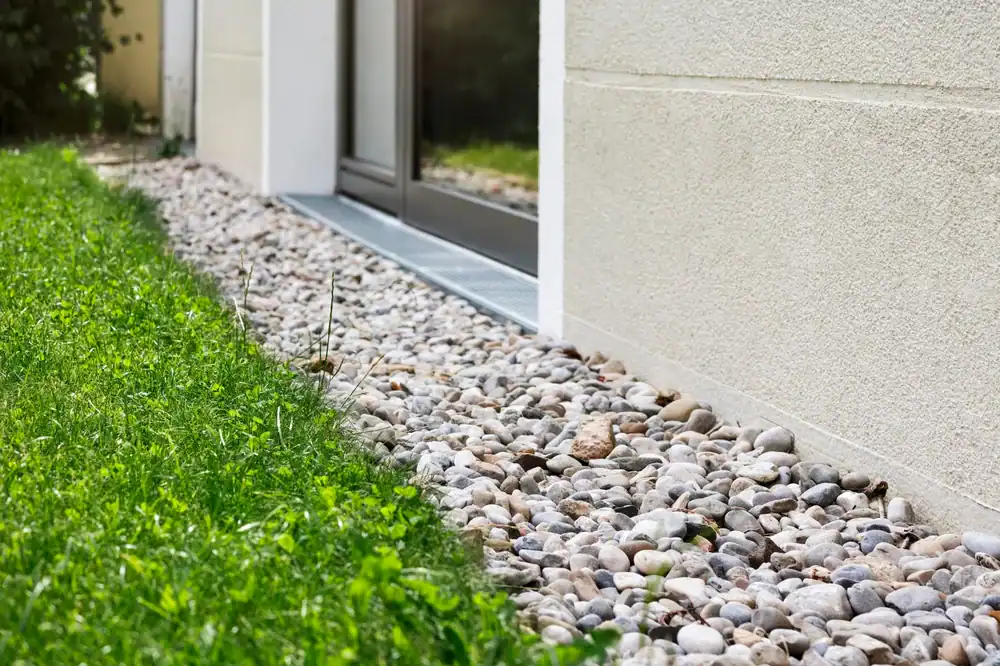
You know something’s wrong when the air in your house smells musty. That’s moisture from below working its way up through your floors.
A properly installed French drain keeps water away from your foundation before it becomes a crawl space problem. No standing water means no mold growth, no wood rot, and no expensive emergency calls when the next storm rolls through. Your dehumidifier stops running overtime because there’s nothing left to fight.
The Piedmont region sits on heavy clay soil that holds water instead of absorbing it. After a good rain, you’ll see it pooling in low spots across your yard and along your foundation line. That water doesn’t just sit there—it finds cracks, seeps into crawl spaces, and slowly damages the structure holding up your home. A French drain installation redirects that water away from your property before any of that happens.
We started as an indoor air quality consultant because we saw how many homes in Stokesdale and the surrounding Piedmont area were dealing with moisture problems that started below the house. Wet crawl spaces create bad air. Bad air makes homes uncomfortable and unhealthy.
We’ve spent over two decades learning how North Carolina’s clay soil behaves, where water flows on different properties, and what it takes to keep foundations dry year-round. We’re not a national franchise following a script. We’re local, we know this area’s soil and drainage challenges, and we’ve seen what works long-term versus what fails after three years.

First, we walk your property to see where water collects, how your yard slopes, and what’s happening around your foundation. We’re looking at soil type, drainage patterns, and how much water you’re dealing with during heavy rain. That assessment determines where the trench goes, how deep it needs to be, and whether you need a sump pump or additional surface drainage.
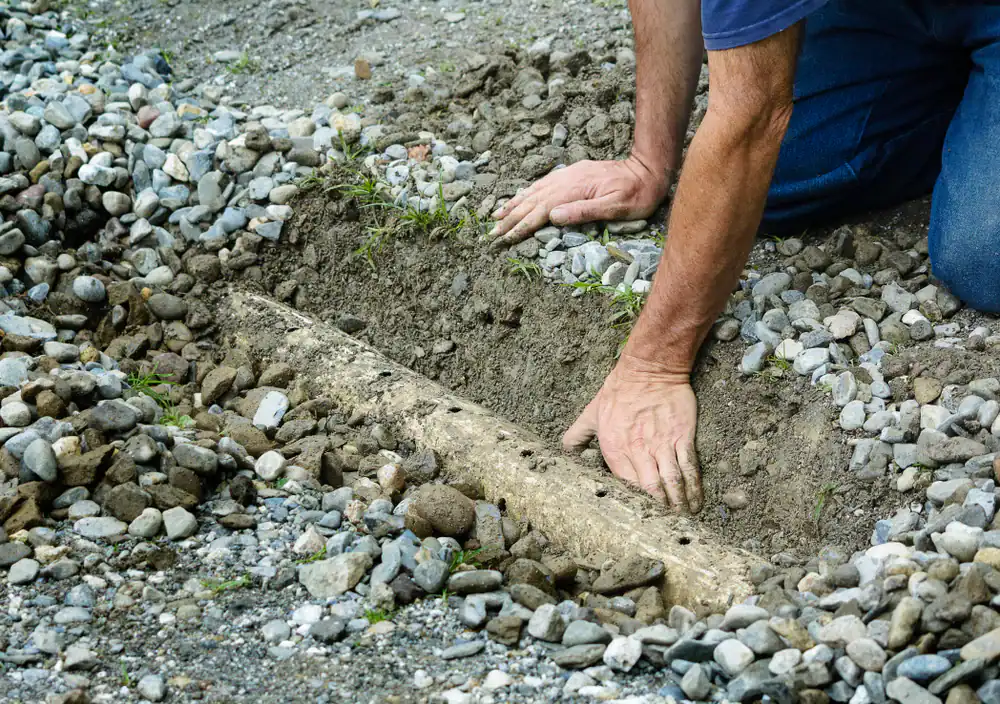
Once we map out the system, we dig the trench at the right slope—typically one inch of drop for every eight feet of length. Slope matters because water won’t flow uphill, and a flat trench just becomes an underground pond. We line the trench with landscape fabric, add a layer of gravel, place perforated pipe, then cover it with more gravel before backfilling. The fabric keeps soil from clogging the system over time.
The pipe carries water away from your foundation to a safe discharge point—usually a low area of your yard, a drainage ditch, or a dry well. We make sure the outlet is far enough away that water won’t circle back toward your house. For crawl space installations, we often tie the system into your existing sump pump or install one if needed. The whole process typically takes one to three days depending on the length of the run and site conditions.
Ready to get started?
Every French drain installation includes a full property assessment before we dig anything. We take photos, explain what we’re seeing, and walk you through why we’re recommending a specific approach for your property. You’re not getting a one-size-fits-all solution—you’re getting a system designed for your soil, your slope, and your water volume.
Stokesdale sits in an area where clay soil is the norm, not the exception. That means water doesn’t percolate down like it would in sandy or loamy soil. It runs across the surface and pools wherever gravity takes it. We account for that when designing your drainage system, often combining French drains with surface drainage solutions or trench drains if you’ve got water coming off driveways or patios. Some properties need waterproofing work on foundation walls before drainage makes sense. We’ll tell you if that’s the case.
We use quality materials—proper perforated pipe, clean gravel, and commercial-grade landscape fabric—because cheap components fail early. A well-built system lasts 30 to 40 years with minimal maintenance. We also make sure we’re not hitting utility lines, and we understand North Carolina drainage laws. You can’t redirect water onto a neighbor’s property or block natural flow, and we design every system to stay compliant.

Most French drain installations in the Stokesdale area run between $5,000 and $9,000 depending on the length of the system, how deep we need to dig, and whether you need a sump pump or additional waterproofing. Cost typically breaks down to $20 to $60 per linear foot for professional installation.
Labor makes up about 80% of the total cost because this isn’t a quick job. We’re digging trenches, grading for proper slope, installing pipe and gravel correctly, and making sure the discharge point actually works. Cheap installations skip steps—wrong slope, no fabric liner, inadequate gravel—and you end up with a system that clogs or fails within a few years.
If you’ve got a straightforward exterior installation with good access and minimal obstacles, you’ll land on the lower end of that range. If we’re working around landscaping, tying into an existing sump system, or dealing with a long run to reach a proper discharge point, costs go up. We give you a clear estimate after we assess your property so there’s no guessing.
A French drain keeps water away from your foundation, which is the main source of crawl space moisture for most homes in this area. If water is pooling around your foundation and seeping through walls or vents, a properly installed drainage system stops that problem.
But if your crawl space is wet because of groundwater coming up through the floor, or because you don’t have a vapor barrier, a French drain alone won’t solve it. You might also need a sump pump, a vapor barrier installation, or better crawl space ventilation. We assess the full picture during our initial visit and tell you exactly what’s causing the moisture so you’re not paying for work that won’t fix the actual problem.
Most homes in Stokesdale deal with surface water and clay soil saturation, which means a French drain combined with a dehumidifier or sump pump handles it. We’ve been doing this for 20 years, so we know what works in this region and what’s a waste of money.
A professionally installed French drain lasts 30 to 40 years if it’s built right and maintained. That means proper slope, quality materials, and a design that accounts for your specific soil and water conditions.
The systems that fail early are usually DIY jobs or cheap installations that skip the landscape fabric, use the wrong gravel, or don’t create enough slope for water to flow. Once soil clogs the perforations in the pipe, water stops moving and you’re back to square one. We use commercial-grade fabric and clean gravel specifically to prevent that.
Maintenance is minimal—mostly making sure the discharge point stays clear and checking that nothing’s blocking the outlet. If you’ve got trees near the trench line, roots can eventually become an issue, but that’s typically a 15- to 20-year problem, not something you’ll deal with right away. We build systems that outlast most other home improvements you’ll make.
A French drain is a buried perforated pipe surrounded by gravel that collects water from the soil and redirects it away from your foundation. It handles subsurface water and keeps your crawl space or basement dry. You don’t see it once it’s installed.
A trench drain is a surface drainage system—usually a channel with a grate on top—that collects water running across driveways, patios, or other hard surfaces. It’s designed for heavy surface flow, like water sheeting off a driveway during a storm. You see the grate at ground level.
Some properties need both. If you’ve got water pooling around your foundation and water running off a sloped driveway toward your house, we might install a French drain for subsurface moisture and a trench drain to catch the surface runoff. We look at your whole property during the assessment and recommend what actually solves your drainage problems, not just what’s easiest to install.
Most residential French drain installations in Stokesdale don’t require a permit as long as the system stays on your property and doesn’t tie into a public right-of-way or curb line. If you’re connecting to a storm drain or running pipe under a public road, you’ll need approval from the local municipality.
North Carolina General Statutes do regulate how you manage water drainage. You can’t redirect water onto a neighbor’s property or block natural drainage flow in a way that causes problems for someone else. We design every system to stay compliant with those regulations, so you’re not creating a legal issue down the road.
If your property has easements, HOA restrictions, or you’re in a flood zone, there might be additional requirements. We handle drainage installations regularly in this area and know what’s required. If a permit is necessary, we’ll tell you upfront and help you through that process. Most of the time, it’s straightforward residential work that doesn’t trigger permitting.
Yes, but whether repair makes sense depends on why the system failed. If the pipe is clogged with soil because there was no fabric liner, or if the slope is wrong and water’s just sitting in the trench, you’re usually better off installing a new system correctly than trying to patch a bad design.
If the system was built right but tree roots have infiltrated the pipe, or the discharge point has become blocked or eroded, those are repairable issues. We can clear blockages, replace damaged sections of pipe, or reroute the outlet to a better location. We’ll assess what you’ve got and tell you honestly whether French drain repair makes financial sense or if you’re throwing money at something that’s going to fail again.
A lot of older systems in this area were installed before people understood how clay soil behaves or before landscape fabric was standard practice. If that’s what you’re dealing with, a new installation with proper materials will outlast a repair and actually solve your drainage problems long-term.