

Contact Info
- Greensboro, NC 27406
- Call: 336-707-0498
- Text: 336-707-0498
-
Mon - Fri: 8am - 4pm
Sat - Sun: Closed
Contact Info
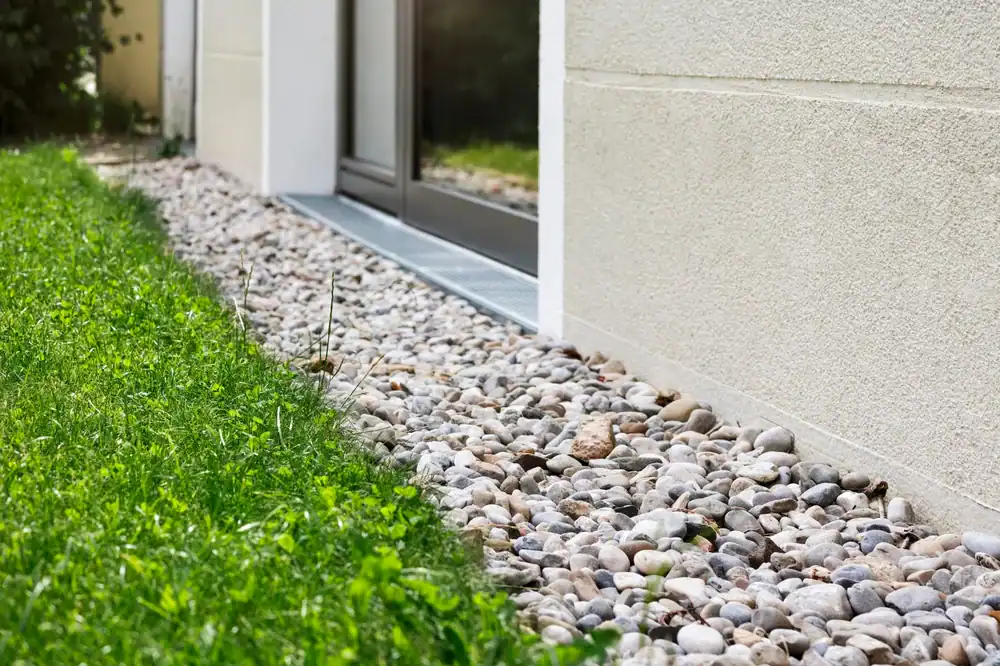
You stop worrying every time the forecast calls for rain. Your basement stays dry, your foundation stays intact, and you’re not dealing with mold growth two days after a storm.
A properly installed French drain system handles both surface water and groundwater before either one reaches your foundation. That means no more hydrostatic pressure pushing against your basement walls. No more cracks forming in your foundation from saturated soil.
The difference shows up fast. After the next heavy rain, you’ll see water flowing away from your house instead of pooling around it. Your sump pump won’t run constantly. And if you’ve been dealing with that musty basement smell, it goes away once the moisture source is cut off.
This isn’t about managing water damage after it happens. It’s about preventing it in the first place.
We’ve been handling water and air quality issues in Swepsonville and throughout Alamance County for years. We understand what happens when homes sit near the Haw River watershed, where drainage problems aren’t occasional—they’re predictable.
Most homes here weren’t built with adequate drainage systems. The soil holds water. The terrain doesn’t naturally channel runoff away from foundations. And when Jordan Lake flooding makes regional news, local basements take the hit.
We’ve seen what poor drainage does to homes in this area. We’ve also seen what proper French drain installation prevents. That’s why we focus on getting the system right the first time—correct depth, proper slope, quality materials, and a discharge point that actually works for your property.

We start by figuring out where your water is coming from and where it needs to go. That means looking at your property’s grade, identifying low spots, and determining the best discharge location. You can’t just dig a trench and hope it works.
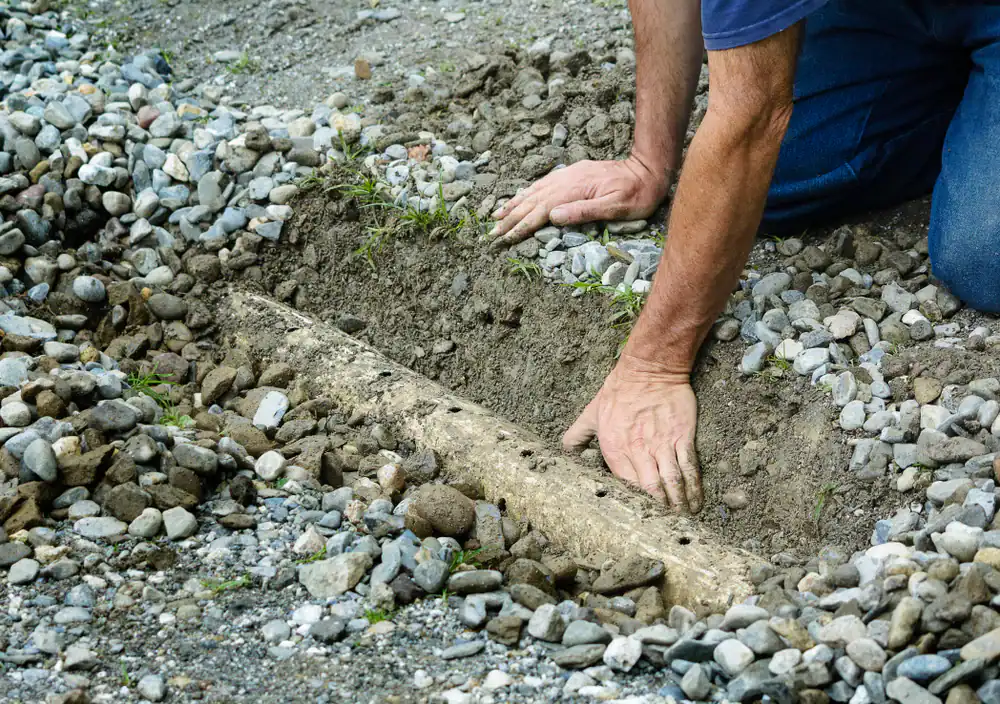
Once we map out the system, we trench along your foundation or across problem areas in your yard. The trench gets lined with landscape fabric to prevent soil from clogging the system. Then we lay perforated pipe surrounded by gravel, which filters water while allowing it to flow freely toward the discharge point.
For exterior systems around foundations, we typically go down 2-3 feet and install the pipe at a consistent slope. For yard drainage issues, depth and placement depend on where water collects and how your property naturally drains. The whole installation usually takes 1-2 days, depending on the scope.
After installation, we test the system to make sure water flows correctly. Then we backfill the trench and clean up. Most systems start working immediately—you’ll see the difference after the next rainfall.
Ready to get started?
You get a system designed specifically for your property’s drainage problems. That includes site assessment, proper trenching depth, quality perforated pipe, contractor-grade gravel, and landscape fabric that won’t break down in North Carolina’s humid climate.
We handle both exterior French drains around foundations and interior systems that connect to sump pumps. If you’re dealing with surface water pooling in your yard, we can install trench drains or surface drainage solutions that tie into the French drain system. Everything gets sloped correctly so water moves away from your home, not toward it.
Swepsonville’s location in the Upper Cape Fear River Basin means properties here deal with more water than most people realize. Between seasonal flooding, clay soil that doesn’t drain well, and the area’s connection to Jordan Lake’s watershed, homes need drainage systems that can handle high water volume during storms. A basic system won’t cut it when you’re getting several inches of rain in a few hours.
We also handle French drain repair for systems that were installed incorrectly or have failed over time. If your existing drain isn’t working, we’ll diagnose why and fix it properly.

Most exterior French drain installations run between $20 and $60 per linear foot, depending on depth, site conditions, and how much pipe you need. A typical exterior system around a foundation averages $1,000 to $1,500 for standard residential projects.
Interior French drains cost more—usually $50 to $60 per linear foot—because they require breaking through your basement floor, installing the drain tile, and connecting it to a sump pump system. For a basement with a 100-foot perimeter, you’re looking at $5,000 to $6,000.
The price changes based on what we’re dealing with. If your yard has difficult access, rocky soil, or requires longer runs to reach a proper discharge point, costs go up. But here’s the thing: a French drain that costs $3,000 to install beats a $10,000 foundation repair bill, which is what you’re risking if water keeps saturating the soil around your home.
A properly installed French drain typically lasts 20-30 years with minimal maintenance. The pipe itself doesn’t wear out. What causes systems to fail is improper installation—wrong slope, inadequate gravel, no landscape fabric, or a discharge point that doesn’t work.
The biggest threat to longevity is sediment clogging the perforations in the pipe. That’s why we wrap everything in quality landscape fabric and use clean gravel. These materials filter out soil particles before they reach the pipe.
You’ll want to flush the system occasionally with a hose or pressure washer, especially after heavy storms that move a lot of sediment. But beyond that, French drains don’t need regular maintenance or upgrades. They’re designed to work passively—gravity does the job, so there are no moving parts to break down.
If groundwater or surface runoff is causing your basement flooding, yes. A French drain intercepts that water before it reaches your foundation and redirects it to a safe discharge area. That eliminates the hydrostatic pressure that forces water through foundation cracks and seeps.
But if your basement floods because of plumbing failures, sewer backups, or water coming through your walls from a source other than ground saturation, a French drain won’t solve that. You need to identify where the water is actually coming from.
Most basement flooding in Swepsonville happens because water pools around foundations during heavy rain. The soil gets saturated, pressure builds up against basement walls, and water finds its way in. A French drain stops that cycle by catching the water before it accumulates. You’ll still want to make sure your gutters and downspouts are directing water away from your house, but the French drain handles what those systems miss.
It depends on the scope of work and where the water discharges. Most exterior French drains around residential foundations don’t require permits in Alamance County, but if you’re discharging into a storm sewer system, wetland, or protected waterway, you’ll need approval.
Interior French drains that involve cutting into your basement floor and installing a sump pump usually require a permit because they’re considered a structural modification. The permit process ensures the work meets building codes and that your discharge point is legal.
We handle permit requirements as part of the installation process. Given Swepsonville’s location near the Haw River and Jordan Lake watershed, there are some environmental regulations about where stormwater can be discharged. We make sure your system complies with local rules so you don’t run into problems down the road.
You can, but most DIY installations fail because the slope is wrong, the trench isn’t deep enough, or the discharge point doesn’t work. A French drain only functions if water flows downhill through the pipe to a location where it can safely exit. If any part of that system is off, water backs up or the drain stops working.
The other issue is knowing where to place the drain. You need to understand how water moves across your property, where it’s coming from, and where it’s going. Most homeowners don’t have the equipment to trench properly or the experience to diagnose drainage problems accurately.
Professional installation also comes with a warranty. If something goes wrong with a system we install, we fix it. If you install it yourself and it doesn’t work, you’re paying twice—once for materials and your time, and again to have it done correctly. For something that protects your foundation and prevents water damage, it’s worth getting it right the first time.
A French drain is a subsurface system that handles groundwater and water that seeps into the soil. It uses perforated pipe buried in gravel to collect and redirect water underground. You don’t see it once it’s installed.
A trench drain is a surface drainage solution—a channel with a grate on top that catches water flowing across driveways, patios, or other hard surfaces. It’s designed for areas where water runs along the ground and needs to be captured before it reaches your foundation or floods your yard.
Both systems can work together. If you have surface water pooling in your driveway and groundwater saturating the soil around your foundation, you might need a trench drain to handle the surface flow and a French drain to manage subsurface water. We assess your property and recommend the right combination based on where your water problems are actually happening.