

Contact Info
- Greensboro, NC 27406
- Call: 336-707-0498
- Text: 336-707-0498
-
Mon - Fri: 8am - 4pm
Sat - Sun: Closed
Contact Info
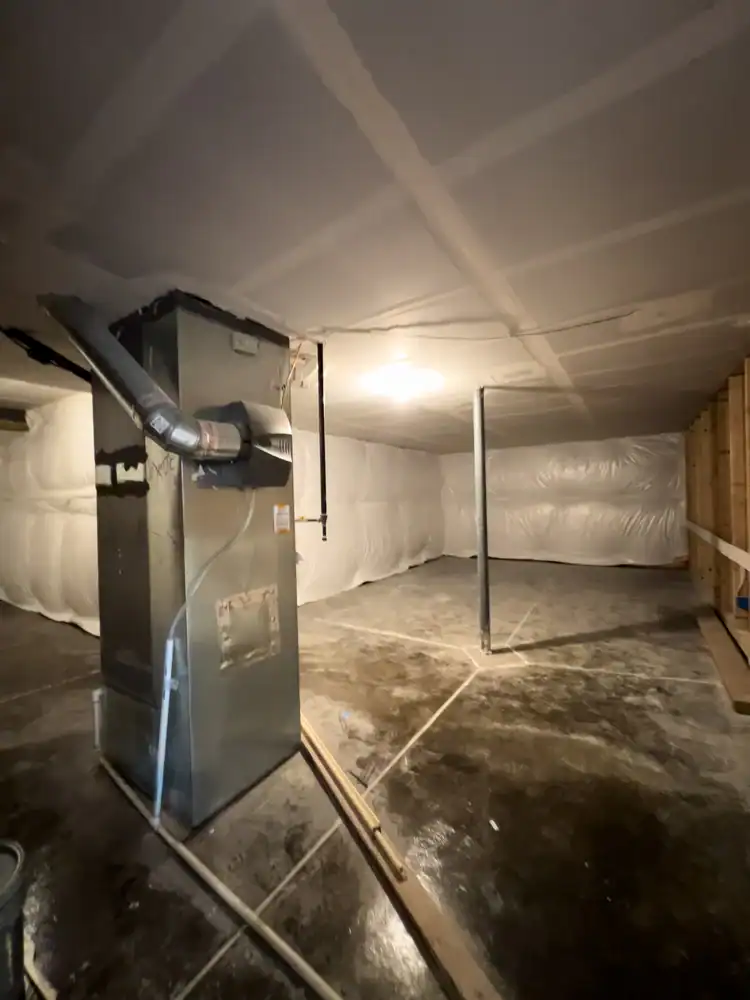
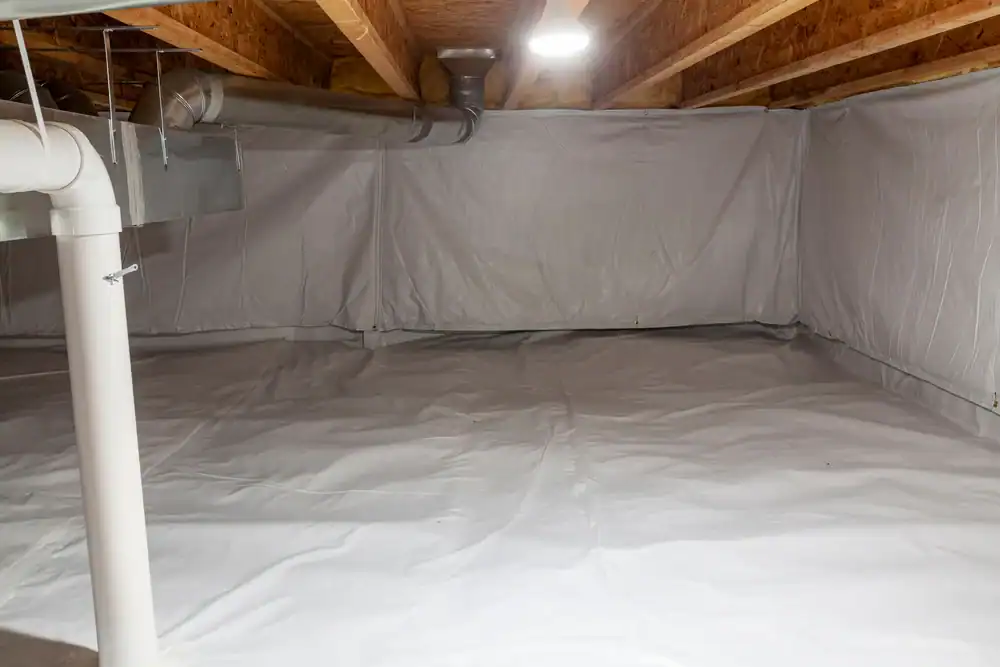
You’ll notice the difference within weeks. That musty smell coming through your vents disappears. Your floors feel warmer in winter because you’re not losing heat to damp, open air below.
Energy bills drop because your HVAC system isn’t working overtime to condition outside air seeping in through vents and gaps. Most homeowners in Hillsdale see around 15% savings on heating and cooling costs after encapsulation. If your ducts run through the crawl space, that number can hit 30%.
Mold stops growing when humidity drops below 60%. Wood stays dry and stable, so you avoid sagging floors and structural repairs down the road. Pests lose interest when moisture disappears. And if you’ve been dealing with allergies or respiratory issues that seem worse at home, sealing off that contaminated air source often brings noticeable relief.
We’ve spent over 30 years helping homeowners in the Greensboro area improve their indoor air quality. We’re BBB accredited with an A+ rating because we show up, do the work right, and stay responsive after the job’s done.
Hillsdale’s housing stock runs older than most areas in North Carolina. Homes built between the 1940s and 1990s weren’t designed with modern moisture control in mind. That’s why crawl space problems are so common here, and why proper encapsulation makes such a dramatic difference.
We don’t just install vapor barriers and leave. We assess what’s actually causing moisture issues in your specific crawl space, address drainage or ventilation problems, and build a system that lasts 20+ years with minimal maintenance.
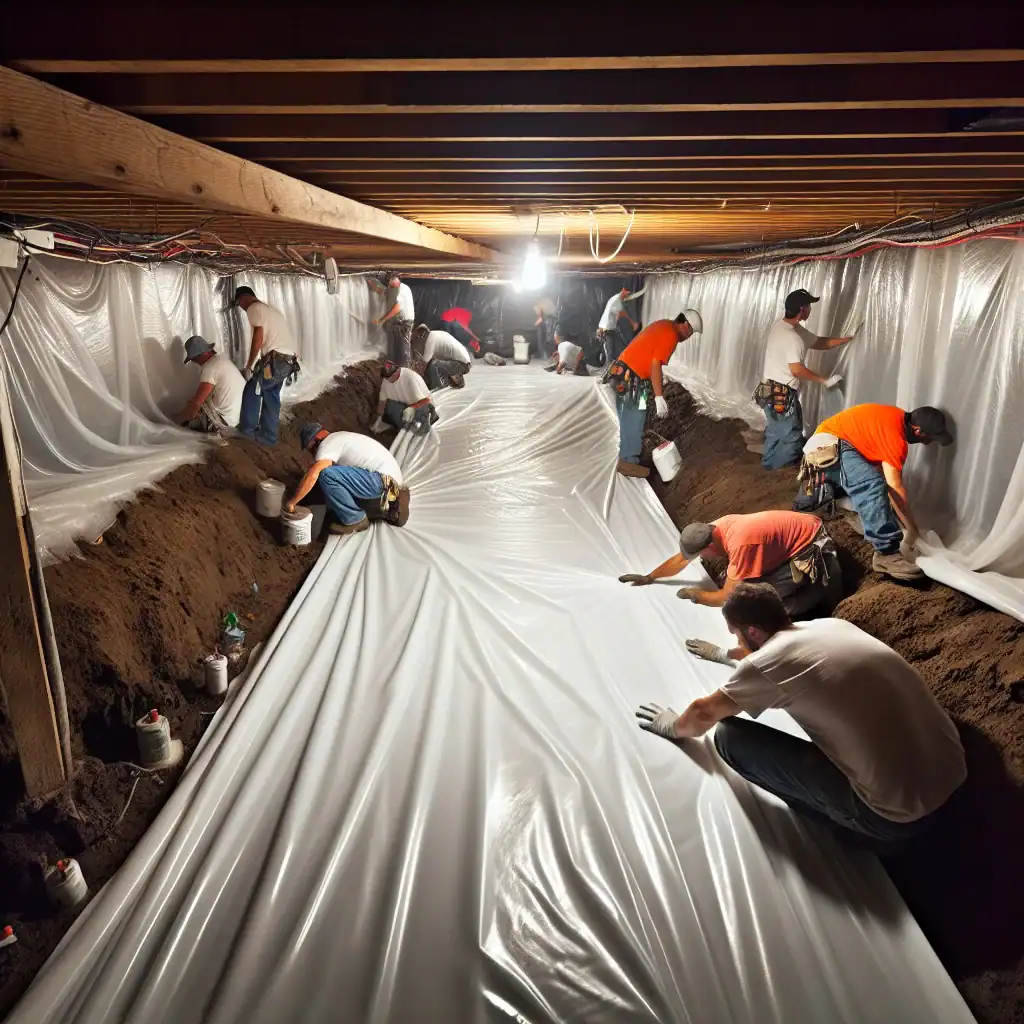
First, we inspect your crawl space to identify moisture sources, existing damage, and any mold or pest issues that need addressing before encapsulation. This isn’t a quick peek with a flashlight. We’re looking at drainage patterns, foundation cracks, plumbing leaks, and how air currently moves through the space.
Next comes prep work. If there’s standing water, we install drainage systems or sump pumps. If mold is present, we remediate it properly before sealing anything in. Debris gets cleared out, and any damaged insulation comes down.
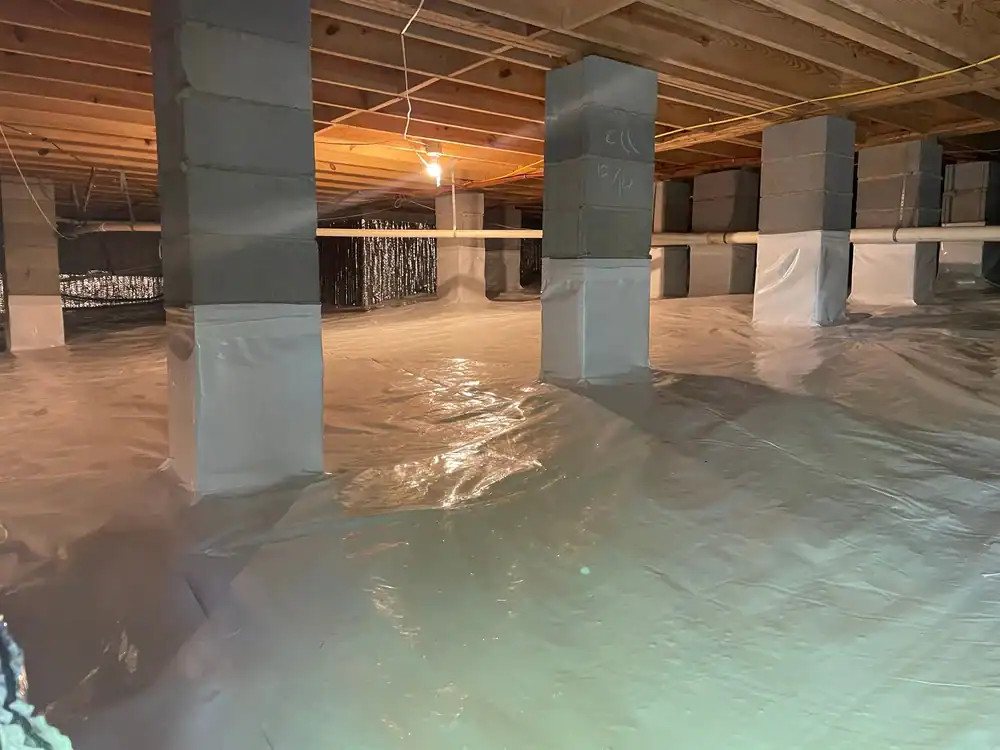
Then we install the vapor barrier. This is a heavy-duty polyethylene liner that covers the entire floor and gets sealed up the foundation walls. Seams are taped, and penetrations around piers and pipes are sealed tight. We’re creating a complete moisture barrier between the ground and your home.
Finally, we install a dehumidifier if needed to maintain humidity below 60% year-round. Vents get sealed, and if your crawl space needs insulation, we add it to the walls rather than between floor joists. The result is a conditioned space that stays dry, clean, and doesn’t drag down your home’s air quality or energy efficiency.

Ready to get started?
A proper crawl space encapsulation system addresses every moisture entry point. You’re getting a thick vapor barrier that covers 100% of the crawl space floor and extends up foundation walls. All seams are sealed, not just overlapped.
Crawl space vents get closed and sealed permanently. This goes against old building practices, but research and building codes now recognize that ventilating crawl spaces in humid climates like North Carolina actually makes moisture problems worse. The 2024 NC Energy Code treats properly encapsulated crawl spaces as code-compliant when insulated correctly.
Dehumidifier installation keeps relative humidity in check even during our humid summer months. These aren’t the portable units you buy at a hardware store. Commercial-grade crawl space dehumidifiers are designed to run continuously in enclosed spaces and remove significantly more moisture per day.
If drainage is an issue, we install perimeter drainage systems or sump pumps before encapsulation. If your crawl space has a dirt floor with standing water after heavy rain, sealing it without fixing drainage just traps the problem. We handle both.
Hillsdale’s older homes often have crawl spaces with minimal clearance and challenging access points. We’re used to working in tight spaces and adapting our approach to fit your home’s specific layout and foundation type.
Most complete encapsulation projects in this area run between $3,500 and $15,000. That’s a wide range because your actual cost depends on square footage, how much prep work is needed, and what additional systems your crawl space requires.
A small, relatively dry crawl space with easy access might only need vapor barrier installation and vent sealing. That’s on the lower end. A larger space with standing water issues needs drainage systems, possibly mold remediation, a commercial dehumidifier, and more extensive sealing work. That pushes costs higher.
Barrier thickness matters too. We use heavy-duty liners that won’t tear or degrade, which costs more upfront but lasts decades longer than thin plastic sheeting. If your crawl space has significant mold growth or structural damage from long-term moisture exposure, remediation and repairs add to the total but are necessary before encapsulation makes sense.
The return on investment shows up in lower energy bills, avoided structural repairs, and better resale value. Most Hillsdale homeowners recoup their investment within several years through energy savings alone, and you’re protecting against much more expensive foundation and floor repairs down the road.
Yes, and the savings are measurable. Homes typically see 15% lower heating and cooling costs after proper crawl space encapsulation. If your HVAC ducts run through the crawl space and they’re leaky, savings can reach 30%.
Here’s why it works. Your HVAC system is designed to condition the air inside your home, not the outdoor air constantly seeping in through crawl space vents. When you seal and encapsulate, you stop conditioning that extra air volume. Your system runs less frequently and maintains temperature more easily.
In summer, encapsulation prevents hot, humid outdoor air from entering your crawl space and radiating heat up through your floors. In winter, it stops cold air infiltration that makes your floors frigid and your heating system work overtime. The temperature in an encapsulated crawl space stays much closer to your living space temperature year-round.
Hillsdale’s climate creates perfect conditions for this problem. Our humid summers mean crawl space vents are pulling in moisture-laden air that your AC then has to dehumidify. Sealing that off makes a dramatic difference in both comfort and cost. Most homeowners notice lower bills within the first month, and the savings compound over years.
Mold needs moisture to grow. When relative humidity stays above 60%, mold thrives on wood, insulation, and organic materials in your crawl space. Encapsulation eliminates the moisture source, which stops mold growth.
The vapor barrier blocks ground moisture from evaporating into your crawl space. North Carolina soil stays damp year-round, and without a barrier, that moisture constantly rises into the air above. Even if you don’t see standing water, ground evaporation can keep humidity levels high enough for mold.
Sealing vents stops humid outdoor air from entering during summer months. When that warm, moisture-heavy air hits cooler surfaces in your crawl space, condensation forms. That’s the moisture that feeds mold colonies on floor joists, subflooring, and insulation.
The dehumidifier handles any remaining moisture from minor leaks or seasonal humidity fluctuations. It keeps levels consistently below 60%, which effectively prevents mold from establishing. If existing mold is present before encapsulation, we remove it first. Sealing mold inside a crawl space just preserves the problem. Proper sequencing matters: remediate, then encapsulate, then maintain dry conditions long-term.
Yes, but the insulation goes on the walls, not between your floor joists. This is a significant change from older building practices, and it makes your crawl space part of your home’s conditioned envelope rather than an outdoor space beneath your house.
Wall insulation keeps the entire crawl space at a more stable temperature. Your floors stay warmer in winter because the space below isn’t exposed to freezing temperatures. In summer, you’re not fighting heat radiating up from a hot crawl space. This approach is more energy-efficient and prevents the moisture problems that old fiberglass insulation between joists creates.
The 2024 NC Energy Code recognizes encapsulated crawl spaces with R-10 continuous wall insulation as compliant. That means if you’re planning to sell your home in the future, a properly encapsulated and insulated crawl space meets current code requirements. Buyers increasingly look for this feature because they understand the energy and air quality benefits.
Insulating the walls also protects your plumbing. Pipes in an encapsulated, insulated crawl space are far less likely to freeze during cold snaps because the space stays above freezing. That alone can save you from expensive emergency repairs and water damage.
A properly installed encapsulation system lasts 20 years or more with minimal maintenance. The heavy-duty vapor barriers we install are designed for decades of service, not just a few years. They resist tears, punctures, and degradation from ground moisture.
The dehumidifier is the only component that needs regular attention. Filters should be cleaned or replaced according to manufacturer specs, usually every few months. The unit itself will eventually need replacement after 10-15 years of continuous operation, but that’s normal for any mechanical equipment.
You should inspect your crawl space annually to make sure the vapor barrier hasn’t been disturbed, seams are still sealed, and the dehumidifier is functioning properly. Look for any new plumbing leaks or foundation cracks that could introduce moisture. Catching small issues early prevents them from compromising the entire system.
The longevity depends partly on installation quality. Cheap plastic sheeting tears easily and doesn’t seal properly at seams. Skipping drainage systems when they’re needed means water will eventually find its way in. We build systems that address root causes and use materials rated for long-term crawl space conditions. That’s why our encapsulation work holds up for decades while cheaper approaches fail within years.
Yes, and that’s one of the unexpected benefits homeowners appreciate. An encapsulated crawl space is clean, dry, and bright enough to use for storage. You’re not dealing with dirt, moisture, or musty odors anymore.
The sealed vapor barrier creates a clean surface. Many homeowners store seasonal items, holiday decorations, and equipment they don’t use regularly. Just keep in mind that crawl spaces typically have limited headroom, so access and moving items in and out can be challenging depending on your specific space.
Humidity stays low year-round with the dehumidifier running, which means your stored items won’t develop mold or mildew. That’s a significant advantage over traditional crawl spaces where moisture ruins anything you leave down there for more than a season.
Don’t store items directly against foundation walls or in ways that could damage the vapor barrier. Keep pathways clear so you can still access plumbing, electrical, and HVAC equipment for maintenance. And remember that while the space is dry and clean, it’s still a crawl space with limited climate control. Avoid storing anything that requires precise temperature control or could be damaged by occasional temperature swings.