

Contact Info
- Greensboro, NC 27406
- Call: 336-707-0498
- Text: 336-707-0498
-
Mon - Fri: 8am - 4pm
Sat - Sun: Closed
Contact Info
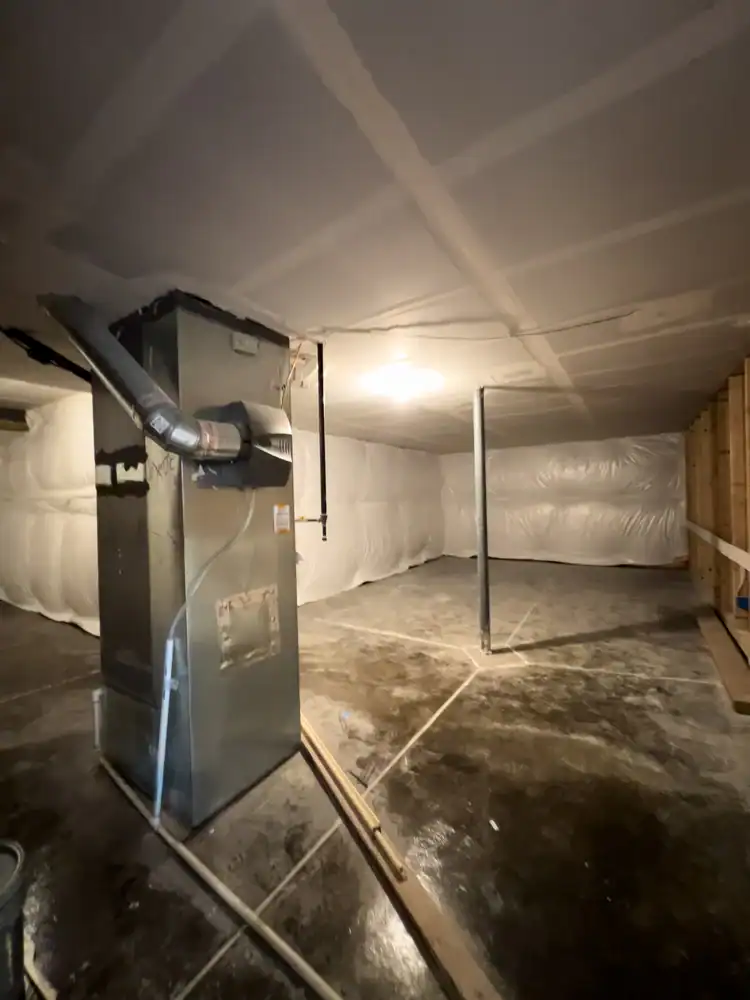
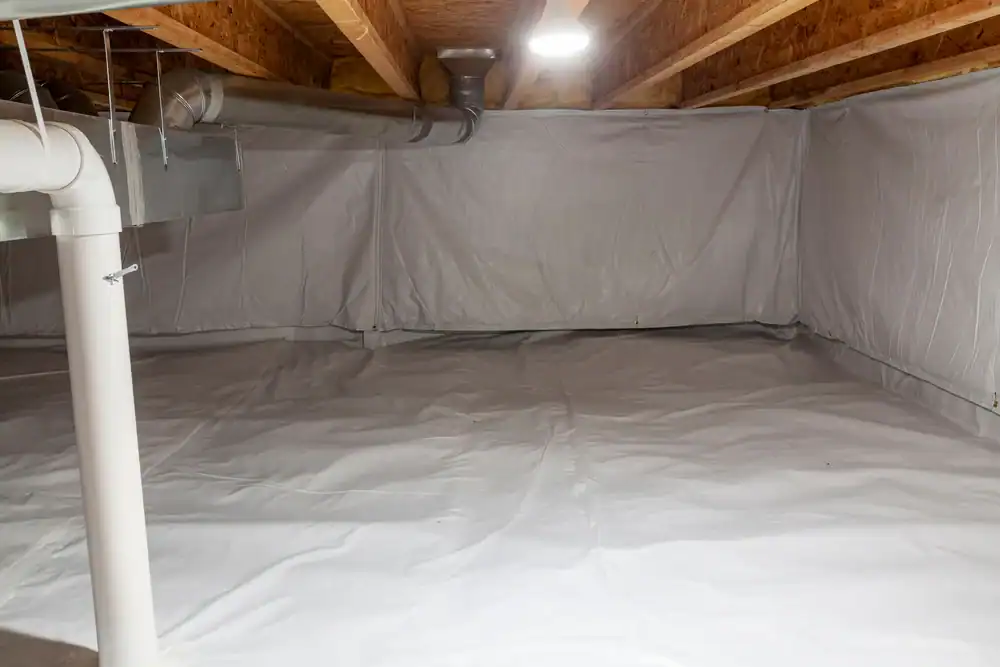
Your floors stop feeling cold in winter. The musty smell disappears. Your HVAC system doesn’t run constantly trying to compensate for air leaking through vents and gaps.
You’ll see the difference on your energy bills within the first few months. Most homeowners in North Carolina save 15-20% annually once their crawl space is properly encapsulated. That’s $300 to $400 staying in your account every year.
The bigger win is what you avoid. Wood rot, sagging floors, mold remediation, pest damage. Those repairs run into the thousands. Encapsulation stops the moisture that causes all of it. You’re not just fixing a problem—you’re preventing a dozen worse ones from starting.
We’ve been handling crawl space encapsulation across North Carolina for years. We know what humidity does to homes here. Koontzville sits in a climate zone where moisture doesn’t take a season off—it’s a year-round issue that requires a system built to last.
We don’t use loose-lay vapor barriers that shift when water shows up. We install secured, sealed systems with proper dehumidification. Every job gets the same attention whether it’s a small ranch or a two-story with a massive crawl space underneath.
You’re hiring people who’ve seen what happens when encapsulation is done halfway. We don’t leave those problems for you to discover later.
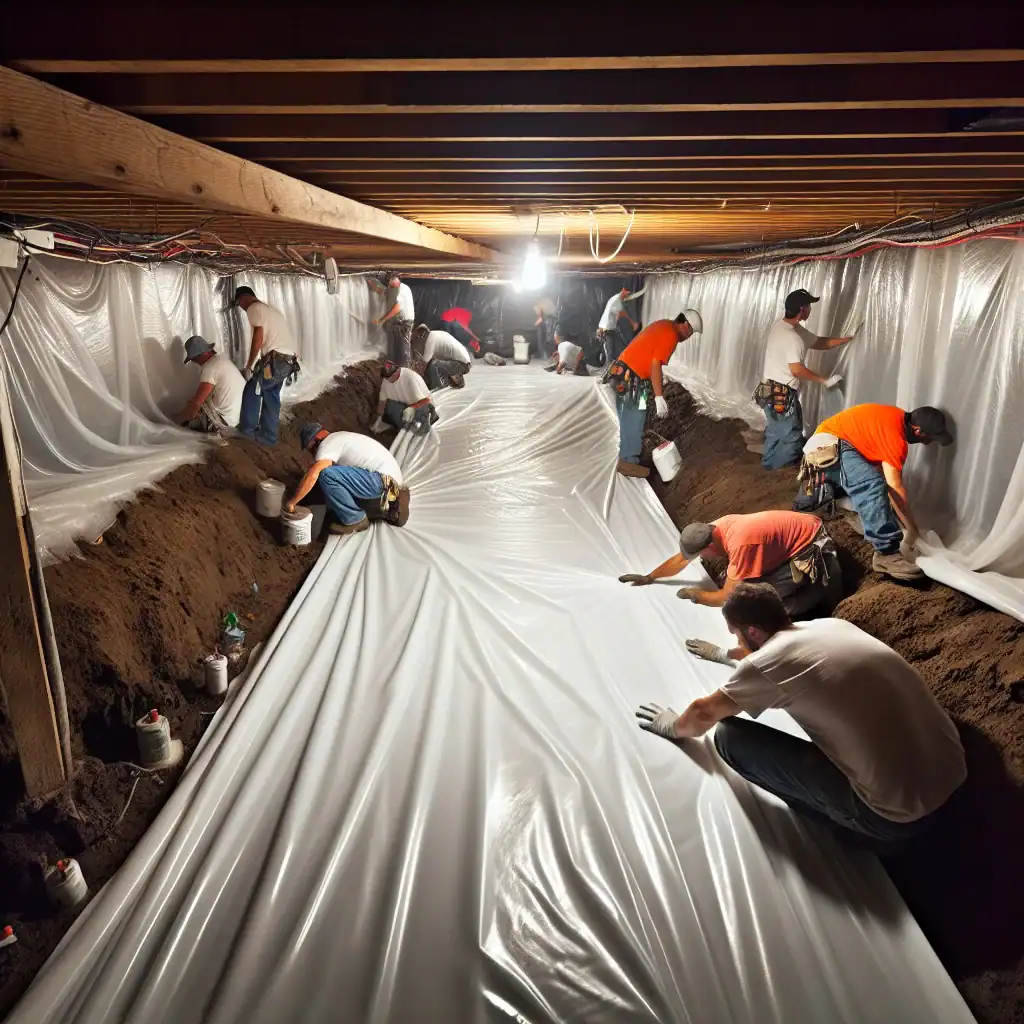
We start with a full inspection of your crawl space. We’re looking at moisture levels, existing damage, ventilation issues, and how your space is currently affecting your home. You’ll get a clear assessment of what needs to happen and why.
Next comes crawl space cleaning if needed. Any debris, old insulation, or contamination gets removed. Then we address structural issues—wood repair, mold treatment, pest damage. You don’t encapsulate over problems. You fix them first.
The vapor barrier installation comes next. We use heavy-duty material that’s sealed at every seam and secured to your foundation walls and floor. This isn’t plastic sheeting. It’s engineered to stop ground moisture from entering your crawl space. We also seal vents and install insulation where it makes sense for your home.
Finally, we install a dehumidifier if your crawl space needs it. In Koontzville’s climate, most do. The dehumidifier keeps humidity between 40-50%, which is the range that prevents mold growth and wood rot. You’ll have a completely controlled environment under your home.

Ready to get started?
Crawl space encapsulation in Koontzville means sealing your space from ground moisture, outside air, and humidity. We install a commercial-grade vapor barrier across your entire crawl space floor and up the foundation walls. Every seam is sealed. Every penetration is addressed.
We close off your foundation vents permanently. Open vents were the old way of doing things, and they don’t work in North Carolina’s humid climate. Closing them is now standard practice because it actually keeps moisture out instead of inviting it in.
Dehumidifier installation is part of most jobs here. North Carolina’s humidity levels make it necessary, not optional. We size the unit based on your crawl space dimensions and set it to maintain the ideal range. You’ll also get insulation on your foundation walls if your home needs it for energy efficiency.
If your crawl space has standing water, drainage issues, or structural damage, we handle that before encapsulation. You’re getting a system that works because the space is properly prepared. That’s the difference between encapsulation that lasts 20 years and a vapor barrier that fails in three.
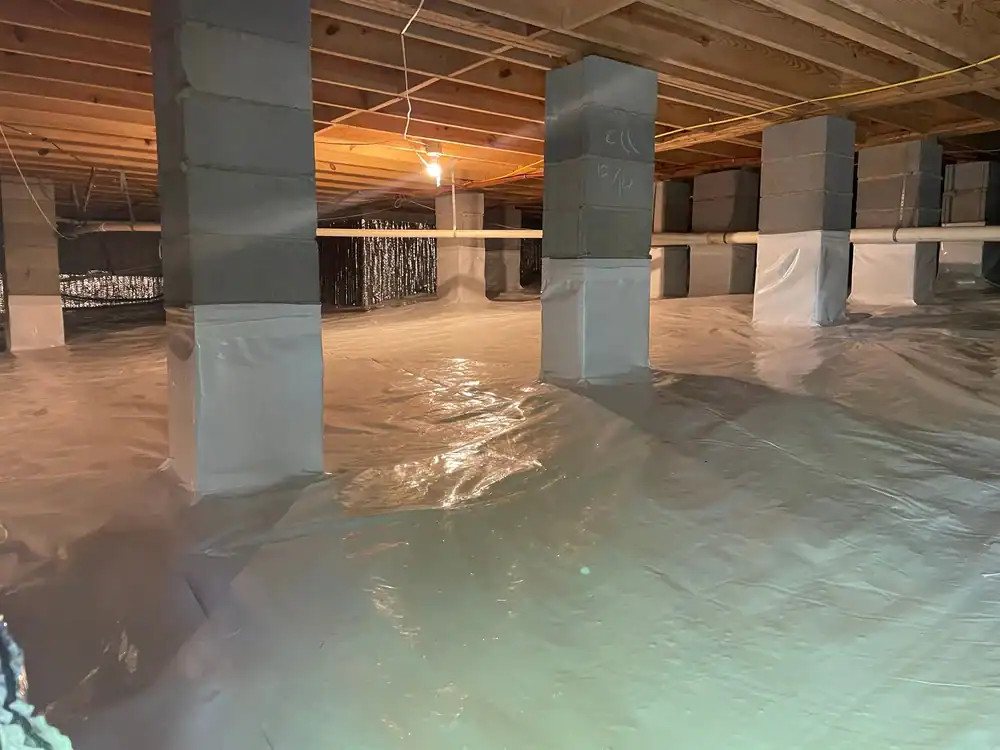
Cost depends on your crawl space size, the condition it’s in, and what needs to happen before we can encapsulate. Most jobs in this area run between $5,000 and $15,000. Smaller crawl spaces with minimal prep work land on the lower end. Larger spaces that need structural repair, extensive cleaning, or drainage work cost more.
Here’s what affects your price: square footage, current moisture damage, whether you need a dehumidifier, if there’s mold or pest damage to address, and how accessible your crawl space is. We give you an exact number after the inspection, not a range.
The return on that investment shows up fast. You’ll save 15-20% on energy bills annually, which pays back a portion every year. You’re also avoiding major repairs that cost significantly more. Wood rot remediation, foundation work, and mold removal all run higher than encapsulation. You’re spending money to not spend a lot more money later.
Most crawl space encapsulation jobs in Koontzville take two to four days. Smaller spaces with no prep work can be done in one or two days. Larger crawl spaces or jobs that include mold treatment, wood repair, or drainage installation take longer.
Day one usually involves cleaning and prep work. We remove debris, treat any mold, and make structural repairs if needed. Day two is vapor barrier installation, sealing vents, and insulation. If you’re getting a dehumidifier, that gets installed toward the end. We test everything before we leave.
You don’t need to be home the entire time, but you’ll want to be available for the initial walkthrough and the final inspection. We’re working under your house, not inside it, so your daily routine doesn’t get disrupted. You’ll know the timeline before we start so you can plan accordingly.
Yes, if the smell is caused by moisture, mold, or mildew. That’s the case in most homes. The musty odor you’re smelling is mold spores and decomposition happening in a damp environment. When you seal the crawl space and control humidity, you eliminate the conditions that create the smell.
It doesn’t happen instantly. The smell fades over a few weeks as the space dries out and air quality improves. If there’s existing mold, we treat that during the prep phase so you’re not just sealing in the problem. The dehumidifier keeps humidity low enough that new mold can’t grow.
If the smell persists after encapsulation, it means something else is going on—like a dead animal, a plumbing leak, or an issue outside the crawl space. But in the majority of cases, moisture control solves the odor problem permanently. You’ll notice the difference in your home’s air quality within the first month.
In Koontzville, yes. North Carolina’s humidity levels make a dehumidifier necessary, not optional. Even with a sealed vapor barrier and closed vents, humidity can still build up in your crawl space during spring and summer. A dehumidifier keeps levels between 40-50%, which is the range that prevents mold and wood rot.
Without a dehumidifier, you’re relying on the vapor barrier alone to control moisture. That works in drier climates. It doesn’t work here. Humidity seeps in through foundation walls, around pipes, and through any small gaps. The dehumidifier actively removes that moisture from the air so it never becomes a problem.
The unit runs automatically and doesn’t need much maintenance. You’ll want to check it a couple times a year and clean the filter. Most homeowners forget it’s even there. But it’s doing the work that keeps your encapsulation system effective long-term. Skipping it means you’re only halfway protecting your crawl space.
A properly installed encapsulation system lasts 15 to 25 years. The vapor barrier itself is the longest-lasting component—20 to 25 years if it’s high-quality material that’s been sealed correctly. The dehumidifier will need replacement every 10 to 15 years depending on usage and maintenance.
What kills encapsulation early is poor installation. Loose-lay barriers that aren’t secured shift when water shows up. Barriers that aren’t sealed at the seams let moisture through. Vents that aren’t properly closed let humid air in. If the system isn’t installed right from the start, you’ll see problems within a few years.
You won’t need to redo the entire system after 15 years. You might replace the dehumidifier or reseal a few seams if needed. But the core system—the vapor barrier and sealed vents—stays functional for decades. That’s why the installation quality matters more than anything else. You’re making a long-term investment in your home’s foundation and air quality.
Yes. One of the benefits of encapsulation is turning your crawl space into usable storage. Once it’s sealed and dry, you have a clean environment that won’t damage what you store there. Before encapsulation, your crawl space was too damp and dirty to keep anything you care about.
After encapsulation, the space stays dry year-round. You can store seasonal items, boxes, equipment—anything that would normally go in a garage or attic. The vapor barrier creates a clean surface, and the controlled humidity means your belongings won’t get moldy or damaged by moisture.
Just keep heavy items off the vapor barrier if possible, or use plywood to distribute weight. You don’t want to puncture the barrier with sharp edges or concentrated pressure. Other than that, your crawl space becomes functional square footage instead of wasted space under your home. Most homeowners don’t realize how much storage they’re gaining until after the job is done.