

Contact Info
- Greensboro, NC 27406
- Call: 336-707-0498
- Text: 336-707-0498
-
Mon - Fri: 8am - 4pm
Sat - Sun: Closed
Contact Info
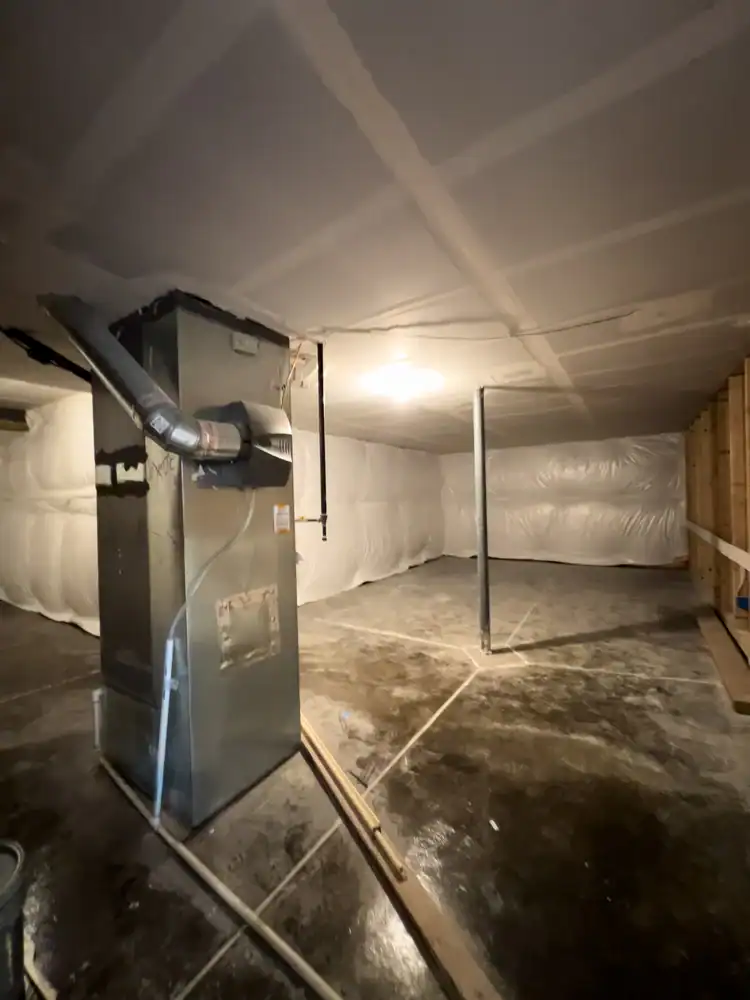
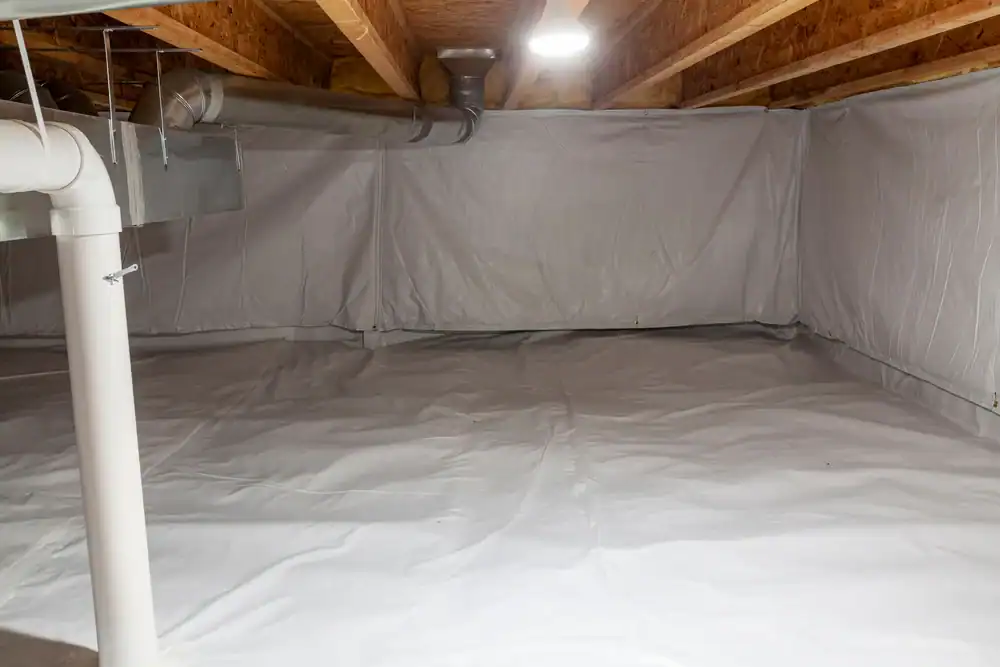
You stop smelling that musty odor coming through your vents. Your floors feel warmer in winter because cold, damp air isn’t seeping up through the floorboards anymore. Your HVAC system doesn’t have to work overtime fighting humidity, which typically drops your heating and cooling costs by 15 to 20 percent—around $300 to $400 back in your pocket every year.
The air inside your home gets noticeably cleaner. Half the air you breathe starts in your crawl space, so when that space stays dry and sealed, you’re not pulling in mold spores, dust mite waste, or whatever else was breeding down there. Families dealing with asthma or allergies usually notice the difference within weeks.
Your home’s structure stays intact longer. Wood doesn’t rot when it’s not sitting in constant moisture. Support beams don’t sag. Floors don’t squeak or feel soft underfoot. You’re protecting the bones of your house, which matters whether you’re staying put or planning to sell.
We work throughout Scalesville and the surrounding Piedmont Region, where clay-heavy soil and above-average rainfall create the exact conditions that turn crawl spaces into moisture traps. We’ve seen what happens when homeowners wait too long—sagging insulation, black mold on floor joists, and HVAC systems that can’t keep up.
We don’t oversell or push services you don’t need. Our crews show up, assess what’s actually happening under your house, and explain what it’ll take to fix it. We use reinforced vapor barriers, closed-cell spray foam, and commercial-grade dehumidifiers that actually hold up in North Carolina’s climate.
You’re not hiring a national franchise that subcontracts the work. You’re working with a local team that understands how humidity behaves here and knows what materials last.
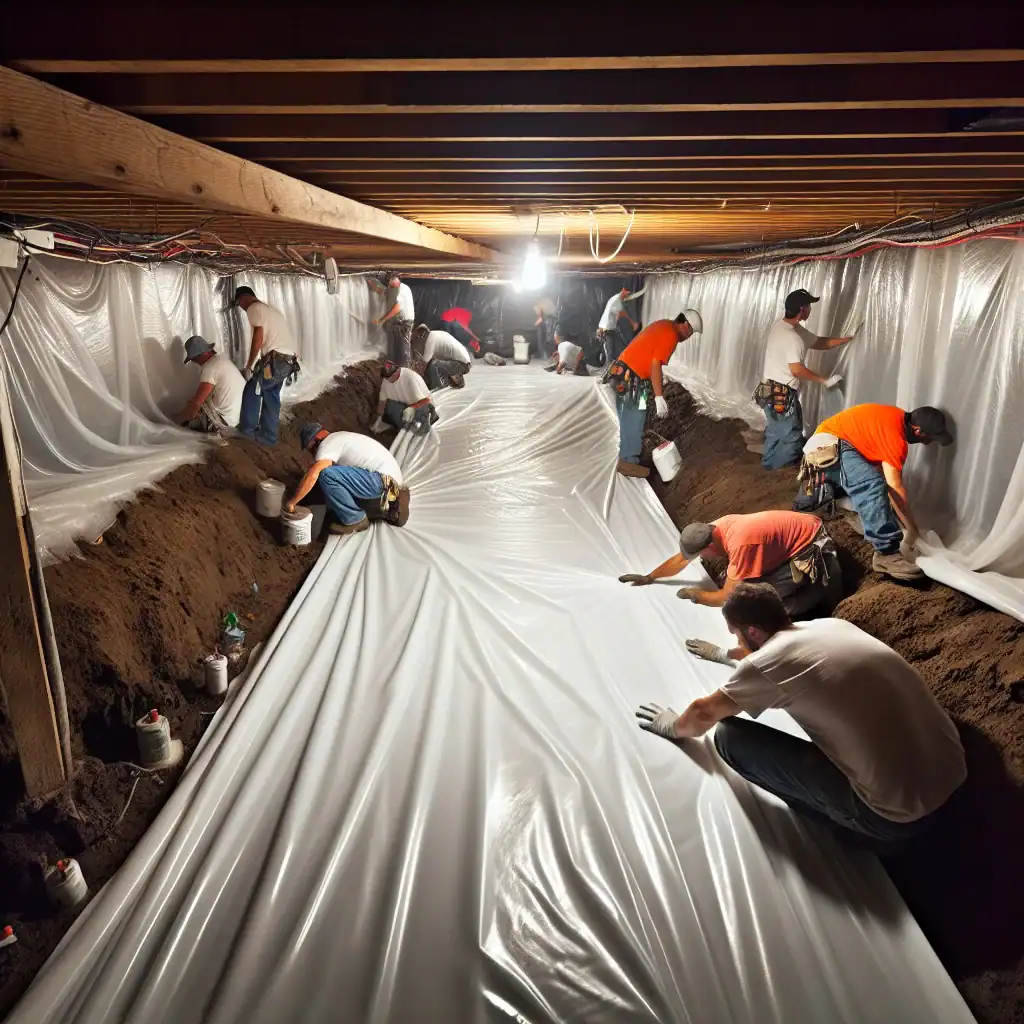
First, we inspect your crawl space to see what we’re dealing with. That means checking for standing water, damaged insulation, mold growth, pest activity, and structural issues. If there’s existing damage, we handle crawl space cleaning and remediation before sealing anything up—you can’t trap moisture and mold inside and expect good results.
Next, we prep the space. We remove old insulation if it’s waterlogged or falling apart. We seal off vents and any gaps where outside air is getting in. Then we install a heavy-duty vapor barrier—usually 12-mil reinforced polyethylene—across the floor and up the walls. This liner stops ground moisture from evaporating into your crawl space.
After that, we insulate the walls with closed-cell spray foam, which also acts as an air barrier. Then we install a dehumidifier to keep humidity levels between 45 and 50 percent year-round. We make sure everything is radon-ready, so if you ever need to add a mitigation system, the setup is already compatible.
The whole process typically takes one to three days depending on your crawl space size and what prep work is needed. When we’re done, you’ll have a clean, dry space that you could actually use for storage if you wanted to.

Ready to get started?
Crawl space encapsulation isn’t just rolling out a vapor barrier and calling it done. You’re getting a sealed system designed to handle North Carolina’s humidity for the long haul.
We install thick, reinforced vapor barriers that won’t tear or shift over time. We seal every seam, every penetration, and every edge so moisture can’t sneak through. We insulate your crawl space walls with closed-cell spray foam, which stops heat transfer and keeps your floors comfortable. We add a commercial-grade dehumidifier—usually an Aprilaire unit—that’s sized correctly for your space and runs automatically to maintain safe humidity levels.
If your crawl space has drainage issues, we address those too. If there’s mold, we treat it before sealing. If pests have been getting in, we close off those entry points. The goal is to leave you with a space that stays dry, stays clean, and doesn’t need constant attention.
Most crawl space encapsulation projects in Scalesville run between $3,500 and $15,000 depending on square footage and how much prep work is involved. That’s not a small investment, but it’s one that pays you back through lower energy bills, better indoor air quality, and a home that holds its value.
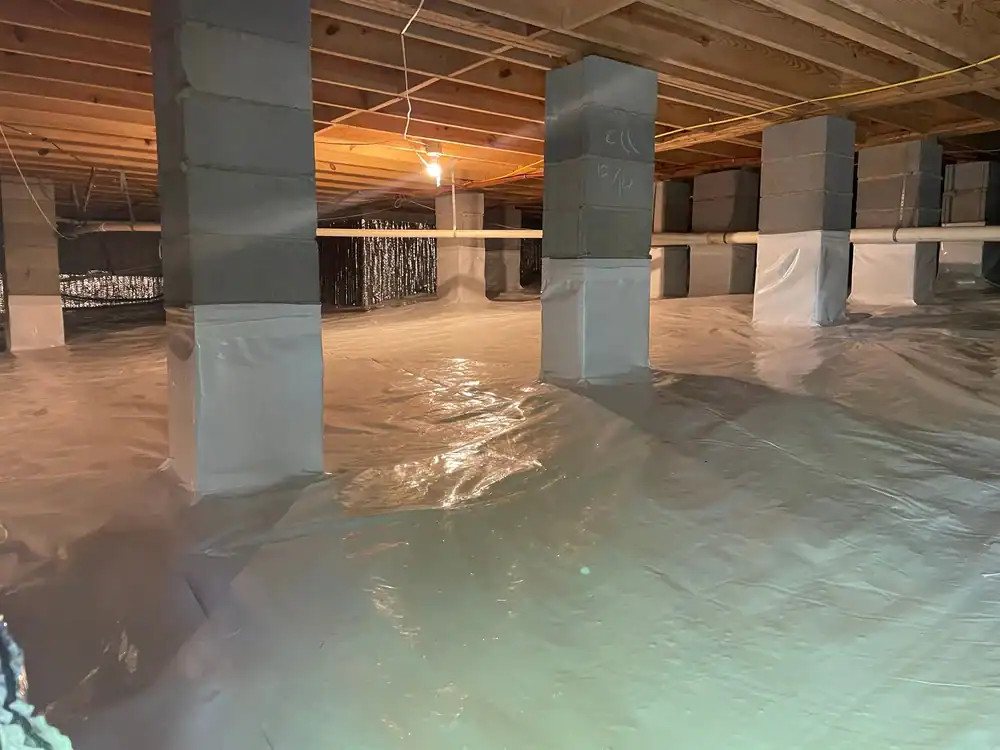
A properly installed encapsulation system lasts 20 years or more if you’re using quality materials and maintaining your dehumidifier. The vapor barrier itself—assuming it’s a reinforced 12-mil or thicker liner—won’t degrade or tear under normal conditions. The spray foam insulation is permanent once it’s cured.
What does need attention is your dehumidifier. You’ll want to clean the filter every few months and check the drain line to make sure it’s not clogged. Most units have an alert system that tells you when something needs attention.
North Carolina’s humidity is tough on crawl spaces, but that’s exactly why encapsulation works so well here. Once the system is in place and running, it handles the moisture load without you having to think about it.
Yes, if the smell is coming from your crawl space. That musty odor is usually mold, mildew, or rotting wood releasing spores and volatile organic compounds into the air. When you seal and dry out the crawl space, you eliminate the source.
Most homeowners notice the smell fading within a few weeks after encapsulation. It takes a little time for the dehumidifier to pull out all the moisture that’s already soaked into the wood and soil, but once humidity levels drop and stay down, mold stops growing and the smell goes away.
If the odor persists after encapsulation, it might be coming from somewhere else—your HVAC ducts, a bathroom exhaust issue, or another part of the house. But in most cases, sealing the crawl space solves it.
Yes. Sealing the crawl space stops outside air and ground moisture from getting in, but it doesn’t remove the humidity that’s already there or the moisture that naturally occurs from temperature changes. A dehumidifier keeps levels in the safe zone—between 45 and 50 percent—so mold and wood rot can’t start.
This is especially important in North Carolina, where summer humidity regularly exceeds 70 percent. Even a sealed crawl space will creep up in humidity without active moisture control.
The dehumidifier runs automatically and only kicks on when needed, so it’s not constantly cycling. Most units are energy-efficient and cost around $10 to $20 a month to operate, which is a small price compared to the damage unchecked moisture can cause.
Yes, and it’s one of the benefits people don’t always think about. Once your crawl space is sealed, insulated, and dehumidified, it becomes a clean, dry area that’s actually usable. You’re not dealing with dirt floors, spider webs, or damp cardboard boxes falling apart.
You can store holiday decorations, seasonal gear, or anything else you don’t need regular access to. The low humidity means you don’t have to worry about mold growing on fabric or cardboard, and the vapor barrier keeps everything off the ground.
That said, you still want to avoid storing anything valuable or irreplaceable down there. It’s a crawl space, not a climate-controlled basement. But for most household storage needs, it works well.
Most projects run between $3,500 and $15,000 depending on the size of your crawl space, the condition it’s in, and what needs to happen before we can seal it. A straightforward encapsulation on a 1,200-square-foot crawl space with no major issues typically falls in the $5,000 to $8,000 range.
If there’s standing water, mold remediation, or structural repairs needed first, that adds to the cost. If your crawl space is unusually large or has a complicated layout with lots of piers and obstacles, that also affects pricing.
We don’t give quotes over the phone because every crawl space is different. We need to see what’s actually going on under your house before we can tell you what it’ll cost. But we do give you a clear, written estimate with no surprises or upsells once we’ve done the inspection.
A vapor barrier by itself is just a sheet of plastic on the ground. It slows down moisture coming up from the soil, but it doesn’t seal the space, insulate it, or control humidity. You’re still getting outside air through your vents, temperature swings through your walls, and moisture buildup when conditions are right.
Encapsulation is a complete system. You’re sealing the vents, insulating the walls, installing a heavy-duty vapor barrier that’s sealed at every seam, and adding a dehumidifier to actively control moisture. It’s the difference between putting a tarp over a puddle and actually fixing the problem.
If you’re going to invest in crawl space work, encapsulation gives you real results—lower energy bills, better air quality, and long-term protection. A vapor barrier alone just doesn’t deliver the same benefits.