

Contact Info
- Greensboro, NC 27406
- Call: 336-707-0498
- Text: 336-707-0498
-
Mon - Fri: 8am - 4pm
Sat - Sun: Closed
Contact Info
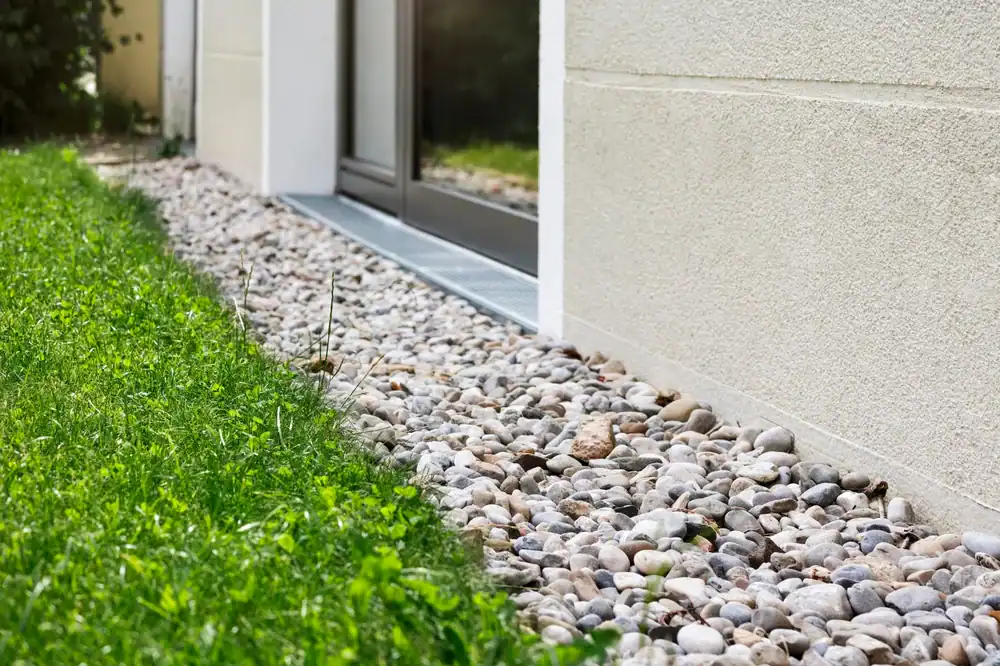
The soggy spots in your yard dry up. That musty smell in the basement disappears because water stops pooling against your foundation walls.
You stop worrying every time rain hits the forecast. The mosquitoes lose their breeding ground, and your landscaping actually has a chance to thrive instead of drowning in clay-trapped water.
Your foundation stays dry, which means no cracks from hydrostatic pressure, no mold creeping up basement walls, and no expensive repairs five years down the road. The system works quietly in the background—you just notice that water problems you used to deal with aren’t problems anymore.
North Carolina’s clay soil makes drainage issues worse, but a French drain cuts through that. It intercepts water before it saturates the ground around your home and redirects it where it belongs.
We’ve spent over 30 years solving moisture problems for North Carolina homeowners. We started with crawl space encapsulation and air quality work in Greensboro, and drainage installation became a natural extension of that expertise.
Water management and foundation protection go hand in hand. When you’re already fixing moisture issues under homes, you learn exactly how water moves through properties and what it takes to stop it.
Osceola homeowners deal with the same clay-heavy soil and drainage challenges we see across the region. We know how water behaves here, where it tends to collect, and how to design systems that actually work for the long term. Our BBB A+ rating and NADCA certification back up what we say we’ll do.

We start with a site evaluation to see where water collects and where it needs to go. The goal is finding the natural drainage path and any obstacles that might interfere with the system.
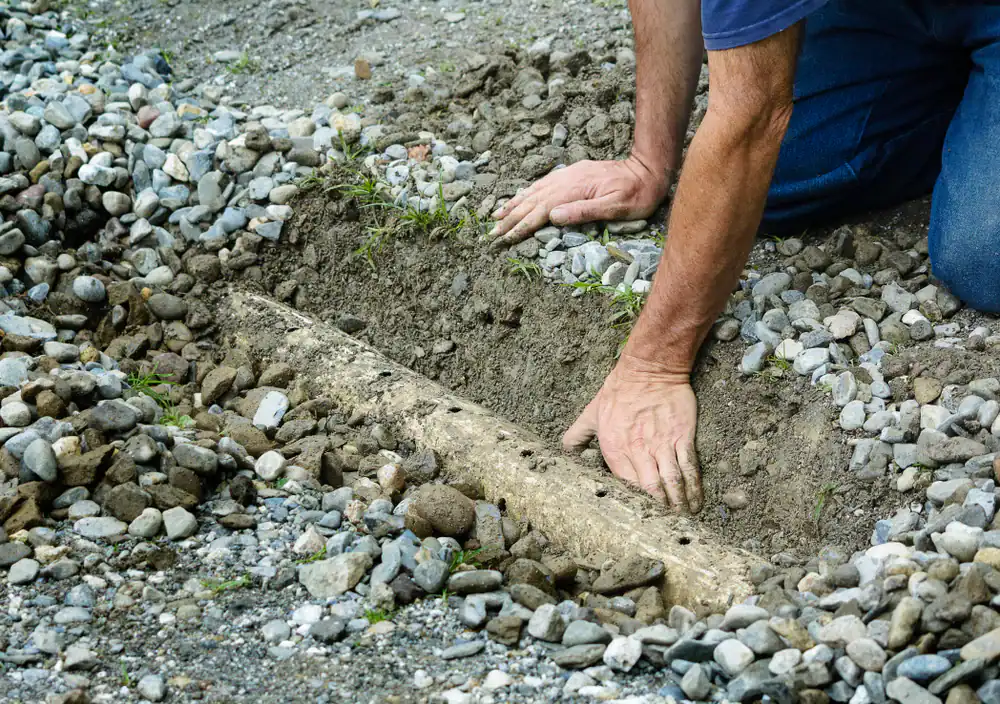
Next comes trenching. We dig a sloped trench that runs from the problem area to the discharge point—usually 12 to 18 inches deep, depending on your property. The slope matters because gravity does the work. Even a slight grade keeps water moving instead of sitting in the pipe.
We lay perforated pipe in the trench, wrap it in filter fabric to keep soil and debris out, then backfill with gravel. The gravel creates a channel for water to flow into the pipe while filtering out sediment. Some installations need a surface grate if you’re dealing with heavy runoff from driveways or patios.
The entire installation typically takes a day for most residential properties. You’ll see results the first time it rains—water flows away from your foundation instead of pooling next to it.
Ready to get started?
Every French drain installation includes a full site assessment to map water flow patterns on your property. We don’t guess where the problem is—we identify exactly where water enters, where it pools, and what’s causing it to stay there.
You get contractor-grade materials: perforated pipe designed for drainage, filter fabric that blocks sediment without restricting water flow, and clean gravel that won’t compact over time. The system is built to last 30 to 40 years when installed correctly.
In Osceola and surrounding areas, we often see properties where clay soil creates standing water that won’t absorb naturally. French drains solve that by giving water a dedicated path instead of forcing it through dense soil. We also handle trench drain installations for surface water issues like driveway runoff or patio flooding.
If your property needs it, we’ll connect the system to existing drainage infrastructure or create a new discharge point away from your foundation. The work includes backfilling, grading, and cleanup so your yard doesn’t look torn up when we’re done.

Most residential French drain installations in North Carolina run between $23 and $36 per linear foot. A standard 60-foot system typically costs between $1,400 and $2,200, depending on soil conditions, depth requirements, and site accessibility.
The price changes based on what your property needs. If we’re working around existing landscaping, utilities, or difficult terrain, that adds time and complexity. Properties with heavy clay soil sometimes need deeper trenching or additional gravel, which affects the total.
You’re not just paying for pipe and gravel. You’re paying for proper slope calculation, correct pipe placement, and a system designed to move water effectively for decades. DIY installations often fail because the grade is wrong or the pipe clogs from poor filtration. Professional installation costs more upfront but saves you from redoing the work in a few years.
A properly installed French drain lasts 30 to 40 years. The longevity depends on installation quality, material choice, and how well the system is maintained.
The pipe itself doesn’t wear out—it’s the filter fabric and gravel that determine lifespan. If the fabric isn’t installed correctly or if sediment gets into the system, the pipe can clog over time. That’s why we wrap the pipe completely and use gravel that won’t break down or compact.
Maintenance is minimal but not zero. You should check the discharge point after heavy rains to make sure water is flowing freely. If you notice slow drainage or water backing up, that usually means sediment buildup that needs flushing. Most homeowners never have issues if the system was installed right from the start.
Yes, if water is entering your basement because of exterior saturation and hydrostatic pressure. A French drain intercepts water before it reaches your foundation, which eliminates the pressure pushing moisture through basement walls.
If your basement leaks after heavy rain or if you see water stains along the base of foundation walls, exterior drainage is usually the fix. The drain captures water as it moves toward your home and redirects it away, so it never has a chance to saturate the soil around your foundation.
French drains don’t fix every basement water problem. If you have cracks in your foundation or issues with interior groundwater, you might need additional waterproofing. But for most homes in Osceola dealing with surface water and clay soil that won’t drain, a French drain eliminates the root cause of basement moisture.
Yes, and clay soil is actually one of the main reasons homeowners need French drains. Clay doesn’t absorb water well, so rainfall sits on the surface or saturates a shallow layer, creating constant moisture problems around foundations.
The French drain works by giving water a path of least resistance. Instead of trying to soak through dense clay, water flows into the gravel-filled trench and through the perforated pipe. The system bypasses the soil entirely, which is why it’s so effective in areas with poor natural drainage.
Installation in clay takes more effort because the soil is harder to dig and doesn’t drain during the work, but the system performs better in clay than in sandy soil. Clay actually helps contain the water within the trench, directing it into the pipe instead of dispersing into surrounding soil.
You need a French drain if water pools near your foundation after rain, if your basement smells musty or shows moisture stains, or if sections of your yard stay soggy for days after a storm.
Other signs include cracks in your foundation, water seeping through basement walls, or landscaping that’s dying because roots are sitting in saturated soil. If you see erosion around your home or notice that gutters and downspouts aren’t enough to keep water away, exterior drainage is the next step.
North Carolina gets enough rainfall that drainage problems don’t fix themselves. Clay soil makes it worse because water has nowhere to go. If you’re dealing with any of these issues, a site evaluation will show whether a French drain solves it or if you need additional work like regrading or surface drainage.
A French drain is buried and handles subsurface water, while a trench drain sits at ground level with a grate on top to catch surface runoff. Both move water away from your property, but they solve different problems.
French drains work underground to intercept water before it saturates soil around your foundation. You don’t see them once they’re installed—they’re completely buried under gravel and soil. They’re ideal for managing groundwater, preventing basement leaks, and drying out soggy areas in your yard.
Trench drains handle surface water like driveway runoff, patio drainage, or areas where water sheets across pavement. The grate collects water at the surface and channels it into a pipe that carries it away. Some properties need both systems—a trench drain for immediate surface flow and a French drain for subsurface moisture control.