

Contact Info
- Greensboro, NC 27406
- Call: 336-707-0498
- Text: 336-707-0498
-
Mon - Fri: 8am - 4pm
Sat - Sun: Closed
Contact Info
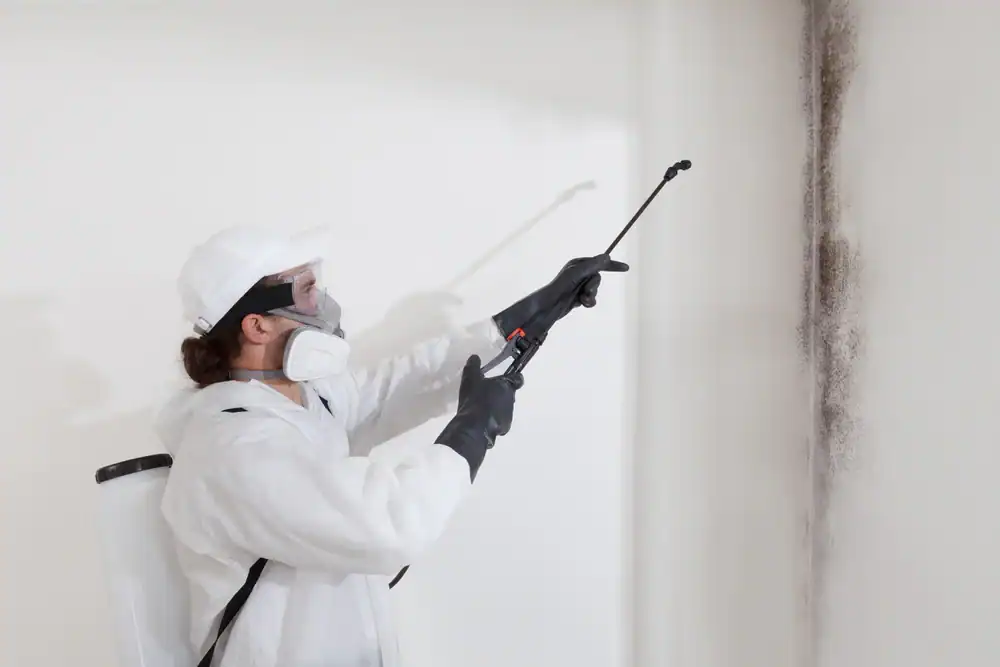
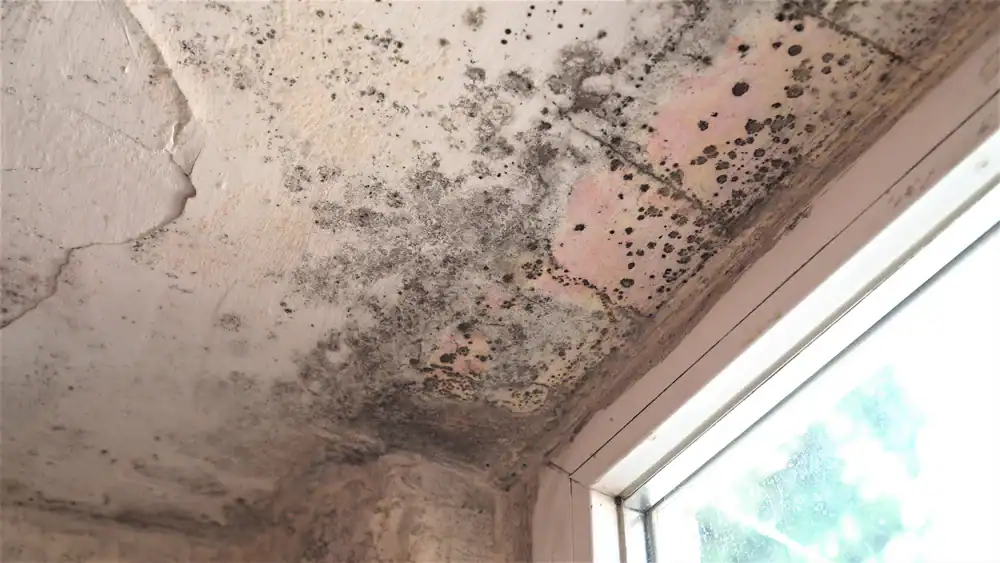
Mold keeps coming back because moisture keeps getting in. You can scrub your walls every Sunday, but if your crawl space is damp or your ducts are full of spores, you’re just buying time.
Professional mold removal means finding where it’s growing, removing what’s already there, and controlling the moisture that caused it. That’s how you stop watching it creep back across your bathroom ceiling or smelling that musty air every time you walk downstairs.
In Koontzville, we’re dealing with North Carolina’s heat and humidity year-round. When warm air hits your cool crawl space, you get condensation. When relative humidity stays above 60%, you get mold growth, wood rot, and air quality problems that move right up into your living space. Fixing it means addressing the source, not just the symptoms.
We work throughout the Greensboro area, including Koontzville neighborhoods where crawl space moisture and HVAC contamination create ongoing mold problems. We’ve seen what happens when homes built in the 70s, 80s, and 90s deal with North Carolina’s climate without proper moisture management.
Our team uses HEPA filtration that captures 99.97% of particles as small as 0.3 microns, including mold spores. We don’t just clean what you can see. We address what’s in your ductwork, your crawl space, and anywhere else moisture is creating conditions for mold to thrive.
You’re not hiring a crew that shows up, sprays something, and leaves. You’re getting people who understand why mold grows here and what it takes to actually stop it.
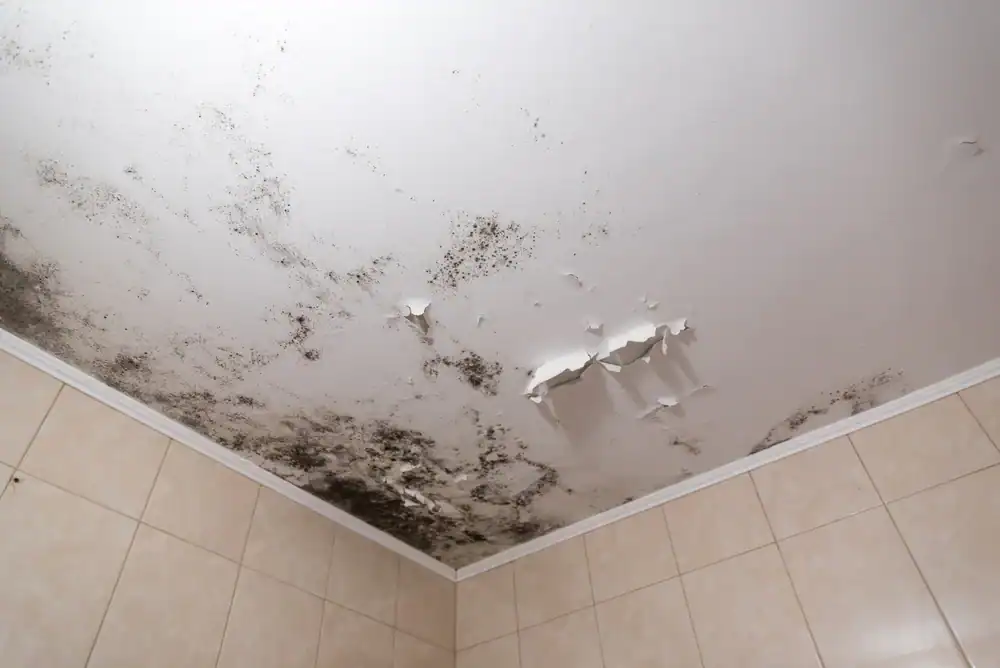
We start with an inspection. That means checking your crawl space, your HVAC system, anywhere water damage has occurred, and any area where you’ve noticed mold or smelled that musty odor. We’re looking for active growth and the moisture source feeding it.
Once we know what we’re dealing with, we contain the area to prevent spores from spreading during removal. We use air scrubbers and HEPA vacuums to capture airborne particles while we remove contaminated materials. If mold has gotten into your ductwork, we clean the entire system so you’re not circulating spores every time your heat or AC kicks on.
After removal, we address moisture control. That might mean encapsulating your crawl space, fixing ventilation issues, or sealing entry points where humid air is getting in. The goal is making sure you don’t have the same problem six months from now.
We walk you through what we found, what we did, and what you can do to maintain the improvements. No jargon, no upselling—just clear information about your home.
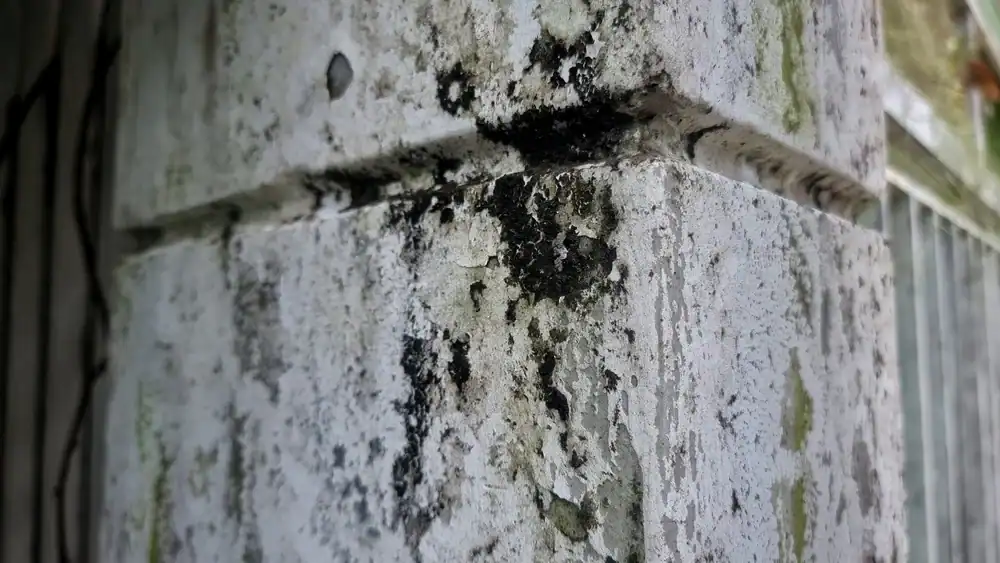
Ready to get started?
You get a thorough inspection that identifies all affected areas, not just the obvious spots. We check crawl spaces, attics, behind walls if needed, and inside your HVAC system where mold often grows unnoticed.
Our removal process uses professional-grade equipment designed to capture microscopic spores. We’re talking HEPA vacuums, air scrubbers, and containment barriers that prevent contamination from spreading to clean areas of your home. If materials like drywall or insulation are too damaged, we remove and dispose of them properly.
Koontzville homes face specific challenges. Many properties here were built between 1970 and 2000, before modern moisture management became standard. Crawl spaces weren’t sealed, ventilation wasn’t optimized for North Carolina’s humidity, and over time that creates perfect conditions for mold. We address those structural issues as part of the remediation process.
You also get moisture control solutions. Crawl space encapsulation, dehumidification recommendations, and ductwork sealing all help prevent future growth. We’re not just cleaning up what’s there—we’re changing the conditions that allowed it to grow in the first place.
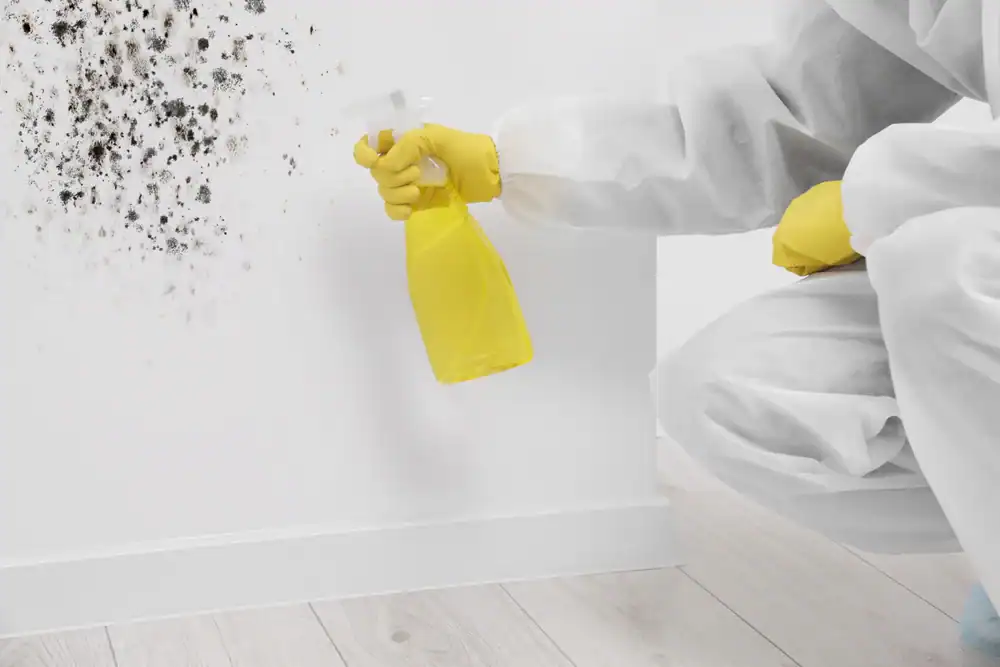
If the affected area is larger than about 10 square feet, you need professional help. That’s roughly a 3×3 section of wall or ceiling. Anything bigger means mold has likely spread beyond what you can see, and disturbing it without proper containment spreads spores throughout your home.
You also need professionals if mold is growing inside your HVAC system, in your crawl space, or anywhere that’s hard to access. These areas require specialized equipment to clean properly and safely. Trying to handle it yourself usually means you’re removing surface mold while leaving the root system and moisture source untouched.
If you’ve had any flooding, water damage, or persistent leaks, don’t try to DIY it. Water intrusion often causes hidden mold growth inside walls, under flooring, or in insulation. Professional remediation includes moisture meters and inspection tools that find what you can’t see. In North Carolina’s climate, what starts as a small patch can become a major contamination problem fast.
Mold exposure causes stuffy nose, sore throat, coughing, burning eyes, and skin rashes in most people. If you have asthma or mold allergies, reactions can be severe—including difficulty breathing and asthma attacks. Immune-compromised individuals can develop lung infections from mold exposure.
Watch your kids closely. Children spend more time on floors where spores collect, and their developing immune systems make them more vulnerable. Unexplained coughing, runny noses, or fussiness that gets worse indoors can all signal mold exposure.
Elderly family members face heightened risks because immune responses decline with age. If anyone in your home is experiencing respiratory symptoms that improve when they leave the house, take that seriously. Mold is the leading cause of Sick Building Syndrome, and in about 80% of those cases, mold contamination is the main culprit. Getting it removed quickly isn’t overreacting—it’s protecting the people who live there.
Cost depends entirely on how much mold you have and where it’s growing. A small bathroom ceiling might run a few hundred dollars. Extensive crawl space contamination with structural damage can reach several thousand. The national average for serious mold problems can hit $30,000, but most residential jobs fall well below that.
Here’s what drives the price up: the size of the affected area, whether materials need to be removed and replaced, how accessible the mold is, and what moisture control work is needed to prevent recurrence. Crawl space encapsulation costs more than surface cleaning, but it also solves the problem long-term instead of just treating symptoms.
The real cost is waiting. Mold damages whatever it grows on, and in North Carolina’s humid climate, it spreads fast. What starts as a small patch on a wall can work its way into your floor joists, insulation, and HVAC system within months. Early intervention costs less than letting it become a structural issue. We’ll give you a clear assessment after inspection so you know exactly what you’re dealing with.
Because you’re removing the mold but not fixing the moisture problem that caused it. Mold needs three things to grow: organic material to feed on, the right temperature, and moisture. Your home has plenty of the first two, so moisture is the only variable you can control.
If your crawl space stays damp, if condensation forms in your ducts, if you have a slow leak somewhere, or if humid outdoor air keeps getting into cool spaces, mold will keep returning no matter how much bleach you use. Surface cleaning kills visible mold but doesn’t address the spores embedded in porous materials or the environmental conditions letting new growth start.
Professional remediation includes moisture control. That means identifying where water or humidity is entering, fixing those entry points, and often installing barriers or dehumidification to keep relative humidity below 60%. In Koontzville, that usually involves crawl space work because North Carolina’s warm, humid air condenses when it hits cooler surfaces underground. Seal that off, control the moisture, and mold stops having what it needs to grow.
A straightforward residential job usually takes one to three days. That includes containment setup, removal, cleaning, and initial moisture control work. Larger projects involving crawl space encapsulation or extensive HVAC cleaning can take longer, sometimes up to a week.
The inspection happens first and typically takes a few hours. We need to map out all affected areas, test moisture levels, and determine what materials can be saved versus what needs removal. Once we have that information, we can give you an accurate timeline.
Most of the actual remediation happens in a single visit. We set up containment barriers, run air scrubbers to capture airborne spores, remove contaminated materials, clean all surfaces with HEPA vacuuming, and treat remaining areas. If you need crawl space encapsulation or ductwork sealing, that’s additional time but it’s scheduled clearly so you know when we’ll be working. You’re not waiting weeks for this to get handled—once we start, we finish the job.
Stop touching it and don’t try to clean it yourself if it’s larger than a dinner plate. Disturbing mold releases spores into the air, and without proper containment and filtration, you’re spreading contamination throughout your home. Turn off your HVAC system if mold is near vents or returns so you’re not circulating spores.
If anyone in your home has respiratory issues, allergies, or a compromised immune system, get them out of the affected area. Mold exposure can trigger serious reactions in vulnerable people, and continued exposure while you figure out next steps isn’t worth the risk.
Document what you’re seeing with photos. If you’re dealing with insurance, they’ll want evidence of the damage. Then call us for an inspection. The sooner you get a professional assessment, the sooner you know what you’re dealing with and can make informed decisions. Mold doesn’t improve with time—North Carolina’s climate makes it worse. Getting ahead of it now prevents a small problem from becoming a major remediation project.