
Contact Info
- Greensboro, NC 27406
- Call: 336-707-0498
- Text: 336-707-0498
-
Mon - Fri: 8am - 4pm
Sat - Sun: Closed
Contact Info
You scrubbed it. Maybe even bleached it. But the musty smell came back. Here's what's actually going on — and why the fix runs deeper than you think.
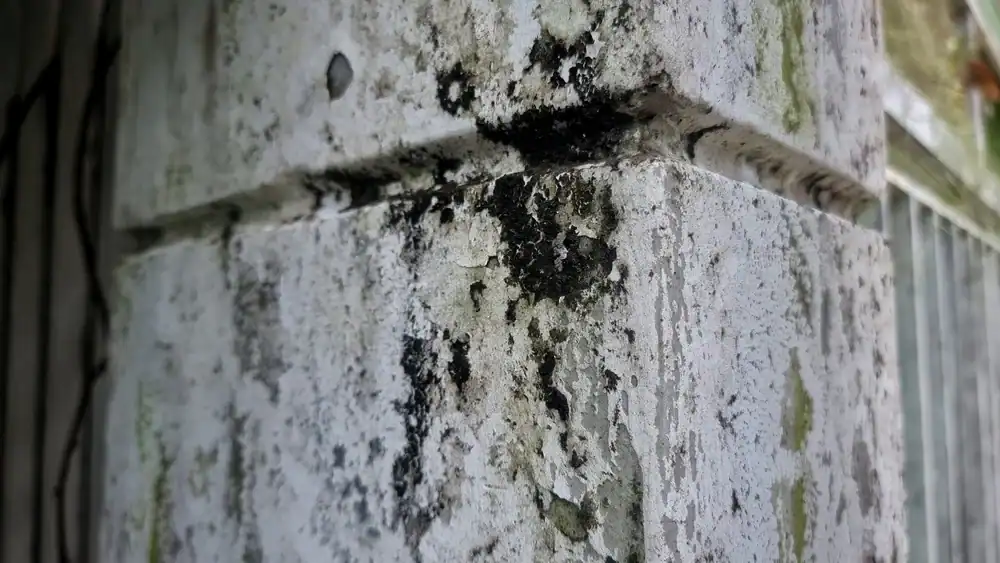
You noticed the smell. Maybe you spotted some dark growth around the bathroom grout or along a basement wall. You cleaned it — probably more than once — and for a few days, things seemed better. Then the smell came back.
That’s not bad luck. It’s not a cleaning product problem, either. It’s the predictable result of treating a symptom while the actual cause keeps doing its thing undisturbed. Black Mold Removal & Remediation Experts – Get a Free Quote Mold in your home? Eliminate mold, odors & health risks fast with expert remediation. 66+ five-star reviews. Call today: 336-864-6033 sounds straightforward until you understand where mold actually lives in most Guilford County homes — and why the visible stuff is rarely the whole story.
That persistent musty smell has a name: microbial volatile organic compounds, or MVOCs. They’re gases released by mold as it breaks down organic material — wood, drywall, cotton, paper. The smell isn’t just unpleasant. It’s a biological signal that an active mold colony is somewhere in your home, off-gassing as it feeds and spreads.
Air fresheners don’t fix it because they don’t touch the source. Dehumidifiers slow things down but don’t eliminate an existing colony. Even a thorough surface scrub only addresses what’s visible — and mold rarely stays visible for long before it retreats behind walls, under flooring, or into spaces most homeowners never think to check.
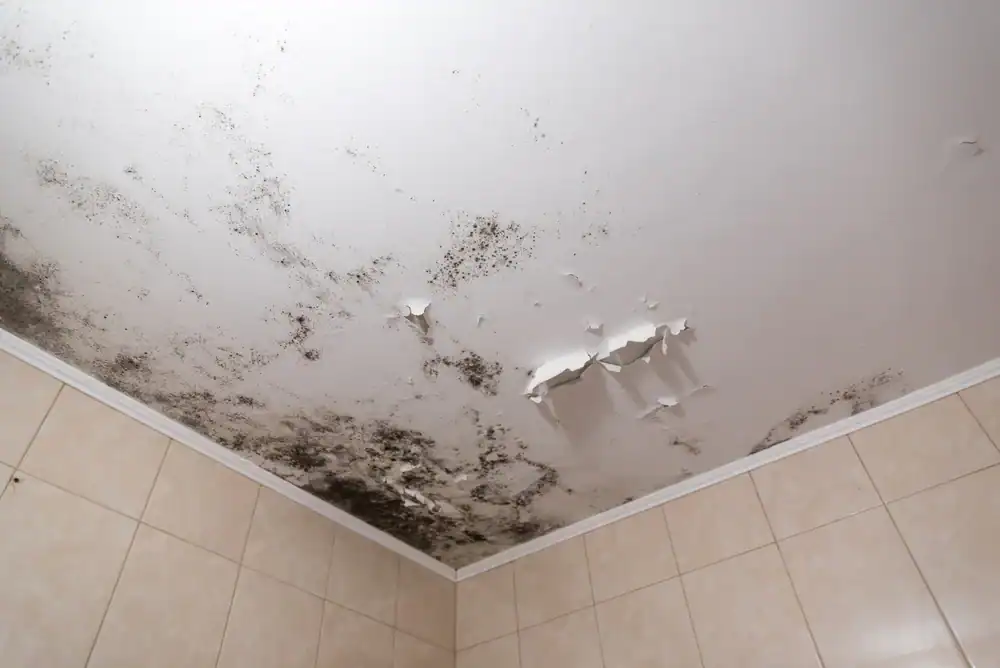
Bleach gets a lot of credit it hasn’t earned when it comes to mold. On a non-porous surface — think glazed tile or a glass shower door — bleach can kill surface mold effectively. But mold doesn’t prefer non-porous surfaces. It prefers wood, drywall, concrete, and insulation — all of which are porous. And on porous materials, bleach simply cannot penetrate deep enough to reach the root structure.
Mold isn’t just a surface film. It has a root system called hyphae that grows into the material itself. When you spray bleach on a moldy wood beam or a drywall panel, the water in the bleach solution actually penetrates the material and can carry moisture deeper — potentially feeding the colony — while the chlorine evaporates off the surface before it can reach the roots. The surface looks clean. The mold is alive beneath it.
There’s another layer to this that most people don’t realize: even if you killed every mold cell on the surface, dead mold spores still cause allergic reactions. The proteins in dead spores are just as capable of triggering respiratory symptoms as live ones. So a bleach treatment that “works” on the surface still leaves behind a health problem. This is one of the core reasons the IICRC S520 Standard — the national benchmark for professional mold remediation — states that physical removal of mold contamination is the primary method, not chemical treatment. You have to get it out, not just kill it in place.
This is why homeowners in Guilford County who clean visible mold with bleach, feel relief for a week or two, and then notice the smell returning aren’t imagining things. The surface looked clear. But the colony was never fully addressed, and the moisture that fed it is almost certainly still present.
Here’s the part that surprises most homeowners: the mold you can see is rarely the primary source of the smell. In Guilford County, the most common culprit is the crawl space — a space most homeowners haven’t looked at since they moved in.
Guilford County gets around 45 inches of rainfall per year, well above the national average of 38 inches, with precipitation falling on roughly 111 days annually. Summer humidity here regularly exceeds 70% — and on peak days can push close to 90%. Mold only needs humidity above 60% and an organic surface to start colonizing, and it can do so within 24 to 48 hours under the right conditions. That’s not a slow process. In a Guilford County summer, those conditions exist for months at a stretch.
A significant portion of the county’s housing stock — particularly homes built before the 1990s, common throughout Greensboro and High Point — sits on vented crawl spaces. Those crawl spaces were designed for a different era of building science. In today’s humid Piedmont climate, they pull in warm, moisture-laden outdoor air, which condenses on the cooler surfaces inside. Add the county’s clay soil, which retains water and drains poorly, and you have a space that is chronically damp whether it rains or not.
What makes this especially important for air quality is that up to 50% of the air you breathe inside your home comes from the crawl space. Mold growing on the wood framing below your floors doesn’t stay below your floors. It releases spores and MVOCs that rise through gaps in the floor system, get pulled into the HVAC return, and get distributed to every room in the house every time the system runs. You can scrub your bathroom grout every week and still smell mold, because the bathroom isn’t the source — the crawl space is. And the ducts are carrying it everywhere.
Older neighborhoods in Greensboro like Fisher Park and Irving Park have aging construction with known moisture intrusion vulnerabilities that compound this problem. If your home was built before the 1990s and sits on a crawl space, the odds that mold is present somewhere in that space — even if you’ve never looked — are genuinely high.
Want live answers?
Connect with a Clean Air LLC expert for fast, friendly support.
Mold removal and mold remediation are not the same thing, and the difference matters. Mold removal addresses the outbreak — it gets rid of what’s there. Mold remediation is the comprehensive version: it identifies the moisture source driving the growth, contains spores during the work so they don’t spread to clean areas, physically removes contaminated material, and verifies the space has returned to normal before the job is called complete.
The key word in that description is “physically.” Professional remediation removes the mold. It doesn’t spray it with chemicals and hope for the best. That’s not a preference — it’s what the industry standard actually requires.
This is where things get genuinely important for Guilford County homeowners: North Carolina has no state licensing requirement for mold remediation. None. Any contractor can legally advertise mold removal services with zero formal training, zero certification, and zero accountability to a professional standard. That’s not a criticism of any specific company — it’s just the regulatory reality. It means the burden of vetting falls entirely on you.
The credential that actually means something in this space is the IICRC AMRT — Applied Microbial Remediation Technician. It’s issued by the Institute of Inspection, Cleaning and Restoration Certification, and it’s not a self-reported designation or an online quiz. Earning it requires completing a Water Restoration Technician course as a prerequisite, attending in-person coursework (there’s no online option), and passing a proctored exam. Recertification is required every four years with continuing education. It’s the industry’s primary hands-on field credential for mold remediation, and it’s based directly on the IICRC S520 standard — the same standard that was formally recognized in federal law in the 2026 National Defense Authorization Act as the benchmark for military housing mold remediation.
We hold the IICRC AMRT certification. We also carry NADCA certification — the governing body for air duct cleaning professionals — with two ASCS-credentialed technicians and one Certified Ventilation Inspector on our team. In a state with no licensing floor, these are the credentials that separate trained professionals from anyone who bought a spray bottle and a truck magnet.
Beyond certifications, look for a company that documents before and after conditions with camera inspection, explains the moisture source driving the growth, and doesn’t promise to make your home “mold free.” That last one is a red flag — mold spores are always present in air. A legitimate remediation brings the contamination back to normal, livable levels. Anyone promising a mold-free home is either misinformed or selling something.
This is a gap that most mold remediation companies — even competent ones — don’t address, because most of them only do one thing. A company that specializes in crawl space remediation will clean the crawl space. A company that specializes in duct cleaning will clean the ducts. Neither one is looking at the full picture.
Here’s why that matters: if mold has been growing in your crawl space for months or years, spores have been entering your HVAC system the entire time. They’ve been pulled into the return air, passed through the filter (mold spores are small enough to pass through standard filters), and deposited along the interior surfaces of your ductwork. Those spores don’t disappear when you remediate the crawl space. They stay in the ducts, and every time your system runs, they continue to circulate through your home.
We’ve been doing this work in Guilford County for over 30 years — since the early 1990s — and we’ve seen this play out more times than we can count. A homeowner gets the crawl space remediated by one company, and six months later the smell is back. Not because the remediation failed, but because the duct system was never addressed and it was reintroducing contamination into the living space the whole time.
Because we handle both crawl space remediation and NADCA-certified duct cleaning, we can address the full contamination pathway in a single engagement — the source below the floor and the distribution system above it. We also offer air quality testing to verify conditions before and after the work, and dehumidifier installation to address the moisture problem that made mold possible in the first place. Treating the humidity source is what keeps it from coming back.
Across thousands of homes in Greensboro, High Point, and the surrounding communities, the pattern is consistent: the homeowners who get lasting results are the ones who addressed the whole system, not just the visible part.
If you’ve cleaned visible mold and the smell returned, you haven’t failed. You’ve just confirmed what the research already shows — surface cleaning doesn’t fix the source, and in most Guilford County homes, the source is somewhere you haven’t looked yet.
Real black mold removal means finding where the moisture is coming from, physically removing the contamination, and making sure the air distribution system in your home isn’t undoing the work. It also means working with someone who can show you what they found, document what they removed, and explain what they’re doing and why — without using your anxiety about mold to sell you things you don’t need.
If you’re dealing with a smell that keeps coming back, we offer free inspections with no obligation. A conversation with Clean Air LLC costs you nothing, and it might save you another round of cleaning products that won’t solve the problem.
Summary:
Share: