
Contact Info
- Greensboro, NC 27406
- Call: 336-707-0498
- Text: 336-707-0498
-
Mon - Fri: 8am - 4pm
Sat - Sun: Closed
Contact Info
Not all home inspectors dig into the same details. Here's how to find one who will — and what to do when they find something in the crawl space.
You’re under contract on a house in Greensboro, or maybe you’ve been in your home for years and something just feels off — a musty smell you can’t track down, floors that feel slightly soft in one spot. Either way, you’re thinking about a home inspection, and you want to make sure you’re hiring someone who will actually look at everything.
That includes the crawl space. Especially the crawl space.
Here’s what to look for when choosing a home inspector in Guilford County, what a thorough crawl space inspection actually involves, and — because this comes up more than most buyers expect — what to do when the inspector finds something.
North Carolina has required home inspector licensure since 1993. That’s the baseline. Every inspector you consider should hold an active NC license — that means they’ve completed 120 hours of pre-licensing coursework and 80 hours of field training, and they keep up with continuing education every year.
But licensure is just the floor. The inspectors worth hiring typically carry additional certifications through national bodies like ASHI (American Society of Home Inspectors) or InterNACHI (International Association of Certified Home Inspectors). These organizations hold their members to published standards of practice — including specific requirements for how crawl spaces must be accessed and documented.
Beyond credentials, ask for a sample report before you commit. A good inspector will hand one over without hesitation. If the report is thin on photos or light on detail, that tells you something.
This is the one area where shopping for the lowest number tends to backfire. Industry professionals are blunt about it: you never want to choose an inspector based on price. Every time someone shops based on price alone, it turns out bad for the buyer.
The average home inspection runs around $340. That’s a small number relative to what you’re buying. An inspector who cuts corners — who doesn’t physically enter the crawl space, who skips the attic, who delivers a three-page report with no photos — may technically satisfy the minimum legal requirement. But they’re not doing you any favors.
What you’re actually paying for is documentation. A thorough inspector gives you a detailed, photo-supported report that becomes your negotiating tool, your repair roadmap, and your record of the home’s condition at the time of purchase. If something goes wrong later, that report matters. Inspectors who carry E&O (errors and omissions) insurance give you an additional backstop if something significant gets missed.
In Greensboro’s real estate market — which has been one of the more active markets in North Carolina over the past several years — you may feel pressure to move fast. Don’t let that pressure push you toward the first available inspector or the cheapest one on the list. The right inspector is worth the extra day or two of scheduling.
Your real estate agent may suggest an inspector. That’s fine as a starting point, but you have every right to do your own research and hire whoever you choose. Your interests and your agent’s interests aren’t always perfectly aligned, and the inspection is the one moment in the transaction that’s entirely yours.
Once you’ve confirmed licensure and looked at sample reports, the next filter is local experience. Guilford County’s housing stock spans a wide range — from historic homes in neighborhoods like Fisher Park and College Hill to mid-century ranches in High Point to newer construction closer to the Piedmont Triad International Airport corridor. Each era of construction comes with its own set of common problems, and an inspector who knows the local inventory will spot them faster.
Greensboro’s older neighborhoods, in particular, tend to have original crawl spaces — vented foundations with bare earth floors, aging vapor barriers, and insulation that’s been compressed or disturbed over decades. These are the crawl spaces that accumulate moisture quietly, over years, before anything visible shows up inside the house. An inspector who’s spent time in Guilford County homes knows what to look for in these spaces.
Reviews matter here, but be specific about what you’re reading for. You want reviews that mention the inspector actually entered the crawl space, that the report was detailed and delivered quickly (within 24 hours is the benchmark), and that the inspector was willing to explain findings clearly. Generic five-star reviews that say “great experience” don’t tell you much. Look for the ones where the reviewer describes what the inspector found and how they handled it.
A few companies that serve Guilford County and come up consistently in local searches include Q&A Home Inspections, LLC, Holmes and Watson Inspection Agency, Bannon Home Inspections, and Heads Up Home Inspection. Each has a presence in the Greensboro and High Point markets. Do your own vetting — check NC licensure status, read recent reviews, and ask for a sample report before you book.
Want live answers?
Connect with a Clean Air LLC expert for fast, friendly support.
A home inspection crawl space assessment is where a lot of buyers get their first real look at what’s happening beneath their future home. And in North Carolina, what’s happening is often moisture-related.
The state’s humid subtropical climate, combined with Guilford County’s clay-heavy soil and the vented crawl space foundations common in older homes, creates conditions where moisture accumulates persistently. By summer, outdoor relative humidity in Greensboro regularly sits above 70 percent. Vented crawl spaces pull that air in through foundation vents, and when that humid air meets the cooler surfaces inside the crawl space, condensation follows.
A thorough inspector will assess standing water or evidence of past flooding, the condition of the vapor barrier (or note its absence), visible mold or mildew on joists and insulation, structural issues like sagging floors or compromised support pillars, ductwork condition, pest activity, and ventilation adequacy. That’s not a quick glance from the hatch — it requires physically entering the space.
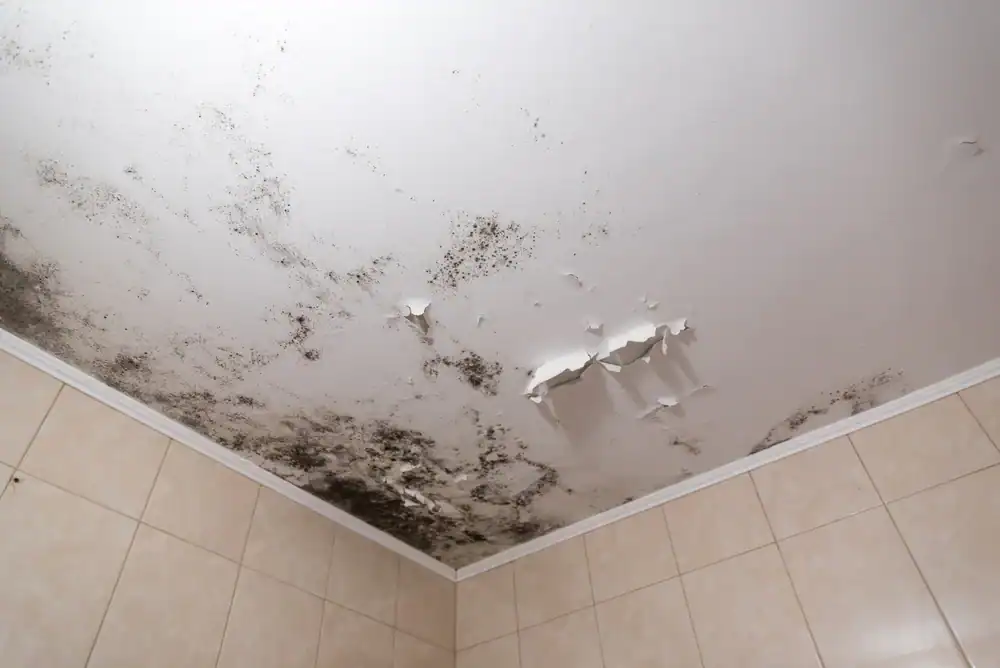
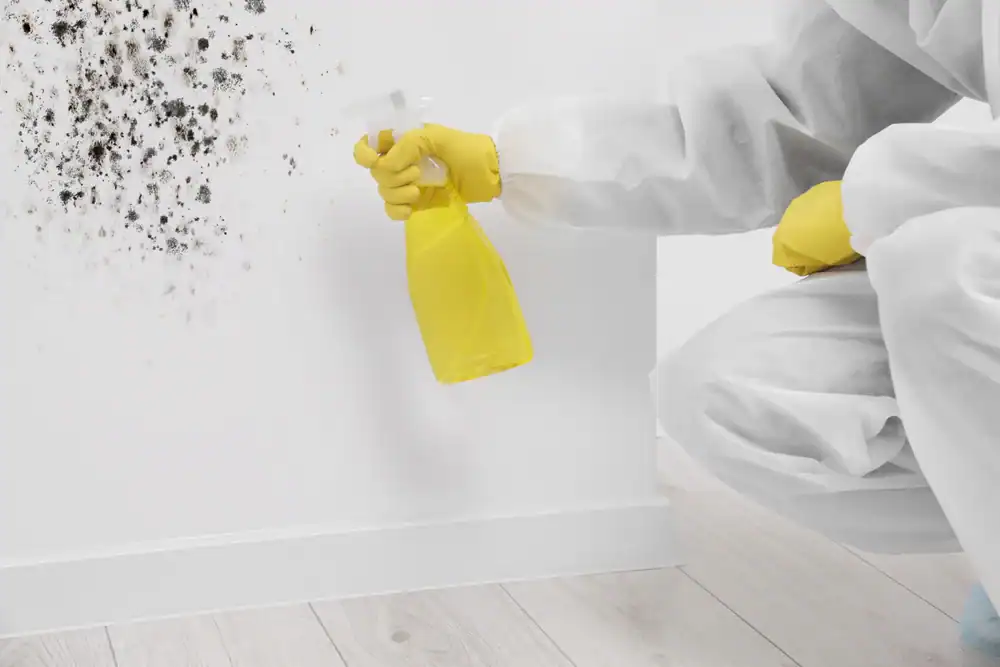
It’s one of the most common findings in Guilford County home inspections, and it tends to stop buyers cold. The inspector’s report says something like “evidence of microbial growth on floor joists” or “recommend further evaluation by a specialist,” and suddenly you’re not sure whether to walk away or negotiate.
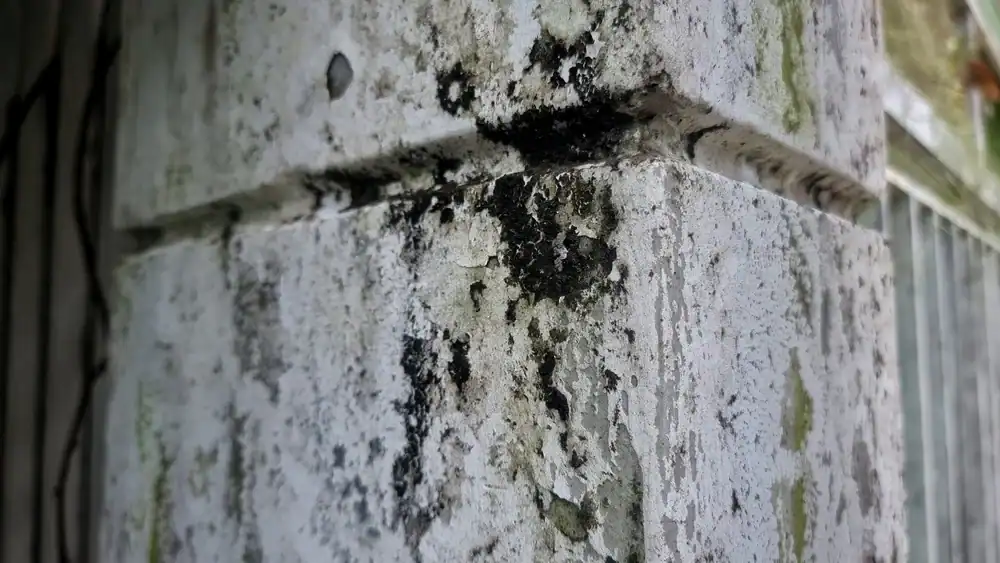
Here’s the context that helps: crawl space mold is common in North Carolina because the conditions that cause it — persistent humidity above 60 percent, limited airflow, organic materials like wood and insulation — are common here. Finding mold doesn’t automatically mean the house is a disaster. It means the moisture problem that allowed mold to grow needs to be addressed, and the mold itself needs to be remediated properly.
What it does mean for your transaction is that you now have documentation. Moisture findings in inspection reports directly influence real estate negotiations. Sellers may be asked to make repairs or offer credits when moisture issues are documented. That report is leverage — use it.
The critical thing to understand is that crawl space mold doesn’t stay in the crawl space. Up to 40 percent of the air circulating through a home comes from the crawl space. The stack effect — the natural movement of air from cooler, lower spaces upward through the home — means that whatever is in your crawl space is, to some degree, in the air your family breathes. That’s the piece that tends to change how seriously people take a mold finding.
When the inspector flags mold or moisture, the next call should be to a certified mold remediation company — not a general contractor, not a handyman. The remediation process requires specific protocols to avoid spreading spores during removal, and the work should be documented so you have a record that it was done correctly.
This is where the inspection handoff problem shows up. The inspector’s job ends at the report. They find the problem and document it — but they don’t fix it, and most inspection reports don’t tell you who to call next. That gap, between “the report flagged mold” and “I found someone qualified to fix it,” is where a lot of homeowners lose time and make expensive mistakes.
When you’re evaluating a mold remediation company, the credential to look for is IICRC AMRT — Applied Microbial Remediation Technician. This is the industry’s established standard for mold remediation work. It requires coursework, examination, and demonstrated field experience. A company whose technicians hold this certification is following documented protocols, not improvising.
For crawl spaces specifically, you also want a company that understands the moisture side of the problem — not just the mold you can see, but the conditions that allowed it to grow. Mold remediation without addressing the underlying moisture issue is a temporary fix. The right company will assess ventilation, vapor barrier condition, and humidity levels alongside the remediation work itself, and may recommend encapsulation or a dehumidifier to prevent recurrence.
We’ve been doing this work in Guilford County since the early 1990s. Our technicians hold NADCA certifications (ASCS and CVI) for ductwork and ventilation, and our mold remediation work is backed by IICRC AMRT certification. We’re also BBB accredited with an A+ rating and have 66-plus five-star Google reviews from homeowners across Greensboro, High Point, and the surrounding area. When a home inspection turns up a crawl space problem, we offer free inspections as a no-risk starting point — so you can get a certified specialist’s eyes on the situation before you commit to anything.
The reason we cover crawl space cleaning, encapsulation, mold remediation, dehumidifier installation, and HVAC duct cleaning under one roof is straightforward: crawl space problems rarely come alone. Moisture leads to mold. Mold gets into ductwork. Ductwork carries it through the house. Handling all of it with one company means nothing gets missed between handoffs.
Choosing the right home inspector in Guilford County comes down to three things: verified NC licensure, credentials that go beyond the minimum, and a track record of thorough work in local homes. Don’t choose on price alone, ask for a sample report, and make sure your inspector is actually going into the crawl space — not just noting it as inaccessible.
If the inspection turns up moisture or mold, that finding is the beginning of a process, not the end of a deal. Get a certified specialist involved quickly, document everything, and make sure whoever does the remediation work is qualified to do it correctly.
If you’re at that point — report in hand, not sure what comes next — Clean Air LLC is a good first call. We’ve seen nearly every crawl space problem Guilford County’s climate can produce, and we offer free inspections so there’s no cost to getting a second set of qualified eyes on the situation.
Summary:
Share: