
Contact Info
- Greensboro, NC 27406
- Call: 336-707-0498
- Text: 336-707-0498
-
Mon - Fri: 8am - 4pm
Sat - Sun: Closed
Contact Info
Cold floors aren't just uncomfortable—they're a sign that your crawl space is letting outdoor air into your home. Crawl space encapsulation creates a sealed barrier that keeps floors warm and energy bills low.
Cold floors happen because your crawl space is acting like a refrigerator under your house. In Guilford County, NC, most homes with crawl spaces were built with foundation vents—small openings designed to let air circulate. The problem is, those vents also let in cold winter air that settles directly beneath your floors.
Even if you close the vents seasonally, cold air still finds its way in through gaps, cracks, and the vent openings themselves. Once that cold air is in your crawl space, it doesn’t stay there. Your home naturally pulls it upward as warm air rises and escapes through the attic. That’s called the stack effect, and it’s why your floors feel like ice even when your heat is running.
The thin layer of plywood between your crawl space and your living area does almost nothing to stop that chill. Without a proper thermal barrier, the cold transfers right through.

Your crawl space isn’t sealed off from the outside world the way your living areas are. Foundation vents were originally installed based on outdated building codes that assumed ventilation would prevent moisture problems. Instead, they created a direct path for outdoor air to flow freely under your home.
But vents aren’t the only issue. Gaps around pipes, electrical lines, and rim joists create dozens of small openings where cold air sneaks in. Cracks in the foundation walls let in both air and moisture. And if your crawl space has a dirt floor with no vapor barrier, ground moisture evaporates into the air, making everything feel even colder and damper.
In the winter, this combination of cold outdoor air and moisture creates the perfect environment for discomfort. Your heating system works harder to compensate, but it’s fighting a losing battle because the cold air keeps coming. Meanwhile, your energy bills climb, your floors stay cold, and the cycle continues.
Here’s what makes it worse in Guilford County: the climate. With an average of 45 inches of rainfall per year—seven inches above the national average—and temperature swings between seasons, crawl spaces here face constant moisture and temperature challenges. Spring and fall bring daily temperature fluctuations that cause condensation cycles. Warm, humid air enters the cooler crawl space and releases moisture on every surface it touches.
That’s not just uncomfortable. It’s a setup for mold growth, wood rot, and long-term structural damage that starts quietly and gets expensive fast.
Most people think the solution to cold floors is adding insulation between the floor joists—those wooden beams that support your subfloor. It sounds logical. Insulation stops heat loss, right?
The problem is, insulation only works if the air around it is stable. When your crawl space is open to the outdoors, cold air is constantly flowing through. That airflow bypasses the insulation and cools everything down anyway. You’re essentially trying to insulate a space that’s connected to the outside.
Even worse, traditional fiberglass insulation absorbs moisture like a sponge in a damp crawl space. Once it gets wet, it loses its insulating ability, gets heavy, and eventually falls down onto the crawl space floor. You’ve probably seen it—soggy pink or yellow batts lying in a heap, doing absolutely nothing.
Insulating the floor joists also ignores everything else in your crawl space that you don’t want cold: your HVAC ducts, water heater, plumbing pipes, and furnace. When those systems are sitting in a cold, damp environment, they have to work harder and use more energy just to do their job. Your hot water cools down as it travels through cold pipes. Your heating ducts lose warmth before the air even reaches your vents. And in a hard freeze, exposed pipes can burst.
The real solution isn’t insulating the floor. It’s controlling the environment underneath it. When you seal and condition your crawl space, you’re treating it like part of your home instead of part of the outdoors. The temperature stabilizes. The air stays dry. And your floors finally feel warm because the space beneath them isn’t freezing anymore.
That’s where crawl space encapsulation comes in.
Want live answers?
Connect with a Clean Air LLC expert for fast, friendly support.
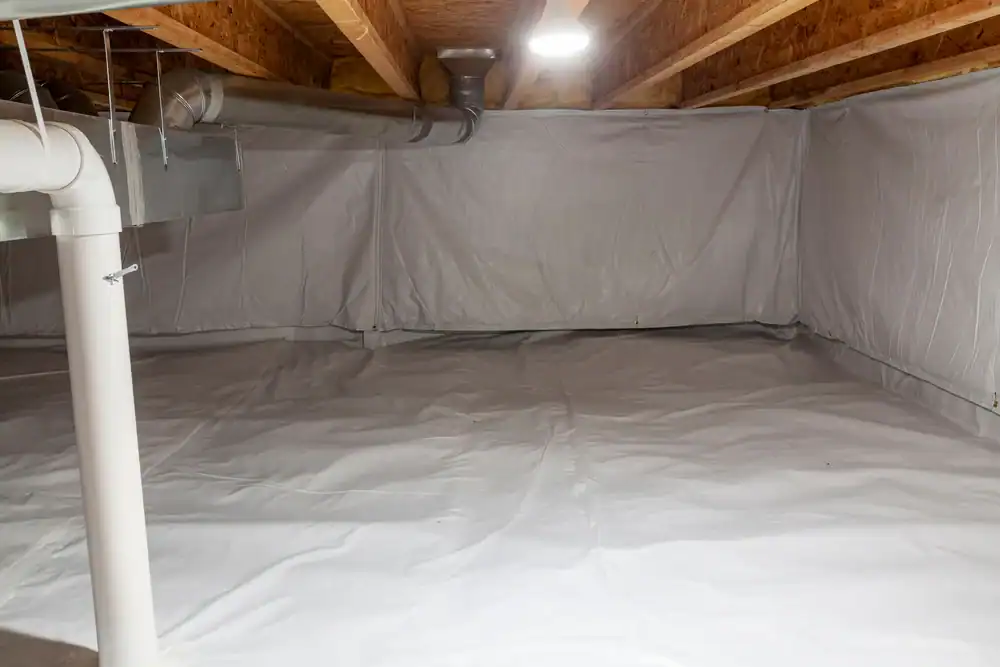
Crawl space encapsulation turns that cold, damp area under your home into a controlled, conditioned space. Instead of leaving it exposed to outdoor air and ground moisture, you seal it off completely with a heavy-duty vapor barrier, close the vents, insulate the foundation walls, and often add a dehumidifier to manage humidity levels.
Think of it like turning your crawl space into a mini basement—clean, dry, and at a stable temperature. When the air under your home matches the temperature of your living space, your floors stay warm. Your HVAC system doesn’t have to fight against cold air infiltration. And moisture has no way to creep in and cause mold or structural damage.
Encapsulation isn’t just about comfort. It’s about creating a healthier home from the ground up.

Encapsulation starts with an inspection. We look for drainage issues, plumbing leaks, standing water, high humidity, and any signs of mold or wood damage. If there’s a moisture problem, it gets addressed first—sometimes with a sump pump, interior drainage, or grading adjustments around your foundation.
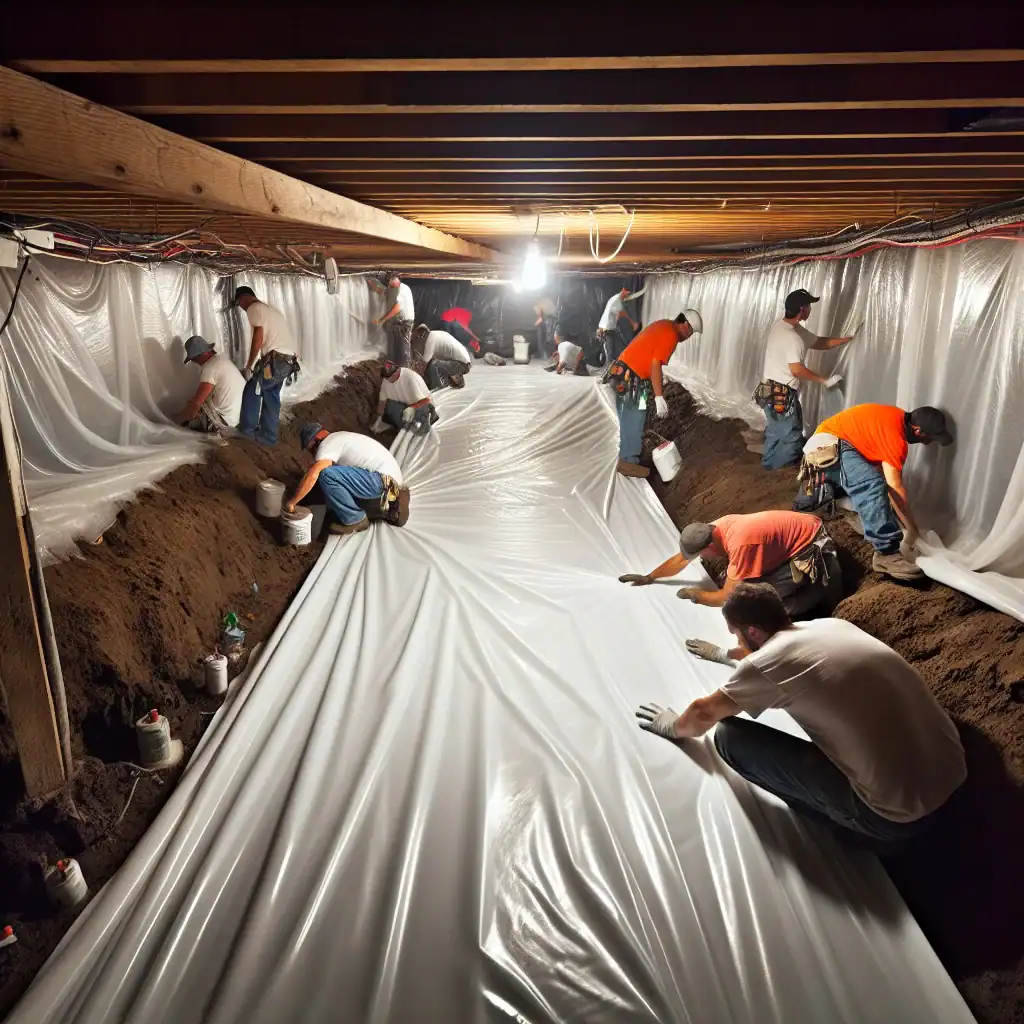
Next, any old insulation, debris, or damaged vapor barriers are removed. You want a clean slate. Then comes the vapor barrier installation. This isn’t the flimsy plastic sheeting you’d pick up at a hardware store. Professional-grade vapor barriers are typically 10 to 20 mils thick, puncture-resistant, and designed specifically for crawl space applications. The barrier covers the entire floor and extends up the foundation walls, with all seams overlapped and sealed with heavy-duty tape.
Foundation vents are sealed shut—not just closed, but permanently blocked off with rigid foam board and sealed around the edges. This stops outdoor air from entering. The rim joists, which sit on top of the foundation walls and below your floor, are insulated and air-sealed. This area is one of the biggest sources of heat loss in a home, so sealing it makes a noticeable difference.
If your crawl space has support piers or columns, those get wrapped in the vapor barrier too. Moisture can wick up through concrete, so covering every surface is important. Once everything is sealed, a crawl space dehumidifier is often installed to maintain ideal humidity levels year-round—typically between 40 and 60 percent. That range prevents mold growth, keeps wood dry, and stops condensation from forming on cooler surfaces.
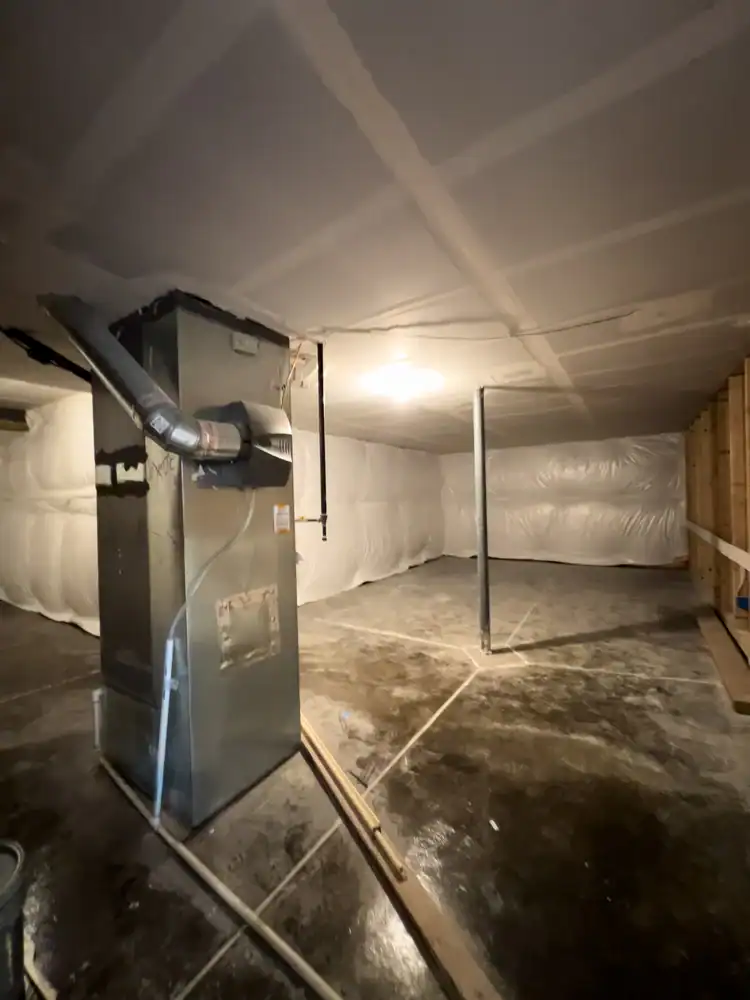
The result is a space that’s isolated from the outdoor environment. No more cold air sneaking in. No more ground moisture evaporating into the air. No more musty smells rising into your home. Just a clean, dry, stable environment that supports the comfort and health of everything above it.
And here’s the bonus: because your crawl space is now conditioned, your HVAC ducts and plumbing are protected from temperature extremes. That means better energy efficiency, lower risk of frozen pipes, and less strain on your heating and cooling systems.
When cold air flows freely through your crawl space, your heating system has to work overtime to keep your home comfortable. Every time warm air escapes through your attic or windows, cold air from the crawl space rushes in to replace it. Your furnace kicks on more often. Your thermostat never quite reaches the temperature you set. And your energy bills reflect all that wasted effort.
Crawl space encapsulation stops that air exchange. By sealing off the crawl space, you eliminate one of the biggest sources of air leakage in your home. The U.S. Department of Energy estimates that homeowners can save an average of 15 percent on heating and cooling costs by insulating crawl spaces, attics, and floors. Some studies specific to North Carolina’s climate show even better results—up to 18 percent energy savings when comparing sealed crawl spaces to vented ones.
That’s real money back in your pocket every month. Over time, those savings add up and help offset the initial investment in encapsulation. But the benefits go beyond your utility bill. Your HVAC system doesn’t have to cycle as often, which means less wear and tear and a longer lifespan for your equipment. Your home maintains a more consistent temperature from room to room. And you’re not constantly adjusting the thermostat trying to stay comfortable.
Encapsulation also improves the efficiency of your HVAC ducts if they run through the crawl space. When ducts are surrounded by cold, damp air, the heated or cooled air inside them loses temperature before it ever reaches your vents. That’s wasted energy. But when your crawl space is conditioned and at a stable temperature, your ducts don’t lose nearly as much heat or cooling. The air that comes out of your vents is closer to the temperature your system intended.
In Guilford County, where summers are humid and winters bring cold snaps, that kind of efficiency matters. You’re not just saving money in one season—you’re improving your home’s performance year-round. And if you’re someone who’s frustrated by high energy bills that never seem to go down no matter what you try, encapsulation addresses one of the root causes you might not have considered.
Cold floors aren’t something you have to live with. They’re a signal that your crawl space is working against you instead of supporting your home’s comfort and efficiency. When you seal and condition that space, you’re not just making your floors warmer—you’re improving your indoor air quality, protecting your home from moisture damage, lowering your energy bills, and creating a healthier environment for your family.
Crawl space encapsulation is one of those home improvements that pays you back in comfort and savings for years to come. If you’re tired of icy floors, rising energy costs, musty smells, or worrying about what’s happening under your home, it’s time to take a closer look at your crawl space.
At Clean Air LLC, we’ve been helping homeowners in Guilford County, NC solve these exact problems for over 30 years. With certified professionals and a focus on indoor air quality, we understand how your crawl space affects everything above it—and how to fix it the right way.
Summary:
Share: