
Contact Info
- Greensboro, NC 27406
- Call: 336-707-0498
- Text: 336-707-0498
-
Mon - Fri: 8am - 4pm
Sat - Sun: Closed
Contact Info
New energy efficiency standards are reshaping how homeowners approach crawl space moisture control. Here's why encapsulation is becoming essential for protecting your home and meeting modern performance expectations.
Building codes don’t sit still. California’s 2025 Energy Code, which took effect January 1, 2026, signals where the rest of the country is headed. These updates focus heavily on building envelope efficiency, improved insulation, and better moisture control.
While North Carolina hasn’t adopted identical standards, the trend is clear. Energy efficiency is no longer optional. Homes are expected to perform better, use less energy, and maintain healthier indoor environments.
Your crawl space plays a bigger role in this than most people realize. An unsealed, uninsulated crawl space acts like a gaping hole in your home’s thermal envelope. It lets conditioned air escape, pulls in humid outdoor air, and forces your HVAC system to work overtime.

Greensboro’s climate creates a perfect storm for crawl space problems. The humid subtropical weather, clay-heavy soils, and seasonal rainfall mean moisture is constantly trying to get under your home.
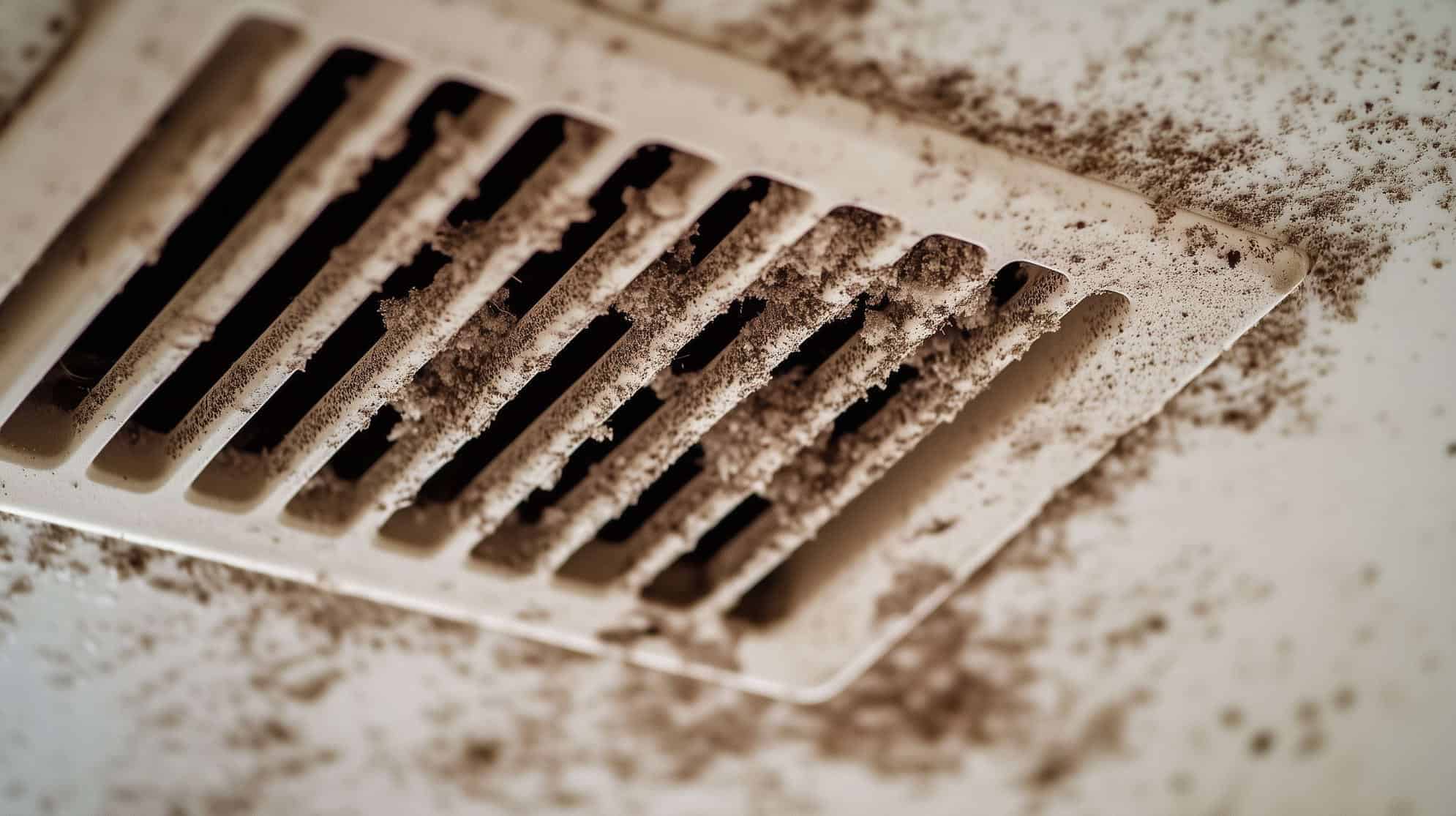
When warm, humid air enters your crawl space through open vents, it meets cooler surfaces and condenses. That moisture gets absorbed by wood framing, insulation, and anything else down there. Damp insulation loses its effectiveness. Wet wood conducts temperature differently than dry wood.
The result? Your HVAC system runs longer and harder to maintain comfortable temperatures upstairs. Studies show that homes with sealed crawl spaces use 15 to 20 percent less energy compared to those with traditional vented crawl spaces.
That’s not a small difference. For a typical Greensboro home spending $2,000 annually on heating and cooling, proper crawl space encapsulation could save $300 to $400 every year. Over time, those savings add up while your equipment lasts longer because it’s not constantly battling moisture and temperature swings.
Humid air is also more expensive to condition than dry air. Your air conditioner has to work to remove moisture before it can effectively cool. When your crawl space is constantly feeding humid air into your home, you’re paying to dehumidify the same air over and over.
Encapsulation breaks that cycle. By sealing the space with a heavy-duty vapor barrier, closing vents, and adding a dehumidifier, you create a controlled environment that stops moisture at the source. Your home’s building envelope becomes tighter, your HVAC runs more efficiently, and your energy bills drop.
For decades, building codes required crawl space vents. The thinking was simple: let outdoor air flow through to keep things dry. But modern building science has proven this approach wrong, especially in humid climates like ours.
When you vent a crawl space in Greensboro, you’re inviting moisture problems. Summer air here is loaded with humidity. That warm, wet air flows into your cooler crawl space, hits surfaces below the dew point, and condensation forms on floor joists, ductwork, and insulation.
This isn’t theory. It’s what happens in thousands of Greensboro homes every summer. The very vents designed to “dry out” the space are actually making it wetter.
Research from the Department of Energy and building science organizations shows that sealed, conditioned crawl spaces dramatically outperform vented ones. They control moisture better, prevent mold more effectively, protect structures longer, and save energy consistently.
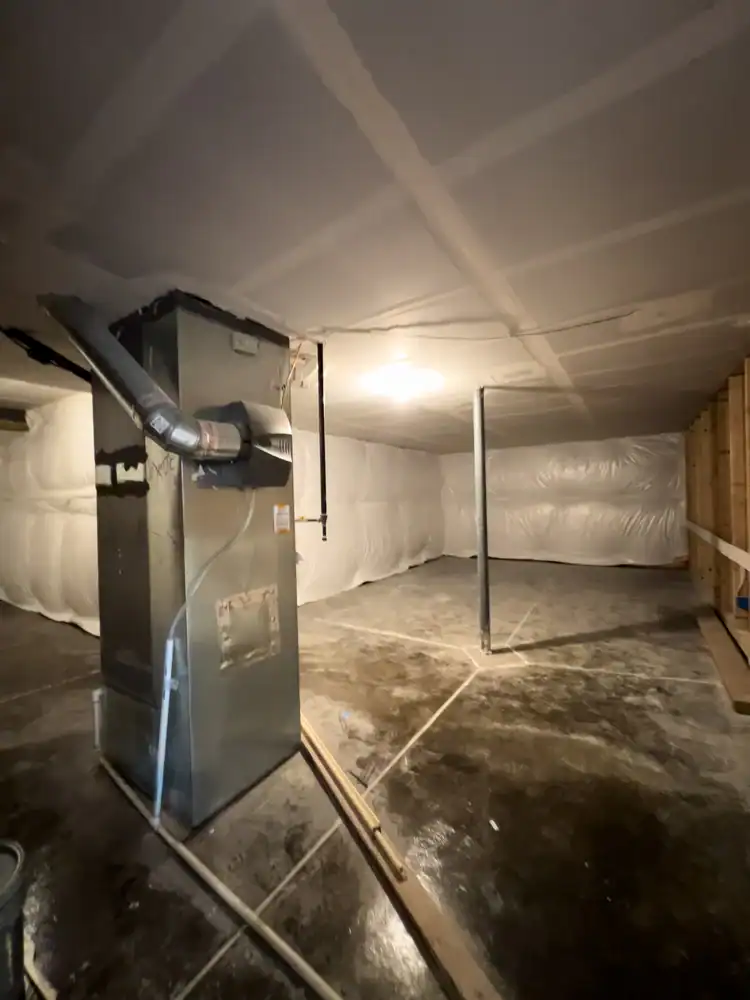
The old code requirement for crawl space ventilation has evolved. Modern codes now allow—and in some cases encourage—sealed crawl spaces when done properly. This means installing a continuous vapor barrier on the ground and walls, sealing all vents and penetrations, and conditioning the space either with a dehumidifier or by connecting it to your home’s HVAC system.
This shift reflects decades of field research. Sealed crawl spaces in humid climates simply work better. They keep relative humidity below 60 percent, which prevents mold growth. They protect wooden structures from moisture damage. They reduce pest problems because termites and other insects prefer damp environments.
For Greensboro homeowners, this matters because our climate is exactly the type where vented crawl spaces fail. Clay soils retain moisture. Seasonal rain cycles create constant ground saturation. Summer humidity levels regularly exceed 70 percent outdoors.
Proper crawl space insulation on foundation walls—not outdated fiberglass between floor joists—creates a thermal barrier that works with your sealed system. Your crawl space doesn’t need more of that humid air. It needs to be sealed off from it entirely.
Want live answers?
Connect with a Clean Air LLC expert for fast, friendly support.
Encapsulation isn’t just throwing plastic on the ground. It’s a comprehensive system designed to control moisture from every possible source.
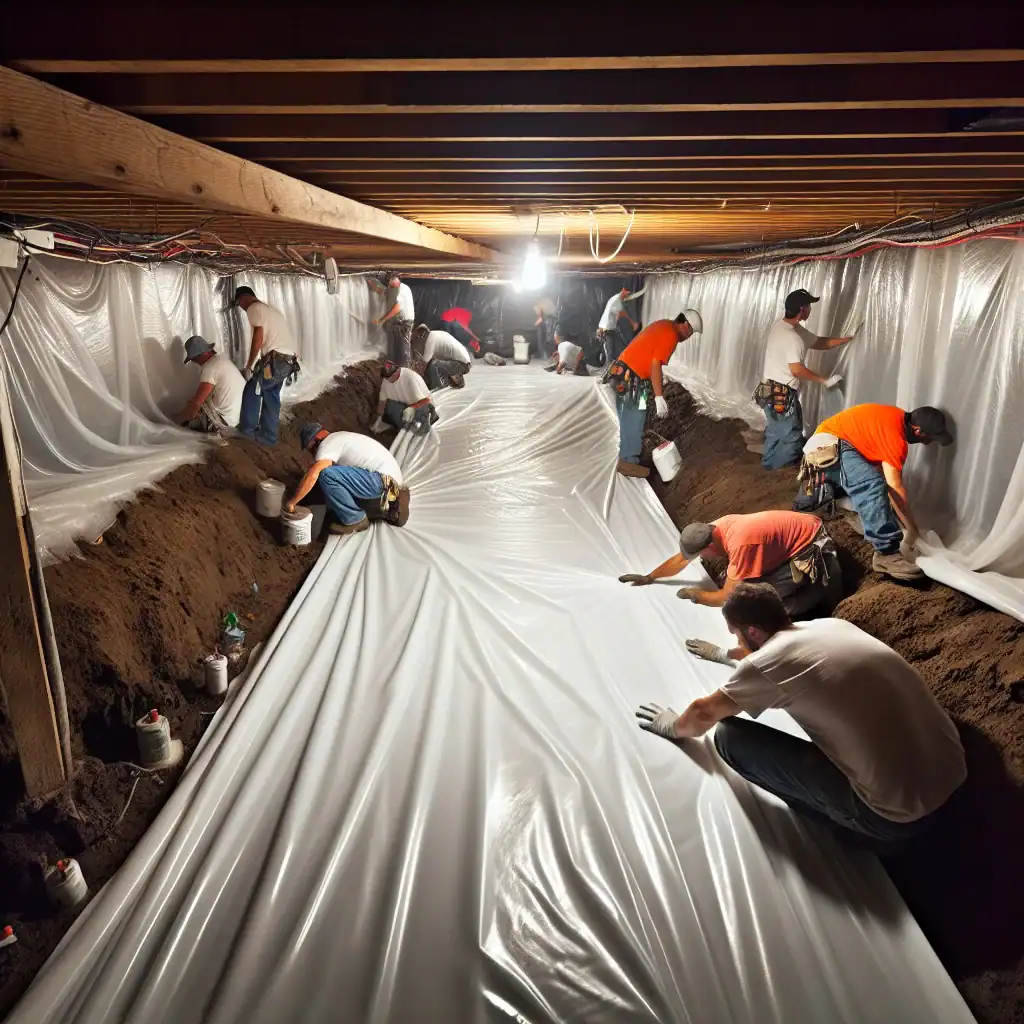
A proper encapsulation includes a heavy-duty vapor barrier covering 100 percent of your crawl space floor and extending up the foundation walls. All seams are sealed. Vents are closed. Penetrations are air-sealed. A dehumidifier maintains ideal humidity levels year-round.
This creates a controlled environment beneath your home. Moisture from the ground can’t evaporate into the space. Humid outdoor air can’t enter through vents. The dehumidifier removes any remaining moisture that might enter through minor gaps or seasonal changes.
The vapor barrier is the foundation of any encapsulation system. But not all vapor barriers are created equal.
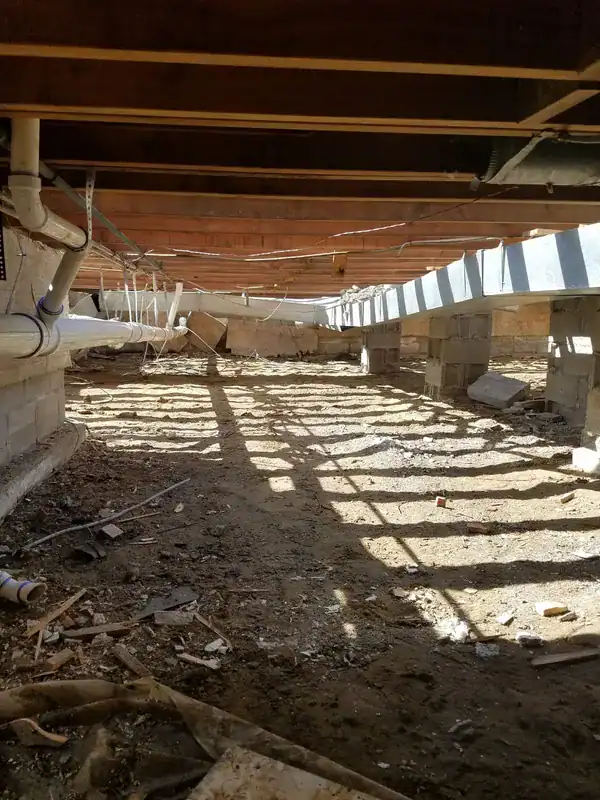
Building codes for vented crawl spaces only require a thin 6-mil plastic sheet loosely laid on the dirt. There’s no requirement to overlap seams, tape edges, or attach it to walls. This meets minimum code, but it does almost nothing to control moisture.
A proper encapsulation uses 12 to 20-mil reinforced polyethylene. This material is thick, puncture-resistant, and designed specifically for crawl space applications. It’s installed with careful attention to coverage and sealing.
Before installation, crawl space cleaning removes debris, damaged insulation, and any existing moisture issues. The barrier then covers every inch of exposed ground. It runs up foundation walls, typically 6 to 12 inches, and is mechanically fastened or sealed with specialized tape. All seams overlap by at least 6 to 12 inches and are sealed with vapor barrier tape to create a continuous moisture barrier.
Penetrations around piers, plumbing, and other obstacles are carefully sealed. The goal is eliminating any path for ground moisture to evaporate into your crawl space air.
This level of detail matters because moisture is persistent. Even small gaps or unsealed seams allow water vapor to escape, raising humidity levels and defeating the purpose of the barrier. A loose-laid 6-mil sheet might cover 60 to 70 percent of the ground effectively, but that remaining 30 to 40 percent continues feeding moisture into the space.
In Greensboro’s clay soils, ground moisture is constant. Even during dry periods, the soil beneath your home holds water like a sponge. Without a properly sealed vapor barrier, that moisture migrates upward continuously, creating the damp conditions that lead to mold, wood rot, and structural damage.
Professional installation ensures the barrier is positioned correctly, sealed thoroughly, and integrated with other encapsulation components like dehumidifiers and drainage systems.
A vapor barrier stops moisture from the ground. But it can’t control humidity from other sources like seasonal temperature changes, minor air leaks, or residual moisture in building materials.
That’s where a crawl space dehumidifier comes in. These aren’t the portable units you buy at a hardware store. They’re commercial-grade systems designed specifically for below-grade spaces, capable of removing 70 to 130 pints of water per day when needed.
The dehumidifier monitors humidity levels continuously and cycles on when needed to maintain the ideal range of 50 to 55 percent relative humidity. This keeps your crawl space dry year-round, regardless of what’s happening with weather or seasonal changes.
Proper dehumidifier installation includes a dedicated drain line so collected water is automatically removed. Many systems can drain to a sump pump, to daylight if your home sits on a slope, or through a condensate pump if needed.
Energy efficiency matters here too. Quality crawl space dehumidifiers are Energy Star rated and use electronically commutated motors that consume 30 percent less power than traditional models. They’re designed to run continuously in sealed environments, maintaining optimal conditions without driving up your electric bill.
Operating costs typically run $30 to $50 per month in electricity, but this investment protects against far more expensive problems. Mold remediation can cost thousands. Structural repairs for wood rot run even higher. A dehumidifier is preventive maintenance that pays for itself by avoiding those major issues.
In Greensboro’s climate, a dehumidifier isn’t optional if you want long-term moisture control. Our humid summers and temperature fluctuations create conditions where even a perfectly sealed vapor barrier needs backup. The dehumidifier provides that final layer of protection, ensuring your crawl space stays dry through every season.
When paired with proper vapor barrier installation, sealed vents, and adequate drainage, a dehumidifier creates a complete moisture control system that works reliably for 15 to 20 years or more.
Energy standards are evolving because homes need to perform better. Moisture control, air quality, and energy efficiency aren’t separate issues. They’re connected, and your crawl space sits at the center of all three.
If you’re noticing musty smells, higher energy bills, or concerns about what’s happening beneath your floors, you’re not alone. Thousands of Greensboro homeowners deal with crawl space moisture every year. The difference is whether you address it properly or keep patching symptoms.
Encapsulation is an investment, but it’s one that protects your home’s structure, improves your family’s air quality, and lowers your operating costs for decades. As energy standards continue tightening and building science keeps advancing, sealed crawl spaces are becoming the expected standard, not the exception.
We’ve spent over 30 years helping Greensboro homeowners solve these exact problems. If you’re ready to see what’s really happening under your home and explore solutions that actually work long-term, it’s worth having that conversation.
Summary:
Share: