
Contact Info
- Greensboro, NC 27406
- Call: 336-707-0498
- Text: 336-707-0498
-
Mon - Fri: 8am - 4pm
Sat - Sun: Closed
Contact Info
That musty smell isn't coming from nowhere. Here's why Guilford County homes are especially prone to crawl space moisture — and what to do about it.
If you’ve noticed a musty smell in your home that keeps coming back no matter what you do, there’s a good chance it’s not a cleaning problem. It’s a crawl space problem. And in Guilford County, the conditions that create crawl space moisture are almost impossible to avoid without actively addressing them. The clay soil, the summer humidity, the older housing stock — it all adds up. This isn’t about scaring you. It’s about helping you understand what’s actually happening under your home, why it keeps happening, and what it takes to genuinely fix it.
Greensboro averages 44 to 46 inches of rainfall per year — well above the national average of 38 inches — and unlike some markets that get a dry season, Guilford County gets moisture year-round. Summer relative humidity regularly hits 70 percent and climbs to 80 or 90 percent during July and August. That alone would be enough to stress most crawl spaces.
But the bigger factor is what’s underneath your home. Guilford County sits on Cecil sandy clay loam — a Piedmont clay soil that holds water for days, sometimes longer, after it rains. So even during a dry stretch in the middle of summer, the ground beneath your crawl space is still releasing moisture vapor upward. Continuously. That’s the part most homeowners don’t know about, and it’s the reason the problem never fully goes away on its own.

Here’s the mechanism that drives most of what we see in Guilford County crawl spaces. During summer, outdoor air temperatures in Greensboro regularly reach the upper 80s. But the surfaces inside your crawl space — the soil, the floor joists, the ductwork — stay significantly cooler. When warm, humid outdoor air meets those cooler surfaces, it condenses. The same way a cold glass sweats on a hot day.
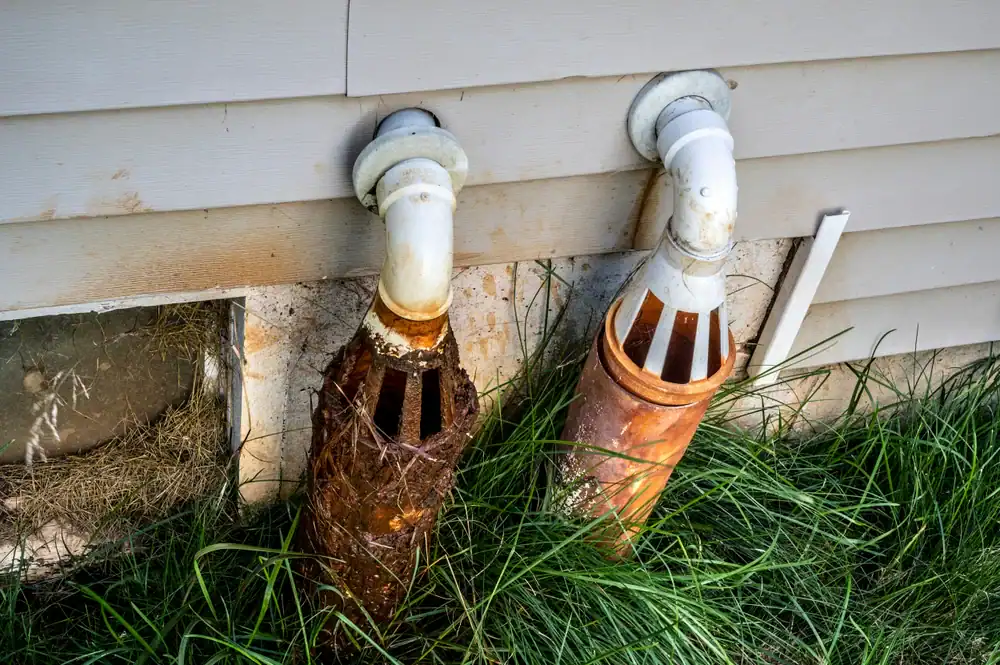
If your home has a vented crawl space — which most older homes in Greensboro do — that humid outdoor air is flowing in through the foundation vents constantly. The original idea behind those vents was that airflow would dry the space out. In drier climates, that logic holds. In a humid subtropical climate like ours, it backfires completely. You’re not ventilating moisture out. You’re ventilating moisture in.
From April through October, outdoor dew points in the Piedmont regularly exceed 65°F. That’s the threshold at which warm air hitting a cooler surface will condense. For roughly half the year, your vented crawl space is essentially a condensation machine. Relative humidity inside a vented crawl space during a Guilford County summer can reach 80 percent or higher — and mold only needs conditions above 60 percent to establish itself on wood framing. Above 70 percent, it’s almost guaranteed.
This is why the musty smell that shows up every spring isn’t random. It’s predictable. The crawl space stayed relatively dry through winter, then spring arrived, outdoor humidity climbed, and the condensation cycle started again. The smell is the first sign. What’s happening to the wood framing and insulation beneath your floors is the part you can’t see yet.
Understanding the stack effect is the piece that changes how most homeowners think about this problem. Hot air rises. As warm air moves upward through your home and escapes through the upper floors and attic, it creates a slight negative pressure at the bottom of the house. That pressure draws replacement air in from the lowest available source — which, in a home with a crawl space, is the crawl space itself.
Research cited by the EPA estimates that roughly 40 to 50 percent of the air on your home’s first floor originated from below the floor. That’s not a fringe claim. It’s the basic physics of how air moves through a multi-story structure. And it means whatever is in your crawl space — moisture, mold spores, soil gases, pest activity — gets pulled upward into the air your family breathes.
A 1,000-square-foot crawl space with exposed soil can release 10 to 15 gallons of moisture per day through evaporation alone. That moisture doesn’t stay in the crawl space. It moves upward. It raises the relative humidity on your first floor. It makes your HVAC system work harder to maintain comfortable temperatures, which is why homeowners with serious crawl space moisture problems often notice higher energy bills alongside the musty smell — those two symptoms are connected.
For homes in older Guilford County neighborhoods like Fisher Park, Sunset Hills, Irving Park, and Westerwood, where original vented crawl spaces and aging vapor barriers are common, this cycle has often been running for decades. The damage is gradual and largely invisible until it becomes expensive. Wood rot and mold don’t announce themselves until you’re looking at structural repairs or a failed home inspection.
Want live answers?
Connect with a Clean Air LLC expert for fast, friendly support.
Encapsulation gets used as a catch-all term, but it’s worth understanding what it actually means — especially because there’s a lot of confusion between a basic vapor barrier and a full encapsulation system. They’re not the same thing, and in Guilford County’s climate, the difference matters considerably.
A properly encapsulated crawl space is a sealed system. It addresses the ground, the walls, the vents, and the air inside the space. Done correctly, it can reduce relative humidity from above 80 percent down to below 60 percent — the threshold where mold stops being a realistic threat. It also takes pressure off your HVAC system, which is why homeowners often report lower energy bills after encapsulation.

This is one of the most common questions we hear, and it matters more than most people realize. A vapor barrier is a sheet of polyethylene plastic laid on the crawl space floor. It reduces moisture vapor rising from the soil. That’s useful — but it’s one component of a moisture control system, not the whole solution.
Full encapsulation goes further. It covers the floor and the crawl space walls, seals the foundation vents, addresses any penetrations where air or moisture can enter, and typically includes active dehumidification to manage the air inside the sealed space. The vapor barrier material also matters significantly. Thin plastic sheeting — the 4 to 6 mil material common in older Guilford County homes — degrades, tears, and shifts over time. A proper encapsulation system uses heavy-duty polyethylene, typically 10 to 20 mil, designed to last.
Many homes in Guilford County have some form of plastic on the crawl space floor from a previous installation. If your home is one of them, that’s a starting point — but it’s worth having someone actually look at the condition of that material and assess whether the vents are still open and whether there’s active moisture accumulation. Old, degraded plastic with open foundation vents is not the same as a functioning moisture control system. In our climate, leaving vents open while relying on a basic vapor barrier means you’re still running that condensation cycle every summer.
A dehumidifier alone isn’t the full answer either, though it’s often part of one. In a vented crawl space, a dehumidifier is fighting against a constant influx of humid outdoor air. It runs harder, uses more energy, and still can’t reliably hold the space below 60 percent relative humidity without first sealing the vents and addressing ground vapor. The right sequence matters: seal first, then dehumidify.
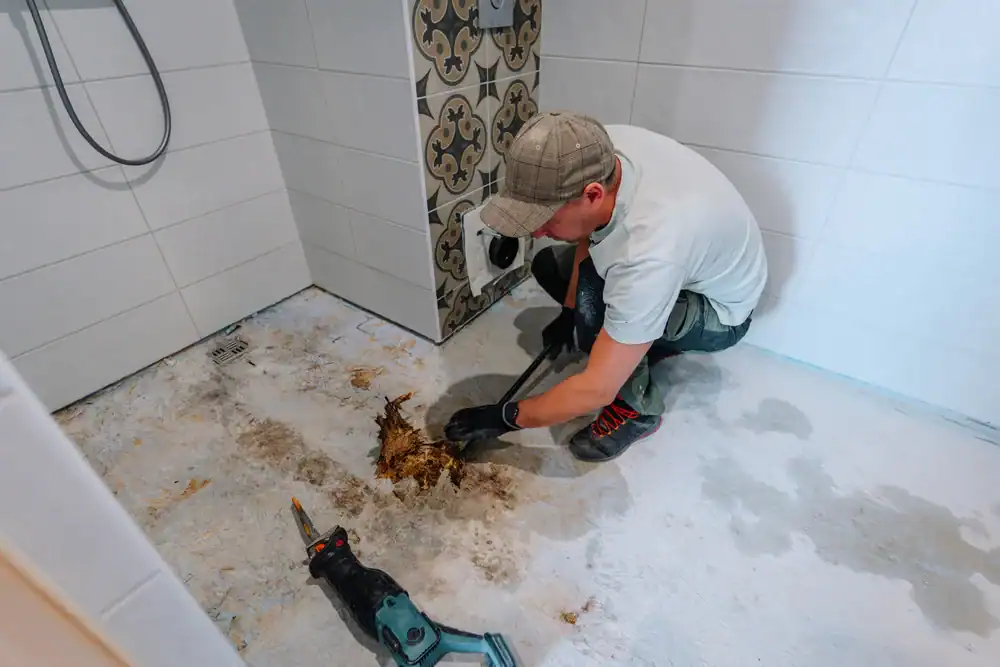
Encapsulation prevents the problem from continuing. But if moisture has been present long enough — and in many Guilford County homes, it’s been present for years — there may already be mold on the wood framing, degraded insulation, or early signs of structural damage to the floor joists. Encapsulating over an active mold problem without addressing it first doesn’t solve anything. It seals the problem in.
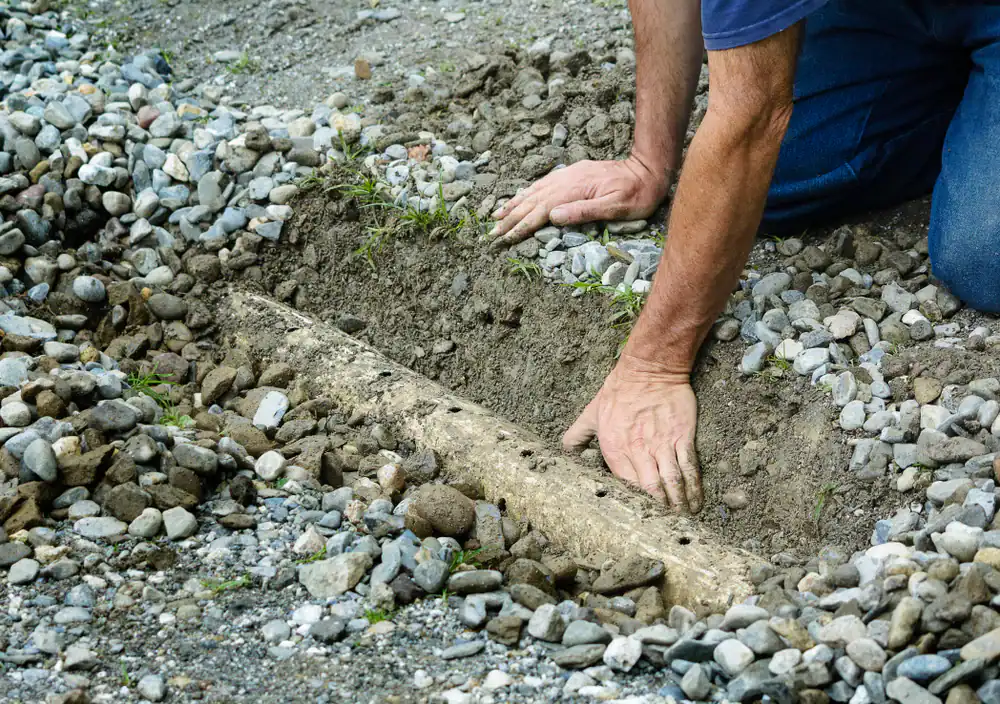
This is where having a single provider who handles the full scope of the problem makes a real difference. Mold remediation, encapsulation, drainage improvements, and dehumidifier installation are interconnected. If there’s a drainage issue contributing to standing water, a French drain or sump pump may need to be part of the solution before anything else happens. If mold is present on the framing, proper remediation — not surface treatment — has to come first. And if the ductwork running through the crawl space has been exposed to years of high humidity and mold spores, cleaning the crawl space without addressing the ducts means you’re still circulating contaminated air through the home.
We hold IICRC AMRT certification specifically for mold remediation work — that’s the Applied Microbial Remediation Technician designation from the Institute of Inspection, Cleaning and Restoration Certification. It means our approach to mold isn’t guesswork. It also means we’re not just treating visible surfaces and calling it done. Proper remediation involves identifying the extent of growth, containing it, removing it safely, and verifying the result. Combined with NADCA certification for duct cleaning and over 30 years working in Guilford County homes, we’re equipped to address every link in this chain — from the ground under your crawl space to the air coming out of your vents — without handing you off to a different contractor for each piece.
The most important thing is to get eyes on the actual space. Musty smells, rising energy bills, and allergy symptoms that worsen at home are all signs worth taking seriously — but a crawl space inspection is the only way to know what you’re actually dealing with and what level of intervention makes sense.
The good news is that not every situation requires the same scope of work. Some homes need full encapsulation with drainage improvements. Others need targeted remediation and a dehumidifier. The right answer depends on what’s there — and the only way to find out is to look.
If you’re in Guilford County and you’ve been noticing any of the symptoms described here, we offer free inspections as a no-commitment starting point. We’ve been working in homes across this county for over 30 years, and we’re not here to sell you something you don’t need. We’re here to tell you what we find and what it means.
Summary:
Share: