
Contact Info
- Greensboro, NC 27406
- Call: 336-707-0498
- Text: 336-707-0498
-
Mon - Fri: 8am - 4pm
Sat - Sun: Closed
Contact Info
Your HVAC tech referred you to a duct cleaning specialist. Here's exactly why that happens — and what to look for when you call.
If your HVAC technician just told you your ducts need cleaning — but said they don’t do it themselves — you probably have questions. Why would a company that services your entire heating and cooling system draw the line there? Is this a referral you should trust, or a reason to be skeptical?
It’s a fair thing to wonder. And the answer actually tells you a lot about how duct cleaning works, what legitimate service looks like, and what to watch out for when you start calling around. Here’s what’s really going on — and what it means for you.
Most reputable HVAC companies in Guilford County, NC are excellent at what they do — diagnosing system problems, replacing equipment, improving efficiency. What they’re not set up for is the specialized equipment, training, and operational model that legitimate duct cleaning requires. That’s not a shortcoming. It’s focus.
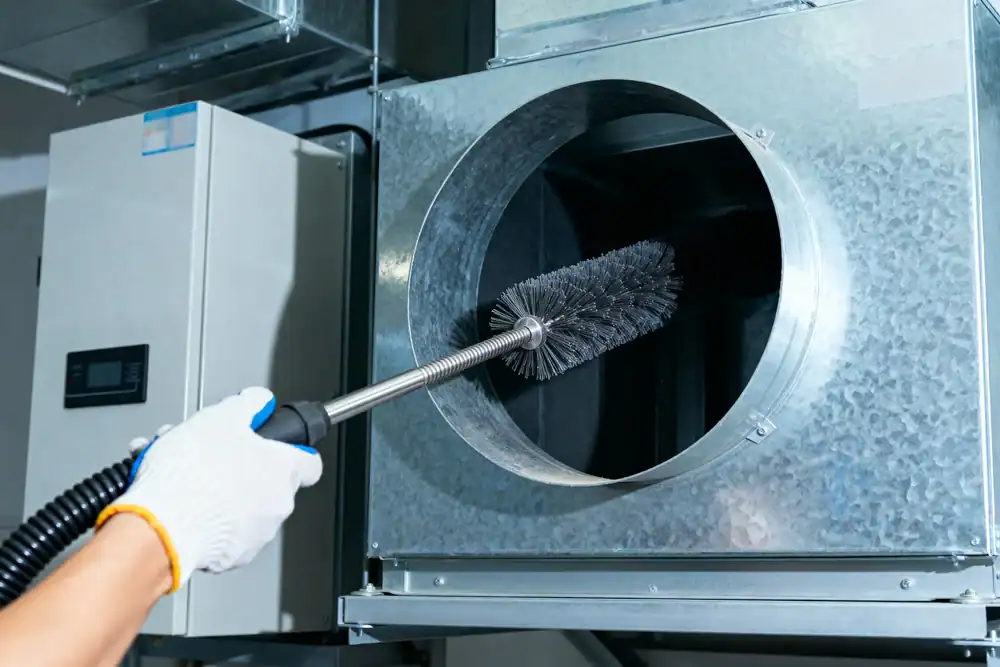
Duct cleaning done right involves truck-mounted vacuum systems that create negative pressure throughout the entire duct network, HEPA-filtered equipment that captures fine particulates rather than pushing them back into your living space, and camera-based inspection to assess what’s actually inside the system before any cleaning begins. That’s a different investment — in tools, in training, and in the certifications that back it up. When an HVAC company refers you to a specialist instead of doing it themselves, they’re making a professional call that protects you.
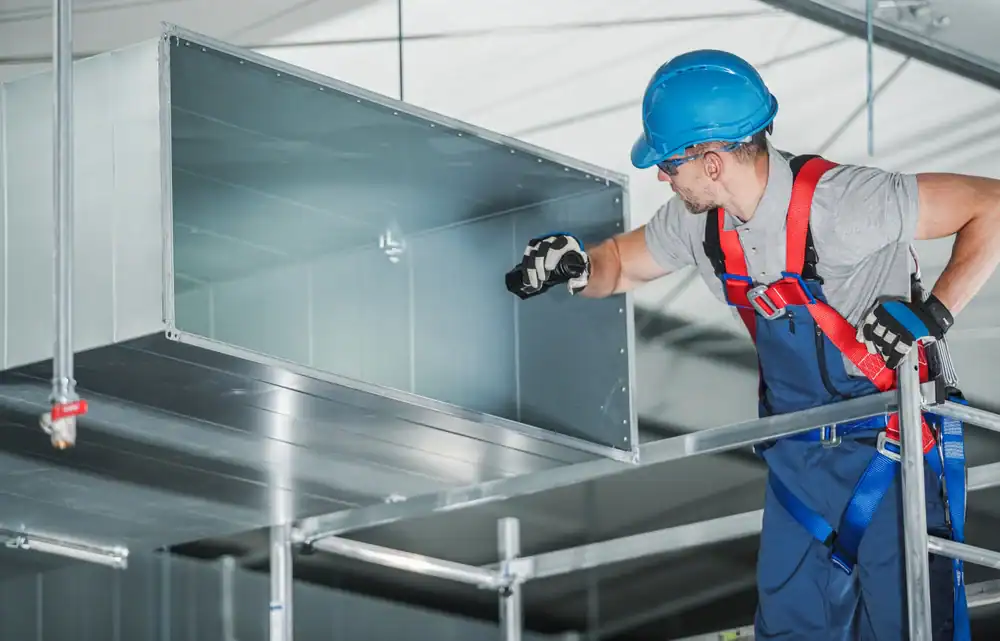
This is where a lot of confusion starts. “Duct cleaning” means very different things depending on who’s doing it. At the low end, you have operators who show up with a shop vac, vacuum the visible registers, and call it done. At the professional end, you have a whole-system process that looks nothing like that.
A thorough cleaning starts with a pre-job inspection — often using a camera — to identify problem areas before any equipment gets turned on. From there, a negative pressure system is established throughout the ductwork, which means the entire system is under suction before agitation begins. That matters because it prevents whatever is loosened inside the ducts from escaping into your home during the process.
Then comes the actual cleaning: power brushing and compressed air tools work through the supply ducts, return ducts, registers, grilles, coils, drain pan, fan motor, and the air handling unit itself. Not just the vents you can see from the hallway. After the cleaning is complete, before-and-after documentation — photos or video — gives you a way to verify what was done. You’re not just taking someone’s word for it.
Most homes take three to four hours for a thorough cleaning. If a company quotes you a job that’ll be done in thirty minutes, that’s your first sign something is off. The time alone tells you whether they’re cleaning the system or just going through the motions.
The distinction between that kind of real work and what some operators call “duct cleaning” is exactly why NADCA — the National Air Duct Cleaners Association — exists. Their ACR Standard (Assessment, Cleaning, and Restoration) sets the process requirements for how a legitimate cleaning should be conducted, and their certifications tell you whether the company in your driveway has actually been trained and tested to that standard.
This is a distinction that matters more than most people realize, especially in the Greensboro area where some local operators use language like “NADCA-trained” or “NADCA-aligned” in their marketing. Those phrases sound credible. They’re not the same thing as being a NADCA member company.
To be a NADCA member, a company must have at least one technician on staff who has earned the ASCS designation — Air Systems Cleaning Specialist. That’s not a seminar certificate or an online course completion. It’s a proctored exam. And it has to be maintained through continuing education, which means the knowledge stays current. Beyond the individual credential, the company itself is held to NADCA’s ACR Standard and Code of Ethics. If they want to keep their membership, they have to operate to that standard on every job.
“NADCA-trained” can mean almost anything. It can mean a technician watched some training videos. It can mean someone attended a conference session. There’s no exam, no ongoing requirement, and no accountability structure behind it.
One practical way to check: NADCA membership is verifiable directly on nadca.com. If a company claims certification but doesn’t appear in the member directory, that tells you something.
In 2025, the EPA formally updated its indoor air quality guidance to recognize source removal — the foundational method NADCA has championed since 1989 — as one of three core best practices for healthy indoor air. For nearly thirty years, skeptics pointed to older EPA language to dismiss duct cleaning as unnecessary. That position has changed. Certified, source-removal-based cleaning is now formally recognized as legitimate IAQ practice.
Want live answers?
Connect with a Clean Air LLC expert for fast, friendly support.
Duct cleaning isn’t equally urgent for every home in every climate. But Guilford County’s conditions create a specific combination of factors that make contaminated ductwork a more common problem here than in drier parts of the country.
The Piedmont Triad runs humid. Summer relative humidity regularly exceeds seventy to eighty percent, and that sustained moisture doesn’t stay outside. It works its way into crawl spaces, into ductwork, and into the air your family breathes every day. Add in the region’s clay-heavy soil — which retains water and drains poorly — and you have conditions that drive elevated crawl space moisture year-round. Up to forty percent of the air circulating through a home comes from beneath the floors. When that space has a moisture problem, the ductwork above it often does too.
This is one of the most common questions we hear, and it’s a fair one — especially given how much noise there is in the market from operators trying to convince everyone their ducts are overdue for service.
Duct cleaning is genuinely warranted in a few clear situations. If you’re noticing a musty smell when your HVAC system kicks on — particularly at the start of cooling season — that’s worth investigating. In Guilford County’s climate, that smell is often mold or mildew that has taken hold somewhere in the system over the winter. It doesn’t always mean the ducts are the source, but a camera inspection will tell you quickly whether they are.
If you’ve recently finished a renovation, duct cleaning is almost always a good idea. Drywall dust, sawdust, and construction debris are fine enough to travel through a home’s air system and settle deep inside the ductwork. Standard HVAC filters aren’t designed to catch all of it during a project, and what gets in tends to stay in.
New homeowners are another group with a legitimate reason to consider it. You don’t know the history of the system — how long it’s been since anyone looked inside, whether there were pets, whether there was ever a moisture event. A pre-cleaning inspection gives you a baseline.
And for households with someone who has asthma or significant allergy sensitivities, it’s worth knowing what’s in the system — especially with Guilford County’s spring and fall pollen counts. Pollen, pet dander, and dust mite debris accumulate in ductwork and recirculate every time the system runs. Whether cleaning is the right call depends on what the inspection actually finds, not on a sales pitch.
What’s not a good reason to get your ducts cleaned: a company showing up at your door or calling with a “$79 whole-house special.” Legitimate cleaning costs what legitimate cleaning costs, and a thorough job on a standard residential system takes three to four hours of actual work. If the price sounds too good to be true for a service that involves a truck, specialized equipment, and a full-system process, it probably is.
When a local HVAC company refers you to a duct cleaning specialist, they’re putting their own reputation on the line. They’re not going to send you to someone who does shoddy work and leaves you calling back to complain. That referral is itself a form of vetting — but it’s still worth knowing what to look for on your end.
Start with certifications you can verify. NADCA membership is the baseline — and again, you can check it yourself at nadca.com. Beyond that, look for additional credentials that speak to the specific conditions in your home. In Guilford County, where humidity and crawl space moisture are persistent factors, a company that also holds IICRC AMRT certification — that’s the Applied Microbial Remediation Technician credential from the Institute of Inspection, Cleaning and Restoration Certification — can address mold-related contamination in ductwork, not just dust and debris. Those two certifications together are meaningful in a climate like ours.
Ask about the process before anyone shows up. A legitimate company will tell you upfront that the job starts with an inspection, that negative pressure equipment will be used throughout the system, and that you’ll receive before-and-after documentation when the work is done. If a company can’t clearly explain their process, or if their explanation sounds like “we clean the vents,” that’s a signal to keep looking.
Ask how long the job will take. A thorough cleaning on a standard home takes three to four hours. A company that tells you they’ll be in and out in under an hour is not cleaning your system — they’re cleaning your accessible registers and leaving.
Check reviews — not just the star rating but the volume and recency. A company that has been in Guilford County for over thirty years and has accumulated sixty-six or more five-star Google reviews has a track record that a newer operation simply can’t replicate. Longevity in a specific local market is its own form of accountability. Fly-by-night operators don’t last three decades.
And if a company offers a free inspection before quoting you a cleaning, take them up on it. That inspection tells you what’s actually in your system — and whether cleaning is genuinely warranted. A company that leads with an inspection rather than a sales pitch is showing you something about how they operate.
The reason top HVAC companies refer duct cleaning out isn’t complicated. It’s a specialized service that requires specialized equipment, specialized training, and accountability to a recognized standard. When your HVAC technician sends you to a certified specialist instead of doing it themselves, that’s a professional judgment worth respecting — not a reason to be suspicious.
What matters is knowing how to evaluate the specialist they send you to. Verified NADCA membership, a clear process, upfront job timelines, before-and-after documentation, and a track record in your specific community are the things that separate a company worth calling from one worth avoiding.
If you’re in Guilford County, NC and want to know what’s actually inside your ductwork before committing to anything, we offer free inspections — no pressure, no guesswork. Reach out during business hours and we’ll tell you exactly what we find.
Summary:
Share: