

Contact Info
- Greensboro, NC 27406
- Call: 336-707-0498
- Text: 336-707-0498
-
Mon - Fri: 8am - 4pm
Sat - Sun: Closed
Contact Info
You stop wondering why everyone’s sneezing. The constant runny noses, scratchy throats, and morning congestion start to fade because the dust, mold spores, and allergens cycling through your vents are gone.
Your HVAC system stops working overtime. When ducts are clogged with debris, your system runs longer to hit the same temperature. That means higher energy bills and more wear on equipment that’s expensive to replace.
You get rid of the smell you can’t quite place. Old cooking odors, mustiness, even traces of cigarette smoke get trapped in ductwork and keep circulating. A thorough vent cleaning removes what’s been stuck there for years, not just what you can see on the surface.
We’ve been improving indoor air quality across Brightwood, NC and the greater Greensboro area for over 30 years. We’ve seen what happens when ducts go uncleaned for a decade, and we’ve helped families breathe easier after removing pounds of dust and debris from their HVAC systems.
North Carolina’s humidity creates the perfect environment for mold growth in crawl spaces and ductwork. We know the local conditions that lead to air quality problems, and we know how to fix them. Our focus is on crawl space and HVAC duct cleaning because that’s where the biggest impact happens for homes in this area.
We don’t do residential dryer vents. We stay focused on what matters most for your indoor air and system efficiency.

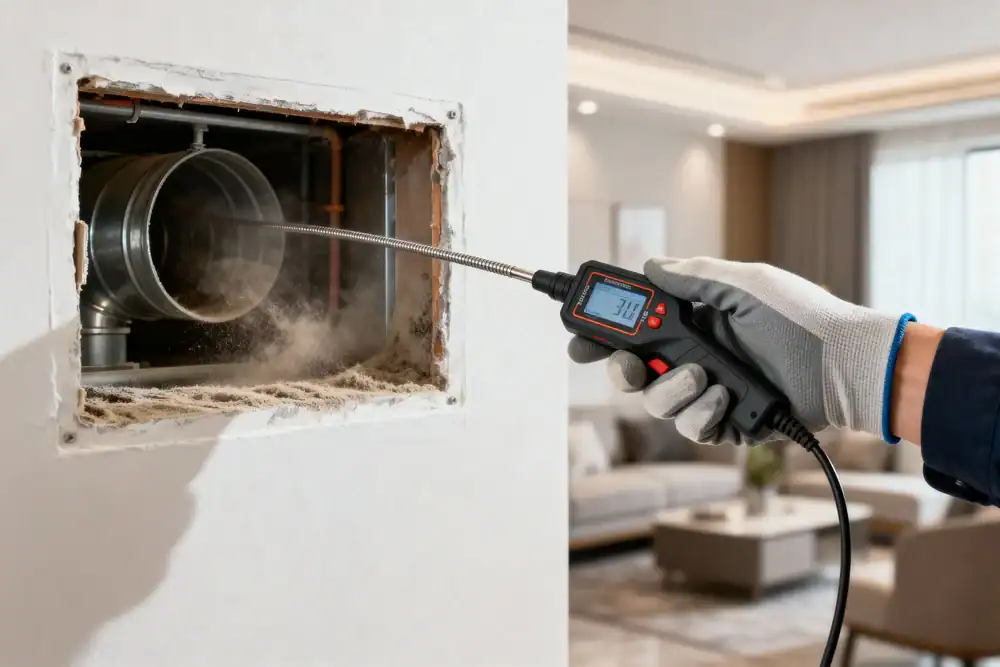
We start with a complete inspection of your ductwork. That means checking for leaks, tears, and mold growth before we clean anything. You need to know what’s actually in there, not just get a surface-level cleaning that misses the real problems.
Next, we use commercial-grade equipment to remove contaminants from your entire ventilation system. This isn’t a quick vacuum job. We’re pulling out years of accumulated dust, pet dander, pollen, and anything else that’s been circulating through your home or business.
After the cleaning, we apply a sanitizing treatment that eliminates bacteria, viruses, and mold spores. This step matters because cleaning alone doesn’t kill what’s growing in there. The sanitizer gives you a truly clean system, not just one that looks better.
The whole process isn’t disruptive. You can stay in your home while we work, and it’s not loud enough to interrupt your day. Most residential jobs take a few hours, and commercial duct cleaning depends on the size of your building.
Ready to get started?
You get a full system cleaning that covers every vent, return, and section of ductwork in your property. We’re not just hitting the easy-to-reach areas. If it’s part of your HVAC system, we clean it.
You get mold removal if we find it. Crawl spaces and ducts in Brightwood homes are prone to moisture issues, especially in older properties. Mold doesn’t just smell bad—it spreads spores throughout your home every time your system runs. We remove it and treat the area to prevent it from coming back.
You get honest recommendations about your system. If we see leaks or damage during the inspection, we’ll tell you. Some companies push unnecessary services. We tell you what actually needs attention and what can wait.
For commercial properties, this service helps you maintain healthier indoor air for employees and customers. Poor air quality leads to more sick days and complaints. Regular ductwork cleaning every 3-5 years keeps your system running efficiently and your indoor environment comfortable.

Most homes benefit from professional duct cleaning every 3-5 years. That’s the standard recommendation, and it’s based on how quickly dust, allergens, and debris build up in a typical HVAC system under normal use.
But your home might not be typical. If you have pets, you’re dealing with more dander and hair in your ducts. If anyone smokes inside, residue builds up faster. If someone in your household has allergies or asthma, more frequent cleaning helps reduce triggers that make symptoms worse.
You should also clean your ducts after any major renovation. Drywall dust, sawdust, and construction debris get pulled into your system and spread throughout your home. One cleaning after the work is done can save you from breathing that in for years.
Yes, but the savings depend on how dirty your ducts are right now. When dust and debris restrict airflow, your HVAC system has to run longer to heat or cool your home to the temperature you want. That extra runtime shows up on your utility bill.
Clean ducts let air move freely, which means your system reaches the target temperature faster and cycles off sooner. You’re not paying for your furnace or AC to fight against clogged vents and dirty coils.
The other savings come from avoiding repairs. Systems that work harder because of dirty ducts wear out faster. Blower motors burn out. Coils freeze. You end up paying for service calls and parts that could have lasted longer if the system wasn’t overworked. Duct cleaning is cheaper than replacing major HVAC components.
The process is similar, but commercial jobs are bigger and take longer. Commercial HVAC systems cover more square footage, have more vents, and often run more hours per day than residential systems. That means more buildup and more time needed to clean everything thoroughly.
Commercial duct cleaning also involves coordinating around your business hours. We can work evenings or weekends if that’s better for your operation. For restaurants, medical offices, or retail spaces, indoor air quality directly affects your customers’ experience, so the stakes are higher.
Residential cleaning focuses on health and comfort for your family. We’re removing allergens, pet dander, and dust that affect the people living there. Both types of cleaning improve system efficiency, but the scale and scheduling are different.
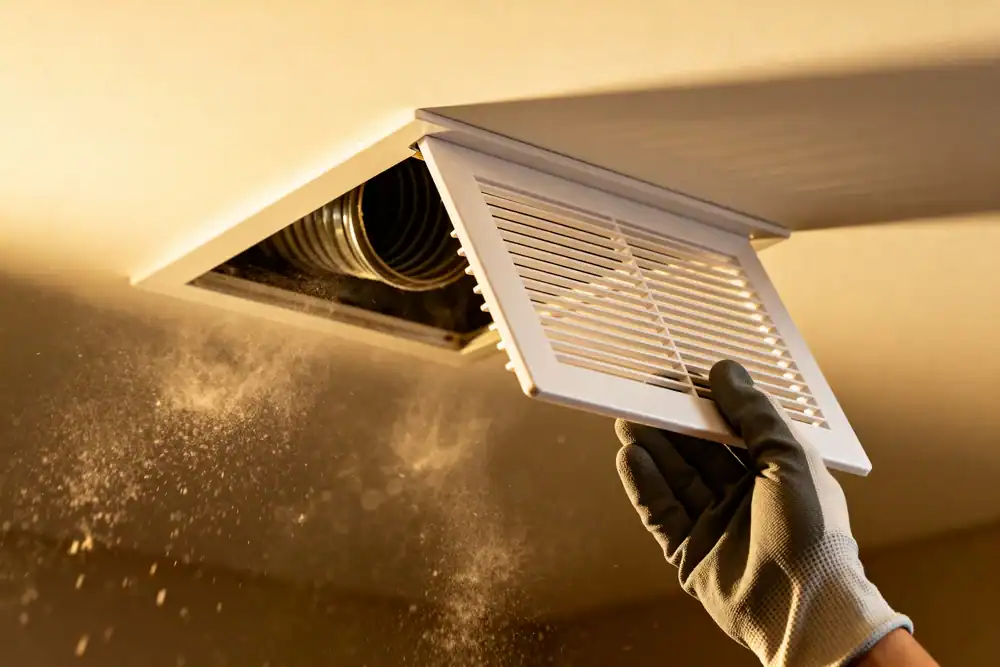
Look at your vents. If you see dust buildup around the edges or on the grates, that’s what’s coating the inside of your ducts too. Pull off a vent cover and shine a flashlight inside. If you see visible debris, dust layers, or anything that looks like mold, it’s time.
Pay attention to smells when your system kicks on. Musty odors, stale smells, or anything unpleasant means something’s trapped in your ductwork and getting blown into your living space every time the HVAC runs.
Watch for allergy symptoms that don’t go away. If you’re sneezing, coughing, or dealing with congestion that gets worse when you’re home, your ducts might be circulating allergens. Also notice if some rooms never seem to reach the right temperature—that can mean blockages or leaks in your ductwork that need attention.
It helps by removing the allergens that are already in your system. Dust mites, pollen, pet dander, and mold spores accumulate in ductwork over time. Every time your HVAC runs, it blows some of that back into the air you breathe. Cleaning removes the source.
Studies show that indoor air quality directly affects respiratory health. Poor indoor air increases asthma attacks and worsens allergy symptoms. If your ducts are full of contaminants, you’re constantly exposed to triggers even when outdoor pollen counts are low.
Duct cleaning isn’t a cure, but it’s one part of managing indoor air quality. Combine it with regular filter changes and controlling humidity levels, and you create an environment where allergens and asthma triggers are minimized. For families dealing with respiratory issues, that difference is noticeable.
Pricing depends on the size of your home or building and the condition of your ductwork. A typical residential cleaning for a single-family home ranges based on square footage and the number of vents. Larger homes with more ductwork cost more because there’s more to clean.
If we find mold during the inspection, removal and treatment add to the cost. Same with extensive debris buildup or damage that needs repair. We give you a free quote upfront so you know what you’re paying before we start any work.
Commercial duct cleaning costs more because the systems are larger and the job takes longer. But the return on investment is better system efficiency, lower energy costs, and healthier indoor air for everyone in the building. We can walk you through pricing during a consultation based on your specific property.