

Contact Info
- Greensboro, NC 27406
- Call: 336-707-0498
- Text: 336-707-0498
-
Mon - Fri: 8am - 4pm
Sat - Sun: Closed
Contact Info
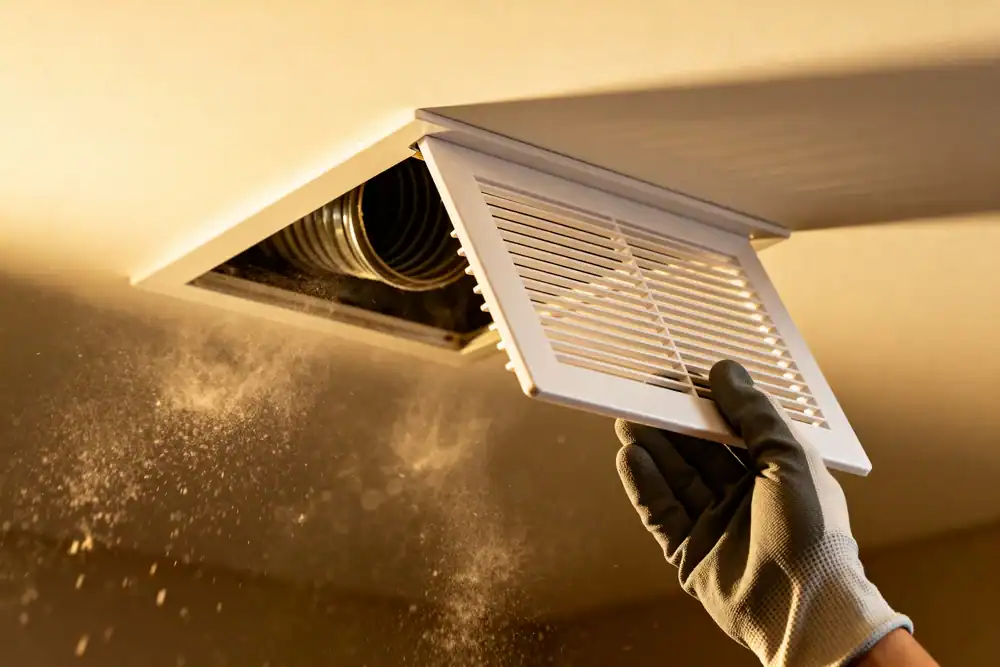
You stop waking up congested. Your house stays cleaner longer because there’s less dust settling on everything. Your energy bills drop because your HVAC system isn’t fighting through layers of buildup just to push air through.
When you live in North Carolina, you’re dealing with humidity year-round. That moisture creates the perfect environment for mold to grow inside your ductwork. Over half of buildings in the Carolinas have dealt with water damage at some point, and with daily humidity averaging 70%, your ducts are constantly exposed to conditions that let mold thrive.
Professional ductwork cleaning removes what’s already there—the allergens, the mold spores, the dust mites—and gives your system a clean slate. You’ll notice the difference in how your home feels, how often you’re dusting, and how much easier it is to breathe. If anyone in your house has asthma or allergies, this isn’t just maintenance. It’s relief.
We’ve been improving indoor air quality in Elon, NC and the surrounding Greensboro area for over 30 years. We’ve seen what happens when ducts go uncleaned in this climate—the mold, the allergen buildup, the systems that work twice as hard because they’re clogged with debris.
We use HEPA-AIRE source removal equipment, which is recognized as one of the most significant advancements in duct cleaning technology in the past three decades. It captures contaminants 1/300th the diameter of a human hair and returns hospital-grade air back into your home. We don’t cut corners, and we don’t upsell you on services you don’t need.
You’ll get a free quote, a clear explanation of what we’re doing and why, and a team that shows up on time and treats your home with respect. That’s how we’ve stayed in business this long.

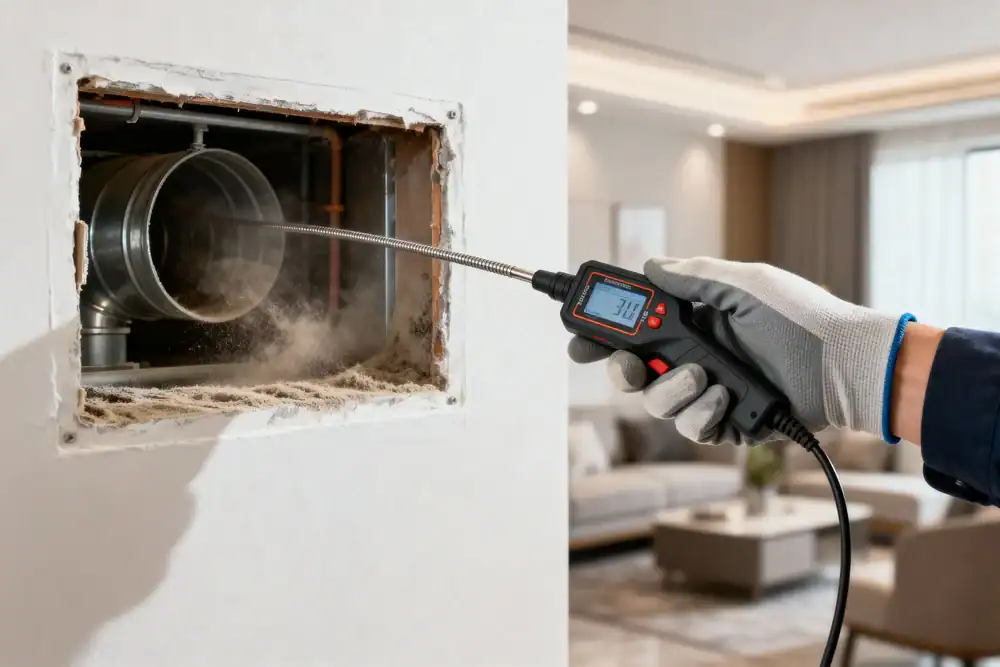
We start with a walkthrough. You show us your system, we inspect your ductwork, and we explain what we’re seeing—whether that’s visible mold, excessive dust buildup, or just normal accumulation that needs clearing out.
Then we seal off your vents and use negative pressure equipment to pull debris out of your ducts while simultaneously agitating the interior surfaces. This isn’t a vacuum job. It’s a full source-removal process that gets the contaminants out of your system entirely, not just pushed around.
We clean the supply and return ducts, the registers, the grilles, and the blower motor components. If there are leaks in your ductwork, we’ll point them out—sealing those means conditioned air actually makes it to every room instead of disappearing into your crawl space or attic.
Once we’re done, we’ll show you the difference. You’ll see what came out, and you’ll feel the improvement in airflow immediately. The whole process typically takes a few hours depending on the size of your home, and we clean up completely before we leave.
Ready to get started?
Our vent cleaning service covers your entire HVAC system—not just the visible registers. We clean the supply ducts that push air into your rooms, the return ducts that pull air back to your system, and the components inside your unit that accumulate dust and restrict airflow.
In Elon, NC, where humidity creates constant moisture issues, we also inspect for mold growth during every service. If we find it, we address it. Mold in your ductwork isn’t just a comfort issue—it’s a health risk that spreads spores throughout your home every time your system runs.
We also check for duct leaks. When your ducts aren’t sealed properly, you’re paying to heat and cool air that never makes it to your living space. Fixing those leaks can eliminate hot and cold spots in your home and reduce how hard your system has to work.
For commercial properties, we handle larger-scale commercial duct cleaning with the same attention to detail. Whether it’s an office building, retail space, or multi-unit property, we understand the stakes are higher when you’re responsible for the air quality that employees and customers breathe. We work around your schedule and get the job done without disrupting your operations.

Every three to five years is the standard recommendation for most homes. But if you’re dealing with allergies, have pets, or recently had any water damage or mold issues, you should consider doing it sooner.
North Carolina’s humidity accelerates how quickly dust and mold accumulate inside ductwork. If your system runs year-round—which most do in this climate—you’re constantly circulating air through ducts that are collecting moisture, dust, pollen, and whatever else gets pulled in from outside.
If you’ve lived in your home for more than five years and never had your ducts cleaned, it’s worth scheduling an inspection. You might be surprised by what’s built up in there.
You’re dusting constantly, but your house still feels dirty. You’re sneezing more than usual, especially when the heat or AC kicks on. You notice a musty smell when your system runs, or there’s visible dust blowing out of your vents.
Another big one: your energy bills are climbing even though you haven’t changed how you use your system. When ducts are clogged, your HVAC has to run longer to reach the temperature on your thermostat. That means more wear on your equipment and higher utility costs every month.
If anyone in your household is experiencing more respiratory issues than normal—coughing, congestion, sore throats—dirty ducts could be the culprit. The EPA estimates that indoor air can be two to five times more polluted than outdoor air, and your ductwork plays a major role in that.
Yes, when it’s done properly. Professional ac duct cleaning removes the allergens that have been sitting in your system—dust mites, pollen, mold spores, pet dander—and keeps them from recirculating every time your HVAC runs.
Nearly 25 million Americans have asthma, and another 50 million deal with allergic rhinitis. For those people, the quality of indoor air isn’t a minor inconvenience. It directly affects their ability to sleep, focus, and function without symptoms.
Cleaning your ducts won’t cure allergies, but it removes a major source of triggers. If you’ve tried everything else—new filters, air purifiers, medication—and you’re still struggling, your ductwork might be the missing piece. It’s one of the most overlooked sources of indoor allergens, and it’s also one of the easiest to address.
It depends on the size of your home, the complexity of your duct system, and what condition it’s in. Most residential jobs fall somewhere in a range that reflects a few hours of work with professional-grade equipment.
We offer free quotes, so you’ll know exactly what you’re paying before we start. No surprises, no upsells for services you don’t need. If we find mold or major leaks during the inspection, we’ll explain what that means and what it’ll take to fix it.
Here’s what you’re actually paying for: equipment that costs tens of thousands of dollars, technicians who know how to use it correctly, and a process that removes contaminants from your ducts instead of just stirring them up. The cheapest option usually means someone showing up with a shop vac and calling it done. That doesn’t work, and it won’t give you the results you’re looking for.
You can’t reach most of your ductwork without specialized equipment. Even if you could, you’d need negative pressure systems, rotary brushes, and HEPA filtration to actually remove the debris instead of just pushing it further into your system.
DIY duct cleaning usually means removing vent covers and vacuuming what you can see. That might get some surface dust, but it doesn’t address what’s deeper in the ducts—the mold, the compacted debris, the buildup on your blower motor and coils.
Professional equipment creates a controlled vacuum that pulls contaminants out of your entire system while agitating the interior surfaces to loosen stuck-on grime. It’s not something you can replicate with household tools. If you’re dealing with mold or significant buildup, trying to clean it yourself can actually make things worse by spreading spores throughout your home.
Your filter catches some of what’s floating in your air, but it doesn’t clean what’s already stuck to the walls of your ductwork. Even with regular filter changes, dust, mold, and allergens build up inside your ducts over time.
Filters are designed to protect your HVAC equipment, not to purify your air. They catch larger particles, but smaller contaminants—like mold spores and fine dust—pass right through and settle inside your ducts. Once they’re in there, they stay until someone physically removes them.
Changing your filter every few months is basic maintenance. Cleaning your ducts is deeper work that addresses the buildup your filter can’t prevent. Both matter, but they’re not interchangeable. If you’re changing filters regularly and still dealing with dust or allergies, your ducts are likely the issue.