

Contact Info
- Greensboro, NC 27406
- Call: 336-707-0498
- Text: 336-707-0498
-
Mon - Fri: 8am - 4pm
Sat - Sun: Closed
Contact Info
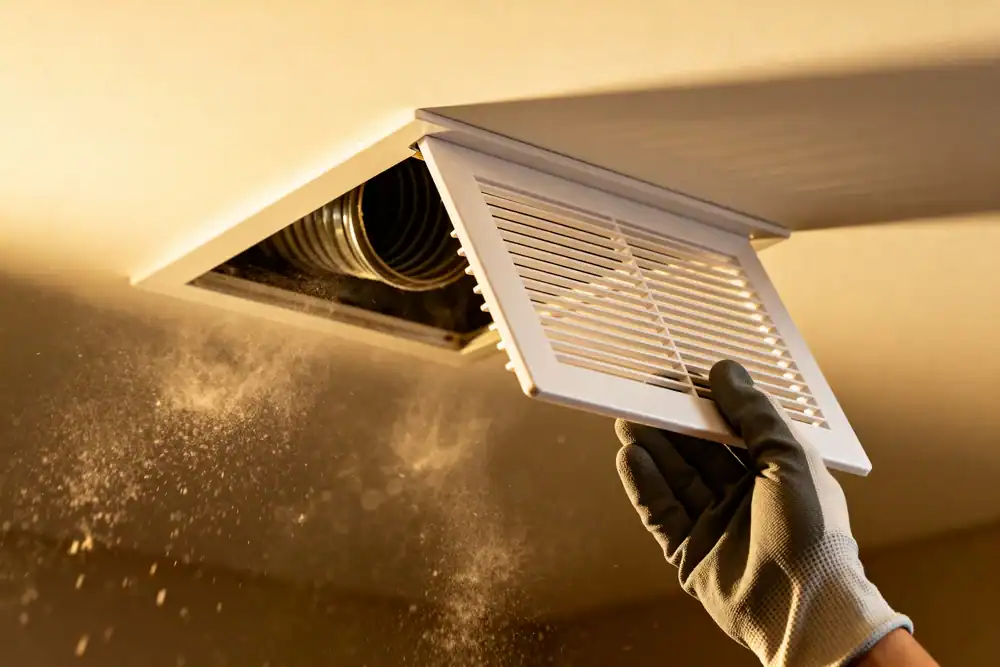
You’ll notice the difference in how your home feels within days. Less dust settling on furniture. Fewer allergy flare-ups when the AC kicks on. Air that doesn’t smell stale or musty when you walk in the door.
Your HVAC system stops working overtime to push air through clogged vents. That means lower energy bills and fewer service calls. Equipment that’s been struggling for years suddenly runs quieter and more efficiently.
If someone in your household deals with asthma or respiratory issues, clean ductwork often brings real relief. The EPA found that indoor air can be 2 to 5 times more polluted than outdoor air. When your ducts are full of contaminants, every breath pulls from that same dirty source. Cleaning them removes the problem at its root.
North Carolina’s humidity makes mold growth a constant threat in ductwork and crawl spaces. Once mold takes hold, it spreads spores throughout your home every time air moves through the system. Professional duct cleaning eliminates that cycle before it affects your health or your home’s structure.
We’ve been handling indoor air quality issues in the Kirkman Crossroad area since the early 1990s. We’ve seen what happens when humidity sits in crawl spaces and ductwork goes unchecked for years. We know the local conditions that create mold problems and how to fix them properly.
Our focus has always been straightforward: remove what’s making your air unhealthy. That means thorough duct cleaning, crawl space work, and HVAC system maintenance that actually addresses the root cause. Not surface-level fixes that look good but don’t last.
Greensboro’s climate creates specific challenges. The region averages 70% humidity year-round, which means your ducts and crawl spaces are constantly fighting moisture. We’ve built our methods around solving those exact problems for local homeowners who are tired of dealing with mold, allergens, and systems that don’t perform like they should.

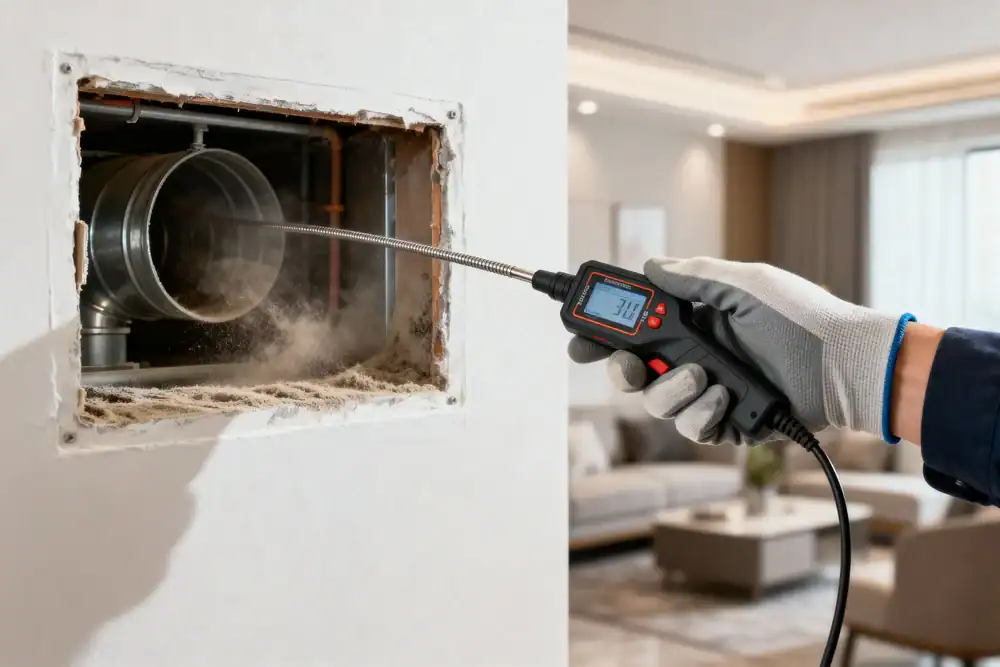
We start with a full inspection of your ductwork and HVAC system. That means looking at every vent, checking for mold growth, measuring buildup levels, and identifying problem areas. You’ll know exactly what we found and what needs attention before any work begins.
The cleaning itself uses industrial equipment designed specifically for duct systems. We seal off sections, create negative pressure, and use rotating brushes and high-powered vacuums to pull out everything that’s accumulated. Dust, debris, mold, pet dander, pollen—it all comes out. We’re not just pushing dirt around or masking odors. We’re physically removing contaminants from the system.
After cleaning, we inspect again to make sure nothing was missed. You’ll see the difference immediately in how much cleaner the air feels and how much better your system performs. If we found mold during inspection, we treat affected areas to prevent regrowth. If your crawl space is contributing to the problem, we’ll walk through what needs to happen there too.
The whole process typically takes a few hours depending on your home’s size and how long it’s been since the last cleaning. Most homes we service in Kirkman Crossroad haven’t had their ducts cleaned in over a decade—some never have. The amount of buildup we remove in those cases is often shocking to homeowners.
Ready to get started?
Every air duct cleaning we do covers your entire HVAC system. That includes supply and return ducts, registers and grilles, diffusers, heating and cooling coils, drip pans, the air handling unit, and the blower motor. If air moves through it, we clean it.
We also handle dryer vent cleaning as part of comprehensive home air quality service. Lint buildup in dryer vents causes nearly 3,000 house fires every year. It’s one of the easiest fire hazards to prevent, but most homeowners don’t think about it until their dryer stops working efficiently. We clear the entire vent line from your dryer to the exterior exhaust.
For commercial properties in Kirkman Crossroad, we offer the same thorough approach scaled to larger systems. Restaurants, offices, retail spaces—anywhere people spend time indoors benefits from clean ductwork. Commercial systems often accumulate contaminants faster due to higher usage and more foot traffic.
North Carolina’s humidity means mold is a constant concern in both residential and commercial ductwork. We treat mold when we find it and can recommend crawl space encapsulation if moisture issues are feeding the problem. Encapsulation creates a barrier that stops humidity from entering your home through the foundation, which protects your ducts and your indoor air quality long-term.

Most homes benefit from duct cleaning every 3 to 5 years. That timeline shifts depending on a few factors specific to your situation.
If anyone in your household has allergies, asthma, or respiratory issues, cleaning every 2 to 3 years makes sense. The same goes for homes with pets—dander accumulates quickly in ductwork and recirculates constantly. If you’ve had recent renovations, you should clean your ducts right after. Construction dust is fine and pervasive, and it settles throughout your entire system.
North Carolina’s humidity accelerates mold growth, so if you’ve noticed musty odors or seen visible mold anywhere in your home, don’t wait. Mold in your ducts means you’re breathing spores every time your HVAC runs. That’s not something to put off.
Changing your filter catches new particles before they enter your system. Duct cleaning removes years of buildup that’s already inside.
Your filter only protects against what’s coming in. It doesn’t touch the dust, mold, and debris that’s been accumulating in your ductwork for years. Even with regular filter changes, contaminants build up on duct walls, in bends and joints, and around vents. That buildup restricts airflow and gets stirred up and redistributed every time your system runs.
Think of it this way: changing your filter is routine maintenance. Duct cleaning is deep cleaning. Both matter, but they serve different purposes. A clean filter can’t fix a duct system that’s already contaminated.
Yes, but the savings depend on how dirty your system is right now. When ducts are clogged with dust and debris, your HVAC system works harder to push air through. That extra effort shows up on your energy bill every month.
Clean ducts restore proper airflow, which means your system doesn’t have to run as long or work as hard to heat or cool your home. The Department of Energy estimates that 25 to 40 percent of energy used for heating and cooling is wasted due to contaminants in HVAC systems. Removing that buildup improves efficiency immediately.
The bigger savings often come from extending your equipment’s lifespan. Systems that don’t have to strain against restricted airflow break down less often and last longer. That means fewer repairs and delaying the cost of full system replacement.
There are clear signs that tell you it’s time. Visible dust blowing out of vents when your system starts is the most obvious one. If you see dust puffing out, there’s a lot more inside the ducts.
Musty or stale odors when your HVAC runs usually mean mold or mildew growth somewhere in the system. Increased allergy symptoms or respiratory issues that get worse indoors point to poor air quality, often caused by dirty ductwork. If you’re dusting constantly and it never seems to help, your ducts are likely redistributing particles faster than you can clean.
Another indicator: if you can’t remember the last time your ducts were cleaned—or if they’ve never been cleaned—they need it. Most homes in Kirkman Crossroad that we service haven’t had duct cleaning in over a decade. The amount of buildup we remove in those situations is significant.
Yes, if the mold is in your ductwork. Duct cleaning removes mold that’s already growing inside the system and prevents it from spreading spores throughout your home every time air circulates.
Mold needs moisture to grow, and North Carolina’s humidity provides plenty of it. If your ducts or crawl space have moisture issues, mold will keep coming back unless you address the source. We treat mold during the cleaning process and can identify where moisture is getting in. Often, crawl space problems are feeding mold growth in ductwork above.
If mold is a recurring issue in your home, duct cleaning is part of the solution, but you’ll also need to control humidity and moisture. Crawl space encapsulation creates a barrier that stops humid air from entering your home through the foundation. That protects your ducts and keeps mold from taking hold in the first place.
The process takes a few hours depending on your home’s size and system complexity. We’ll seal off sections of ductwork, use industrial vacuums and rotating brushes to remove buildup, and inspect everything before and after to make sure it’s done right.
You might hear equipment running and feel slight vibrations as we work through the system. We’ll need access to all vents and your HVAC unit. Most of the mess stays contained in our equipment—we’re not tracking debris through your home.
After we’re done, you’ll notice cleaner air almost immediately. Less dust settling on surfaces. Better airflow from vents. If there were odors before, they’ll be gone. Your HVAC system will run more quietly and efficiently. Some customers tell us their allergy symptoms improve within days. The difference is that noticeable when you remove years of accumulated contaminants from the air you’re breathing every day.