
Contact Info
- Greensboro, NC 27406
- Call: 336-707-0498
- Text: 336-707-0498
-
Mon - Fri: 8am - 4pm
Sat - Sun: Closed
Contact Info
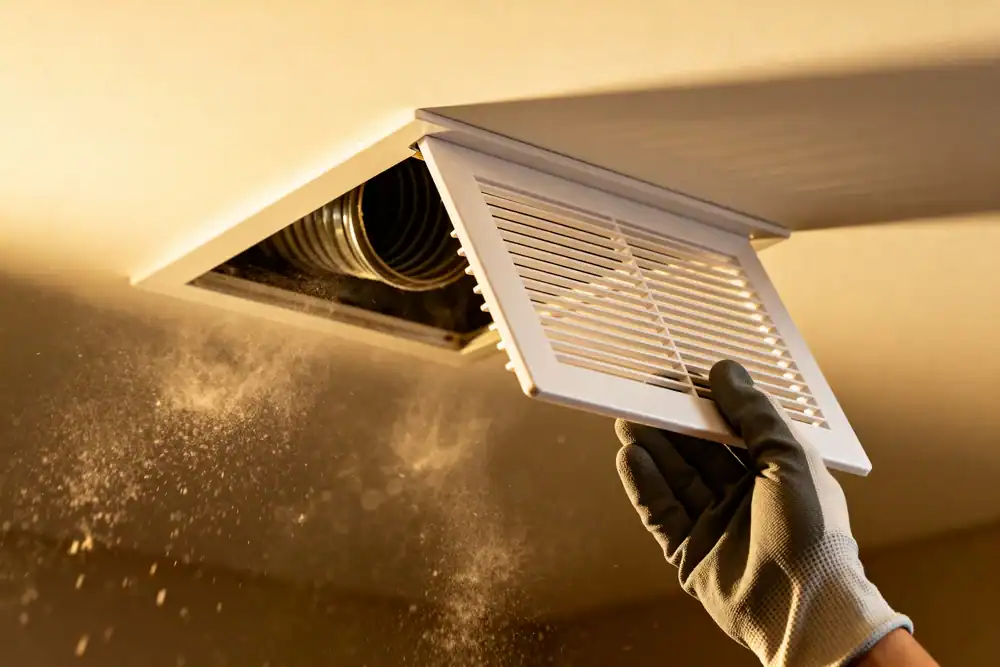
Your energy bills drop. That’s usually the first thing people notice after professional ductwork cleaning—sometimes by as much as 30% when your system isn’t fighting through layers of dust and debris.
The air in your home feels different too. Less stale. Fewer allergy flare-ups, especially during North Carolina’s brutal pollen seasons when oak and pine coat everything outside and somehow still end up circulating through your vents.
Your HVAC system stops working so hard. When ac duct cleaning removes the buildup forcing your system to strain, it runs quieter, more efficiently, and lasts longer. That’s not marketing speak—it’s what happens when airflow isn’t restricted by years of accumulated contamination.
You’re not just cleaning ducts. You’re removing mold spores, dust mites, pet dander, and whatever else has been recycling through your home every time the heat or AC kicks on.
We’ve been handling commercial duct cleaning and residential HVAC systems in McLeansville and the greater Greensboro area since the early ’90s. We’re NADCA certified—both Rick Watson and Noah Watson hold ASCS and CVI certifications, which means we follow the actual industry standards, not just what sounds good on a website.
We’ve seen what happens when humidity sits above 70% for weeks and ducts turn into breeding grounds for mold. We know how North Carolina’s pollen seasons hit harder than most places, and how that affects indoor air quality when your return vents pull it all inside.
This isn’t a side service for us. It’s what we’ve been doing here in McLeansville for over 30 years, and we’ve built our reputation on showing up, doing the work right, and making sure your air is cleaner when we leave.

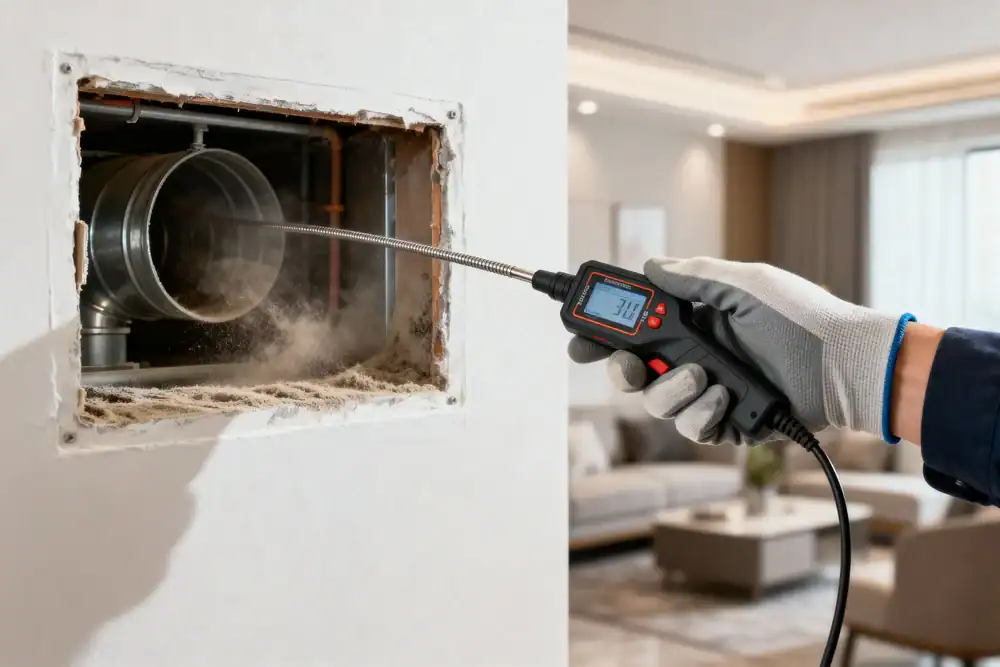
We start with an inspection. That means looking at your ductwork with cameras to see what’s actually in there—not guessing, not assuming. You’ll see what we see.
Then we seal off your vents and use negative pressure equipment to pull contaminants out while we agitate and dislodge buildup from inside the ducts. This isn’t a vacuum from a truck. It’s industrial equipment designed specifically for HVAC duct cleaning that meets NADCA standards.
We clean the supply and return sides, the registers, the grilles, and the main trunk lines. If there’s mold, we treat it. If there’s debris that shouldn’t be there—construction dust, rodent droppings, whatever—we remove it.
After the cleaning, we do a final inspection to make sure airflow is restored and nothing was missed. The whole process usually takes a few hours depending on the size of your system, and when we’re done, your HVAC system can actually breathe again.
Ready to get started?
You get a full system cleaning—not just the easy-to-reach parts. That includes all supply and return ducts, registers, grilles, diffusers, and the air handler components. We’re cleaning the entire path that air travels through your home or commercial building.
In McLeansville, humidity is a constant issue. Summer months regularly push past 70%, which means moisture clings to duct surfaces and creates the perfect environment for mold and musty odors. Our process addresses that directly, treating contamination and improving airflow so your system isn’t recycling the same stale, contaminated air.
For commercial properties, we follow ACR and NADCA standards that are specified on projects worldwide. That means documentation, proper containment, and cleaning methods that meet code requirements and insurance standards.
We don’t do residential dryer vents, but we do handle everything else related to your ductwork—including crawl space issues that affect air quality, encapsulation to prevent moisture problems, and mold remediation when needed. If it’s affecting the air you’re breathing in McLeansville, we’ve probably dealt with it before.

Most homes in McLeansville need duct cleaning every 2 to 3 years, not the 3 to 5 years you’ll hear as a national average. North Carolina’s climate changes that math.
We deal with higher humidity and longer pollen seasons than most of the country. Raleigh consistently ranks as one of the worst cities in the U.S. for spring allergies, and McLeansville isn’t far behind. That means more particulates entering through windows, doors, and return vents, and more moisture helping it all stick to your duct surfaces.
If anyone in your home has allergies or asthma, if you’ve recently renovated, or if you’re noticing dust accumulating faster than it used to, you’re probably due. A quick inspection will tell you for sure—we’re not going to sell you a cleaning you don’t need.
It can, and often does—but only if your ducts are actually dirty enough to restrict airflow. The U.S. Department of Energy found that leaky or clogged ducts can lower energy efficiency by up to 30%. That’s not a small number when you’re running AC through a North Carolina summer.
When your system has to work harder to push air through buildup and debris, it uses more energy. After a proper cleaning, airflow improves, your HVAC system doesn’t strain as much, and energy consumption drops. Some customers report up to 22% lower utility bills after cleaning, especially if their ducts hadn’t been touched in years.
That said, duct cleaning isn’t magic. If your system is old, inefficient, or poorly designed, cleaning the ducts won’t fix that. But if restricted airflow is the problem, you’ll notice the difference on your next bill.
Look at your vents. If you see visible dust, debris, or discoloration around the registers, that’s a sign. If you smell something musty or stale when the system kicks on, that’s another.
Pay attention to how your home feels. If some rooms are harder to heat or cool than others, or if you’re dusting constantly and it doesn’t seem to help, your ducts might be circulating contaminated air and restricting airflow at the same time.
Allergy symptoms that get worse indoors are a big indicator, especially in McLeansville where outdoor allergens are already high. If you’re sneezing more at home than outside during pollen season, your ducts are probably part of the problem. We can inspect your system and show you exactly what’s in there—no guessing, no pressure.
NADCA certification means we’re trained and held to the industry’s actual standards—not just someone with a truck and a vacuum. The National Air Duct Cleaners Association sets the benchmark for how duct cleaning should be done, and certified technicians like Rick and Noah Watson have to prove they know how to do it right.
That includes using proper equipment, following containment protocols, and understanding HVAC systems well enough to clean them without causing damage. It also means we’re up to date on the latest methods, safety standards, and best practices that change as the industry evolves.
Non-certified companies might be cheaper, but they’re also more likely to miss sections of ductwork, use inadequate equipment, or worse—damage your system and leave you with a bigger problem than you started with. NADCA certification isn’t a luxury. It’s the baseline for doing the job correctly.
Yes, but only if it’s done right. Mold in ductwork is common in McLeansville because of our humidity levels. When moisture gets into your ducts—whether from condensation, leaks, or crawl space issues—it creates an environment where mold thrives.
Standard duct cleaning removes visible mold and the debris it feeds on, but if the moisture problem isn’t addressed, it’ll come back. That’s why we also handle crawl space encapsulation and moisture control as part of our service offering. Cleaning the mold without fixing the source is a waste of your money.
If you’re smelling mold or seeing it around your vents, don’t ignore it. Mold spores circulating through your HVAC system affect everyone in the building, and the longer it sits, the worse it gets. We’ll inspect, treat, and help you prevent it from returning.
We handle both. Commercial duct cleaning actually makes up a significant part of what we do in McLeansville and the Greensboro area, especially for office buildings, retail spaces, and industrial facilities that need to meet specific air quality and safety standards.
Commercial systems are larger and more complex than residential, but the process is similar—inspection, containment, cleaning, and verification. The difference is that commercial projects often require documentation for insurance, compliance, or tenant agreements, and we’re set up to provide that.
We follow ACR and NADCA standards that are recognized on commercial projects worldwide, so if your building needs certified duct cleaning that meets code, we’ve done it before. Whether it’s a 1,200-square-foot home or a 50,000-square-foot facility, the goal is the same: cleaner air and a system that works the way it should.