

Contact Info
- Greensboro, NC 27406
- Call: 336-707-0498
- Text: 336-707-0498
-
Mon - Fri: 8am - 4pm
Sat - Sun: Closed
Contact Info
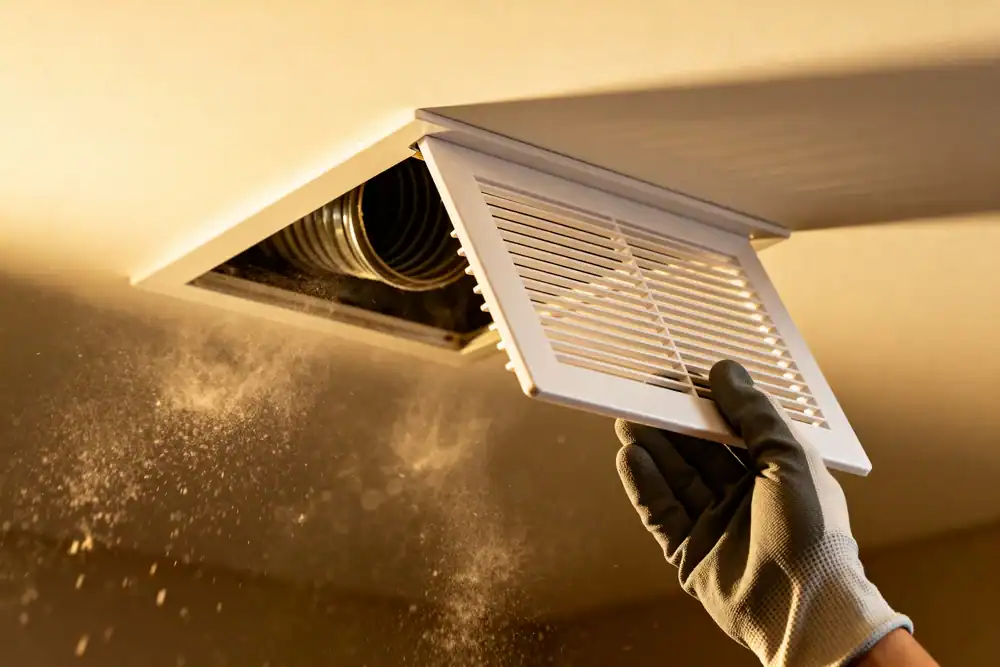
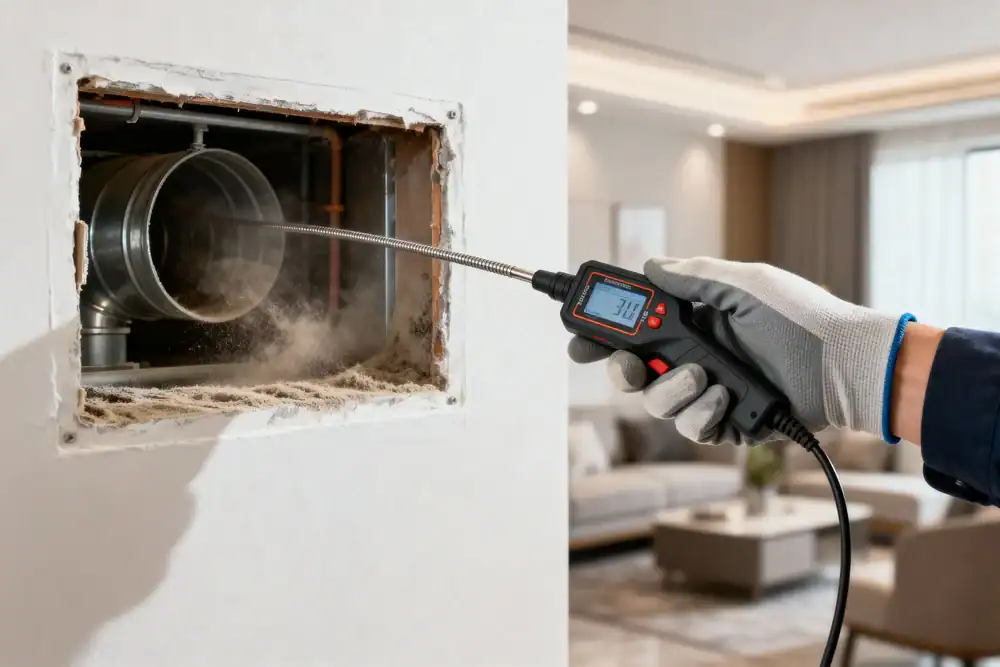
Your HVAC system stops working overtime. Studies show that commercial duct cleaning can reduce fan and blower energy use by 41-60% while increasing airflow by up to 46%. That’s not marketing speak—that’s measurable savings on every heating and cooling bill.
The air in your home or office gets noticeably cleaner. Dust stops settling on your furniture within hours of cleaning it. People with allergies stop reaching for tissues every time they walk through the door. The musty smell that’s been lingering for months finally disappears.
Your system responds faster when you adjust the temperature. Cold spots in certain rooms start evening out. The constant cycling on and off slows down because your HVAC isn’t fighting through layers of debris just to push conditioned air through your vents.
We’ve been handling vent cleaning and air quality work in Greensboro and surrounding areas like Oak Ridge for over 30 years. Both Rick Watson and Noah Watson hold ASCS certifications from NADCA—the National Air Duct Cleaners Association—and Rick carries additional CVI certification.
Oak Ridge homeowners and business owners deal with specific challenges. Newer homes in this area often have more complex ductwork systems with more rooms than the state average. Affluent neighborhoods mean higher expectations and zero tolerance for shortcuts. We’ve earned our BBB A+ rating by showing up on time, doing thorough work, and explaining exactly what we found in your system.
We don’t do residential dryer vents. We focus entirely on air duct cleaning, crawl space encapsulation, and mold remediation—services that require specialized equipment and training.

We start with a complete inspection of your HVAC system and ductwork. You’ll see exactly what’s inside your ducts—the dust, debris, and whatever else has been circulating through your home or business. We use cameras when needed so there’s no guessing about what condition your system is actually in.
Next comes the actual ac duct cleaning using source removal methods. That’s the only approach NADCA recognizes as acceptable, and it means we’re physically removing contaminants—not just stirring them up or masking problems. We use specialized vacuums and tools designed specifically for ductwork, not general-purpose equipment that can’t reach or properly clean your entire system.
We seal and test as we go. Every access point gets properly closed. Every section gets verified clean. You’re not paying for a surface-level job that leaves half your ductwork untouched. When we’re done, your system is cleaner, your airflow is improved, and you’ll have documentation of what we found and what we fixed.
Ready to get started?
You get a full system cleaning—supply and return ducts, registers, grilles, diffusers, heating and cooling coils, drip pans, fan motor, and the air handling unit housing. We’re not just hitting the easy-access areas and calling it done.
For Oak Ridge commercial properties and office spaces, this matters even more. Your employees and customers notice when air quality is poor. Management professionals and business owners in this area expect environments that support productivity, not hinder it. Poor ductwork cleaning leads to dust on desks, stuffiness in conference rooms, and complaints about temperature inconsistencies.
We also address what’s causing problems in the first place. If we find mold, we’ll tell you. If there’s a moisture issue that’s going to lead to mold, we’ll point it out. If your system has leaks or damage that’s wasting energy, you’ll know before we leave. The goal isn’t just to clean what’s there—it’s to give you information that helps you make smart decisions about your property.
Oak Ridge has an average household income of $149,743, which is more than double the state average. You’re not looking for the cheapest option—you’re looking for someone who’ll do it right the first time and won’t need to come back in six months to fix what they missed.

Most residential properties benefit from professional air duct cleaning every three to five years. That’s the general guideline, but your situation might be different.
If you have pets, you’re probably dealing with more dander and hair in your system. If someone in your household has allergies or asthma, you’ll notice the difference from more frequent cleanings. If you’ve recently completed a renovation, all that construction dust has settled somewhere—and a lot of it is in your ductwork.
Oak Ridge homes tend to be newer with more square footage and more rooms than average for North Carolina. Larger homes with more complex HVAC systems accumulate debris faster simply because there’s more ductwork and more air movement. Pay attention to how often you’re changing filters and how quickly dust accumulates after you clean. Those are better indicators than any arbitrary timeline.
Changing your filter catches new debris before it enters your system. Cleaning your ducts removes years of buildup that’s already inside.
Your filter can’t do anything about the dust, mold, pollen, and other contaminants that are already coating the inside of your ductwork. Every time your system runs, air passes over that buildup, picks up particles, and distributes them throughout your property. You’re essentially recycling the same pollutants five to seven times per day.
Think of it like this: changing your filter is routine maintenance. Cleaning your ducts is addressing accumulated damage. Both matter, but they serve completely different purposes. A clean filter on a dirty system still means you’re breathing contaminated air and your HVAC is working harder than it should. The EPA estimates that indoor air can be two to five times more polluted than outdoor air, and your ductwork is a major contributor to that problem.
Yes, but the amount depends on how dirty your system is and how inefficient it’s currently running.
The University of Colorado conducted a study with NADCA that measured actual energy use before and after duct cleaning. Systems showed 41-60% savings on fan and blower energy consumption. They also supplied 10-46% more conditioned air after cleaning. Those aren’t best-case scenarios—those are measured results from real HVAC systems.
When your ductwork is clogged with debris, your system has to work significantly harder to push air through. That means it runs longer, cycles more frequently, and uses more energy to achieve the same temperature. Between 25-40% of the energy used for heating or cooling gets wasted when contaminants force your system to compensate. Professional cleaning removes that resistance, and your energy bills reflect the difference immediately.
Look for visible dust around your vents and registers. If you see buildup on the outside, there’s significantly more on the inside.
Check how quickly dust accumulates on furniture and surfaces after you clean. If you’re dusting constantly and it keeps coming back within a day or two, your ducts are likely the source. Notice any musty or stale odors when your HVAC runs—that’s a clear sign of mold or mildew growth inside your ductwork.
Pay attention to uneven heating or cooling throughout your property. Cold spots in some rooms and hot spots in others usually mean restricted airflow from debris buildup. If anyone in your home or office is experiencing increased allergy symptoms, sneezing, coughing, or respiratory issues that seem worse indoors than outdoors, contaminated ducts are often the culprit. One customer told us they found over an inch of debris and lint in their 17-year-old ducts—you don’t always know how bad it is until someone actually looks.
The core process is the same—source removal using NADCA-approved methods—but commercial systems require additional considerations and often more extensive work.
Commercial ductwork in Oak Ridge office buildings and business properties is typically larger, more complex, and services more people. That means contamination affects more individuals and poor air quality has a bigger impact on productivity and comfort. We schedule commercial duct cleaning to minimize disruption to your operations, often working after hours or on weekends.
Commercial properties also face stricter regulations around indoor air quality and workplace safety. You need documentation that your HVAC system meets health and safety standards. We provide that documentation along with before-and-after reports showing exactly what we found and what we cleaned. For property managers and business owners in Oak Ridge—where 85% of workers are in white-collar positions—maintaining a professional environment isn’t optional. Clean ductwork is part of that equation.
We’ll show you exactly where it is, explain what’s causing it, and give you options for remediation.
Mold in ductwork usually means there’s a moisture problem somewhere in your HVAC system. That could be a leak, condensation from poor insulation, or a drainage issue in your drip pan. Just cleaning the visible mold without addressing the moisture source means it’s coming back.
We handle mold remediation as a separate service because it requires different equipment, procedures, and often different products than standard duct cleaning. You’ll get a clear explanation of what needs to happen, what it costs, and why each step matters. Mold isn’t something to ignore—it spreads quickly and creates serious health risks, especially for anyone with respiratory issues or compromised immune systems. The good news is that when it’s caught during a duct inspection and properly remediated, you can prevent it from becoming a much larger and more expensive problem down the road.