
Contact Info
- Greensboro, NC 27406
- Call: 336-707-0498
- Text: 336-707-0498
-
Mon - Fri: 8am - 4pm
Sat - Sun: Closed
Contact Info
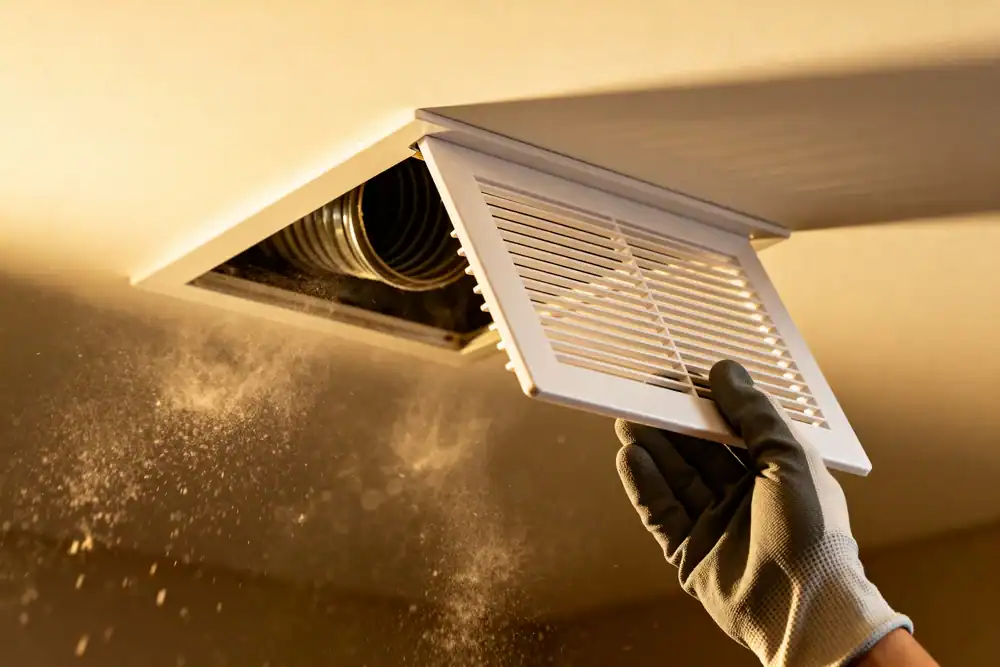
You’ll notice the difference in how your home feels. Less dust settling on furniture between cleanings. Fewer allergy flare-ups when the heat or AC kicks on. Your system runs quieter because it’s not fighting through layers of buildup to push air through.
Energy bills drop when your HVAC doesn’t have to work overtime. A clogged system uses more power to move the same amount of air, and that shows up every month on your utility statement. Clean ductwork means better airflow, which means your system reaches temperature faster and cycles less.
If anyone in your household deals with asthma or respiratory issues, cleaner ducts mean fewer triggers. The EPA consistently ranks indoor air pollution as a top environmental health risk, and your ductwork is often the main distribution system for whatever’s floating around inside your walls. Cleaning it removes the source, not just the symptoms.
We’ve been handling air duct cleaning across the Greensboro area and surrounding communities like Scalesville for over 30 years. We’re NADCA certified, which means our team follows the national standard for how duct cleaning should actually be done—not the shortcuts some companies take.
North Carolina’s humidity creates the perfect environment for mold growth inside ductwork, especially in areas with older HVAC systems or homes near wooded areas. We’ve seen it all, from minor dust accumulation to full mold remediation projects. Our approach combines hospital-grade disinfection with thorough mechanical cleaning, so you’re not just moving dust around—you’re removing it.
Rick Watson and our certified team use equipment designed for commercial and residential duct cleaning. We’re BBB accredited and locally owned, which means when you call, you’re talking to people who live and work in the same communities we serve.

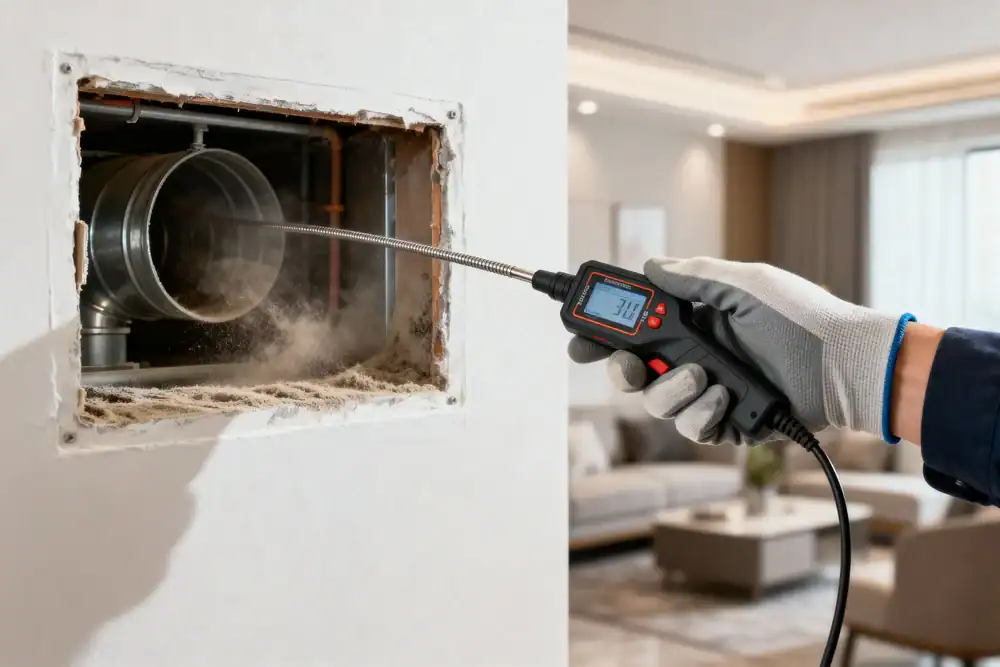
We start with a full system inspection. That means checking your ductwork for visible mold, excess dust, pest activity, or damage that could be affecting your air quality. We’ll also look at your HVAC unit itself to make sure everything’s functioning as it should before we start cleaning.
Once we’ve mapped out your system, we use high-powered vacuums and rotary brushes to remove buildup from inside the ducts. This isn’t a surface wipe-down. We’re pulling out years of accumulated dust, pet dander, pollen, and anything else that’s been cycling through your home. For homes with mold or heavy contamination, we follow up with a hospital-grade disinfectant and UV light treatment to kill lingering bacteria and spores.
After the cleaning, we inspect again to make sure every section of ductwork is clear. We’ll also check your filters and make recommendations if anything needs replacing. The whole process typically takes a few hours depending on the size of your home, and you’ll have access to your system as soon as we’re done. No curing time, no waiting—just cleaner air.
Ready to get started?
Our service covers your entire HVAC duct system—supply lines, return lines, registers, and grilles. We also clean the blower motor, evaporator coil, and drip pan if they’re accessible, because those components affect your air quality just as much as the ducts themselves.
In Scalesville and the surrounding Greensboro area, humidity and seasonal pollen are constant challenges. Homes here deal with higher moisture levels, especially in crawl spaces and attics where ductwork often runs. That makes mold growth more common, and it’s why we include a full mold inspection as part of every job. If we find it, we’ll walk you through your options for remediation.
We also offer add-ons like dryer vent cleaning and vapor barrier installation if your crawl space is contributing to air quality issues. A lot of homes in this area have older ductwork that wasn’t sealed properly during installation, and that lets in dust, insulation particles, and even outdoor air. We’ll flag those issues during our inspection so you know exactly what’s affecting your system and what you can do about it.

Most homes benefit from duct cleaning every three to five years, but that timeline shifts depending on a few factors. If you have pets, you’re likely dealing with more hair and dander in your system, which means more frequent cleaning makes sense. Same goes for anyone with allergies or asthma—cleaner ducts mean fewer triggers, so every two to three years might be a better fit.
North Carolina’s humidity also plays a role. Homes in areas with higher moisture levels or poor ventilation can develop mold inside ductwork faster than drier climates. If you’ve noticed a musty smell when your HVAC runs, or if you’ve had water damage or flooding, don’t wait for the standard timeline. Get it checked sooner.
New construction or recent renovations are another reason to clean sooner. Drywall dust, sawdust, and debris from construction often end up in ducts, and that stuff circulates every time your system runs. A post-construction cleaning clears it out before it becomes a long-term problem.
Yes, but the savings depend on how clogged your system is to start with. When ducts are packed with dust and debris, your HVAC has to work harder to push air through. That extra effort translates to higher energy use, and over time, it adds up on your utility bill. Clean ducts restore proper airflow, so your system doesn’t have to run as long to reach the temperature you set.
The Department of Energy estimates that 25 to 40 percent of the energy used for heating and cooling is wasted due to contaminants in HVAC systems. Even a quarter-inch of dust on a heating or cooling coil can reduce efficiency by up to 21 percent. Cleaning removes that barrier and lets your system operate the way it was designed to.
You’ll also extend the life of your HVAC unit. Systems that run efficiently experience less wear and tear, which means fewer breakdowns and a longer time before you’re looking at a full replacement. That’s not just a monthly savings—it’s avoiding a major expense down the road.
There are a few clear signs. If you see dust blowing out of your vents when the system kicks on, that’s a red flag. Same with visible mold around vent openings or a musty smell that gets stronger when your HVAC runs. Those aren’t things you should ignore—they mean something’s circulating through your home that shouldn’t be.
Another indicator is uneven airflow. If some rooms heat or cool fine while others stay uncomfortable, blockages in your ductwork could be the cause. Dust buildup or collapsed sections of flex duct restrict airflow and make your system work harder in some areas than others.
If anyone in your household has unexplained respiratory issues, frequent headaches, or allergy symptoms that don’t improve with medication, your ducts might be contributing. Indoor air pollution is a real issue, and your HVAC system distributes whatever’s inside your ducts throughout your home. A professional inspection will tell you exactly what’s in there and whether cleaning will make a difference.
Filters catch some of what’s floating through your system, but they don’t touch what’s already built up inside the ductwork itself. Think of it this way: your filter is the first line of defense, but it only captures particles that pass through it. Everything that settled into your ducts before you started changing filters regularly is still sitting there, and it gets stirred up every time air moves through.
Duct cleaning removes the accumulated dust, mold, pet dander, and debris that filters can’t reach. It’s a deeper clean that addresses the source of contamination, not just what’s passing through. If your ducts are dirty, even a brand-new filter won’t stop that buildup from affecting your air quality.
Changing your filter regularly is still important—it protects your system and keeps new debris from building up as quickly. But it’s not a replacement for cleaning the ducts themselves. Both matter, and they work together to keep your indoor air as clean as possible.
The process is similar, but the scale and complexity are different. Commercial systems are larger, often with more zones, longer duct runs, and higher airflow demands. That means more access points to clean, more time on-site, and equipment rated for bigger jobs. We handle both, and the approach adjusts based on what your building needs.
Commercial properties also have different air quality standards, especially in healthcare, food service, or office environments where indoor air directly affects productivity and health. NADCA standards apply to both residential and commercial work, but commercial jobs often require more documentation, post-cleaning testing, and coordination with building management or tenants.
If you’re managing a commercial property in Scalesville or the surrounding area, we’ll work with your schedule to minimize disruption. That might mean after-hours cleaning or sectioning off areas so your business can keep operating. We’ve handled everything from small office buildings to larger facilities, and we’ll walk you through what to expect before we start.
If mold is growing inside your ductwork, cleaning is a necessary step—but it’s not always the only step. Mold needs moisture to grow, so if it’s in your ducts, there’s a moisture problem somewhere in your system. That could be a leaky duct joint, condensation on your evaporator coil, or humidity coming from a crawl space or attic. We’ll identify the source during our inspection so you’re not just treating the symptom.
Our cleaning process includes mechanical removal of mold and contaminated material, followed by hospital-grade disinfection and UV light treatment to kill spores. That clears out what’s already there, but if the moisture issue isn’t fixed, mold can come back. We’ll recommend solutions based on what we find—whether that’s sealing ductwork, improving ventilation, or installing a vapor barrier in your crawl space.
North Carolina’s climate makes mold a common issue, especially in older homes or properties near wooded areas. If you’ve noticed a musty smell, visible mold around vents, or respiratory symptoms that get worse at home, don’t wait. Mold spreads quickly, and your HVAC system can distribute spores throughout your entire house if it’s not addressed.