
Contact Info
- Greensboro, NC 27406
- Call: 336-707-0498
- Text: 336-707-0498
-
Mon - Fri: 8am - 4pm
Sat - Sun: Closed
Contact Info
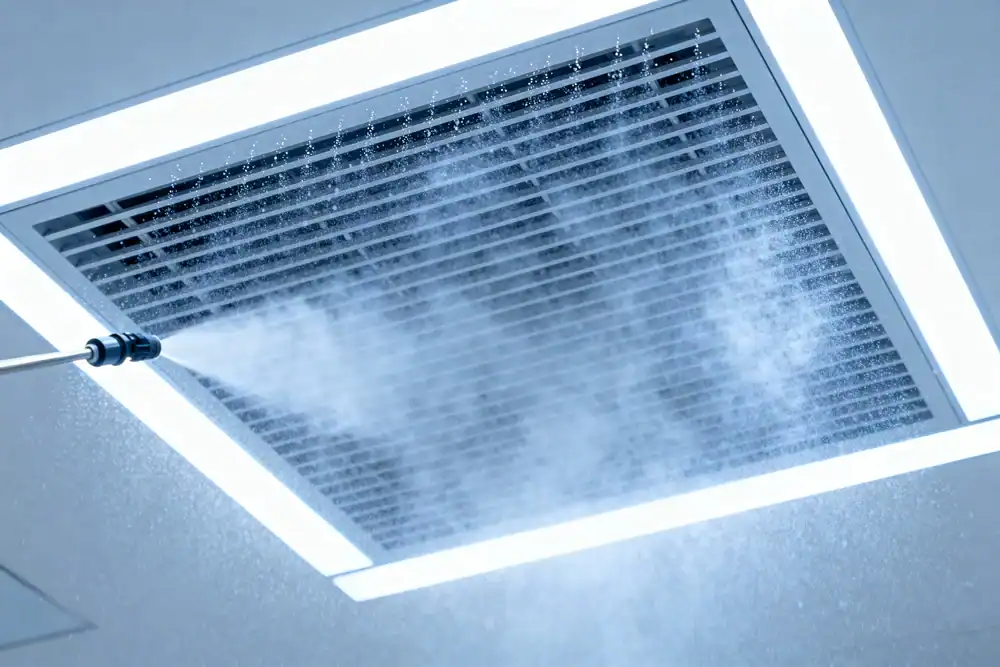
You’ll notice the difference in your energy bills first. Commercial HVAC systems account for over 30% of your building’s energy use, and that percentage climbs when ducts are dirty. Contaminants coat your heating and cooling coils, forcing the system to work harder just to maintain temperature.
Clean ductwork changes that. Your system runs efficiently again. Airflow improves, temperature control becomes consistent, and you’re not burning money to push air through clogged vents.
Your employees will notice too. Fewer complaints about stuffiness, headaches, or that stale air smell that never quite goes away. Buildings with poor ventilation see 130% more sick leave. When your air ducts are clean, people breathe easier and work better.
Then there’s your equipment. HVAC systems aren’t cheap to replace, and prices have jumped 40% since 2020. Regular duct cleaning reduces strain on your system, keeps it running within factory specs, and adds years to its lifespan. You’re protecting a major investment.
We’ve served the Charlotte area since 2008, and we’ve been working in Allen Jay for years. Rick Watson and Noah Watson are both NADCA-certified with ASCS credentials. Rick also holds CVI certification, which means we understand the technical side of commercial HVAC systems, not just the cleaning part.
We’re not a residential company trying to scale up. Commercial ductwork is different—larger systems, different contaminants, stricter standards. Our principal owner trained as an Environmental Geologist and brings over 20 years of environmental consulting experience to every project.
Allen Jay businesses need reliable service that doesn’t disrupt operations. We work around your schedule, including after-hours and weekends. You get written protocols for every job, documentation for compliance, and a team that knows how to read mechanical drawings and protect sensitive equipment during the cleaning process.
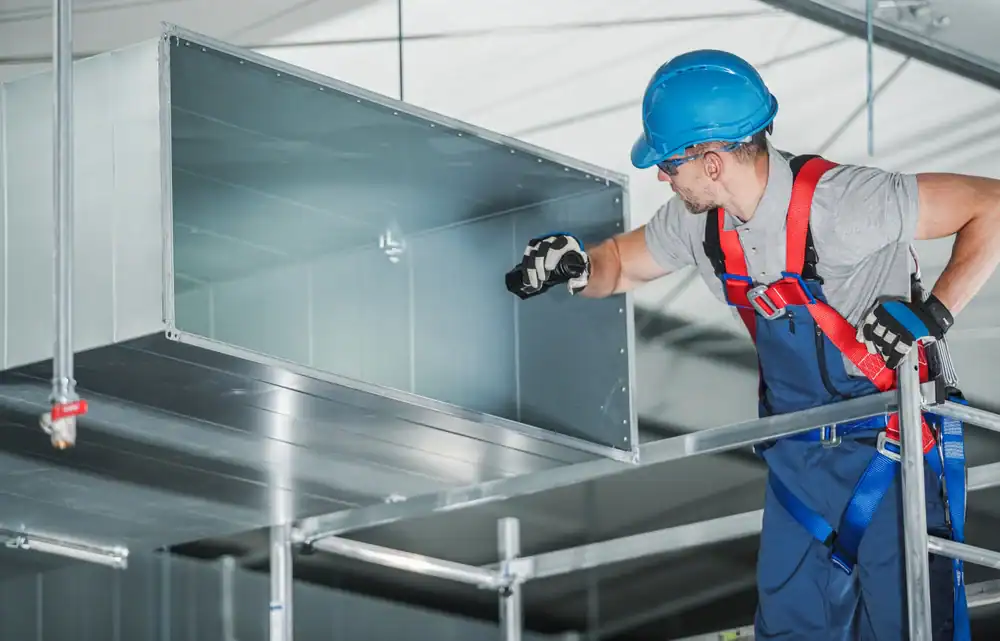
We start with an assessment of your system. That means looking at your mechanical drawings, identifying access points, and locating any sensitive airflow monitoring equipment that needs protection during cleaning. Every commercial system is different, so we plan each job individually.
Before we start cleaning, you get a written protocol. It outlines what we’re doing, how we’re doing it, and what results you should expect. This isn’t just for your records—it’s accountability on our end and documentation you can use for regulatory compliance.
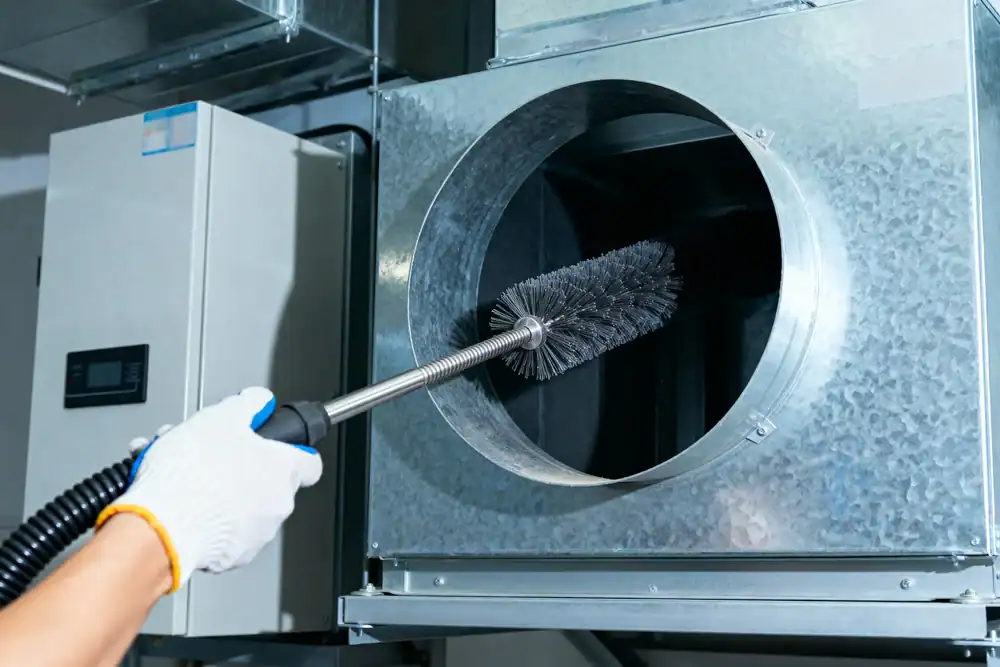
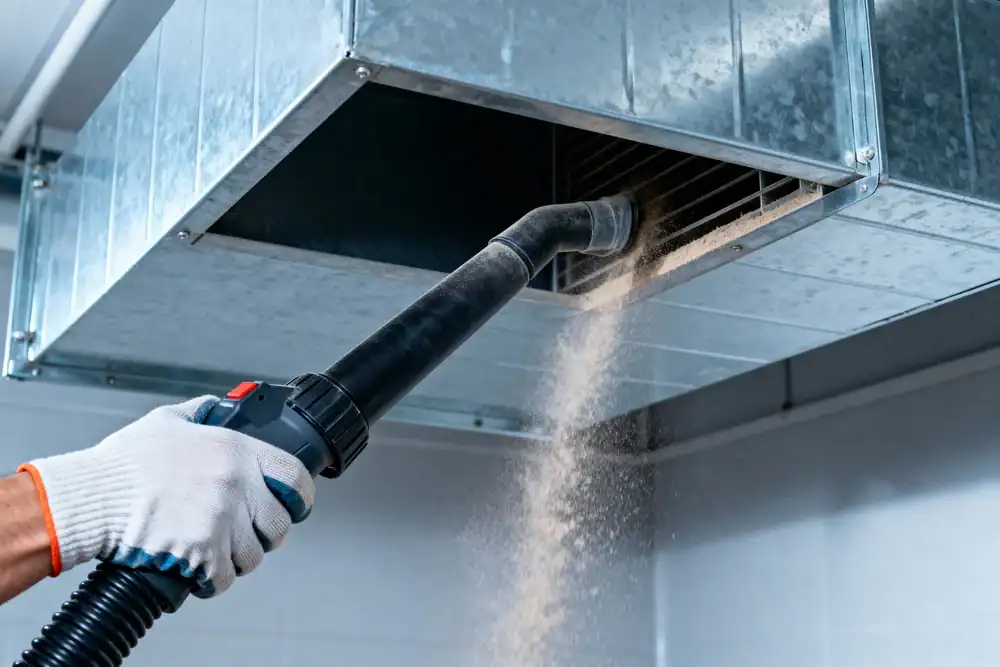
The actual cleaning involves accessing your ductwork at strategic points and using professional-grade equipment to remove dust, dirt, mold spores, and other contaminants. We’re not just blowing air through your vents. We’re physically removing buildup from your system, including what’s accumulated on heating and cooling coils.
Once we’re done, your system gets a final inspection. We verify that airflow is restored, access points are properly sealed, and your HVAC is operating as it should. You get documentation of the work completed, and we walk you through what we found and what we did about it.
Ready to get started?
Our commercial air duct cleaning service covers your entire HVAC system, not just the visible vents. That includes supply and return ducts, registers and grilles, heating and cooling coils, condensate drain pans, and the air handling unit itself. If it’s part of your air distribution system, we clean it.
Allen Jay has its share of manufacturing and industrial facilities, and those environments create specific challenges. Dust from production processes, chemical residues, and higher particulate loads mean your ductwork needs more than a basic cleaning. We handle contamination that residential companies wouldn’t know how to approach.
You also get compliance support. OSHA requires employers to provide workplaces free from recognized hazards, and poor indoor air quality qualifies. Our documentation gives you proof that you’re maintaining your systems and taking air quality seriously. That matters during inspections and when you’re managing risk.
We don’t do residential dryer vents, and we’re not trying to upsell you on services you don’t need. This is commercial HVAC duct cleaning done right, with the certifications and experience to back it up.
Most commercial buildings benefit from duct cleaning every three to five years, but your specific timeline depends on what’s happening inside your facility. Manufacturing operations, food service environments, or buildings with high occupancy rates need more frequent cleaning because they generate more contaminants.
If you’re seeing dust around vents, getting complaints about air quality, or noticing your energy bills creeping up without explanation, those are signs your ducts need attention now. Buildings that have gone through renovations should also get their ductwork cleaned—construction dust gets everywhere, including your HVAC system.
NADCA recommends cleaning when there’s visible mold growth inside ducts, when ducts are infested with rodents or insects, or when they’re clogged with excessive dust and debris. You don’t need to wait for a scheduled interval if you’re already seeing problems. The longer contaminants sit in your system, the harder your HVAC works and the worse your indoor air quality gets.
Yes, but the savings depend on how dirty your system is right now. Clean air ducts can reduce heating and cooling costs by 5-20% because your HVAC isn’t fighting against buildup to move air. When contaminants coat your heating and cooling coils, your system has to work significantly harder to reach the same temperature.
Commercial HVAC systems already consume about 40% of your building’s total energy. If your ducts are clogged, that percentage goes up. You’re paying for wasted energy every month until the problem gets fixed. Clean ductwork restores proper airflow, which means your system runs at designed efficiency instead of compensating for restrictions.
The other cost factor is equipment lifespan. HVAC repairs and replacements aren’t cheap, especially with equipment prices up 40% since 2020. When your system runs harder due to dirty ducts, components wear out faster. Regular duct cleaning reduces that strain, which means fewer breakdowns and more years before you’re shopping for new equipment.
Commercial systems are larger, more complex, and deal with different types of contamination. Residential duct cleaning typically involves smaller systems with standard layouts. Commercial buildings have multi-zone systems, variable air volume setups, and ductwork that serves dozens or hundreds of occupants instead of a single family.
The contaminants are different too. Commercial buildings—especially in Allen Jay’s industrial areas—deal with manufacturing dust, chemical residues, higher particulate loads from foot traffic, and contamination from commercial cooking or production processes. That requires different equipment, different techniques, and certifications that prove you know what you’re doing.
Commercial duct cleaning also involves regulatory compliance. You need documentation, written protocols, and proof that the work meets industry standards. NADCA certification matters because it shows your cleaning company understands commercial HVAC systems, not just residential setups. The stakes are higher when you’re responsible for air quality that affects employee health and productivity.
It depends on your building size and system complexity, but most commercial duct cleaning projects take anywhere from several hours to a full day. Larger facilities with extensive ductwork or multiple HVAC systems may require multiple days, especially if we’re working around your business hours.
We can schedule work during off-hours or weekends to minimize disruption to your operations. That’s often the best approach for businesses that can’t afford downtime during regular hours. You don’t want your employees dealing with noise and equipment access during peak productivity times.
Before we start, we’ll give you a realistic timeline based on your specific system. That includes the assessment, the actual cleaning, and the final inspection. We’re not rushing through the job just to finish faster—commercial ductwork needs thorough cleaning to actually solve the problem. Cutting corners means you’re back to dirty ducts and high energy bills sooner than you should be.
Yes. Poor indoor air quality from contaminated ductwork causes real health problems, not just minor discomfort. The EPA identifies indoor air quality as one of the top five environmental health risks, and your ductwork plays a major role in what your employees breathe all day.
Dirty ducts circulate dust, mold spores, bacteria, and other contaminants throughout your building every time your HVAC runs. Employees exposed to poor air quality report headaches, eye and throat irritation, coughing, dizziness, fatigue, and difficulty concentrating. Buildings with inadequate ventilation see 130% more sick leave than buildings with clean air systems.
There’s also the productivity cost. Research from Harvard shows that better indoor air quality can boost cognitive function and work performance by 6-9%. Poor air quality slows response times, decreases accuracy, and costs businesses real money in lost productivity. When you’re paying employees to work, you want them breathing clean air that helps them focus, not contaminated air that makes them feel lousy.
Yes. Every commercial duct cleaning project includes written protocols and documentation of the work completed. You get records that show what was done, when it was done, and what results were achieved. That’s important for OSHA compliance, health department inspections, and your own risk management.
OSHA requires employers to provide workplaces free from recognized hazards that can cause serious harm. Poor indoor air quality qualifies as a recognized hazard, especially when you know your ducts are contaminated and you’re not addressing it. Our documentation proves you’re maintaining your HVAC systems and taking reasonable steps to protect employee health.
You also get the benefit of working with NADCA-certified technicians. That certification means we follow industry standards for commercial duct cleaning, not just making it up as we go. When inspectors or insurance companies ask about your air quality maintenance, you have professional documentation from a certified company, not just a receipt from whoever was cheapest.