

Contact Info
- Greensboro, NC 27406
- Call: 336-707-0498
- Text: 336-707-0498
-
Mon - Fri: 8am - 4pm
Sat - Sun: Closed
Contact Info
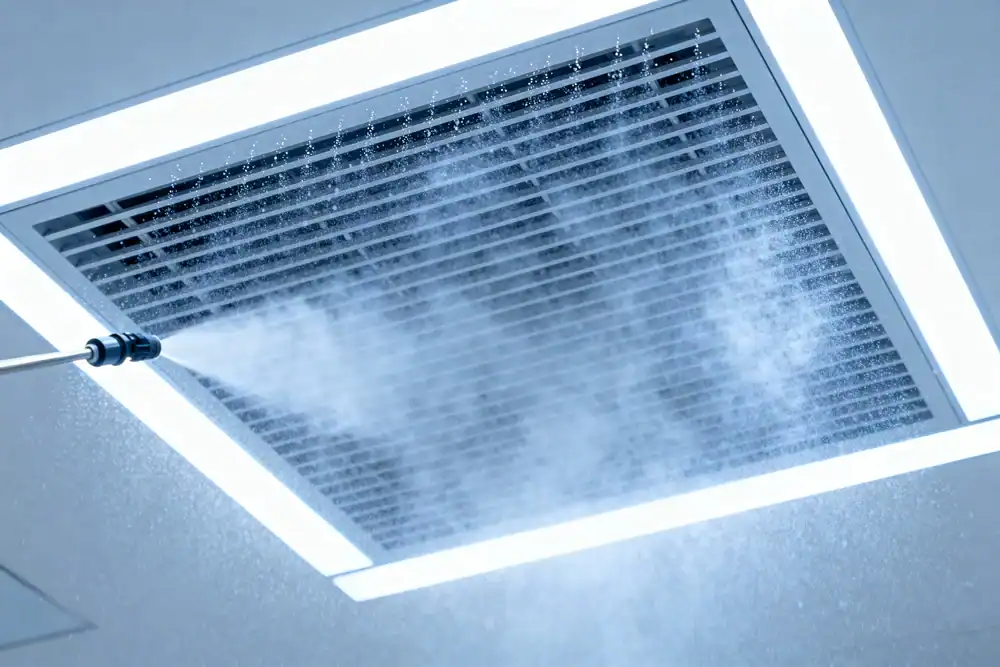
Your facility uses less energy to heat and cool the same space. Studies show that cleaning your ductwork can reduce fan and blower energy consumption by 41% to 60% while increasing airflow by up to 46%. That’s not a small difference on your utility bill.
Your employees breathe cleaner air. Dust, pollen, and mold spores stop circulating through your building every time the system kicks on. Fewer complaints about stuffiness, fewer allergy flare-ups, and better focus during the workday.
Your HVAC system lasts longer because it’s not straining to push air through clogged ducts. Equipment that runs efficiently breaks down less often and doesn’t need replacing as soon. You’re looking at 30% to 50% more life out of a system that’s properly maintained.
We’ve spent three decades cleaning commercial ductwork in North Carolina. We work with manufacturing plants, office buildings, warehouses, and retail spaces throughout Randolph County. Asheboro’s economy runs on manufacturing and industrial operations, which means facilities here deal with more dust, debris, and airborne contaminants than typical office environments.
We follow NADCA standards because those are the only standards worth following. Our team uses commercial-grade equipment designed for the larger, more complex duct systems found in business facilities. We’re not a residential company trying to scale up. We know what commercial ductwork looks like and how to clean it properly.
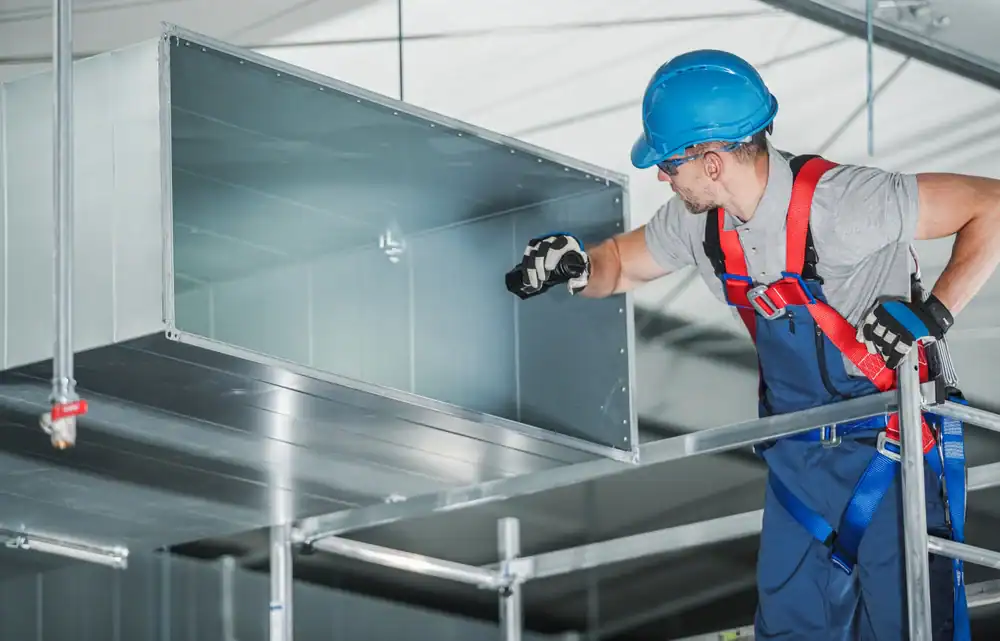
We start with an inspection of your entire HVAC system. That means looking at your ductwork, vents, and air handling units to see where debris has built up and how your system is currently performing. You’ll know exactly what we found before we start any work.
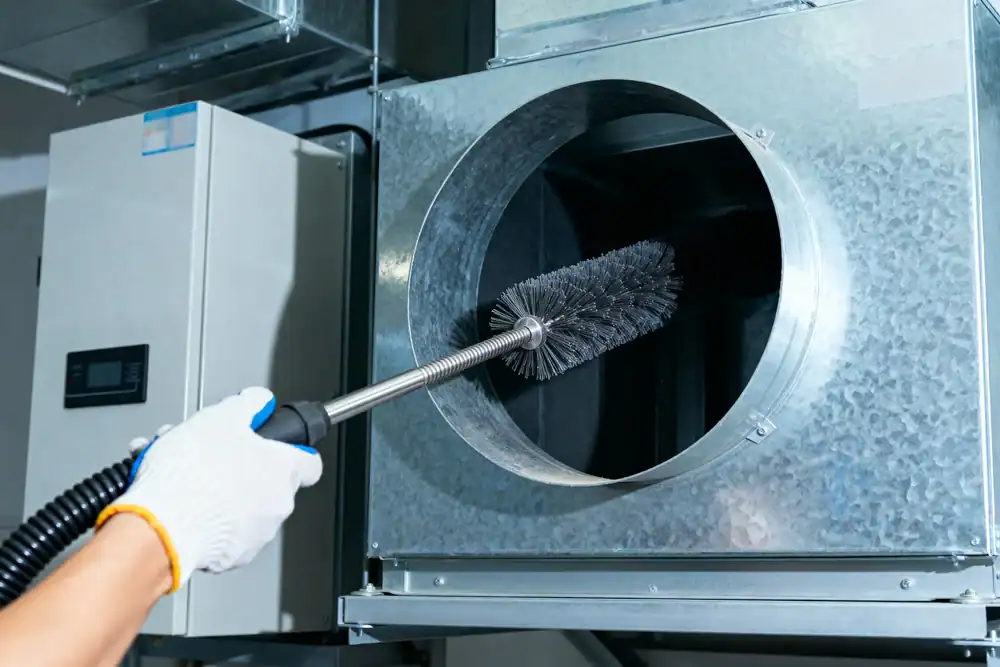
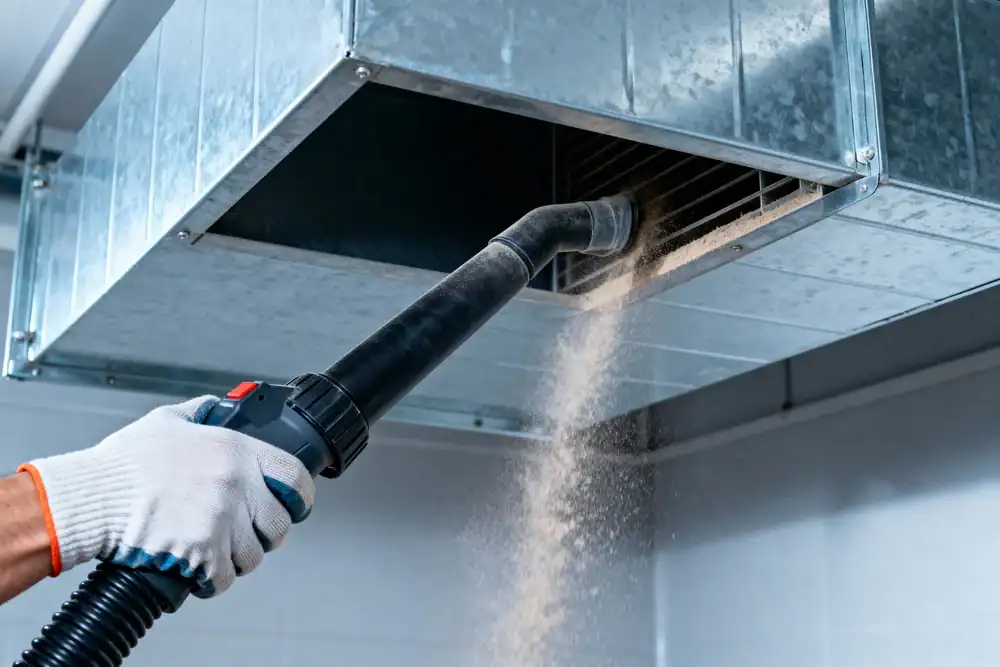
Then we seal off sections of your ductwork and use high-powered vacuums with HEPA filtration to pull out dust, dirt, and contaminants. We’re not blowing debris around or pushing it deeper into the system. We’re removing it completely. For stubborn buildup, we use rotating brushes and compressed air tools designed specifically for commercial duct cleaning.
After the cleaning, we inspect again to make sure everything was removed. You’ll see the difference in airflow immediately, and you’ll notice the difference in your energy bills within the first billing cycle. Most commercial clients also see fewer HVAC service calls after a thorough duct cleaning.
Ready to get started?
We clean the entire air conveyance system. That includes supply and return ducts, registers and grilles, diffusers, heat exchangers, cooling coils, drip pans, fan motors, and the air handling unit housing. If air moves through it, we clean it.
In Asheboro’s manufacturing and industrial facilities, ductwork accumulates more than just household dust. You’re dealing with metal shavings, wood particles, chemical residue, and other byproducts of production. Standard residential cleaning methods don’t cut it. You need equipment and experience that match the environment.
We also address mold and microbial growth if we find it during inspection. Asheboro’s humidity levels create conditions where mold can thrive inside ductwork, especially in systems that aren’t maintained regularly. We don’t just clean around it. We remove it and treat the affected areas to prevent it from coming back.
Most commercial facilities should have their ductwork cleaned every three to five years. But that timeline changes based on what your facility does. Manufacturing plants, woodworking shops, and facilities that produce airborne particles need more frequent cleaning, sometimes annually.
If you’re in a sector with strict air quality regulations, you might be required to clean more often to stay compliant. OSHA’s General Duty Clause requires employers to provide a workplace free from recognized hazards, and poor indoor air quality counts.
You’ll know it’s time when you notice higher energy bills, reduced airflow from vents, visible dust around registers, or employee complaints about air quality. Those are signs your system is working harder than it should because the ducts are restricting airflow.
Yes, and the data backs it up. NADCA studies show that cleaning your HVAC system can reduce conveyance energy by 41% to 60% and increase airflow by 10% to 46%. Even small amounts of debris can make your heating and cooling system up to 40% less efficient.
Your HVAC system is one of the largest energy consumers in any commercial building. When ducts are clogged, the system runs longer to reach the same temperature. That means higher electricity or gas bills every single month.
Most commercial clients see a return on investment within one to two years just from energy savings alone. Add in fewer repairs, longer equipment life, and better employee productivity from improved air quality, and the numbers get even better.
Commercial duct systems are significantly larger and more complex than residential systems. You’re dealing with multiple air handlers, longer duct runs, and systems that operate more hours per day. The equipment and expertise required are completely different.
Commercial facilities also face stricter regulations. You might need to maintain certain air quality standards for OSHA compliance, insurance requirements, or industry-specific regulations. Residential cleaners aren’t equipped to handle those requirements or provide the documentation you need.
The stakes are higher too. A poorly maintained commercial HVAC system doesn’t just affect one family. It impacts employee health, productivity, operational costs, and regulatory compliance. You need a company that understands commercial systems and has the equipment to clean them properly.
We work around your schedule to minimize disruption. Many commercial clients have us come in during off-hours, weekends, or during planned shutdowns. The actual cleaning process is loud because we’re using industrial vacuums and air tools, but we can section off areas to keep other parts of your facility operational.
For most commercial buildings, the job takes one to three days depending on the size of your system and how much buildup we’re dealing with. We’ll give you a clear timeline during the inspection so you can plan accordingly.
The short-term disruption is worth it. You’re looking at immediate improvements in air quality, lower energy costs, and a system that won’t break down as often. Most clients tell us they wish they’d done it sooner.
Look at your vents and registers. If you see dust buildup around the edges or dark streaks on the walls near air returns, that’s debris blowing out of your ductwork. Open a register and shine a light inside. If you see visible dust, debris, or worse, mold growth, your ducts need attention.
Check your energy bills. If costs have been creeping up without a corresponding increase in usage or rate changes, your HVAC system is probably working harder because of restricted airflow. Compare your current bills to the same months from previous years.
Listen to your employees. If you’re hearing complaints about stuffiness, allergies, headaches, or respiratory issues that seem to improve when people leave the building, your indoor air quality is suffering. Poor ductwork is often the culprit.
Yes. We provide detailed reports that include before and after photos, a summary of work performed, and documentation that the cleaning was completed according to NADCA standards. Many of our commercial clients need this for OSHA compliance, insurance requirements, or internal facility management records.
If you operate in a regulated industry, you know that documentation matters. We’ve worked with hospitals, government facilities, manufacturing plants, and other operations where air quality isn’t optional. We know what you need and we provide it.
You’ll also get recommendations for ongoing maintenance and a suggested timeline for your next cleaning based on your facility type and what we found during the job. We’re not trying to sell you services you don’t need. We’re giving you the information to make smart decisions about your HVAC system.