

Contact Info
- Greensboro, NC 27406
- Call: 336-707-0498
- Text: 336-707-0498
-
Mon - Fri: 8am - 4pm
Sat - Sun: Closed
Contact Info
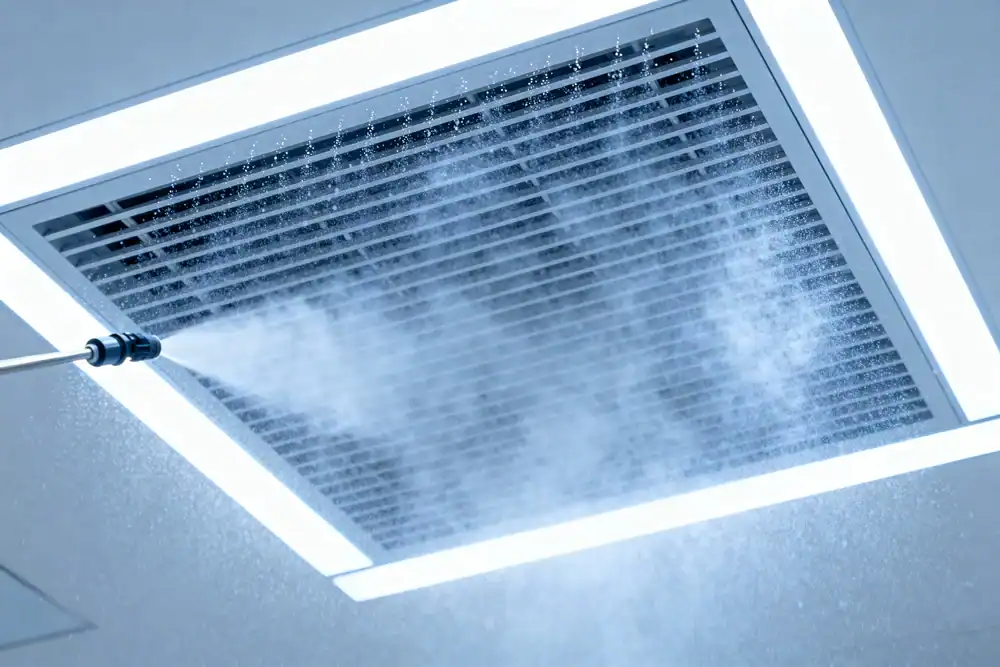
Your energy bills drop. The EPA found that removing debris from ductwork and cleaning impacted coils can cut HVAC runtime by up to 30%. That’s real money back in your operating budget every month.
Your employees feel better. Headaches, fatigue, trouble concentrating—these aren’t just complaints. They’re symptoms of poor indoor air quality that show up in productivity reports and absenteeism rates. When your ventilation system is clean, people work better because they feel better.
Your system lasts longer. Dirt forces your HVAC to work harder, which means more wear, more breakdowns, and earlier replacement. Clean ductwork means better airflow, less strain, and equipment that actually reaches its expected lifespan. You’re not just maintaining your building—you’re protecting a major capital investment.
We serve commercial properties throughout Miles Crossroad and the greater Greensboro area. We follow NADCA standards because those standards exist for a reason—they work.
Our team uses HEPA-filtered equipment that actually removes contaminants instead of just moving them around. We’ve cleaned systems so thoroughly that HVAC contractors saw no need to replace ductwork that was 17 years old. That’s not marketing talk—that’s what happens when you do the job right.
We’re local, and we understand what commercial property managers in this area deal with. High humidity, seasonal pollen, and aging HVAC systems are part of doing business in North Carolina. We know how to address those specific challenges without wasting your time or budget.
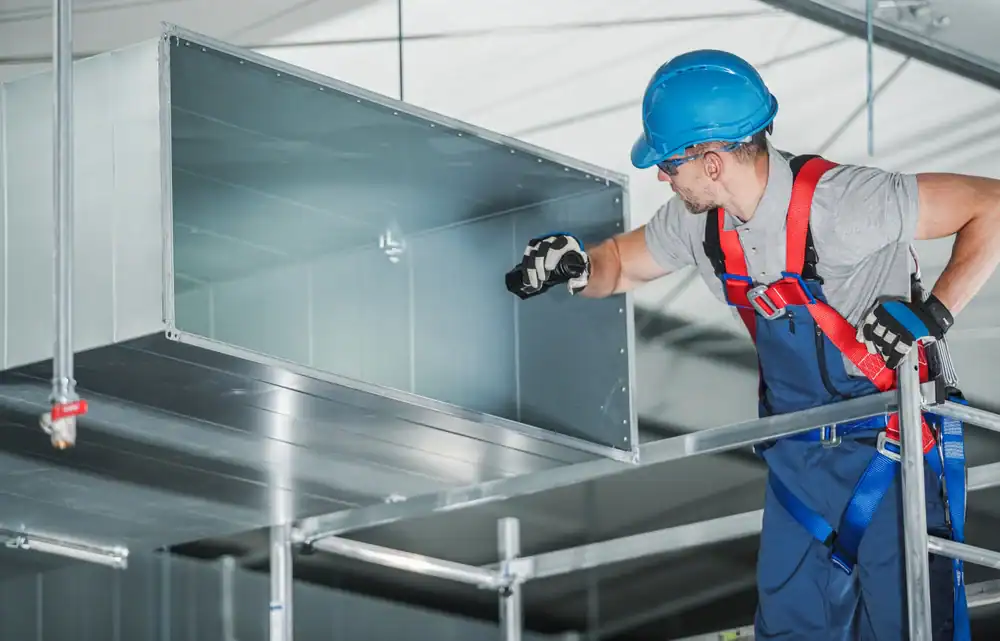
We start with an inspection. You need to know what’s actually in your system before anyone starts cleaning. We assess the ductwork, identify problem areas, and give you a clear picture of what we’re dealing with.
Then we contain and protect your space. We seal off work areas and set up HEPA-filtered negative air machines. This keeps contaminants from spreading into occupied areas during the cleaning process. Your business keeps running while we work.
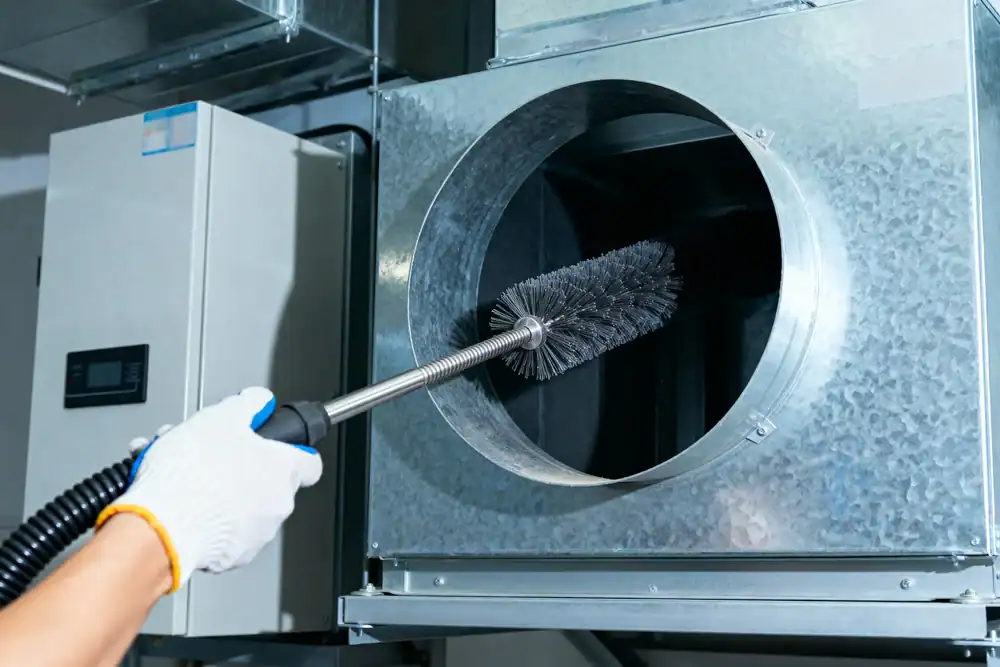
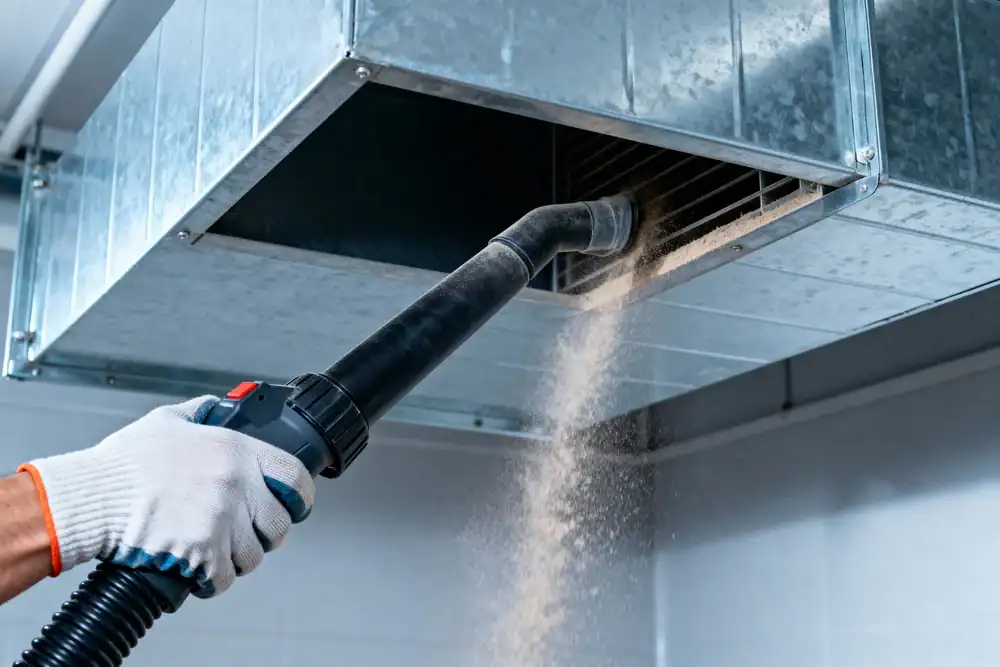
We clean every component—not just the easy-to-reach parts. That means supply and return ducts, registers, grilles, diffusers, coils, drain pans, and the air handling unit. We use specialized brushes and vacuum systems designed for commercial ductwork. The equipment matters because residential tools don’t cut it in commercial systems.
After cleaning, we verify the work. You’ll see the difference in airflow and air quality, but we also document what was removed and what your system looks like now. Most commercial properties in Miles Crossroad need this service every three to five years, depending on use and environment.
Ready to get started?
You get a complete system cleaning—not a surface-level pass-through. That includes all accessible ductwork, supply and return vents, registers, grilles, coils, blower components, and the air handler. We’re addressing the entire air circulation system in your building.
Commercial buildings in Miles Crossroad face specific challenges. The area’s humidity creates conditions where mold and bacteria can develop in duct systems. Seasonal pollen counts are high, and that material gets pulled into your HVAC system constantly. We’re not just removing dust—we’re addressing biological contaminants that affect health and violate OSHA standards if they reach certain levels.
You also get documentation. If you’re managing a property for someone else or you need records for compliance, we provide before-and-after reports. Some industries require proof of indoor air quality maintenance. We make that easy.
The timeline depends on your building size and system complexity, but most commercial jobs take between five and nine hours per system. We work around your schedule because shutting down your business isn’t an option. Early morning, evening, or weekend service is available when it makes sense for your operation.
Look at your vents. If you see visible dust buildup around registers or supply vents, that’s a clear sign. But the real indicators are often less obvious.
Are your energy bills creeping up without explanation? Dirty ducts restrict airflow, which forces your HVAC system to run longer to reach temperature. That shows up in your utility costs before you ever see the dust.
Are employees complaining about stuffiness, odors, or feeling worse at work than at home? Indoor air quality problems don’t always announce themselves dramatically. They show up as low-grade symptoms that people attribute to other causes. If your team is experiencing headaches, fatigue, or respiratory irritation that improves when they leave the building, your ductwork is a likely culprit.
Most commercial properties in Miles Crossroad should have ductwork inspected every three to five years. High-traffic buildings, medical facilities, restaurants, or any property with specific air quality requirements may need more frequent service.
Scale and complexity. Commercial systems are larger, more intricate, and require different equipment and expertise. A residential system might have 10 to 15 vents. A commercial building can have 50 or more, with multiple air handlers and rooftop units.
Commercial ductwork is often metal, not flex duct, and it’s configured differently. You’re dealing with longer runs, more branches, and systems designed to condition much larger spaces. The cleaning equipment has to be industrial-grade to handle that scope.
The stakes are also different. In a home, poor air quality affects a family. In a commercial building, it affects dozens or hundreds of people, and it can create liability issues. OSHA and the EPA have specific standards for commercial indoor air quality. If particulate matter reaches 500 parts per million, you’re in violation. Residential properties don’t face those regulatory requirements.
That’s why you can’t treat commercial duct cleaning like a scaled-up residential job. The approach, equipment, and standards are fundamentally different.
For most commercial buildings in Miles Crossroad, expect five to nine hours per HVAC system. Larger buildings with multiple systems will take longer—sometimes requiring multiple days of work.
The timeline depends on several factors. How large is your ductwork system? How accessible are the ducts? What’s the contamination level? A relatively clean system with good access moves faster than one that hasn’t been serviced in a decade and has limited access points.
We typically schedule commercial jobs during off-hours to minimize disruption. Early morning, evening, or weekend service means your business operates normally while we work. Some property managers prefer to schedule during planned closures or low-activity periods.
The key is that we don’t rush the job to hit a time target. Thorough cleaning takes as long as it takes. Cutting corners to finish faster defeats the entire purpose. You’re paying for results, not speed, and we make sure the work is done right even if it takes an extra hour or two.
Yes, if your ducts are actually dirty. The EPA’s research shows that removing debris and cleaning impacted coils can reduce HVAC runtime by up to 30%. That directly translates to lower energy bills.
Here’s why it works. When dust and contaminants build up in your ductwork, they restrict airflow. Your system has to work harder and run longer to move the same amount of air. That extra runtime costs money every single month.
Commercial buildings in the U.S. consume 40% of the nation’s energy, according to the Department of Energy. HVAC is a massive part of that consumption. Even a 10% to 15% improvement in efficiency adds up to real savings over a year.
But the savings go beyond just energy costs. Clean systems break down less often, which means fewer emergency repair calls and less downtime. They also last longer before needing replacement. When you’re looking at a $50,000 to $100,000 rooftop unit replacement, extending that equipment’s life by even a few years is significant.
The return on investment for commercial duct cleaning is measurable. Most property managers see the payback within the first year through reduced energy and maintenance costs.
Not explicitly, but OSHA and the EPA have indoor air quality standards that you’re required to meet. If poor duct conditions cause you to violate those standards, you’re liable.
OSHA requires commercial buildings to maintain particulate matter below 500 parts per million. The EPA has guidelines for acceptable indoor air quality, especially in buildings like schools, healthcare facilities, and offices where people spend extended time. Neglected ductwork can cause you to fail those standards.
Some industries have specific requirements. Healthcare facilities, food service operations, and buildings with sensitive equipment often have stricter air quality mandates. If you’re in one of those sectors, regular duct cleaning isn’t optional—it’s part of compliance.
There’s also liability to consider. If employees develop health issues tied to poor indoor air quality, you’re potentially looking at workers’ comp claims or lawsuits. Poor IAQ costs the American economy an estimated $168 billion annually in health-related expenses and lost productivity. Property managers and business owners are increasingly held accountable for maintaining healthy environments.
Even if you’re not legally required to clean your ducts, the risk of not doing it often outweighs the cost of the service.
Every three to five years for most commercial properties. But that’s a general guideline—your building might need more or less frequent service depending on specific factors.
High-traffic buildings need more frequent cleaning. Retail spaces, gyms, restaurants, and medical facilities accumulate contaminants faster than low-traffic office buildings. If your business generates dust, smoke, or other airborne particles, you’re looking at shorter intervals between cleanings.
Environmental factors matter too. Miles Crossroad and the Greensboro area deal with high humidity and significant seasonal pollen. Both accelerate contamination in duct systems. Buildings in this region often need service on the shorter end of that three-to-five-year range.
After renovations or construction work, you should clean your ducts regardless of when they were last serviced. Drywall dust, sawdust, and other construction debris get pulled into HVAC systems and coat everything.
The best approach is to have your system inspected every two to three years. An inspection tells you whether cleaning is needed or if you can wait. That’s more cost-effective than cleaning on a rigid schedule when it might not be necessary, and it prevents you from going too long and creating a bigger problem.