
Contact Info
- Greensboro, NC 27406
- Call: 336-707-0498
- Text: 336-707-0498
-
Mon - Fri: 8am - 4pm
Sat - Sun: Closed
Contact Info
You’re probably noticing higher energy bills even though nothing’s changed. Your HVAC system runs constantly but spaces still feel stuffy. Employees mention allergies or headaches more often than they used to.
That’s what happens when ductwork fills with years of dust, debris, and contamination. Your system works harder to push air through clogged passages. You pay more to heat and cool less effectively. And whatever’s trapped in those ducts—mold spores, rodent droppings, chemical residue—keeps circulating through your building.
Clean ductwork changes that. Systems that were struggling suddenly move air the way they’re designed to. Energy consumption drops because fans and blowers aren’t fighting against blockages. Research shows properly cleaned systems can save 41% to 60% on conveyance energy while delivering up to 46% more airflow.
Your indoor air quality improves because you’re not constantly redistributing contaminants. Equipment lasts longer because it’s not overworking itself. And you’re not facing surprise breakdowns during your busiest seasons.
We’ve been handling commercial ductwork in the Greensboro area—including Sandy Ridge—for over 30 years. Rick Watson holds NADCA certifications (ASCS and CVI), which means our work follows ACR standards used on commercial projects worldwide.
Sandy Ridge sits in a commercial corridor where restaurants, retail spaces, and service businesses operate in older buildings with HVAC systems that have seen decades of use. Many of these systems have never been properly cleaned. We’ve pulled out everything from construction debris to years of accumulated lint that was choking airflow by more than half.
We’re BBB accredited with an A+ rating. The work gets done right because we follow the actual standards, not shortcuts. You get a thorough inspection, documentation of what we find, and cleaning that addresses the real problems in your system.
We start with a full system inspection using cameras to document what’s actually inside your ductwork. You see the same footage we do. No guessing, no upselling based on assumptions.
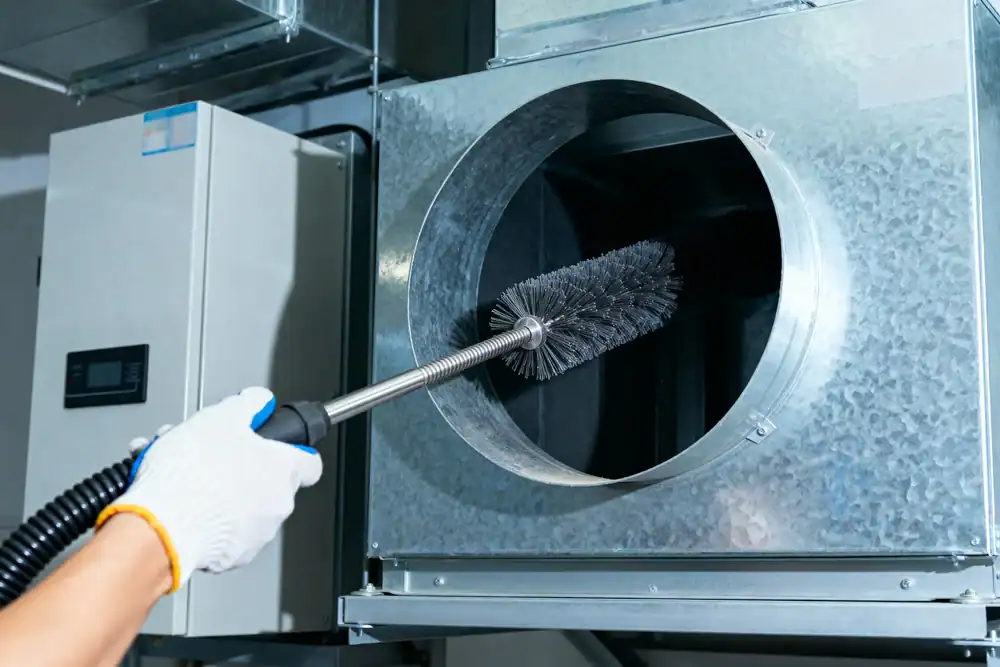
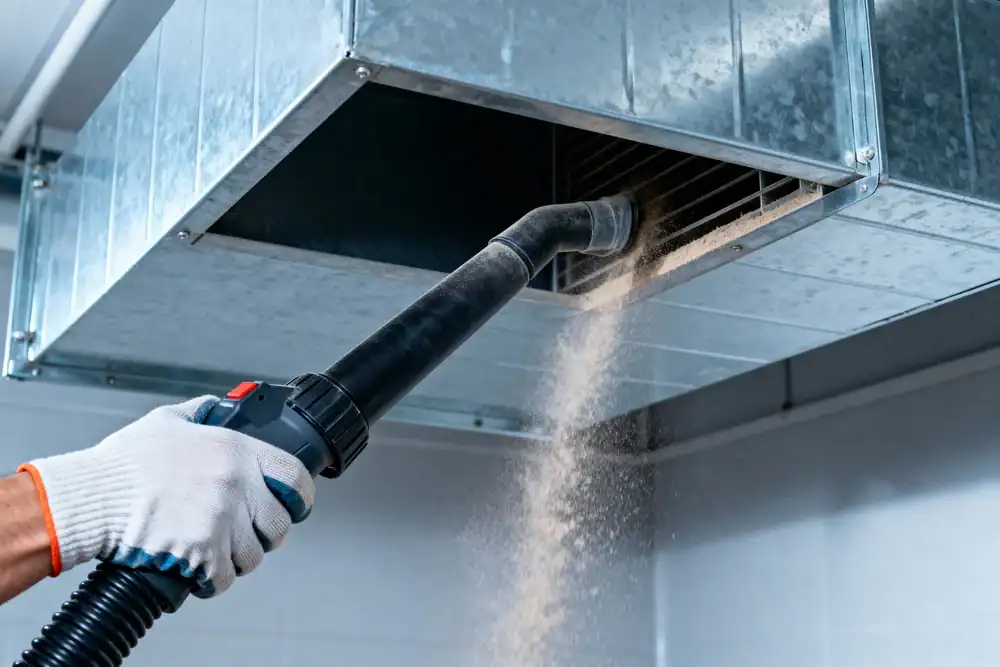
Once we know what we’re dealing with, we seal off your HVAC system and use negative air pressure to contain debris. High-powered vacuums connect to your ductwork while we use compressed air tools and rotating brushes to dislodge buildup from every surface. Everything gets pulled into HEPA-filtered collection systems—nothing redistributes through your building.
We clean supply and return ducts, registers, grilles, diffusers, and the air handling unit itself. Coils get addressed if they’re restricting airflow. Blower components get cleaned so they’re not just pushing contaminated air back through your freshly cleaned ducts.
After cleaning, we do a final camera inspection so you can see the difference. You get documentation of the work for your maintenance records and compliance requirements. Most commercial jobs take one to three days depending on system size and access points.
Ready to get started?
A real commercial duct cleaning isn’t just running a vacuum through a few vents. It’s a complete system restoration that addresses every component affecting your air quality and efficiency.
You get a pre-cleaning video inspection that documents current conditions. This matters for your records and helps identify issues like damaged ductwork, disconnected sections, or moisture problems that need attention beyond cleaning.
The actual cleaning covers your entire HVAC system—all supply and return ductwork, every register and grille, diffusers, the air handler, evaporator coils, drip pans, and blower assemblies. We’re addressing the whole system because contamination in one area affects everything else.
In Sandy Ridge’s commercial buildings, we often find specific issues related to the area’s mix of older construction and highway-adjacent locations. Exterior dust infiltration is common. So is debris from renovations that was never properly removed. Restaurants deal with grease accumulation that standard cleaning doesn’t touch. Retail spaces in older buildings often have ductwork that’s never been accessed since installation.
You also get post-cleaning documentation with before-and-after footage, plus recommendations for maintenance intervals based on your specific operation. Most commercial facilities should have ductwork inspected every three to five years, but high-contamination environments need more frequent attention.
Cost depends on your system size, how much ductwork you have, and what we find during inspection. A small retail space might run $800 to $1,500. Larger commercial buildings with complex HVAC systems can range from $2,000 to $5,000 or more.
What drives cost up is accessibility and contamination level. If your ductwork is easy to access and moderately dirty, cleaning goes faster. If we’re dealing with decades of buildup, restricted access points, or contamination that requires special handling, that takes more time and equipment.
The real question isn’t what cleaning costs—it’s what not cleaning costs. If dirty ductwork is adding 20% to your energy bills, you’re likely spending hundreds or thousands extra every year. One cleaning can pay for itself in energy savings within the first year, and the efficiency gains continue for years after.
We give you an upfront estimate after inspection. No surprises, no upselling once we’re on site. You know exactly what you’re paying for and why.
NADCA recommends inspection every two years and cleaning as needed, but “as needed” varies dramatically based on your operation. A clean office environment might go five years between cleanings. A restaurant needs attention every one to two years because of grease and particle accumulation.
If you’re in manufacturing, construction, or any industry with high dust or chemical exposure, you’re looking at more frequent cleaning—sometimes annually. Medical facilities, schools, and anywhere with vulnerable populations should stay on a tighter schedule because air quality directly affects health.
Watch for signs between scheduled inspections. Visible dust blowing from vents, musty odors when the system runs, increased allergy complaints from staff, or rising energy costs all indicate it’s time for cleaning regardless of your schedule.
Sandy Ridge businesses near the highway corridor often need more frequent service because of exterior dust and diesel particulate infiltration. If your building is in a high-traffic area, expect to clean more often than the standard recommendations.
Yes, but the savings depend on how restricted your airflow is right now. If your ductwork is significantly clogged, you can see energy reductions of 20% to 40% after cleaning. If your system is only moderately dirty, savings will be smaller but still measurable.
Here’s why it works: your HVAC system is designed to move a specific volume of air with a specific amount of energy. When ducts are clogged with debris, the blower has to work harder to push air through restricted passages. That means longer run times, more energy consumption, and more wear on components.
Clean ducts restore designed airflow. Your system reaches temperature set points faster and shuts off sooner. Fans and blowers operate at normal capacity instead of straining. The cumulative effect shows up in lower utility bills, especially during peak heating and cooling months.
One of our commercial clients saw a 30% drop in HVAC-related energy costs after we cleaned ductwork that hadn’t been touched in 15 years. Their system was running almost constantly before. After cleaning, it cycled normally and maintained temperature with half the runtime.
Commercial systems are larger, more complex, and face different contamination challenges than residential HVAC. You’re dealing with multiple zones, longer duct runs, larger air handlers, and often rooftop units that residential cleaners aren’t equipped to handle.
Commercial ductwork also accumulates different types of contamination based on business operations. Restaurants have grease buildup. Retail spaces accumulate product dust and exterior pollutants. Manufacturing facilities deal with process-specific particles. Medical offices need sanitization-level cleaning. Each requires different approaches and equipment.
The stakes are higher too. A residential system serves one family. Your commercial system affects employees, customers, and business operations. Downtime costs money. Poor air quality creates liability. Regulatory compliance matters in ways it doesn’t for homes.
That’s why commercial cleaning requires NADCA certification and adherence to ACR standards. You need technicians who understand commercial systems, have the right equipment for large-scale work, and can document everything for your compliance and maintenance records. A crew that does residential work isn’t automatically qualified for commercial projects.
Most commercial cleanings take one to three days depending on system size and complexity. A small office or retail space might be done in a day. Larger facilities with multiple HVAC systems can take three to five days.
We work around your schedule. Many businesses prefer we work after hours or on weekends to avoid disruption. That’s doable, though it may affect scheduling and cost. If we work during business hours, we section off areas so the entire building isn’t affected at once.
Your HVAC system will be shut down in zones as we clean them. We coordinate with you to minimize impact on operations. If you have areas that can’t go without climate control—server rooms, temperature-sensitive inventory, medical equipment—we schedule around those needs.
The actual disruption is minimal. You’ll hear equipment running. Some areas will have temporary barriers while we work. But we’re not tearing apart your building or creating chaos. We contain everything, clean as we go, and leave spaces ready to use as soon as we’re done with each section.
NADCA certification means the technician has been trained on and tested for the ACR standard—the globally recognized protocol for HVAC system cleaning. It’s not marketing. It’s proof that the person doing the work knows how to properly assess, clean, and restore commercial systems.
Uncertified cleaners often use shortcuts that look like they work but don’t actually solve the problem. They might clean accessible ductwork but skip the air handler. They might vacuum loose debris but not address adhered contamination. They might not properly contain dust, which means they’re just redistributing it through your building.
NADCA certification requires understanding of airflow dynamics, contamination types, proper equipment use, containment protocols, and safety procedures. Rick Watson holds both ASCS (Air Systems Cleaning Specialist) and CVI (Certified Ventilation Inspector) certifications, which means he can properly assess your system and execute cleaning that meets commercial standards.
For your business, this matters because improper cleaning can actually damage your HVAC system or fail to address the real problems. You’re investing money either way—certified work ensures you’re getting actual results, not just someone running equipment through your ducts and calling it done.