
Contact Info
- Greensboro, NC 27406
- Call: 336-707-0498
- Text: 336-707-0498
-
Mon - Fri: 8am - 4pm
Sat - Sun: Closed
Contact Info
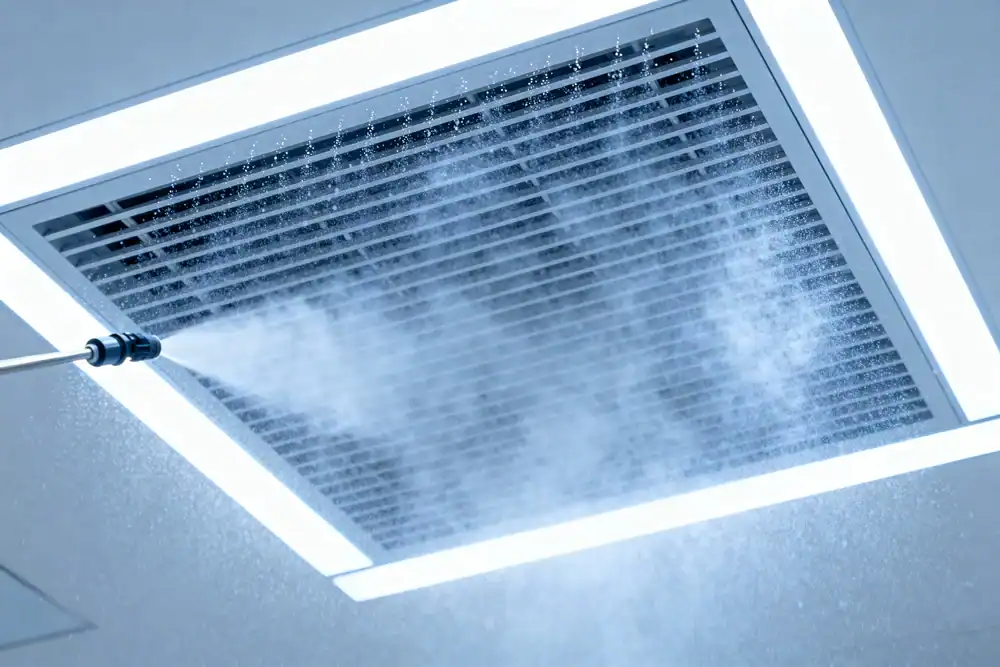
Dirty ductwork forces your heating and cooling system to run longer cycles just to maintain temperature. That’s wasted energy showing up on every utility bill. When airflow is restricted, your equipment works under stress, wearing down components faster and shortening the lifespan of your investment.
Clean ducts mean your HVAC system runs efficiently. You’ll see the difference in energy costs – most commercial facilities cut heating and cooling expenses by 20 to 40 percent after professional duct cleaning. Your system reaches set temperatures faster and holds them without constant cycling.
The air quality shift is immediate. Employees stop complaining about stuffiness, throat irritation, or that stale smell that lingers in break rooms and lobbies. When your ventilation system isn’t circulating dust and allergens, people notice. Fewer sick days, better focus, and a workspace that actually feels clean.
We serve commercial facilities throughout Tobaccoville and the Piedmont Triad region. We follow NADCA certification standards because that’s the benchmark for thorough, effective duct cleaning – not the shortcuts some companies take to finish faster.
Our work focuses on results you can measure: better airflow, lower energy use, and air quality that meets the standards your facility needs. We’ve cleaned ductwork in manufacturing plants, office buildings, and retail spaces across northwest Forsyth County, and we understand what local businesses deal with – seasonal pollen loads, humidity issues, and the dust that comes with being near active construction and agriculture.
You’re not getting a crew that rushes through and calls it done. Our team takes the time to access every section of your ductwork, remove buildup properly, and verify the system is clean before we leave.
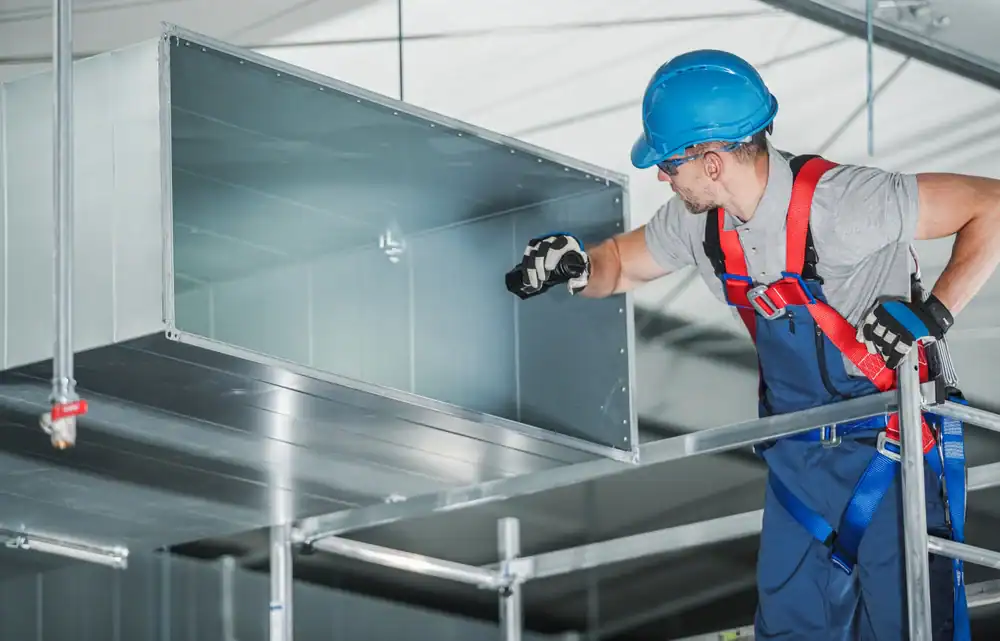
We start with a full system inspection. That means accessing your ductwork to see what we’re dealing with – how much buildup is present, where the worst blockages are, and whether there are any underlying issues like disconnected sections or damaged insulation. You’ll know exactly what needs attention before we start.
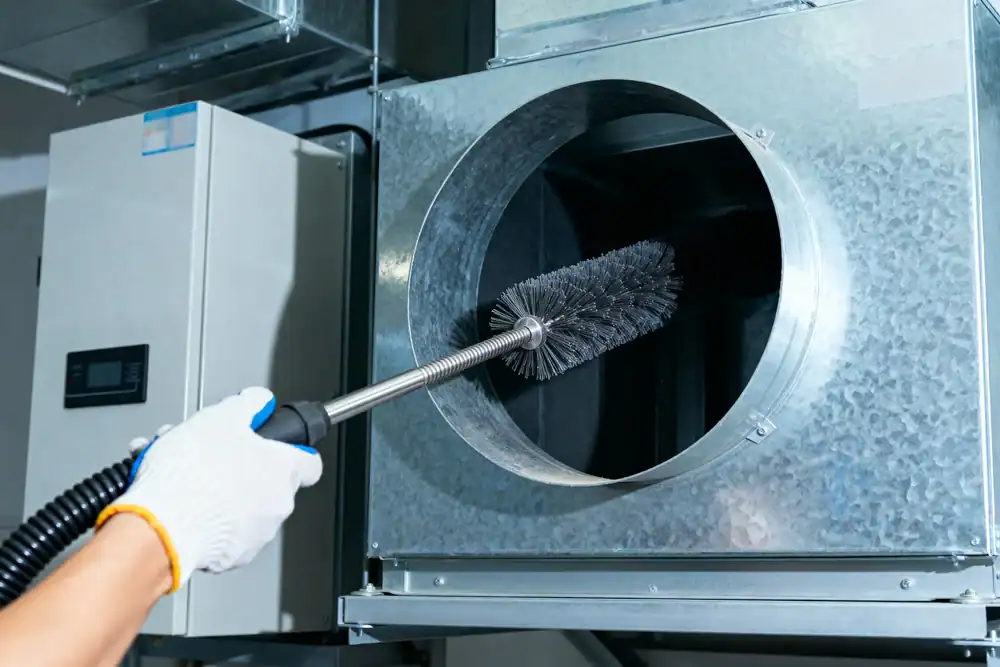
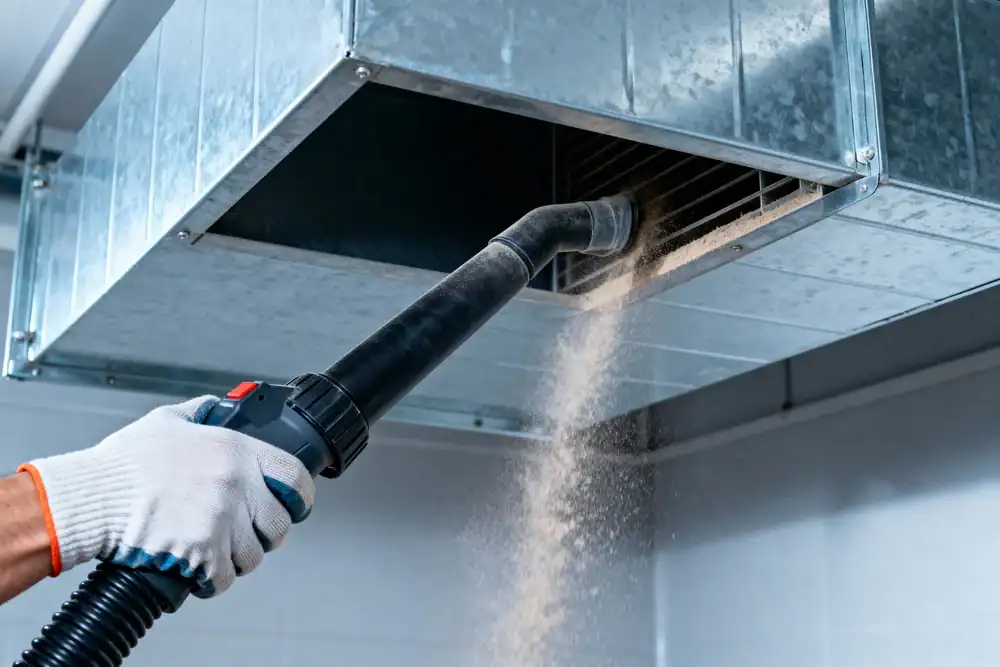
The cleaning itself uses commercial-grade equipment designed for large duct systems. We create negative pressure to pull debris out while brushing and agitating every surface inside the ducts. This isn’t a quick vacuum job – we’re removing years of accumulated dust, pollen, and contaminants that regular filters don’t catch.
We work around your schedule. Most commercial duct cleaning happens after hours or on weekends so your operations aren’t interrupted. Depending on your system size, the work typically takes several hours to a full day. When we finish, your ductwork is clear, your airflow is restored, and your HVAC system can do its job without fighting against buildup.
Ready to get started?
Our commercial air duct cleaning covers your entire ventilation system – supply ducts, return ducts, registers, grilles, and the air handler unit. We’re cleaning every component that moves air through your building, not just the easy-to-reach sections.
In Tobaccoville and the surrounding Triad area, commercial facilities deal with specific air quality challenges. Pollen counts spike hard in spring. Summer humidity creates conditions where mold can develop in ductwork if moisture gets trapped. Manufacturing and warehouse spaces accumulate dust faster than office environments. We adjust our approach based on what your facility faces.
You’ll also get a post-cleaning system check. We verify that airflow is balanced, registers are properly sealed, and there aren’t any gaps or leaks that would undermine the work we just completed. If we spot issues during cleaning – damaged duct sections, poor connections, or areas where energy is being lost – we’ll flag them so you can address them before they become expensive problems.
This service doesn’t include residential dryer vent cleaning. Our focus is commercial HVAC ductwork where the stakes are higher and the systems are more complex.
Most commercial buildings benefit from professional duct cleaning every three to five years. That’s the general guideline, but your facility might need it more often depending on what happens inside your building.
Manufacturing operations, restaurants, and medical facilities generate more airborne contaminants than standard office spaces. If your business involves processes that create dust, grease, or chemical particles, you’re looking at more frequent cleaning – potentially every one to two years. Retail spaces with high foot traffic also accumulate debris faster.
You’ll know it’s time when energy bills creep up without explanation, employees mention air quality issues, or you notice dust building up quickly after filter changes. Nearly half of all commercial buildings now schedule annual HVAC inspections that include duct assessment, especially if they’re following LEED or EPA guidelines. If you’re in that category, your inspector will tell you when cleaning is due.
Pricing depends on your system size, how accessible your ductwork is, and how much buildup we’re removing. A small office building with straightforward duct access costs less than a sprawling warehouse with hard-to-reach ventilation runs.
Most commercial duct cleaning projects in the Tobaccoville area range from a few hundred dollars for smaller systems to several thousand for large facilities with complex HVAC setups. The investment pays back through lower energy costs – you’re typically looking at 20 to 40 percent reductions in heating and cooling expenses after cleaning.
We provide upfront estimates after inspecting your system. No surprises, no upselling services you don’t need. The quote covers the full scope of work: inspection, cleaning, debris removal, and post-service verification. If your ductwork has damage or issues beyond cleaning, we’ll explain what needs repair and why, but that’s separate from the cleaning cost.
We schedule commercial duct cleaning to minimize disruption. Most of our work happens after hours, on weekends, or during your slow periods so your daily operations continue without interruption.
The actual cleaning process does require accessing different areas of your building to reach duct openings, registers, and the air handler. We coordinate with you on timing and access so we’re not in the way during peak business hours. For facilities that can’t shut down HVAC systems, we work in sections – cleaning parts of the ductwork while keeping other zones operational.
Noise is a factor. Commercial duct cleaning equipment isn’t silent, which is another reason after-hours work makes sense for most businesses. If you need us there during operating hours, we’ll work around your schedule and keep disruption to specific areas. The entire process typically takes several hours to a full day depending on your system size, and your HVAC system is back to normal operation as soon as we finish each section.
Visible dust around vents and registers is the most obvious sign. If you’re wiping down supply grilles weekly and they’re covered in dust again within days, that’s debris circulating through your ductwork and into your space.
Energy bills tell the story too. When your HVAC system runs longer to heat or cool the building, and your usage patterns haven’t changed, restricted airflow from dirty ducts is often the culprit. Your equipment is working harder to push air through blocked passages.
Employee complaints about air quality, unexplained allergy symptoms, or musty odors point to contamination in your ventilation system. If your team mentions stuffiness, throat irritation, or that the air feels stale, your ducts are likely circulating more than just conditioned air. You can also check inside a duct yourself – remove a register cover and look inside with a flashlight. If you see buildup on the duct walls or debris sitting in the bottom, it’s time for professional cleaning.
Filters catch particles before they enter your HVAC system, but they don’t clean what’s already accumulated inside your ductwork over months and years of operation. Think of filters as your first line of defense – they’re essential, but they’re not a complete solution.
Even with regular filter changes, dust and debris still build up on duct walls, in corners, and around bends where airflow slows down. Pollen, skin cells, insulation fibers, and other contaminants settle into your ductwork and stay there. Filters can’t remove that buildup because it’s downstream from where the filter sits.
Professional duct cleaning addresses the entire system. We’re physically removing the accumulated layer of contamination from inside your ducts, not just catching new particles before they enter. Both matter – you need good filtration and periodic deep cleaning. Filters handle daily protection, duct cleaning handles the buildup that filters miss or that entered the system before better filters were installed. Most commercial facilities that stay on top of filter changes still need duct cleaning every few years because the two serve different purposes.
Yes. NADCA standards represent the industry benchmark for proper duct cleaning, and that’s the protocol we follow. These aren’t optional guidelines – they define what thorough, effective duct cleaning actually looks like versus the shortcuts some companies take.
NADCA standards require complete system cleaning, not just the easy-to-reach sections. That means accessing and cleaning supply ducts, return ducts, registers, grilles, coils, and the air handler. The standards also specify the equipment and methods that actually remove buildup rather than just stirring it around.
Following NADCA protocols means you’re getting documentation of the work completed, verification that the entire system was addressed, and cleaning methods that protect your ductwork while removing contaminants. It’s the difference between a crew that shows up with a shop vacuum and calls it done versus professionals using commercial-grade negative air machines, rotary brushes, and proper containment. When we say we follow NADCA standards, that’s a verifiable commitment to doing the work right – not marketing language.