

Contact Info
- Greensboro, NC 27406
- Call: 336-707-0498
- Text: 336-707-0498
-
Mon - Fri: 8am - 4pm
Sat - Sun: Closed
Contact Info
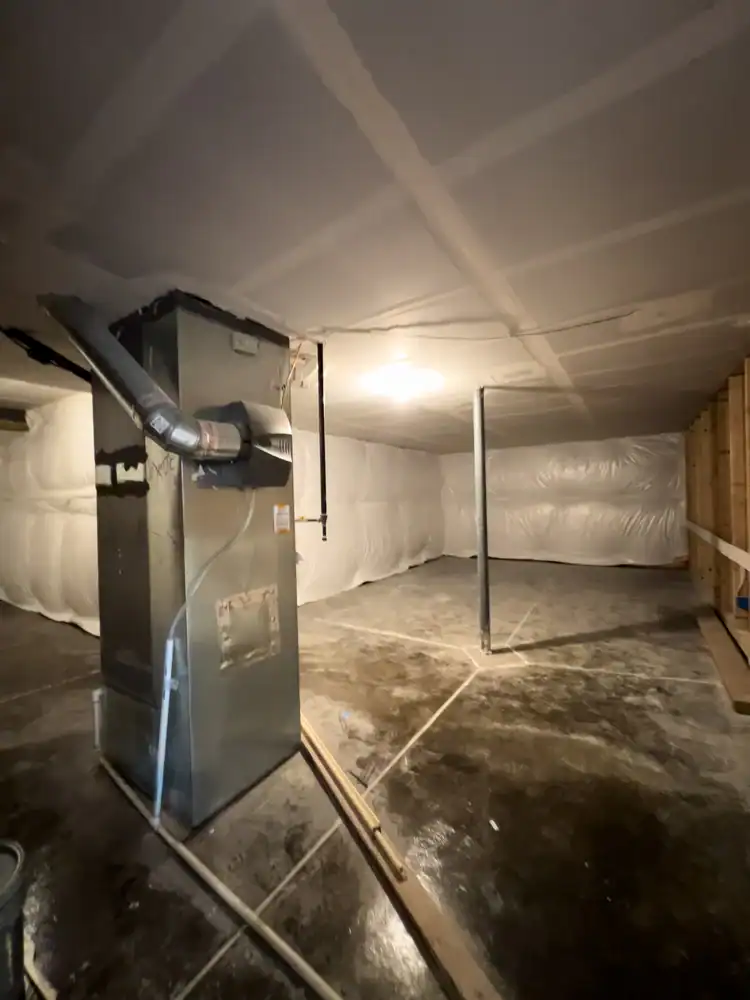
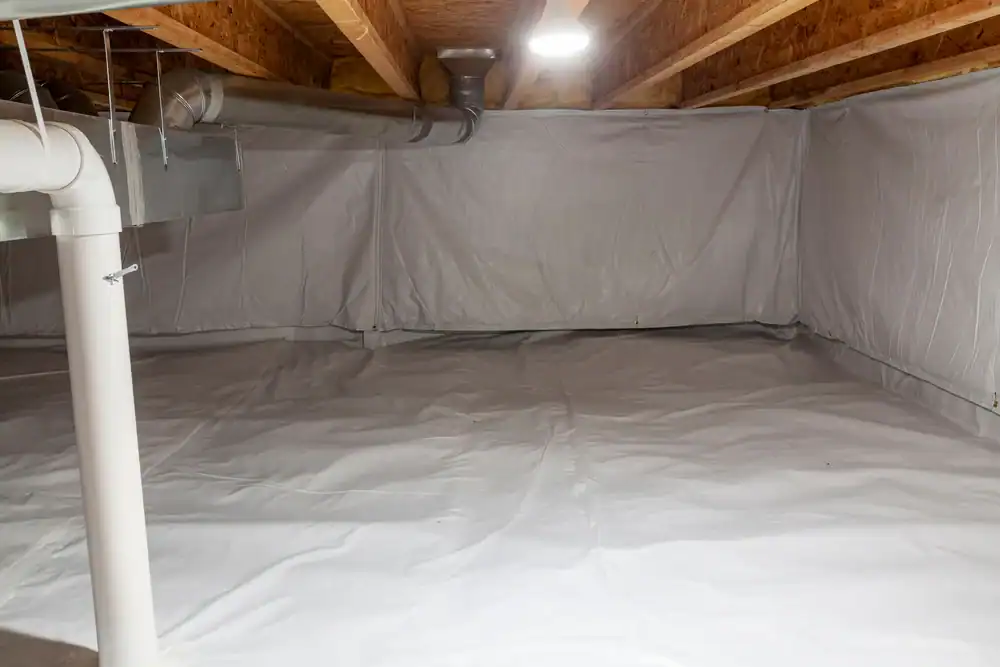
You stop wondering if that musty smell is mold. Your floors feel warmer in winter because cold air isn’t seeping through gaps. Your HVAC system runs less because it’s not fighting humidity all summer.
North Carolina’s temperature swings create the perfect storm for crawl space problems. Morning temps drop, afternoon heat rises, and that cycle creates condensation that soaks into your floor joists and insulation. Over time, you’re looking at wood rot, sagging floors, and air quality issues that affect everyone upstairs.
Encapsulation changes that. A proper vapor barrier installation stops ground moisture from entering. A crawl space dehumidifier keeps humidity below 60% year-round. Sealed vents prevent outside air from bringing in more moisture. The result is a dry, stable environment that protects your home’s structure and the air your family breathes.
We’ve been handling crawl space problems in Asheboro and central North Carolina since 2011. Rick Watson runs our company and handles service calls personally—you’re not getting shuffled to whoever’s available that day.
We’re BBB accredited with an A+ rating because we show up on time, do the work right, and don’t disappear when you have questions later. Asheboro homeowners deal with specific challenges: proximity to the Yadkin River means higher humidity when water levels rise, and the Piedmont soil doesn’t drain like it should.
We’ve seen what happens when crawl spaces go unchecked in this area. We’ve also seen what proper encapsulation does for energy bills, air quality, and resale value. That’s why we use 12-mil reinforced vapor barriers and closed-cell spray foam—not the cheaper materials that fail in three years.
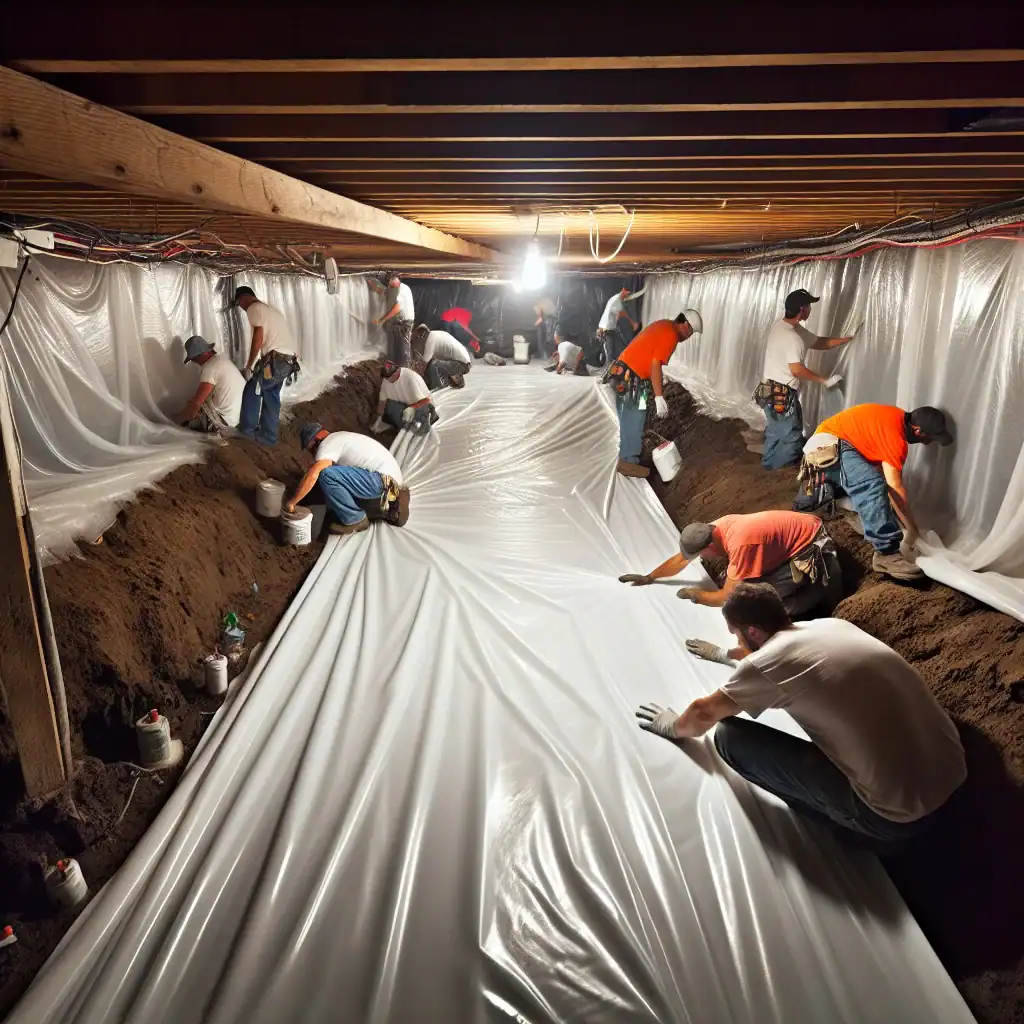
We start with an inspection of your crawl space to check for existing moisture damage, mold growth, fallen insulation, and structural issues. You get a clear assessment of what needs fixing before encapsulation begins.
Next comes prep work. We remove debris, old insulation, and anything that’s moldy or damaged. If there’s standing water, we address drainage issues first—encapsulation won’t work if water’s still pooling underneath.
Then we install the vapor barrier. We use reinforced material that’s at least 12-mil thick, sealed at every seam and fastened to your foundation walls. This stops ground moisture from evaporating into your crawl space. We seal foundation vents to prevent outside air from bringing in humidity.
After the barrier is down, we install a dehumidifier sized for your space. This keeps humidity levels stable even during Asheboro’s humid summer months. If your crawl space insulation needs replacing, we use closed-cell spray foam on the walls—not fiberglass batts that sag and hold moisture.
Final step is a walkthrough so you see exactly what was done and how to maintain it.

Ready to get started?
You’re getting a complete moisture control system, not just a plastic sheet thrown on the ground. The vapor barrier covers your entire crawl space floor and extends up the foundation walls. Every seam is sealed. Every penetration point is addressed.
Dehumidifier installation is part of the package because a barrier alone won’t control humidity if you’ve already got moisture in the air. We size the unit based on your square footage and set it to maintain optimal levels automatically.
Crawl space insulation goes on the walls, not between your floor joists. This brings your crawl space inside your home’s thermal envelope, which is how you get those energy savings—around 15% on heating and cooling costs for most Asheboro homes.
We also handle mold remediation if needed before encapsulation. You can’t seal in mold and expect good results. If your crawl space has active growth, we remove it first using industry-standard techniques and equipment.
North Carolina’s climate makes this work essential. You’re not just preventing future problems—you’re fixing issues that are already affecting your home’s air quality and efficiency. The stack effect pulls air from your crawl space into your living areas, so whatever’s down there (mold spores, dust mites, humidity) ends up in the air you breathe.
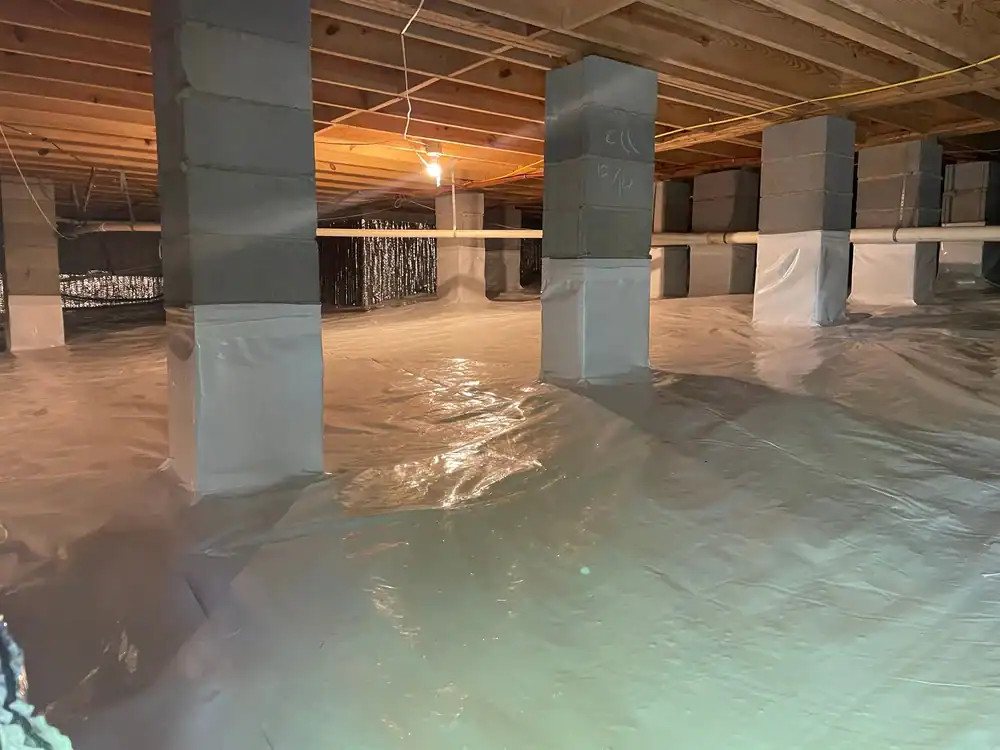
Most crawl space encapsulation projects in Asheboro run between $3,500 and $15,000 depending on your square footage, the condition of your crawl space, and what additional work is needed before we can encapsulate.
If we find significant mold growth, damaged floor joists, or drainage issues, those get addressed first. A 1,200 square foot crawl space in good condition costs less than a 2,000 square foot space that needs mold remediation and structural repairs.
The investment pays back through lower energy bills, better air quality, and increased home value. Buyers recognize encapsulated crawl spaces as a plus, and you may qualify for energy-efficiency tax credits depending on the materials used.
Musty odors in your home are the most obvious sign. If your house smells off and you can’t find the source, it’s likely coming from your crawl space.
Other signs include floors that feel cold in winter or bouncy when you walk on them, increased allergy or asthma symptoms indoors, higher energy bills without explanation, and visible mold or moisture when you check your crawl space with a flashlight.
Cupping or buckling hardwood floors indicate moisture traveling through your subfloor. Condensation on crawl space surfaces during temperature changes means humidity is too high. If you see any of these issues, encapsulation prevents them from getting worse and damaging your home’s structure.
A properly installed encapsulation system with quality materials lasts the life of your home. The vapor barrier itself—when it’s 12-mil or thicker reinforced material—doesn’t degrade or need replacement.
The dehumidifier is the only component that may need servicing or eventual replacement, similar to any other appliance. Most units run for 10-15 years before needing attention.
The key is installation quality. Cheap barriers tear easily and don’t seal properly at the seams. Poor installation leaves gaps where moisture can still enter. We use professional-grade materials and proper sealing techniques so the system works permanently, not just for a few years.
Yes. Most homeowners see around 15% reduction in heating and cooling costs after encapsulation because you’re no longer conditioning air that’s leaking through your crawl space.
When your crawl space is open to outside air and ground moisture, your HVAC system works harder to maintain comfortable temperatures. Cold air seeps up through floors in winter. Humid air makes your AC run longer in summer.
Encapsulation with proper insulation creates a controlled environment. Your crawl space becomes part of your home’s conditioned space instead of fighting against it. The temperature stays stable, humidity stays low, and your HVAC system runs more efficiently because it’s not compensating for moisture and temperature swings underneath your home.
Encapsulation eliminates the conditions mold and pests need to thrive. Mold requires moisture and organic material—encapsulation removes the moisture source, and we remove contaminated insulation during prep.
Once humidity drops below 60% and stays there, mold can’t grow. The vapor barrier stops ground moisture, the dehumidifier controls air moisture, and sealed vents prevent humid outside air from entering.
Pests like bugs and rodents seek out crawl spaces for water and shelter. A properly sealed crawl space with low humidity is far less attractive. The tight seal from outside and dry conditions discourage them from setting up residence. You won’t eliminate every pest risk, but you remove the main reasons they’re drawn to crawl spaces in the first place.
You can buy the materials, but professional installation ensures the system actually works. The barrier needs to be sealed at every seam, properly fastened to foundation walls, and installed without tears or gaps.
DIY installations often miss critical details: improper seam sealing, wrong dehumidifier sizing, skipped mold remediation, or using barriers that are too thin. These mistakes mean the system fails to control moisture, and you’ve spent money without solving the problem.
Professional installation also includes proper assessment of drainage issues, structural damage, and mold growth before encapsulation begins. We know what to look for in North Carolina crawl spaces and how to address problems specific to Asheboro’s climate and soil conditions. The cost difference between DIY and professional work is smaller than the cost of doing it twice when the first attempt doesn’t hold up.