
Contact Info
- Greensboro, NC 27406
- Call: 336-707-0498
- Text: 336-707-0498
-
Mon - Fri: 8am - 4pm
Sat - Sun: Closed
Contact Info
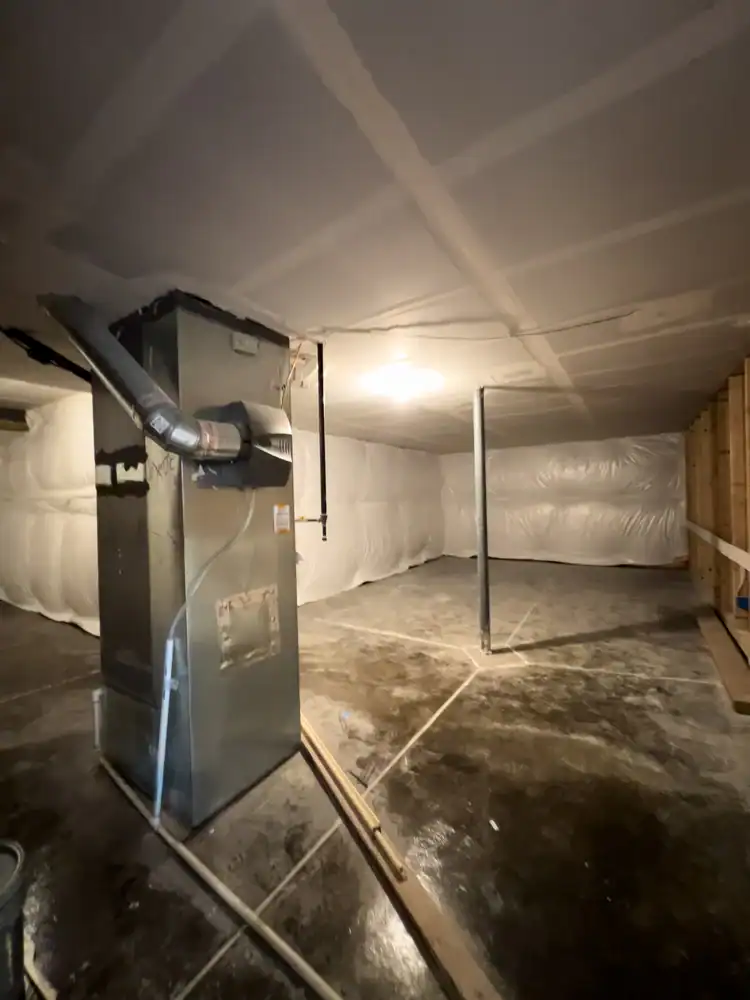
The musty smell disappears. Your floors feel warmer in winter. You stop wondering what’s happening underneath your house every time it rains.
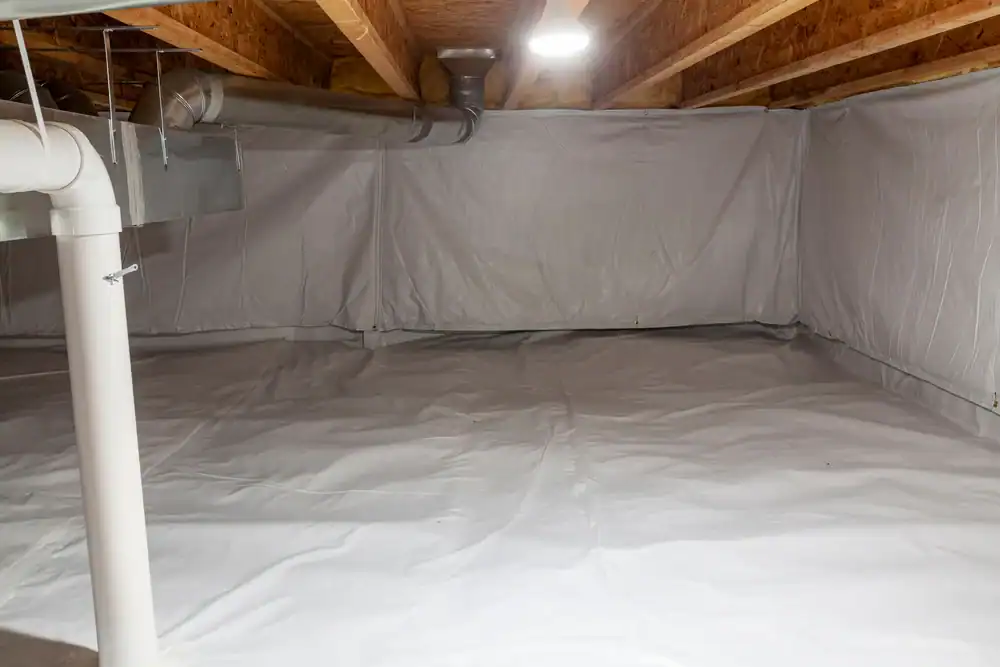
Crawl space encapsulation creates a sealed barrier between your home and the damp ground below. That means no more moisture creeping up through vents and floor joists. No more mold spores floating into your living room. No more energy bills that make you wince because your HVAC system is fighting humidity all summer and cold air all winter.
You’ll notice the air quality first. Breathing gets easier. Allergies calm down. Then you’ll see it on your energy bills—most homeowners around Greesons Crossroads, NC save 15-20% annually once their crawl space is properly sealed and conditioned.
The bigger win is what you don’t see: wood rot that never starts, pests that never move in, structural damage that never happens. You’re not just fixing a problem. You’re preventing a dozen worse ones from ever showing up.
We work with homeowners in Greesons Crossroads, NC and across the Triangle who are tired of dealing with crawl space moisture on their own. We’ve seen what happens when humidity sits at 70% year-round under a house. It’s not pretty.
North Carolina’s climate is tough on crawl spaces. You get hot, humid summers and temperature swings that create condensation cycles almost daily. That’s why cookie-cutter solutions don’t work here. You need vapor barrier installation that actually seals, dehumidifier systems that run efficiently in our climate, and insulation that won’t sag or grow mold when moisture shows up.
We focus on crawl space encapsulation because it’s what this area needs most. Not dryer vents. Not attic work. Just crawl spaces—done right, with materials that hold up and methods that actually solve the root problem.
First, we assess what’s actually going on down there. That means checking for standing water, existing mold, damaged insulation, and whether your floor joists are still solid. If there’s cleanup or repair work needed before encapsulation, we’ll tell you upfront.
Next comes crawl space cleaning and prep. We remove old insulation, debris, and anything that shouldn’t be there. If mold is present, we treat it. If drainage is an issue, we address it. You can’t seal a problem in and expect good results.
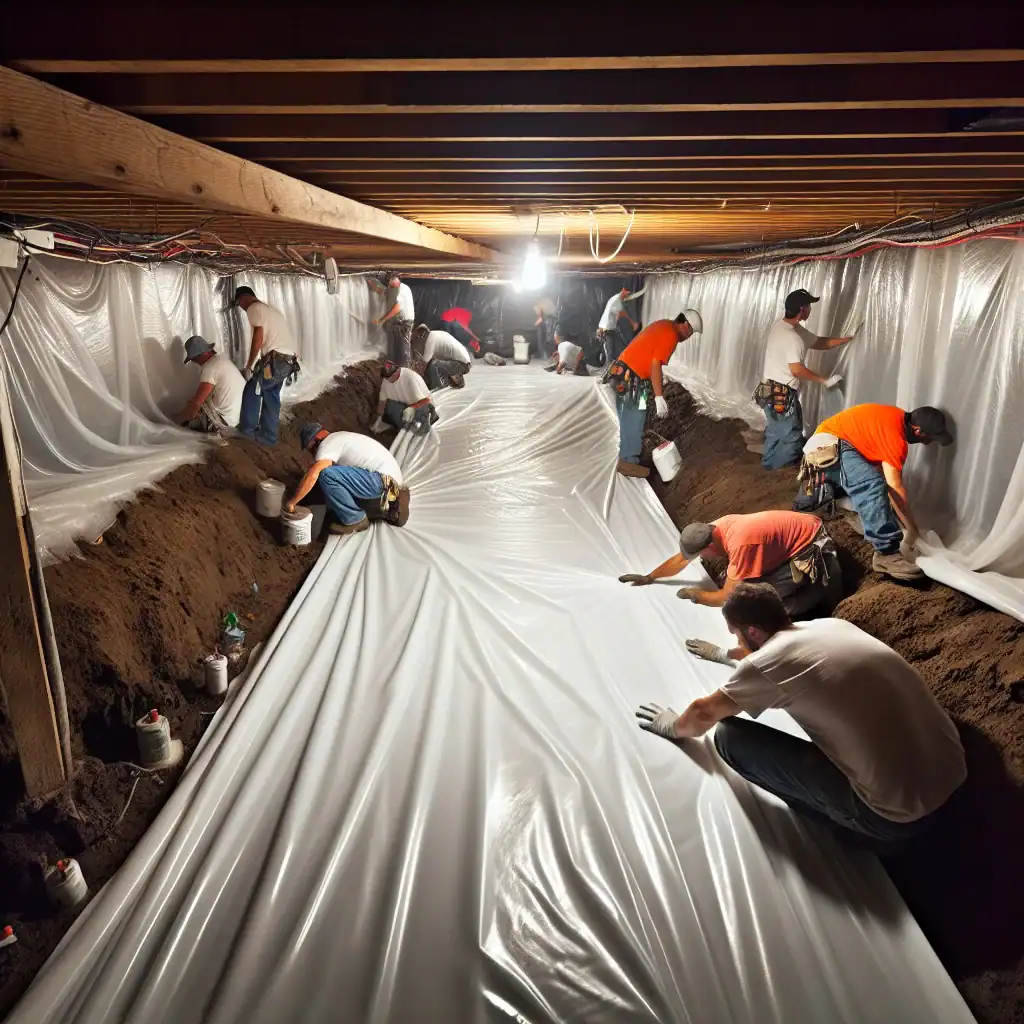
Then we install the vapor barrier—a thick, durable liner that covers your crawl space floor and gets sealed up the walls. This isn’t the thin plastic you see in hardware stores. It’s heavy-duty material designed to keep ground moisture where it belongs. We seal every seam, every pier, every penetration. No gaps.
After that, we handle crawl space insulation if your rim joists need it, and install a dehumidifier system sized for your space. The dehumidifier keeps your relative humidity between 40-50%, which is the range where mold can’t grow and wood stays dry. It runs automatically, so you don’t have to think about it.
Finally, we test everything, walk you through what we did, and make sure you understand how to monitor your system going forward.

Ready to get started?
Crawl space encapsulation isn’t one thing—it’s a combination of moisture control methods working together. You’re getting vapor barrier installation that seals your crawl space floor and walls. You’re getting a dehumidifier installation that keeps humidity in check year-round. You’re getting insulation work if your rim joists need it. And you’re getting all the prep work—cleaning, mold treatment, minor repairs—that has to happen before any of that goes in.
Around Greesons Crossroads, NC, the biggest issue we see is homeowners who got a vapor barrier installed without a dehumidifier. That doesn’t work in North Carolina. When it’s 90 degrees outside at 70% humidity, and your crawl space cools down to 70 degrees, you hit 100% humidity down there. Condensation forms. Mold grows. The barrier alone isn’t enough.
That’s why our systems include controlled dehumidification. It’s the only way to maintain the 40-50% humidity range that keeps your crawl space dry and your indoor air quality high. We size the equipment for your specific square footage and the conditions in this area. Oversized units waste energy. Undersized units can’t keep up.
You also get a cleaner, brighter space that you can actually use for storage. The heavy-duty liner turns your crawl space into a low-humidity zone where you can keep holiday decorations, tools, or anything else you don’t need daily access to.
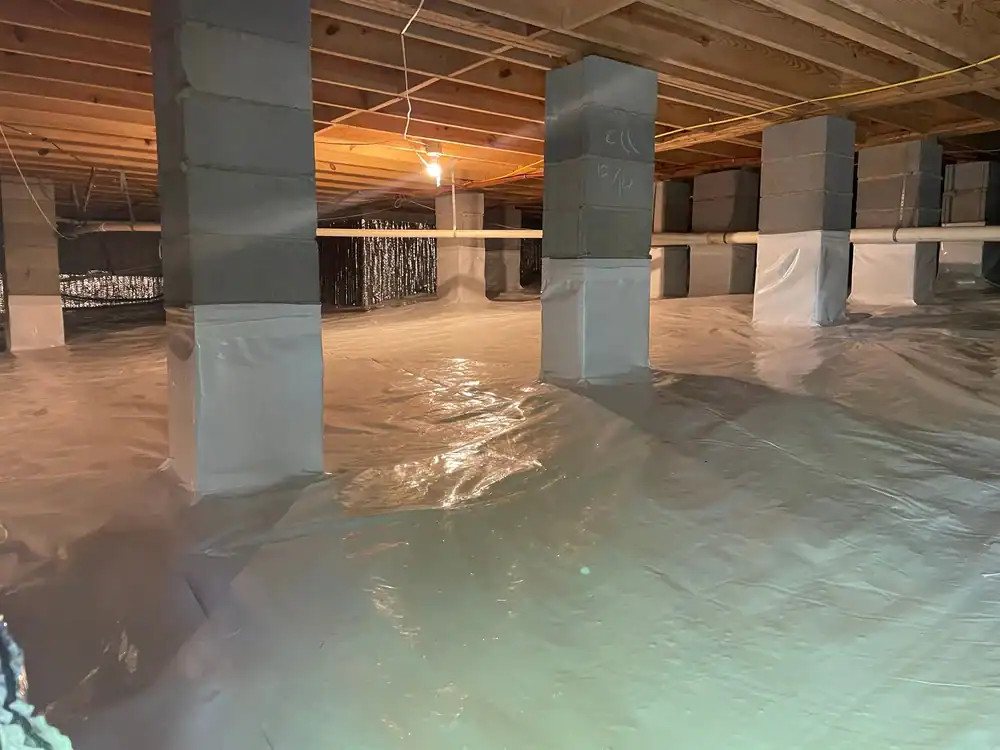
Most full encapsulation projects in this area run between $3,500 and $15,000, depending on your crawl space size, what condition it’s in, and what needs to happen before we can seal it. A 1,200-square-foot crawl space in decent shape with no major drainage issues will cost less than a 2,000-square-foot space that needs mold remediation and standing water removal first.
The price includes vapor barrier installation, dehumidifier equipment, insulation if needed, and all the prep work. If your crawl space needs significant cleaning, structural repairs, or drainage solutions, that adds to the cost. We’ll give you a clear breakdown after we assess your space so you know exactly what you’re paying for and why.
Most homeowners see a return on that investment within a few years through lower energy bills and avoided repair costs. When you factor in the 15-20% savings on heating and cooling, plus the fact that you’re preventing wood rot and mold growth that could cost thousands to fix later, the math works out.
Most encapsulation jobs take two to four days, depending on the size of your crawl space and how much prep work is involved. If we’re just installing a vapor barrier and dehumidifier in a clean, dry space, we can finish in two days. If we need to remove old insulation, treat mold, or address drainage issues first, it takes longer.
The actual installation moves quickly once prep is done. Laying the vapor barrier, sealing all the seams, insulating rim joists, and installing the dehumidifier system is straightforward work. What takes time is doing it right—making sure every seam is sealed, every pier is wrapped, and every penetration is airtight.
You don’t need to be home the whole time, but we’ll need access to your crawl space and power. We clean up as we go and haul away any debris or old materials. When we’re done, your crawl space will look completely different—cleaner, brighter, and sealed tight.
Yes. Field studies done in North Carolina show annual heating and cooling savings around 15-20% after encapsulation. For most homeowners in Greesons Crossroads, NC, that’s $300 to $400 back in your pocket every year. The savings come from stopping air leakage and reducing the load on your HVAC system.
When your crawl space is open to outside air and ground moisture, your HVAC works overtime. In summer, it’s fighting humidity that seeps up through your floors. In winter, it’s fighting cold air that makes your floors freezing and your heating system run constantly. Sealing and conditioning your crawl space eliminates both problems.
Your system doesn’t have to work as hard, so it runs less. That shows up directly on your utility bills. You’ll also notice more consistent temperatures throughout your house and floors that don’t feel like ice in January. The comfort improvement is immediate. The cost savings add up month after month.
You need both. The vapor barrier stops ground moisture from coming up, but it doesn’t control the humidity that’s already in your crawl space air or that comes in through rim joists and other openings. In North Carolina’s climate, a vapor barrier alone won’t keep your humidity below 60%—and that’s the threshold where mold starts growing.
A dehumidifier installation is what maintains the 40-50% humidity range your crawl space needs to stay dry. It pulls moisture out of the air continuously and drains it away automatically. Without it, you’ll still have condensation forming on cool surfaces, especially during summer when outside air is hot and humid.
We’ve seen plenty of crawl spaces with vapor barriers installed years ago that still have mold problems because there’s no dehumidification. The barrier is step one. Controlled humidity is step two. Both have to work together to actually solve moisture problems for good.
We treat it before we seal anything. Encapsulating over existing mold doesn’t make it go away—it just traps it under the barrier where it keeps growing and sending spores into your home. That defeats the whole purpose of improving your indoor air quality.
Mold treatment involves removing contaminated materials like old insulation, cleaning affected wood surfaces, and applying antimicrobial solutions to kill remaining spores. If the mold growth is extensive or the wood is structurally compromised, we’ll let you know what needs to be replaced before we move forward with encapsulation.
Once the mold is gone and the space is clean, then we install the vapor barrier and dehumidifier system. That combination prevents new mold from ever growing back because you’re eliminating the moisture that mold needs to survive. Your crawl space stays dry, your air stays clean, and you don’t have to worry about what’s happening under your floors anymore.
If you smell musty odors in your house, feel cold floors in winter, notice higher energy bills, or see visible mold or standing water in your crawl space, you need encapsulation. Those are the obvious signs. But even if you don’t see problems yet, crawl space moisture is likely affecting your home if you live in Greesons Crossroads, NC and your space isn’t already sealed.
North Carolina’s humidity levels mean most unencapsulated crawl spaces sit around 70% relative humidity year-round. That’s well above the 60% threshold where mold grows and wood starts to rot. You might not notice the effects immediately, but over time you’re breathing lower-quality air, paying more to heat and cool your home, and risking structural damage to your floor joists and supports.
The best way to know for sure is to have someone look at your crawl space and measure the humidity level. If it’s above 50%, you’re creating conditions for problems even if you don’t see them yet. Encapsulation stops those problems before they cost you serious money or affect your family’s health.