

Contact Info
- Greensboro, NC 27406
- Call: 336-707-0498
- Text: 336-707-0498
-
Mon - Fri: 8am - 4pm
Sat - Sun: Closed
Contact Info
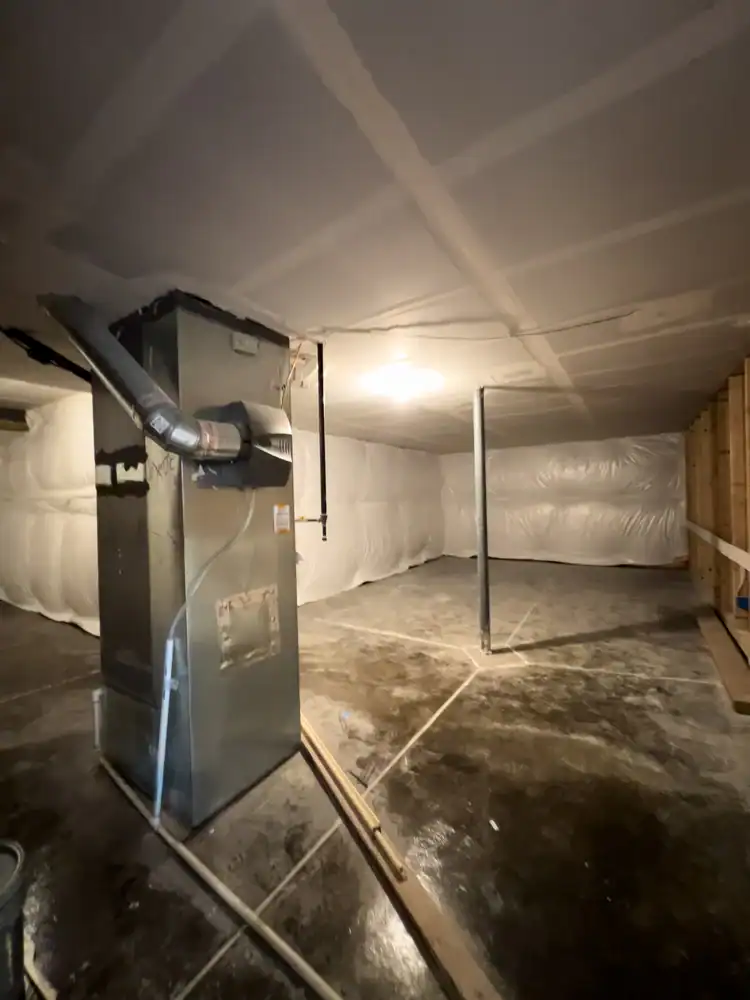
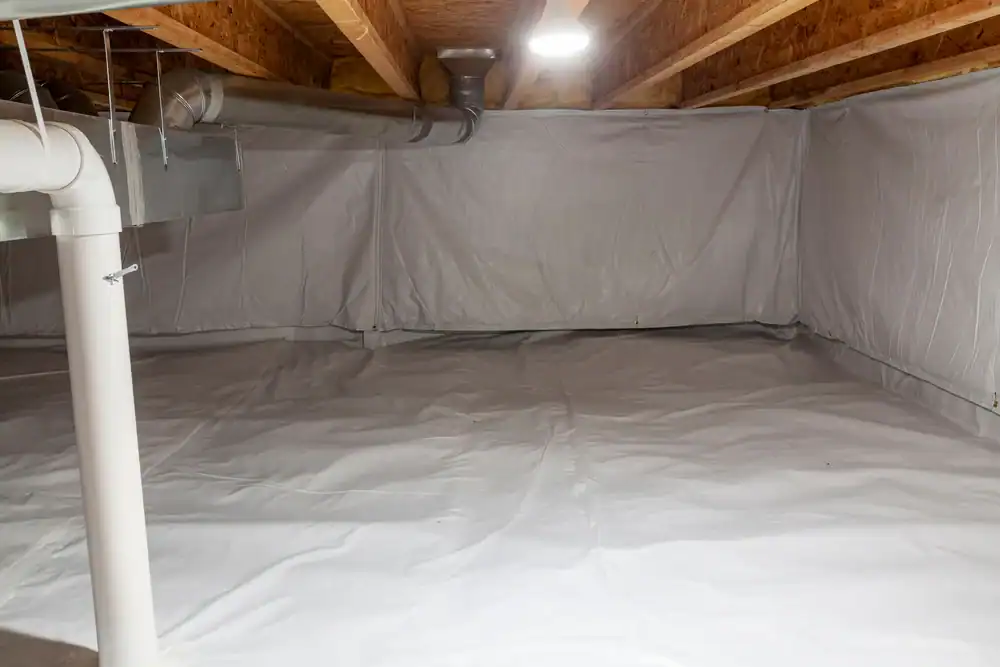
You stop wondering what’s happening underneath your home. The musty smell disappears. Your floors feel warmer in winter, and your AC isn’t fighting a losing battle every summer.
When humidity drops below 60%, mold can’t grow. Wood stops rotting. Pests lose interest. Your dehumidifier isn’t running nonstop trying to fix a problem that starts in an open, damp crawl space.
Up to half the air you breathe upstairs comes from below. If that space is sealed with a proper vapor barrier and moisture control system, you’re not pulling in spores, odors, or whatever’s been nesting down there. You’re breathing cleaner air, spending less on heating and cooling, and protecting the structure holding up your entire house.
We’ve been improving indoor air quality across the Greensboro area for over 30 years. We’re BBB accredited with an A+ rating, and our team includes NADCA-certified professionals who’ve seen every version of crawl space problems North Carolina throws at homeowners.
Julian sits in the Piedmont region where clay-heavy soil holds water and pushes it toward your foundation. The humidity here regularly tops 70% in summer. That’s why crawl spaces are so common—and why they cause so many problems if they’re not properly sealed.
We’ve worked in hundreds of homes dealing with the exact conditions you’re facing. We know what works here, what doesn’t, and how to do the job right the first time so you’re not calling someone back in two years.
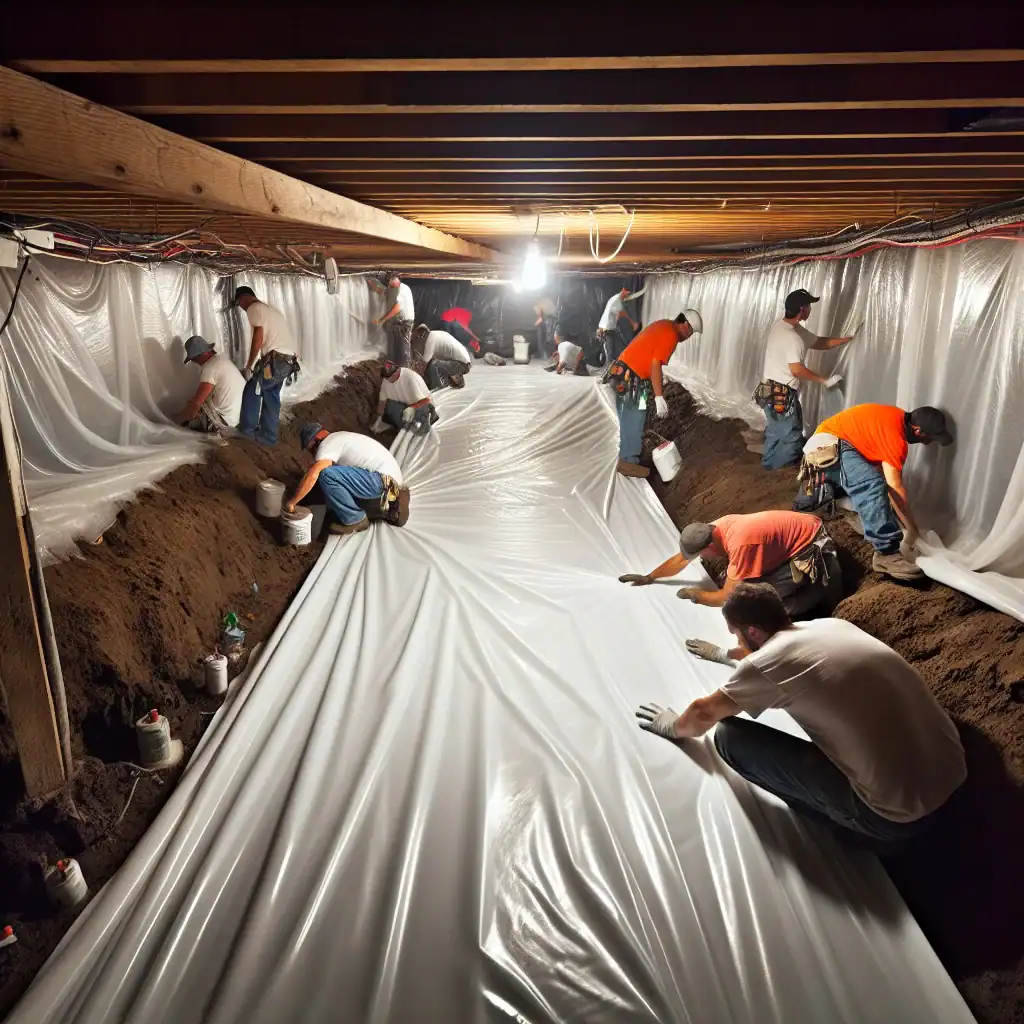
First, we inspect your crawl space to see what we’re working with—moisture levels, existing damage, ventilation issues, and whether there’s standing water or mold growth. This tells us what needs to happen before we seal anything.
Next, we handle crawl space cleaning if needed. That means removing debris, old insulation, or anything that shouldn’t be there. If there’s mold, we address it. If there’s standing water, we figure out where it’s coming from.
Then comes vapor barrier installation. We cover the floor and walls with a heavy-duty moisture barrier that stops ground moisture from entering your crawl space. We seal vents, install a dehumidifier if your space needs it, and make sure the system works as one complete moisture control solution. When we’re done, your crawl space is a sealed, conditioned part of your home—not a damp pit you hope doesn’t cause problems.

Ready to get started?
Crawl space encapsulation isn’t about rolling out a sheet and calling it done. You’re getting a moisture barrier that covers every inch of exposed ground and foundation walls. You’re getting sealed vents so outside humidity stops flooding in every summer. You’re getting a dehumidifier installation if your crawl space needs active moisture control to stay between 40-50% humidity year-round.
In Julian, where the soil is mostly clay and the water table sits high, moisture doesn’t just show up during storms—it’s constant. That’s why crawl space insulation and proper sealing matter so much here. Without it, you’re fighting the same cycle: condensation, mold growth, wood rot, higher energy bills, and air quality that gets worse every year.
When the job’s finished, you’ll have a dry, controlled space that protects your home’s structure, improves the air you breathe, and cuts your heating and cooling costs. That’s what encapsulation actually does when it’s done right.
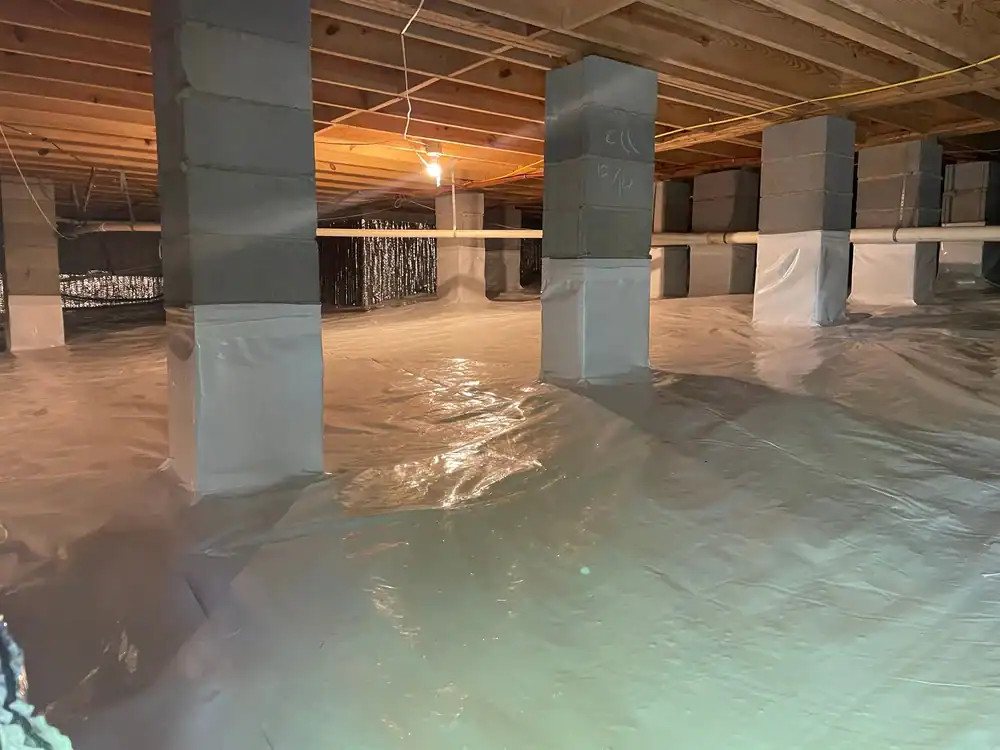
Most crawl space encapsulation projects in North Carolina run between $3,500 and $15,000 depending on the size of your space, the condition it’s in, and what needs to happen before we seal it. If you’ve got a 1,200-square-foot crawl space in decent shape, you’re likely looking at $3,000 to $5,000 for vapor barrier installation and basic sealing.
If there’s mold remediation, significant crawl space cleaning, or drainage work that needs to happen first, the cost goes up. Same if you need a dehumidifier installation to maintain humidity levels after encapsulation. We don’t give one-size-fits-all pricing because no two crawl spaces are the same.
What matters more than the upfront cost is what you get back. Homeowners in NC see energy savings between 15-20% after encapsulation, and your home value can increase up to 10%. You’re also avoiding future costs—mold remediation, structural repairs, pest control—that add up fast if moisture keeps doing damage underneath your house.
Most encapsulation jobs take between one and three days depending on the size of your crawl space and what condition it’s in when we start. A straightforward vapor barrier installation in a clean, dry space might only take a day. If we’re doing crawl space cleaning, mold treatment, or installing a full moisture control system with a dehumidifier, plan on two to three days.
We’re not rushing through it. The vapor barrier has to be installed correctly—sealed at the seams, attached to the walls, and integrated with your vents and any drainage systems. If it’s done sloppy, moisture finds a way in, and you’ve wasted your money.
You’ll know the timeline after the inspection. We’ll walk you through what needs to happen and how long each part takes so there are no surprises once we start.
Yes, if the humidity stays below 60%. Mold needs moisture to grow, and crawl space encapsulation removes the conditions that let it thrive. When you seal off ground moisture with a vapor barrier and control the humidity with a dehumidifier, mold can’t get what it needs.
That said, if there’s already mold growing, encapsulation doesn’t kill it—it just stops new growth. We treat existing mold before sealing anything so you’re starting with a clean space. Once the crawl space is encapsulated and the humidity is controlled, mold won’t come back.
In Julian, where summer humidity regularly exceeds 70%, an unsealed crawl space is basically a mold factory. Warm, moist air gets in through the vents, hits the cooler crawl space, and condenses on every surface. That cycle doesn’t stop until you seal the space and control what’s happening down there.
In most cases, yes. Encapsulation stops outside moisture from getting in, but it doesn’t remove humidity that’s already there or that enters through small gaps. A dehumidifier keeps your crawl space between 40-50% humidity, which is the range where mold can’t grow and wood stays dry.
North Carolina’s climate makes dehumidifiers especially important. Even with a sealed crawl space, humidity can creep up during summer if there’s no active moisture control. A dehumidifier runs automatically, pulls moisture out of the air, and drains it away so you’re not dealing with condensation or damp conditions.
We’ll measure your crawl space humidity during the inspection and recommend a dehumidifier if your space needs it. Some smaller, well-sealed crawl spaces stay dry without one, but most homes in this area benefit from having that extra layer of moisture control in place.
Unsealed crawl spaces leak air. A lot of it. In winter, cold air comes in through vents and gaps, making your floors cold and forcing your heating system to work harder. In summer, hot, humid air does the same thing to your AC.
When you encapsulate your crawl space, you’re sealing those leaks. Your home holds temperature better. Your HVAC system doesn’t cycle on and off as much. Homeowners in NC typically see energy savings between 15-20% after encapsulation because their heating and cooling systems aren’t fighting constant air exchange with an unconditioned crawl space.
You’ll also notice your floors feel warmer in winter. That’s because you’re not sitting above a giant cold air pocket anymore. The entire lower part of your home becomes part of your conditioned space instead of working against it.
The problems get worse. Moisture keeps condensing on floor joists and insulation. Wood starts rotting. Mold spreads. Pests move in because they’re attracted to damp, decaying wood.
You’ll keep paying higher energy bills because your HVAC system is working against an open, humid crawl space. Your indoor air quality suffers because up to 50% of the air upstairs is coming from below—and if that air is full of mold spores and musty odors, that’s what you’re breathing.
Eventually, you’re looking at structural damage. Weakened floor joists, sagging floors, cracks in drywall, doors that don’t close right. Those repairs cost a lot more than encapsulation, and they don’t fix the underlying moisture problem. If you’re selling, buyers will either walk away or demand a steep discount once the inspection reveals crawl space issues. Encapsulation costs a fraction of what you’d lose in home value or spend on damage control down the road.