

Contact Info
- Greensboro, NC 27406
- Call: 336-707-0498
- Text: 336-707-0498
-
Mon - Fri: 8am - 4pm
Sat - Sun: Closed
Contact Info
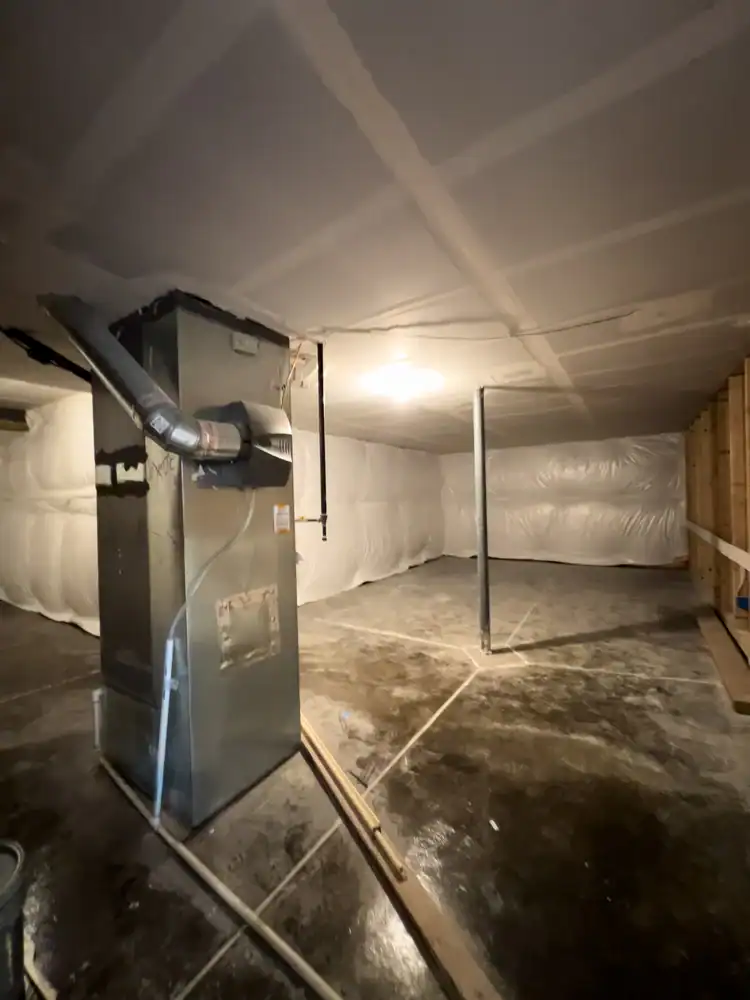
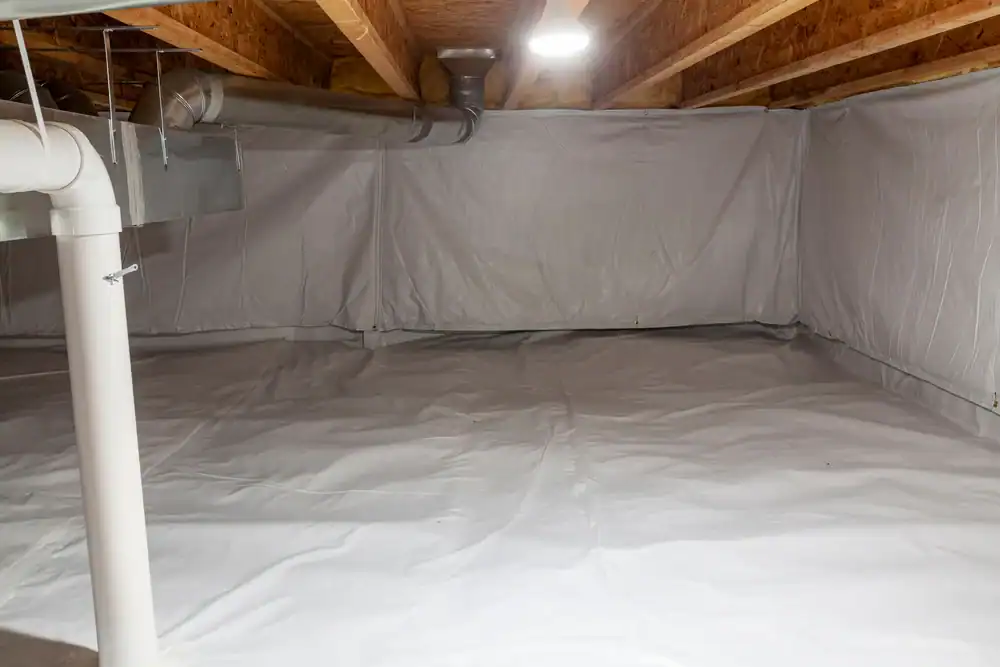
You stop paying to cool humid air. North Carolina summers are expensive enough without your HVAC system fighting moisture seeping up through your floors. When your crawl space is properly encapsulated with a vapor barrier installation, your system cools dry air instead of battling humidity. That’s where the 15-20% energy savings come from.
Your floors feel warmer in winter. No more cold spots in January. A sealed crawl space with proper insulation keeps conditioned air where it belongs.
You breathe cleaner air. Most people don’t realize that up to 50% of the air in your home comes from your crawl space. If that space is damp, you’re breathing mold spores, musty odors, and whatever else is growing down there. Encapsulation cuts that off at the source.
Your home holds its value. Buyers in Pfafftown, NC know what moisture damage looks like. A professionally encapsulated crawl space tells them you’ve maintained the home and they won’t be dealing with wood rot or foundation issues after closing.
We’ve spent over 30 years improving indoor air quality across the Greensboro area, including Pfafftown. Rick Watson holds ASCS and CVI certifications and maintains NADCA membership because crawl space work isn’t something you wing. It requires understanding moisture science, building codes, and how North Carolina’s climate impacts your specific home.
We’re BBB accredited with an A+ rating. That doesn’t happen by accident when you’ve been in business for 14 years under the same standards.
Pfafftown homes face specific challenges. The humidity here during summer months creates perfect conditions for condensation on cooler crawl space surfaces. We’ve seen what happens when moisture sits untreated: sagging floors, compromised floor joists, pest infestations. We also know how to prevent it.
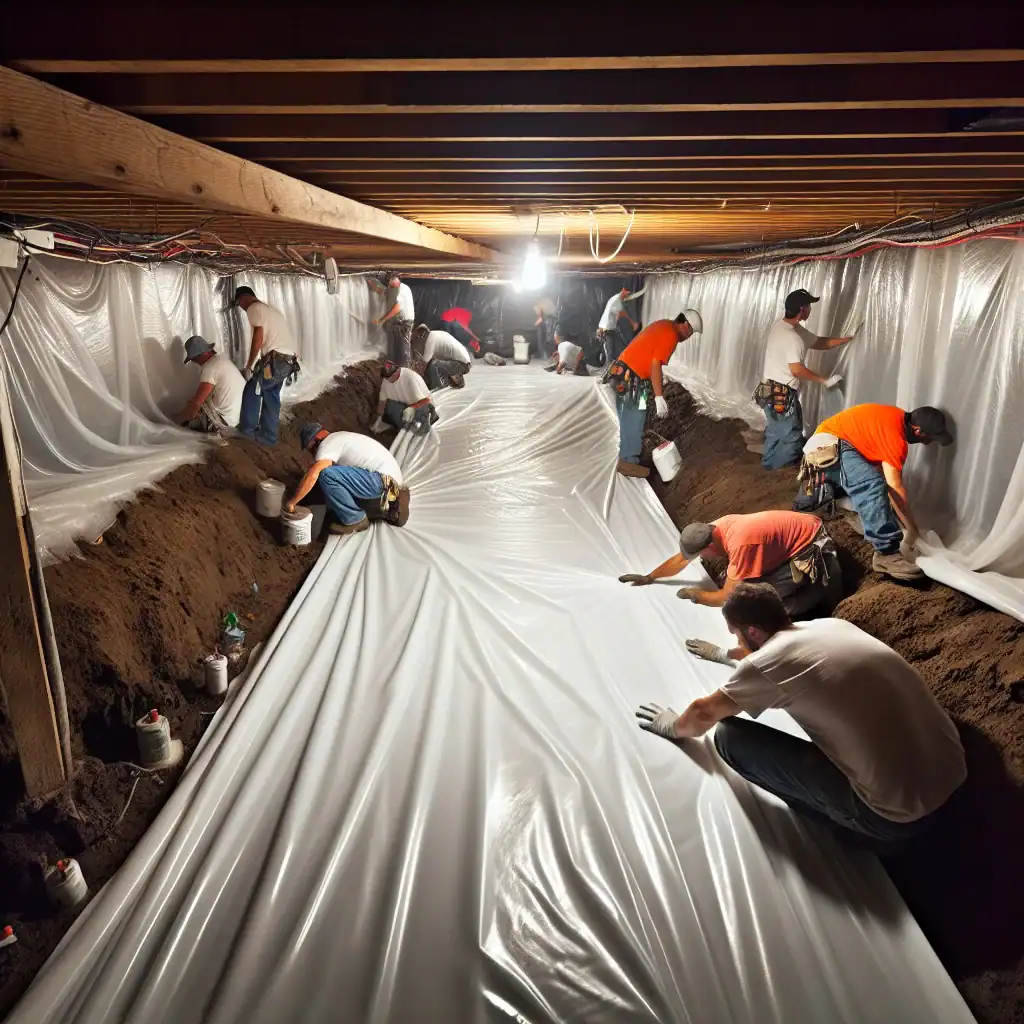
We start with a crawl space inspection. You need to know what you’re dealing with before any work begins. We check for existing moisture damage, standing water, pest activity, insulation condition, and ventilation issues. This isn’t a sales pitch—it’s a diagnostic.
Next comes crawl space cleaning if needed. Any debris, old insulation, or contaminated materials get removed. You can’t encapsulate over a mess and expect it to work.
Then we install the vapor barrier. This is a heavy-duty polyethylene liner that covers your crawl space floor and gets sealed to your foundation walls. It stops ground moisture from evaporating into your crawl space. Seams get taped. Penetrations get sealed. No shortcuts.
We handle crawl space insulation where it makes sense. Sometimes that means insulating your foundation walls instead of your floor joists. It depends on your specific setup and whether you’re conditioning the space.
Dehumidifier installation comes next if your crawl space needs it. Even with a vapor barrier, you may need mechanical dehumidification to maintain proper humidity levels year-round. We size the unit based on your space, not what’s on sale.
Finally, we address drainage if water intrusion is an issue. Sometimes that means a sump pump. Sometimes it means regrading outside. We tell you what’s necessary and what’s optional.

Ready to get started?
Crawl space encapsulation in Pfafftown isn’t just throwing plastic on the ground. You’re getting a system designed for North Carolina’s climate.
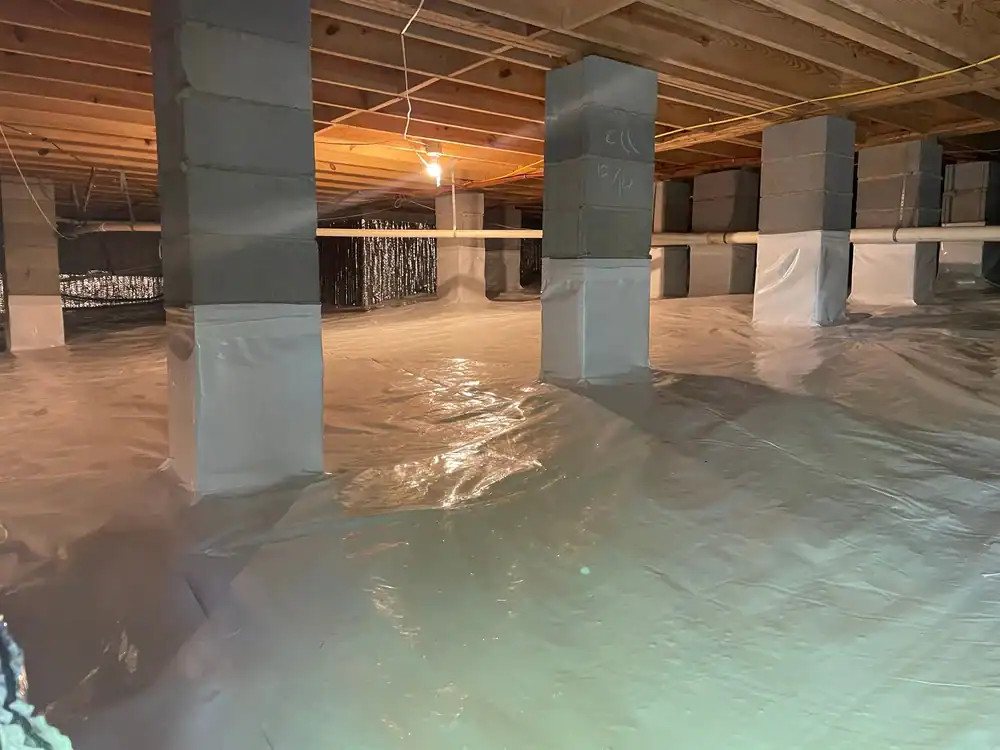
The vapor barrier we install is commercial-grade, not the thin plastic you’d buy at a hardware store. It’s thick enough to walk on during future inspections without tearing. We seal it to your foundation walls, wrap your piers, and tape every seam. Ground moisture stays in the ground.
Moisture control includes addressing how air moves through your space. We seal crawl space vents because open vents in our humid climate actually make moisture problems worse. Warm outdoor air hits your cool crawl space and condensation happens. Sealed vents prevent that.
Dehumidifier installation gives you active control over humidity levels. We install units that drain automatically so you’re not emptying buckets. They’re sized correctly for your square footage and set to maintain humidity below 60%—the threshold where mold growth accelerates.
Homes in Pfafftown often sit on clay soil that doesn’t drain well. If water pools in your crawl space after heavy rain, we address that with drainage solutions before encapsulation. Otherwise, you’re just trapping water under plastic.
The result is a crawl space that stays dry year-round, protects your home’s structure, improves your indoor air quality, and cuts your energy costs. That’s what complete moisture control looks like.
Most crawl space encapsulation projects in the Pfafftown area run between $5,000 and $15,000. That’s a wide range because your specific cost depends on your crawl space size, current condition, and what systems you need.
A straightforward encapsulation on a 1,200 square foot crawl space in good condition costs less than a 2,000 square foot space that needs water damage repair, mold remediation, and drainage work before we even start the vapor barrier installation. If you need a dehumidifier, add $1,200-$2,500 depending on the unit size.
The cost breaks down roughly 50-70% labor and 30-50% materials. You’re paying for proper installation that actually works. We’ve seen plenty of crawl spaces where someone tried to save money with a basic vapor barrier that wasn’t sealed correctly. Two years later, they’re paying again to have it done right.
Here’s what matters: encapsulation typically saves 15-20% on heating and cooling costs. On a $2,000 annual energy bill, that’s $300-$400 back in your pocket every year. It also prevents structural damage that costs exponentially more to repair than encapsulation costs to prevent.
Most encapsulation projects take 2-4 days depending on your crawl space size and condition. A standard 1,500 square foot crawl space in decent shape usually takes about 3 days from start to finish.
Day one typically involves crawl space cleaning and prep work. We remove old insulation, debris, and anything that doesn’t belong. If there’s minor mold, we treat it. If there’s significant contamination, that’s a separate remediation process that happens before encapsulation begins.
Days two and three cover vapor barrier installation, sealing, and dehumidifier setup. We’re installing the liner, sealing all seams and penetrations, wrapping piers, and attaching it to your foundation walls. If you need insulation or drainage work, that extends the timeline.
Weather can affect the schedule if we’re doing exterior drainage work. Heavy rain delays that part. But the interior encapsulation work happens regardless of weather since we’re working in your crawl space.
You can stay in your home during the entire process. We’re not tearing up your living space. Most homeowners barely notice we’re there except when we’re moving equipment in and out.
Yes, but only if we address what’s causing the smell. That musty odor is mold and mildew growing on organic materials in your crawl space. Encapsulation stops the moisture that feeds mold growth, but it doesn’t magically eliminate existing mold.
Here’s the process: we identify and remove contaminated materials during crawl space cleaning. Old moldy insulation comes out. If floor joists show surface mold, we treat them. If there’s significant mold growth, you need proper mold remediation before encapsulation.
Once we install the vapor barrier and seal your crawl space, we’re cutting off the moisture source. Humidity drops. Mold can’t grow without moisture. The dehumidifier maintains humidity levels below 60% year-round, which prevents future mold growth.
The smell usually disappears within a few weeks after encapsulation as the space dries out completely. You’ll notice the difference in your home’s air quality too. Remember, up to 50% of your indoor air originates in your crawl space. When that space is dry and clean, your whole home smells better and your family breathes cleaner air.
If the smell persists after encapsulation, that tells us there’s a moisture source we missed or contamination that needs more aggressive treatment. But in 30+ years, we’ve learned how to find and fix those issues.
Most encapsulated crawl spaces in Pfafftown need a dehumidifier. The vapor barrier stops ground moisture, but it doesn’t eliminate all humidity. You still have some air exchange, and North Carolina’s climate is humid enough that mechanical dehumidification makes sense.
Here’s why: even a well-sealed crawl space can experience humidity spikes during our summer months. If humidity stays above 60% for extended periods, you risk mold growth on wood surfaces. A dehumidifier keeps levels consistently between 45-55% regardless of outdoor conditions.
The dehumidifier also speeds up the drying process after encapsulation. Your crawl space has been accumulating moisture for years. The vapor barrier stops new moisture, but the space itself needs time to dry out completely. A dehumidifier cuts that time significantly.
We size dehumidifiers based on your crawl space square footage and typical humidity levels. A 1,500 square foot space usually needs a 70-90 pint unit. We install models that drain automatically into a sump pump or condensate line so you never touch it.
Can you skip the dehumidifier? Technically yes, but you’re leaving humidity control to chance. For the relatively small additional investment, you’re guaranteeing the long-term success of your encapsulation system. Most of our customers choose to include it for that reason.
Encapsulation typically reduces heating and cooling costs by 15-20%. That translates to $300-$400 annual savings on a typical 2,000 square foot Pfafftown home with $2,000 yearly energy costs. The savings come from making your HVAC system more efficient.
Here’s what’s happening: right now, your system is conditioning humid air that’s seeping up from your crawl space. Humid air requires significantly more energy to heat and cool than dry air. When you encapsulate your crawl space and control moisture, your HVAC works with dry air instead. Same comfort level, less energy required.
Your floors also stop acting like a thermal leak. Unsealed crawl spaces let outside air temperature affect your floor temperature. That means cold floors in winter pulling heat from your living space, and your heating system running longer to compensate. Proper crawl space insulation and encapsulation eliminate that heat loss.
The savings show up immediately on your first full month’s utility bill after encapsulation. Summer months typically show the biggest difference because that’s when humidity has the largest impact on cooling costs. Winter savings are noticeable too, especially if we’ve insulated your foundation walls.
Over a 10-year period, you’re looking at $3,000-$4,000 in energy savings. That’s a significant return on your encapsulation investment, and it doesn’t even account for the structural damage you’re preventing or the improved home value.
A vapor barrier is one component of encapsulation. Just laying plastic on your crawl space floor isn’t encapsulation—it’s incomplete moisture control that often creates new problems.
Real encapsulation means sealing your entire crawl space as a system. The vapor barrier gets sealed to your foundation walls, not just laid on the ground. We seal all seams with specialized tape. We wrap piers. We seal around any penetrations like plumbing or electrical. We close foundation vents. The goal is creating a continuous moisture barrier.
Just installing a vapor barrier without sealing it properly lets moisture migrate around the edges and through gaps. You’ve spent money without solving the problem. We’ve seen crawl spaces where someone installed plastic five years ago and there’s standing water on top of it because they didn’t address drainage or seal the perimeter.
Encapsulation also includes crawl space insulation in most cases, either on your foundation walls or floor joists depending on your setup. It includes dehumidifier installation to actively control humidity. It addresses drainage if water intrusion is an issue.
The difference is comprehensive moisture control versus a partial fix. Encapsulation costs more upfront, but it actually works long-term. A basic vapor barrier that isn’t properly sealed is money you’ll spend twice—once now, and again in a few years when you have to do it correctly.