

Contact Info
- Greensboro, NC 27406
- Call: 336-707-0498
- Text: 336-707-0498
-
Mon - Fri: 8am - 4pm
Sat - Sun: Closed
Contact Info
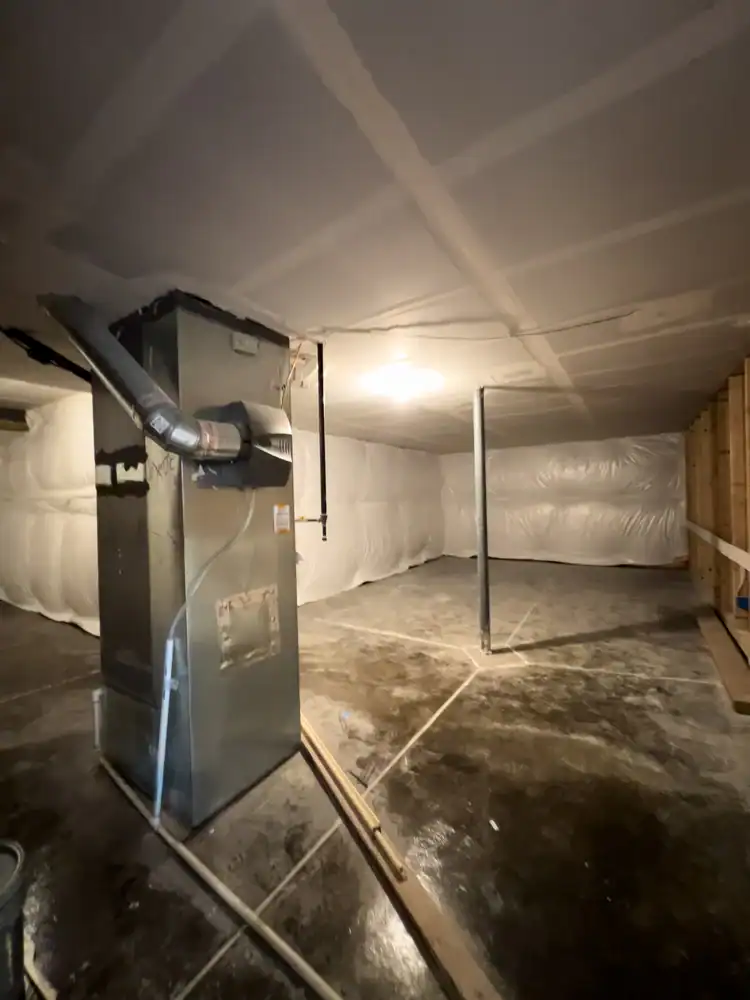
Your floors stay warm in winter. The air in your home stops feeling heavy and damp in summer. You’re not cranking the thermostat just to feel comfortable.
That’s what proper crawl space encapsulation does. It seals out the humid North Carolina air that’s been sneaking through your foundation vents, condensing on cool surfaces, and creating the perfect environment for mold and wood rot. When moisture gets controlled at the source, your HVAC system doesn’t work overtime trying to condition air that’s already compromised.
You’ll notice the difference in your energy bills first—most homeowners see around 20% savings. But the real value shows up over time: structural wood that stays dry and intact, indoor air that doesn’t trigger allergies, and a home that holds its value because the foundation isn’t quietly deteriorating underneath.
Clean Air LLC is owned by Rick Watson, and we’ve been helping homeowners in Randleman, NC deal with crawl space issues since 2011. We’re BBB accredited with an A+ rating because we show up when we say we will and do the work right the first time.
Randleman’s climate makes crawl space problems worse than they need to be. The humidity here doesn’t just pass through—it settles in and does damage. We’ve seen what happens when moisture goes unchecked for years, and we know exactly how to fix it before it costs you thousands in structural repairs.
We’re not a national franchise reading from a script. Rick handles consultations personally, and our team knows the specific challenges that come with foundations in this area.
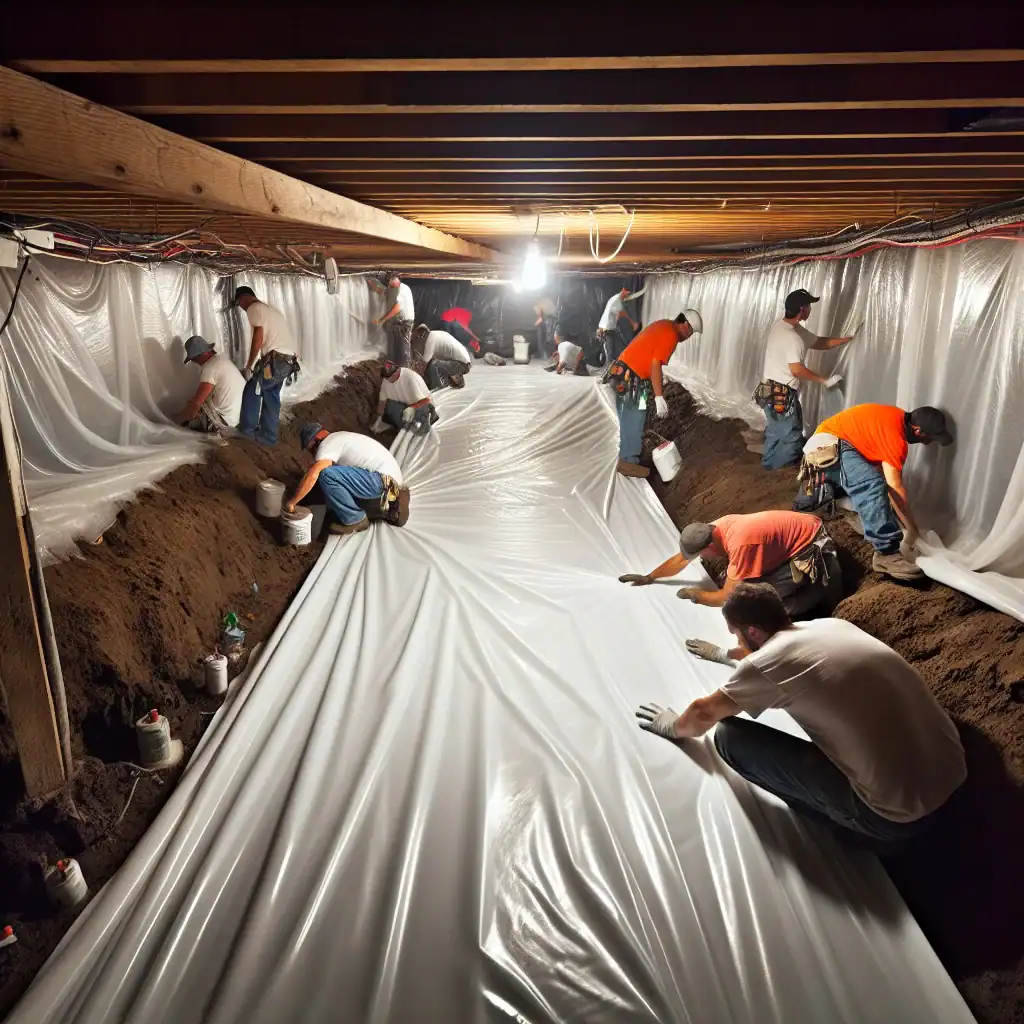
We start with a thorough inspection of your crawl space to assess moisture levels, check for existing mold or wood damage, and identify where water is getting in. This isn’t a quick glance—we’re looking at drainage patterns, foundation vents, and structural conditions so we know exactly what your space needs.
Next comes crawl space cleaning if there’s debris, old insulation, or contamination that needs to be removed before we can seal anything. A clean surface is critical for vapor barrier installation to work correctly.
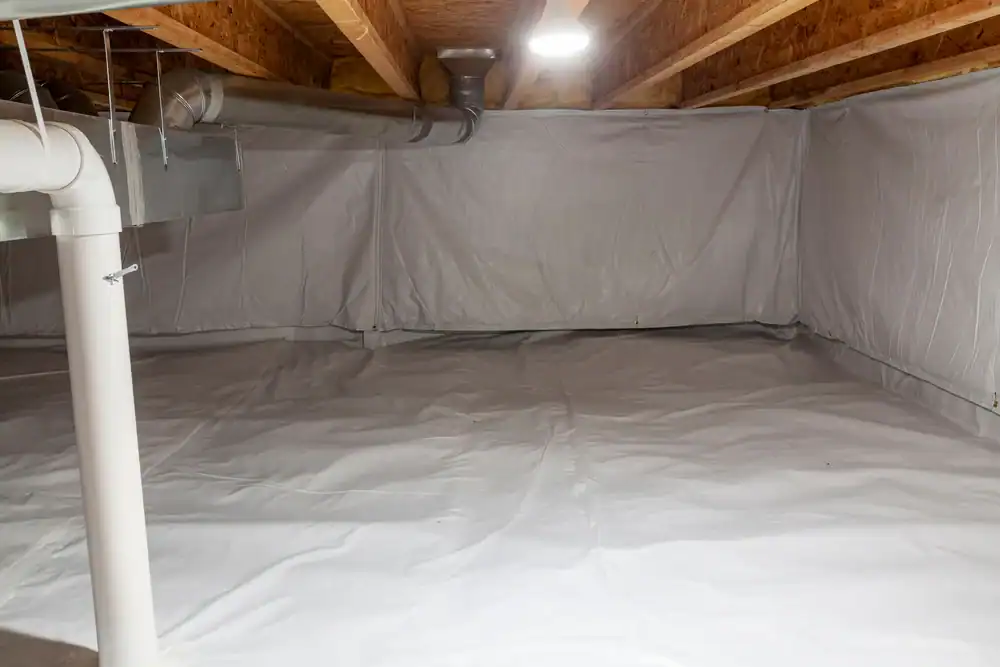
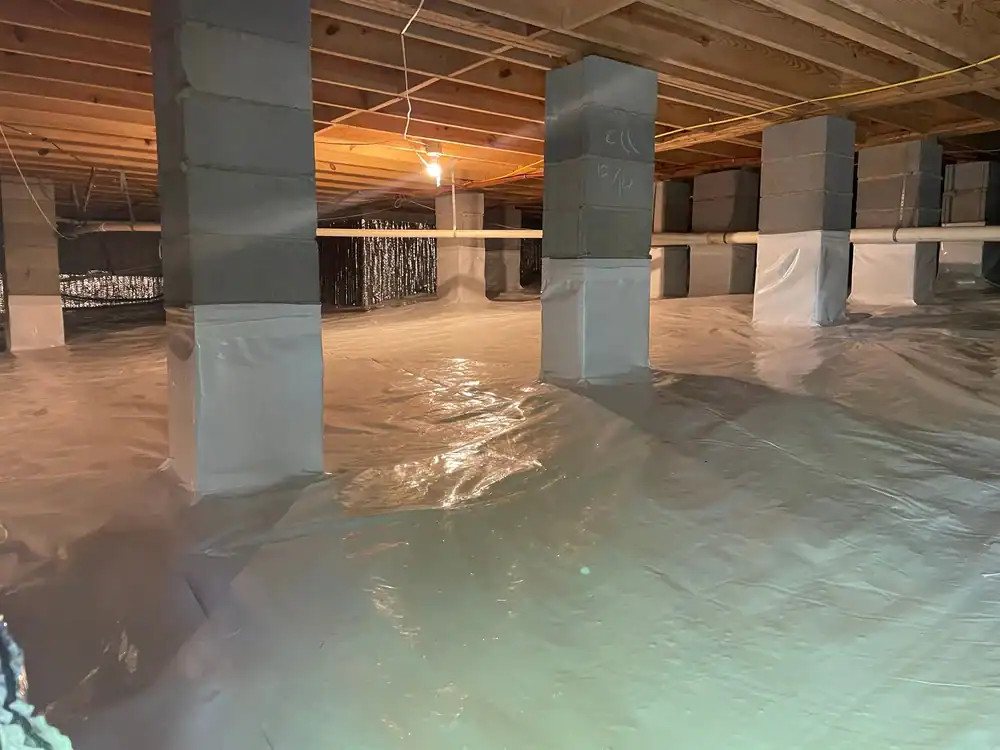
Then we install a heavy-duty vapor barrier across the entire crawl space floor and up the foundation walls. This barrier stops ground moisture from evaporating into your crawl space air. We seal all seams and attach it properly so it doesn’t shift or tear over time.
If your space needs it, we’ll install a dehumidifier designed specifically for crawl spaces. These aren’t the same units you’d use in a basement—they’re built to handle the load and maintain humidity levels between 40-50%, which prevents mold growth and keeps wood dry. We also address crawl space insulation if your rim joists or walls need it, and we make sure your space has proper drainage so water doesn’t pool under your home after heavy rain.

Ready to get started?
Every crawl space encapsulation project includes vapor barrier installation with sealed seams and proper attachment to your foundation walls. We don’t cut corners on materials—the barrier we use is thick enough to last and tough enough to handle foot traffic if you ever need to access your crawl space later.
Dehumidifier installation is part of most jobs because Randleman’s humidity doesn’t take a break. The units we install are commercial-grade and sized correctly for your space. They run automatically and drain on their own, so there’s nothing for you to empty or maintain constantly.
Moisture control also means looking at how water moves around your foundation. If drainage is an issue, we’ll address it. If vents need to be sealed to stop outside air from getting in, we handle that too. The goal is a complete system that works together, not just a plastic sheet on the ground.
In North Carolina, crawl space problems escalate fast because of our climate. What starts as a small moisture issue in spring becomes a mold problem by summer. We’ve seen it happen over and over in Randleman, which is why we focus on prevention and long-term solutions instead of quick fixes that fail in a year.
Most full encapsulation projects in this area run between $8,900 and $15,000 depending on the size of your crawl space and what condition it’s in when we start. If there’s existing mold, significant debris, or drainage problems that need to be fixed first, that affects the total cost.
A straightforward encapsulation with vapor barrier installation and a dehumidifier on a 1,200 square foot crawl space typically falls in the $10,000-$12,000 range. Larger homes or spaces that need extensive prep work will be higher. Smaller crawl spaces in good condition can sometimes come in under $9,000.
We don’t give quotes over the phone because every crawl space is different. What looks like a simple job can turn complicated once we’re underneath your home and see what’s actually going on. The inspection is free, and we’ll give you an exact price before any work starts so there are no surprises later.
Most encapsulation jobs take two to four days depending on the size of your crawl space and what needs to be done. A basic encapsulation with vapor barrier and dehumidifier installation on an average-sized home usually takes two full days.
If we need to remove old insulation, clean out debris, or address mold remediation first, that adds time. Larger homes or crawl spaces with difficult access points can push the timeline to four days. We’re not rushing through the work—proper installation matters more than speed.
You don’t need to be home the entire time, but we’ll need access to your crawl space entry points and electricity. We clean up as we go and make sure everything is sealed and tested before we consider the job done. Once we’re finished, your crawl space is ready to do its job, and you’ll start noticing the difference in your home’s comfort within days.
Yes, but the amount depends on how bad your crawl space situation was before we sealed it. Most homeowners see energy savings around 15-20% after encapsulation, though some see more if their crawl space was particularly problematic.
Here’s why it works: when your crawl space is open to outside air and ground moisture, your HVAC system is constantly fighting humidity and temperature swings from below. In summer, hot humid air gets pulled into your home and your AC runs nonstop trying to dehumidify it. In winter, cold air makes your floors freezing and your heating system works harder to compensate.
Encapsulation stops that cycle. Your HVAC system conditions the air once and maintains it, instead of constantly battling new moisture and temperature problems from underneath your house. The savings show up every month on your utility bill, and over time, that adds up to thousands of dollars. Plus your heating and cooling equipment lasts longer because it’s not running under constant strain.
In Randleman, yes. North Carolina’s humidity is too high and too consistent to rely on vapor barrier installation alone. Even with a perfect seal, some moisture will still be present in your crawl space, and without a dehumidifier, that moisture has nowhere to go.
A vapor barrier stops ground moisture from evaporating up into your crawl space, but it doesn’t remove humidity that’s already in the air or that enters through small gaps and penetrations. A crawl space dehumidifier actively pulls moisture out of the air and maintains levels between 40-50%, which is the range where mold can’t grow and wood stays dry.
We’ve seen encapsulated crawl spaces without dehumidifiers still develop moisture problems because the climate here is just too humid. The dehumidifier isn’t optional if you want the encapsulation to actually work long-term. It’s part of the system, and it’s what makes the difference between a crawl space that’s sealed and one that’s actually dry.
We address it before we encapsulate. You can’t seal mold into your crawl space and expect good results—it needs to be removed first, and the conditions that caused it need to be fixed so it doesn’t come back.
During the inspection, we’ll identify any mold growth and determine how extensive it is. Minor mold on surface areas can usually be treated and removed as part of the encapsulation process. More significant growth might require dedicated mold remediation before we move forward with vapor barrier installation and moisture control.
Once the mold is gone and we’ve encapsulated your crawl space with proper dehumidifier installation, the conditions that allowed mold to grow in the first place are eliminated. Mold needs moisture and organic material to survive. When you control the moisture and keep humidity below 60%, mold can’t establish itself. That’s why encapsulation works as a long-term solution—it removes the environment mold needs, not just the visible growth.
If your floors are cold in winter, your home feels humid in summer, or you’re noticing musty smells that seem to come from nowhere, your crawl space probably needs attention. Those are the obvious signs, but there are others that homeowners don’t always connect to crawl space problems.
Higher than normal energy bills without any other explanation usually point to crawl space issues. So do allergy symptoms that get worse when you’re home, or HVAC systems that run constantly but never quite keep your house comfortable. If you’ve had pest problems—especially with moisture-loving insects like roaches or silverfish—that’s another indicator your crawl space is too humid.
The only way to know for sure is to have someone who knows what to look for actually get under your house and assess the conditions. We do free inspections in Randleman, NC and we’ll tell you honestly whether encapsulation makes sense for your situation or if there’s a simpler fix. Not every crawl space needs full encapsulation, but if yours does, waiting just makes the problem more expensive to fix later.