
Contact Info
- Greensboro, NC 27406
- Call: 336-707-0498
- Text: 336-707-0498
-
Mon - Fri: 8am - 4pm
Sat - Sun: Closed
Contact Info
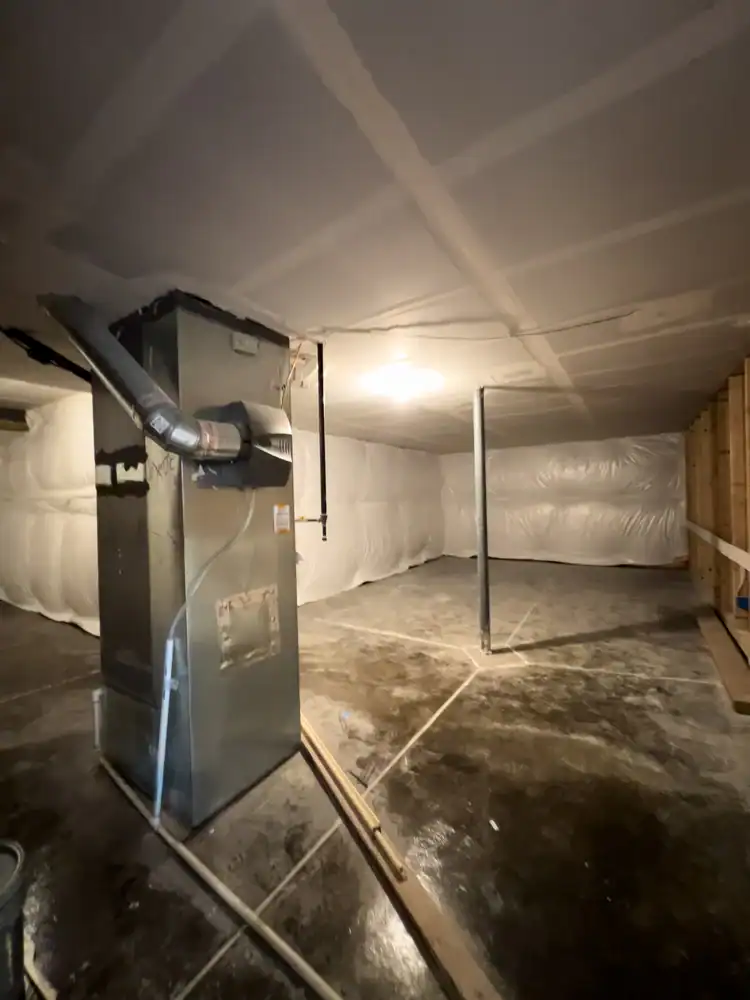
You stop smelling that musty odor every time you walk in the door. Your HVAC system doesn’t run constantly just to keep up. And you’re not wondering if there’s mold growing under your feet.
In Saxapahaw, where humidity sits above 60% for most of the year, an unprotected crawl space is working against you. Moisture seeps through vents, condensation builds on floor joists, and before long you’re dealing with wood rot or worse.
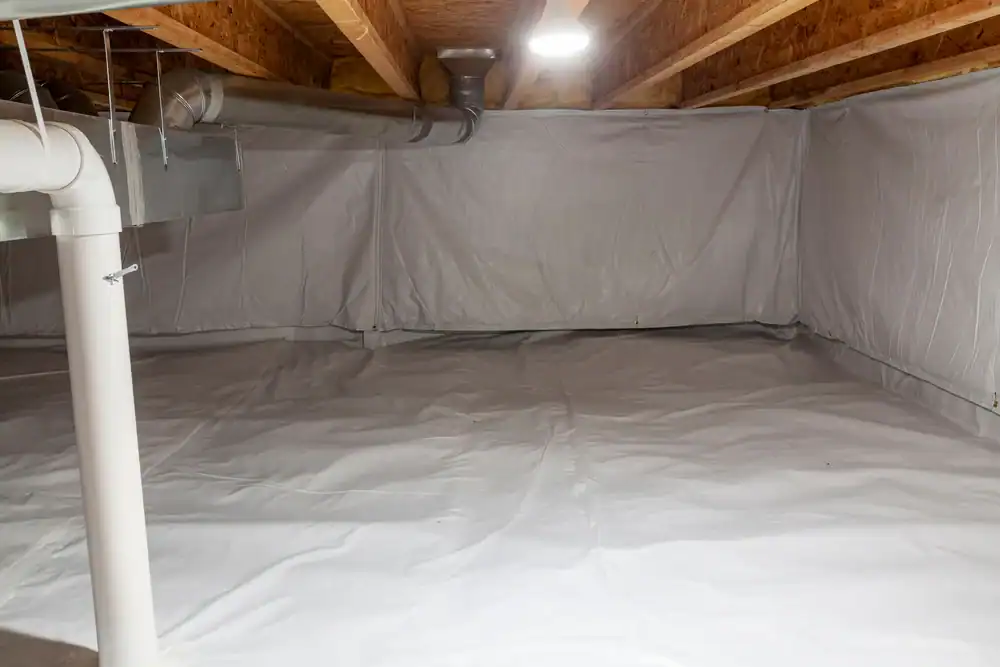
Encapsulation changes that. A proper vapor barrier installation seals out ground moisture. A crawl space dehumidifier keeps humidity below the threshold where mold can grow. Insulation stops the temperature swings that make your floors cold in winter and your AC bill spike in summer. You get a space that’s dry, stable, and actually protecting your home instead of threatening it.
We’ve been handling crawl space problems in the Greensboro area for over 30 years. We’ve seen what North Carolina’s climate does to homes—the humidity that won’t quit, the seasonal temperature swings, the way moisture finds every gap it can.
Saxapahaw sits in the middle of it all. You’re close enough to Durham and Greensboro to know what modern building science looks like, but you’re in a community where 40% of homes are mobile homes and plenty of houses were built before anyone thought about crawl space moisture control. That means older construction, vented crawl spaces that were never meant to handle this humidity, and homeowners who’ve been told to “just keep an eye on it.”
We don’t work that way. You get a real assessment, a clear explanation of what’s happening under your house, and a system that’s built to last 15 to 20 years or more.
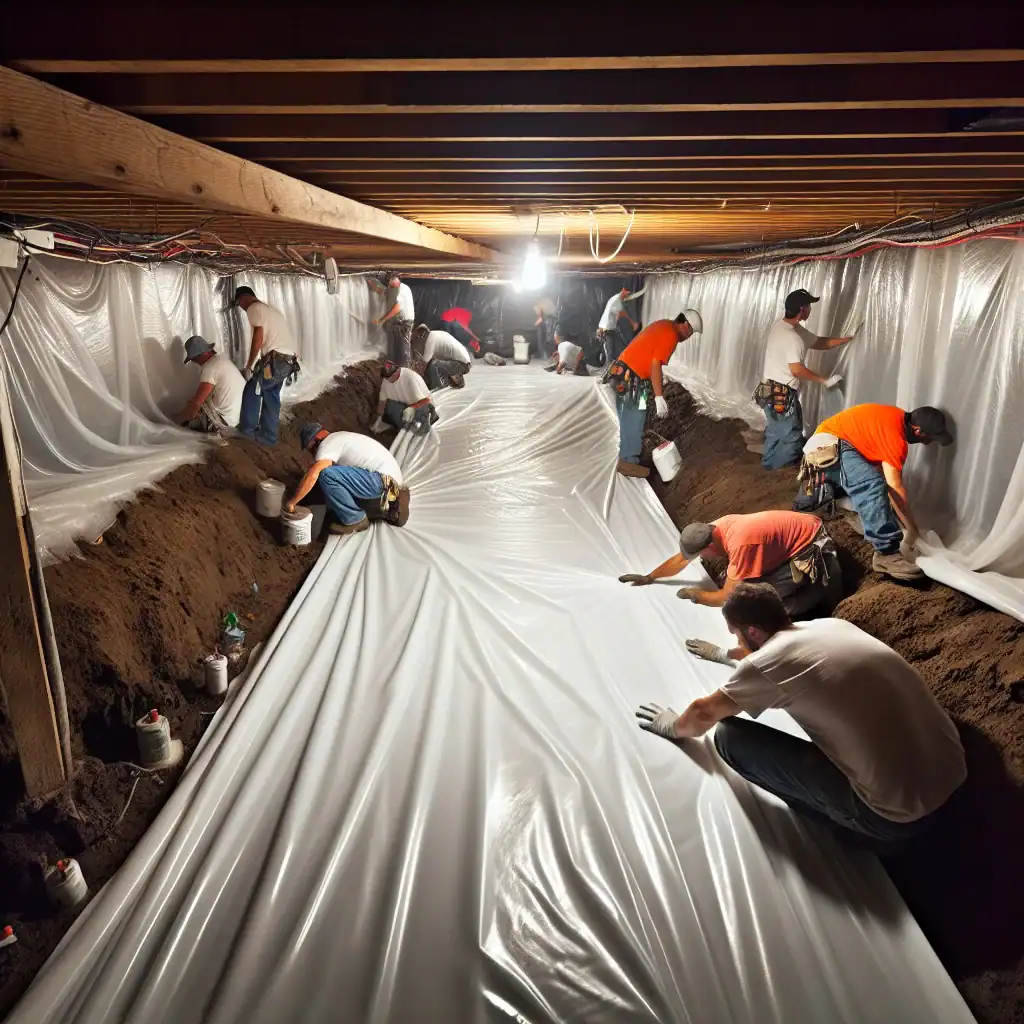
First, we inspect your crawl space to see what we’re dealing with—standing water, existing mold, damaged insulation, whatever’s down there. You get a straight answer about what needs to happen and why.
Next comes crawl space cleaning if it’s needed. We remove debris, old insulation, anything that’s wet or contaminated. Then we address drainage issues so water doesn’t pool under your house.
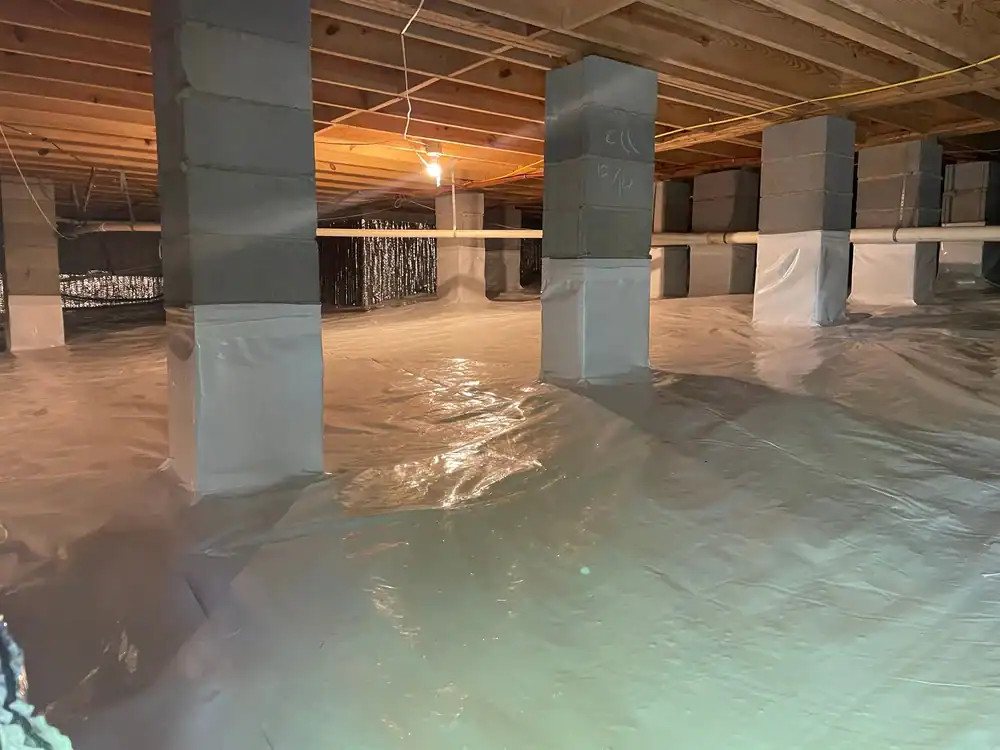
After that, we install a heavy-duty vapor barrier across the entire crawl space floor and up the foundation walls. This isn’t the thin plastic you’d get at a hardware store—it’s a thick, durable material that actually stops moisture from coming up through the ground. We seal every seam and secure it properly so it stays in place.
If your crawl space needs it, we add insulation to the walls and install a dehumidifier to keep humidity levels where they should be. We seal vents and make sure the space is conditioned, not just covered. When we’re done, you have a crawl space that’s dry, clean, and working the way it should.

Ready to get started?
You’re not just getting a vapor barrier. You’re getting moisture control that addresses the specific problems North Carolina homes face.
In Saxapahaw, that means dealing with humidity that stays above 60% for six to nine months a year. It means understanding that your crawl space is feeding air directly into your living space—up to 50% of the air on your first floor comes from down there. And it means knowing that if your relative humidity hits 65% or higher, you’re creating the perfect environment for mold.
Our encapsulation systems include a sealed vapor barrier that stops ground moisture, dehumidifier installation to control the air, and crawl space insulation that keeps temperatures stable. We seal foundation vents that were letting humid outside air flood your crawl space. We make sure drainage is handled so water doesn’t collect under your house after heavy rain.
The result is a crawl space that cuts your energy costs by up to 20%, protects your floor joists from rot, and stops feeding musty air into your home. Homeowners in Alamance County are seeing real differences—lower utility bills, better indoor air quality, and peace of mind that their foundation isn’t slowly deteriorating.
The cost depends on the size of your crawl space, the condition it’s in, and what needs to be done before we can encapsulate. A typical job runs several thousand dollars, but that number changes based on whether you need mold remediation, drainage work, or structural repairs first.
Here’s what matters more than the upfront cost: the return. Homeowners typically save 15-20% on heating and cooling costs after encapsulation. That’s real money every month. You’re also avoiding expensive repairs down the line—replacing rotted floor joists or dealing with mold remediation costs way more than preventing the problem in the first place.
The EPA found that every dollar you save in energy costs adds $20 to $24 to your home’s resale value. So if you’re saving $30 a month on utilities, that’s $360 a year, which translates to over $7,000 in home value. Over 10 years, between energy savings and avoided repairs, most homeowners see a full return on their investment.
A properly installed encapsulation system lasts 15 to 20 years, and many last longer if they’re maintained. The vapor barrier itself is durable enough to handle decades of use. The dehumidifier will need occasional maintenance, but the core system stays intact.
What kills encapsulation systems early is poor installation or ignoring drainage issues. If water is still pooling under your house because grading wasn’t fixed, or if the vapor barrier wasn’t sealed correctly, you’ll have problems. That’s why the installation matters as much as the materials.
In North Carolina’s humid climate, your system is working year-round. It’s controlling moisture during summer when humidity spikes, and it’s keeping your crawl space from turning into a freezer in winter. As long as the system was installed right and you’re not introducing new water problems, it keeps working. We’ve seen systems we installed decades ago still doing their job because they were done correctly from the start.
Yes, if the smell is coming from mold or mildew caused by moisture—which it almost always is. That musty odor is a sign that humidity levels are too high and organic materials are breaking down. Encapsulation stops the moisture that’s feeding the problem.
Once we seal your crawl space with a vapor barrier and get a dehumidifier running, humidity drops below the level where mold can thrive. Most molds need humidity above 65% to grow. When we bring that number down to 50-55%, the environment that was creating the smell doesn’t exist anymore.
You might still smell it for a bit after encapsulation if there’s existing mold that needs to be cleaned up first. That’s why we inspect before we start—if there’s active mold growth, we address that as part of the process. But once the space is clean and the moisture is controlled, the smell goes away and stays away. You’re not masking it or covering it up. You’re eliminating what caused it.
In most cases, yes. The vapor barrier stops moisture from coming up through the ground, but it doesn’t control the humidity that’s already in the air or that comes from other sources. A dehumidifier finishes the job by keeping the air dry.
North Carolina’s climate makes this especially important. Even with a sealed crawl space, humidity can creep in through small gaps or from the air that’s already trapped inside. If you don’t control that, you’re still at risk for condensation on cold surfaces, which leads right back to mold and wood rot.
The dehumidifier keeps your crawl space humidity at the right level year-round. It runs automatically, so you’re not thinking about it. And it uses less energy than you’d expect—especially compared to what you’re saving by not running your HVAC system overtime to compensate for a wet crawl space. Most homeowners find that the dehumidifier pays for itself in energy savings within a few years.
You can buy the materials and do it yourself, but most homeowners who try end up calling us to fix it. Crawl space encapsulation looks straightforward until you’re actually under the house dealing with tight spaces, uneven ground, and moisture sources you didn’t know existed.
The biggest issues we see with DIY jobs are improper sealing—seams that aren’t taped correctly, barriers that aren’t secured to the walls, and vents that are still letting humid air in. If the vapor barrier isn’t installed right, moisture finds a way through. If you don’t address drainage before you encapsulate, you’re just trapping water under a plastic sheet.
There’s also the question of what you’re not seeing. We find structural issues, plumbing leaks, and mold problems during inspections that homeowners didn’t know were there. If you encapsulate over those problems, you’re making them worse. A professional job means the space gets assessed correctly, drainage gets handled, and the system is installed in a way that actually works. You’re not redoing it in two years because it didn’t hold up.
Homes with encapsulated crawl spaces sell for more—sometimes up to 10% more—because buyers see it as one less major expense they’ll have to deal with. When a home inspector goes into a crawl space and finds it dry, clean, and properly sealed, that’s a green light. When they find standing water, mold, or sagging insulation, buyers start calculating repair costs.
Today’s buyers are more educated about foundation issues than they used to be. They know what moisture problems cost. They know that a wet crawl space means potential mold, higher energy bills, and structural repairs. An encapsulated crawl space removes those concerns before they become negotiating points.
Beyond the sale price, encapsulation makes your home easier to sell. It shows up in the inspection report as a positive instead of a problem. Buyers notice the difference immediately—the house feels more comfortable, there’s no musty smell, and the floors are stable. You’re not explaining away issues or offering credits to cover future repairs. You’re showing them a home that’s been maintained correctly, and that matters more than most cosmetic upgrades.