

Contact Info
- Greensboro, NC 27406
- Call: 336-707-0498
- Text: 336-707-0498
-
Mon - Fri: 8am - 4pm
Sat - Sun: Closed
Contact Info
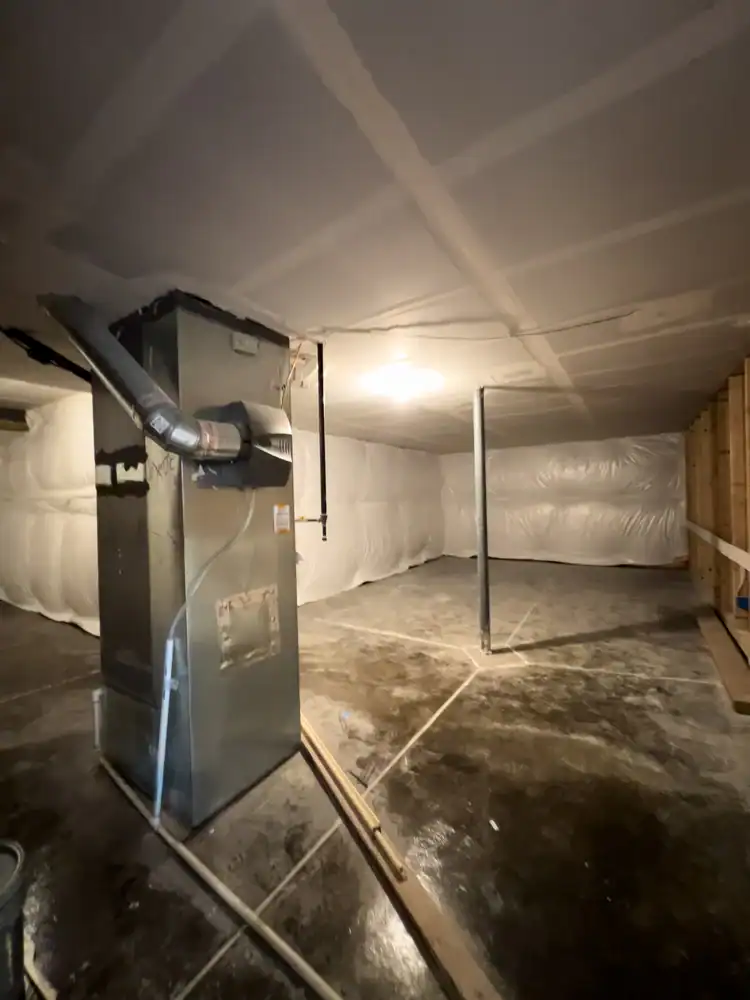
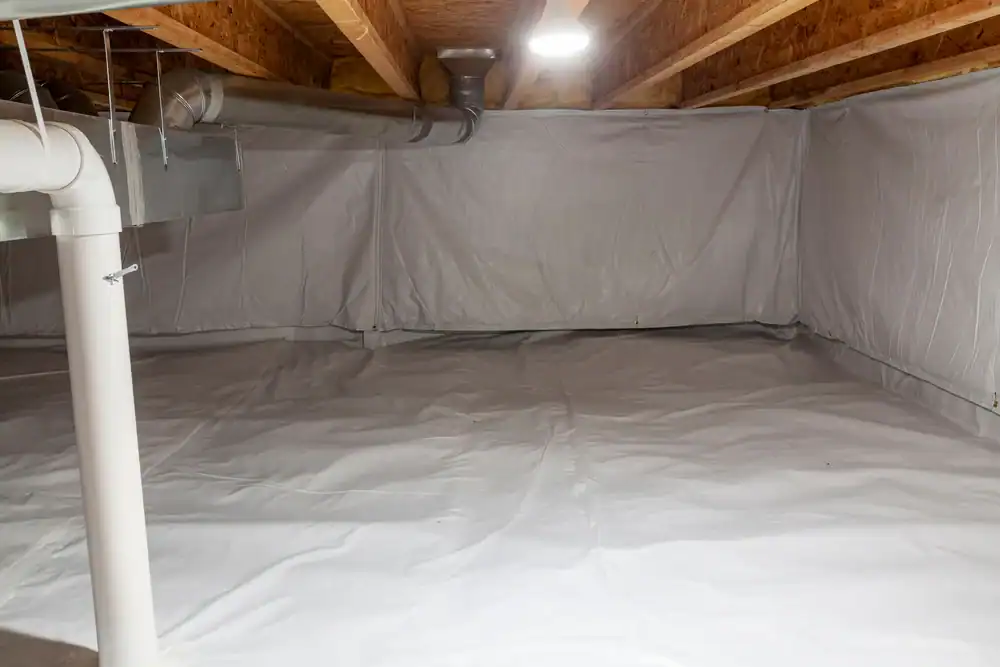
You stop paying to heat and cool the outdoors. North Carolina’s humidity doesn’t mess around, and neither does the damage it causes. When moisture gets into your crawl space, it rots floor joists, feeds mold, and sends musty air straight into your living room.
Crawl space encapsulation changes that. A proper vapor barrier installation locks out ground moisture. Pair it with a dehumidifier installation, and you’ve got year-round control. Your floors stay warmer in winter. Your energy bills drop by 15 to 20 percent. That’s $200 to $600 back in your pocket every year.
You also protect what you’ve built. Wood stays dry. Mold doesn’t grow. Pests lose interest. The air coming up through your vents smells like air, not a basement. And if you ever sell, buyers notice. Encapsulation can add up to 10 percent to your home’s value because it shows the house has been maintained, not just decorated.
We focus on one thing: keeping crawl spaces dry, sealed, and functional. We don’t do dryer vents. We don’t dabble in ten different services. We specialize in crawl space encapsulation, vapor barrier installation, moisture control, and dehumidifier systems because that’s where homeowners in Stokesdale, NC need the most help.
Stokesdale sits in an area where clay-rich soil holds moisture like a sponge. Humidity here regularly tops 70 percent in summer. That combination turns unprotected crawl spaces into breeding grounds for mold, wood rot, and structural problems. We’ve seen it dozens of times, and we know how to fix it before it gets worse.
When you call us, you’re working with people who understand the local climate, the soil conditions, and what actually works long-term. No upselling. No runaround. Just straight answers and solid work.
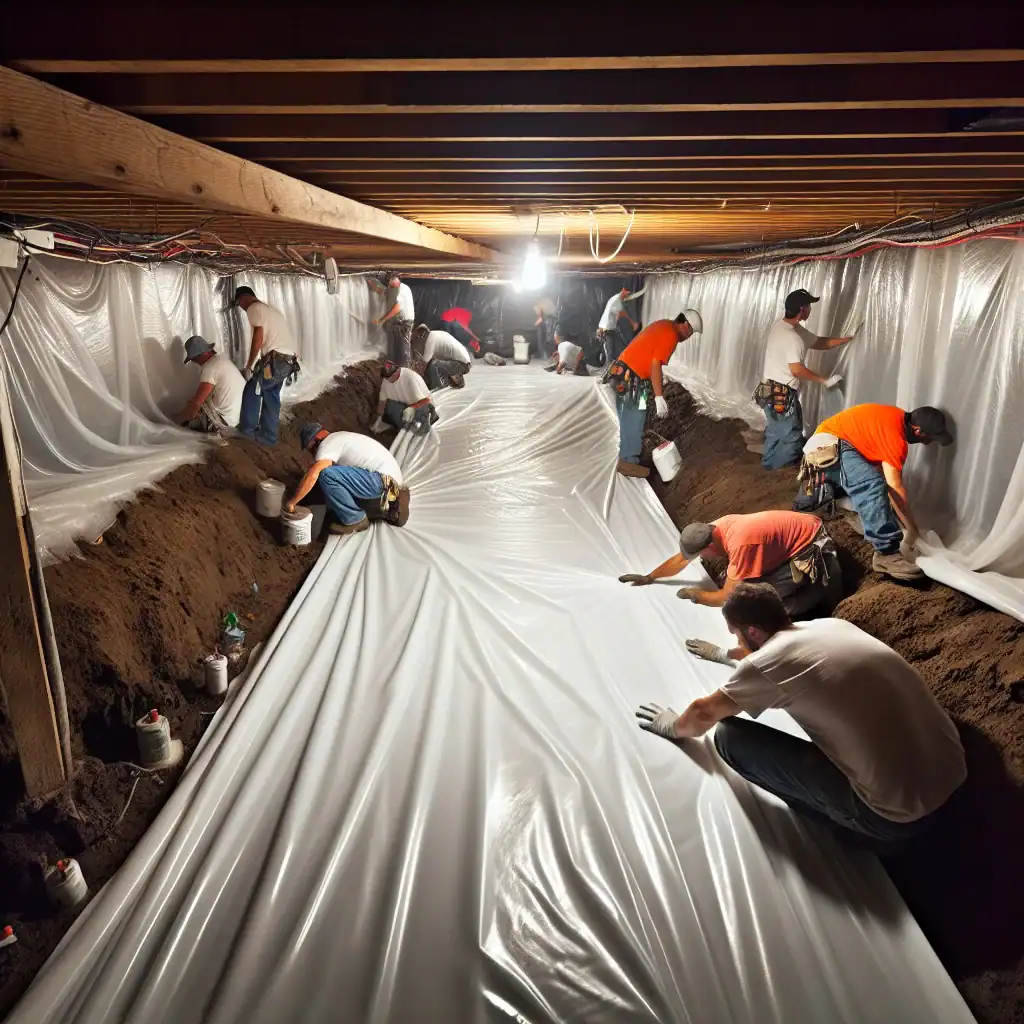
First, we inspect your crawl space. We’re looking for standing water, mold growth, damaged insulation, and structural issues. If there’s a drainage problem or existing mold, we handle that before sealing anything. Encapsulation doesn’t fix flooding on its own—it works alongside proper drainage and sump systems.
Next comes crawl space cleaning. We remove old insulation, debris, and anything that’s holding moisture. Then we seal foundation vents and install a heavy-duty vapor barrier across the floor and up the walls. This barrier stops ground moisture from evaporating into your crawl space. It’s thick, durable, and built to last 10 to 20 years.
After the vapor barrier installation, we add crawl space insulation if needed and install a dehumidifier to control humidity levels year-round. The dehumidifier pulls moisture out of the air and keeps conditions stable, even during North Carolina’s wettest months. Once everything’s sealed and running, you’re done. The system works quietly in the background while you enjoy lower bills, cleaner air, and a healthier home.

Ready to get started?
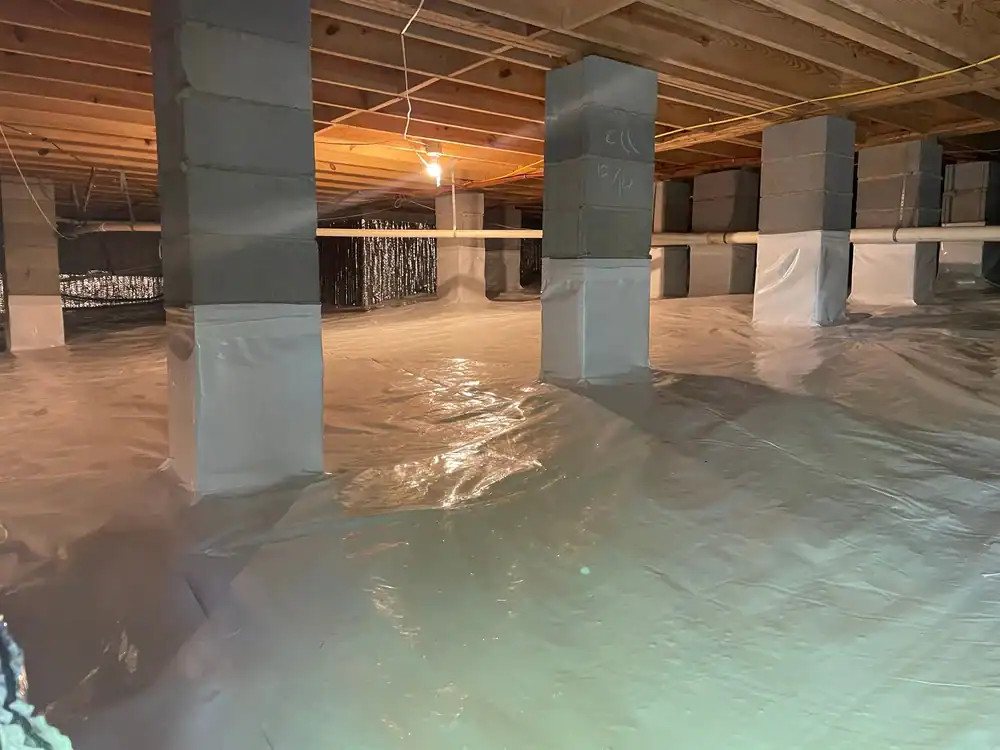
Crawl space encapsulation isn’t just laying down plastic. It’s a full moisture control system designed for Stokesdale’s climate. You get a professional-grade vapor barrier that covers your crawl space floor and foundation walls. We seal every seam, secure every edge, and make sure ground moisture has nowhere to go.
We also seal your foundation vents. Open vents were supposed to help with airflow, but in humid climates like ours, they just let in more moisture. Closing them off is one of the fastest ways to drop humidity levels and improve energy efficiency. The U.S. Department of Energy found that sealed crawl spaces in the Southeast use significantly less energy than vented ones.
If your crawl space has drainage issues, we’ll recommend a sump pump or perimeter drain before we encapsulate. If there’s mold, we’ll treat it first. And if your insulation is sagging or soaked, we’ll replace it with the right material. The dehumidifier we install isn’t a box-store unit—it’s sized for your space and built to run efficiently for years. Everything works together to keep your crawl space dry, your home comfortable, and your investment protected.
Most crawl space encapsulation projects in the Stokesdale area run between $3,500 and $15,000. The range depends on your crawl space size, the condition it’s in, and what prep work is needed before we can seal it.
If you’ve got standing water, mold, or damaged floor joists, those get handled first. A small crawl space in good shape with minimal prep will land on the lower end. A larger space that needs drainage work, mold remediation, or structural repairs will cost more. But the investment pays back. Field studies in North Carolina show annual energy savings around 15 to 20 percent, which adds up to $300 to $400 a year for a typical 2,000-square-foot home.
You’re also avoiding bigger expenses down the road. Replacing rotten floor joists can cost five figures. Foundation repairs aren’t cheap either. Encapsulation protects the structure and keeps those costs off the table.
Yes. A 2005 U.S. Department of Energy study found that sealed crawl spaces in the Southeast used significantly less energy than vented crawl spaces. Homeowners in North Carolina typically see heating and cooling costs drop by 15 to 20 percent after encapsulation.
That happens because you’re no longer conditioning air that leaks out through your crawl space. When your crawl space is open to outside air and ground moisture, your HVAC system works overtime trying to keep up. Sealing the space with a vapor barrier and adding a dehumidifier creates a controlled environment. Your system runs less, uses less energy, and keeps your home more comfortable.
For every dollar you save annually on energy, your home’s value increases by $20 to $24. So if encapsulation saves you $250 a year, that adds $5,000 to $6,000 to your home’s resale value. The energy savings are real, and they compound over time.
A professionally installed crawl space encapsulation system lasts 10 to 20 years. The vapor barrier itself is built to hold up for decades if it’s installed correctly and not damaged by flooding or pests.
The dehumidifier will need occasional maintenance—filter changes, maybe a part replacement after several years—but the unit should run reliably for 10-plus years. We recommend an annual inspection just to make sure everything’s still sealed and working as it should. Catch a small issue early, and you avoid bigger problems later.
The longevity depends partly on how well the system was installed and partly on whether you stay on top of minor maintenance. But once it’s in, you’re not looking at frequent repairs or replacements. It’s a long-term solution that keeps working year after year.
Encapsulation drastically reduces the conditions mold needs to grow. Mold requires moisture, and a sealed crawl space with a vapor barrier and dehumidifier keeps humidity levels too low for mold to thrive.
If you already have mold, we treat that before installing the encapsulation system. Sealing over existing mold doesn’t solve the problem—it just hides it. Once the space is clean and dry, the vapor barrier stops new moisture from coming up through the ground, and the dehumidifier keeps the air dry. That combination shuts down mold growth.
In North Carolina’s humid climate, an unsealed crawl space is basically a mold factory. Humidity levels above 60 percent create perfect conditions for spores to spread. Encapsulation brings that number down and keeps it there. Your indoor air quality improves because you’re not pulling mold spores up through your floor vents anymore.
You can buy the materials and try it yourself, but most homeowners who go that route end up calling us to fix it later. Crawl space encapsulation looks straightforward until you’re actually down there dealing with uneven ground, tight corners, foundation penetrations, and proper sealing techniques.
The vapor barrier has to be installed correctly—no gaps, no loose seams, and proper overlap at the walls. If it’s not sealed right, moisture still gets in. The dehumidifier has to be sized for your space and installed where it can drain properly. Vents need to be sealed from the inside and outside. And if there’s any standing water or drainage issue, that has to be solved first or the whole system fails.
A professional installation comes with experience, the right materials, and usually a warranty. We’ve seen DIY jobs that looked fine on the surface but didn’t actually control moisture because the details were missed. If you’re going to invest the time and money, it’s worth doing it once and doing it right.
A vapor barrier is just one part of encapsulation. Some contractors will lay a sheet of plastic on your crawl space floor and call it done. That’s a vapor barrier, and it helps, but it’s not a complete system.
Full crawl space encapsulation means sealing the entire space—floor, walls, vents, and any gaps where air or moisture can get in. You’re creating a controlled environment. The vapor barrier goes across the ground and up the foundation walls. Foundation vents get sealed. A dehumidifier keeps the air dry. If needed, insulation gets added to the walls or rim joists.
The difference is control. A basic vapor barrier slows down ground moisture. Full encapsulation stops it, controls humidity, improves energy efficiency, and protects your home’s structure. It’s the difference between a temporary fix and a long-term solution that actually delivers the benefits you’re paying for.