

Contact Info
- Greensboro, NC 27406
- Call: 336-707-0498
- Text: 336-707-0498
-
Mon - Fri: 8am - 4pm
Sat - Sun: Closed
Contact Info
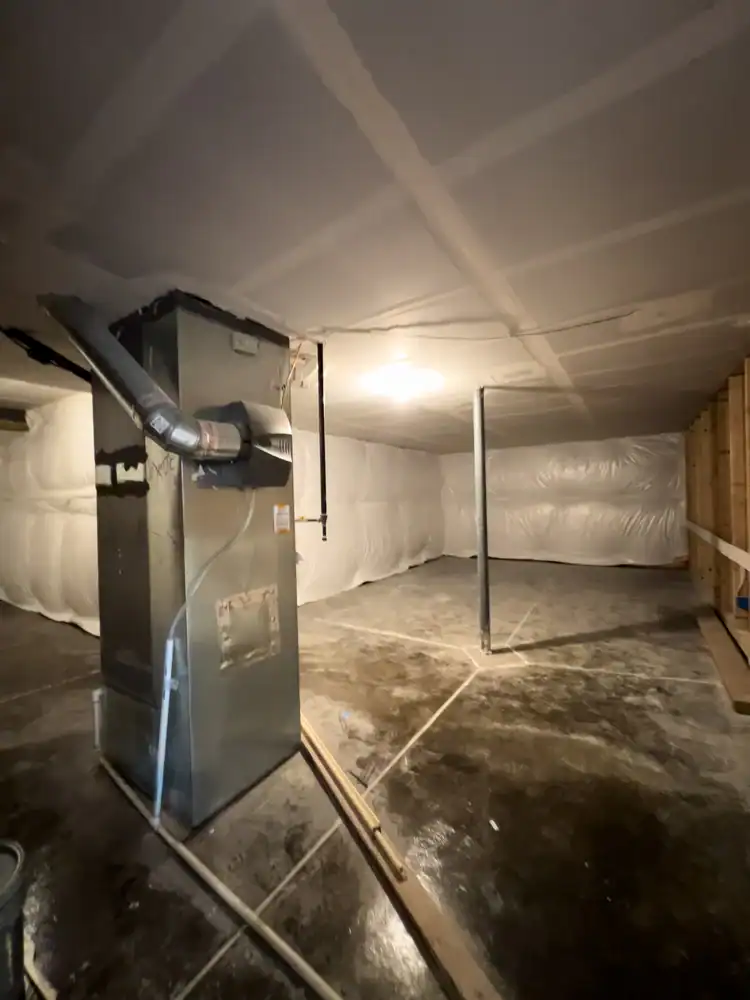
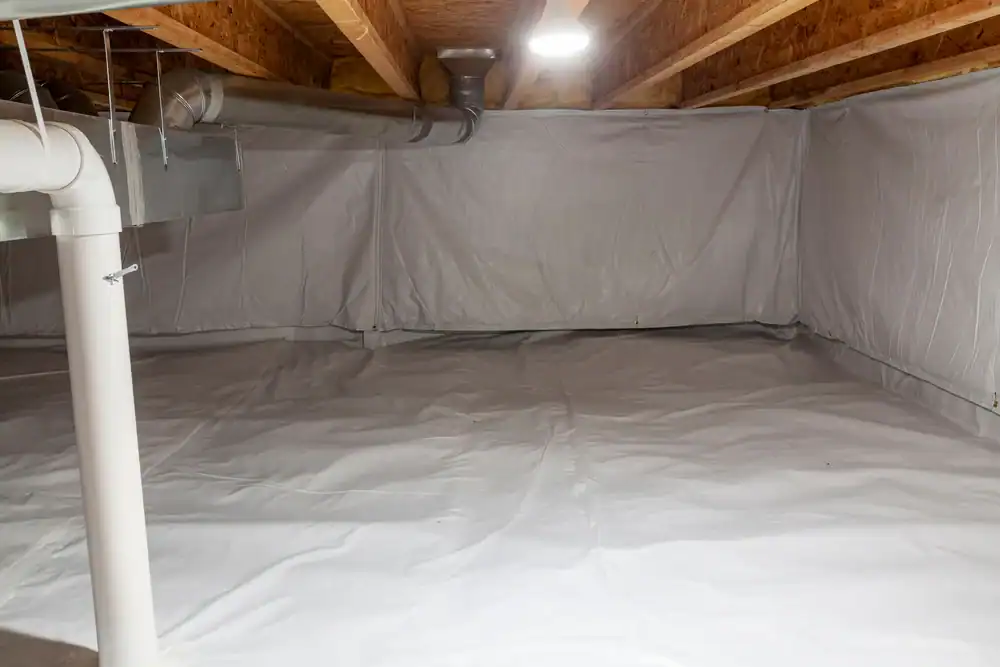
You’ll notice warmer floors in winter. Your HVAC system won’t run as hard trying to cool humid air. That musty smell disappears because the source is gone, not just covered up.
Your crawl space becomes a controlled environment instead of a breeding ground. No more wondering what’s happening under your feet. No more flashlight checks that end with a knot in your stomach.
Energy bills drop because you’re not paying to condition outdoor air that’s leaking in through vents. Structure stays intact because moisture isn’t rotting beams or inviting termites. Air quality improves because up to 75% of your indoor air starts in that crawl space, and now it’s coming from a clean, dry source instead of a moldy mess.
This isn’t about making your crawl space look nice. It’s about stopping the cycle of damage, cost, and worry that comes with North Carolina’s humidity hitting an unprotected space.
We’ve spent 14 years working in crawl spaces across the Greensboro area, including right here in Swepsonville. We’re NADCA certified, BBB accredited with an A+ rating, and we understand what North Carolina’s climate does to homes built with traditional vented crawl spaces.
Rick Watson leads our team. He’s ASCS and CVI certified, which means he’s trained specifically in crawl space science and vapor barrier installation. This isn’t a side service for us—it’s what we do, alongside HVAC duct cleaning and mold remediation, because all three affect the air you breathe.
Swepsonville homes face the same humidity issues as the rest of central NC. Summers are brutal on crawl spaces. Moisture condenses on cooler surfaces, wood stays damp, and mold starts growing before you even know there’s a problem. We’ve seen it hundreds of times, and we know how to fix it right the first time.
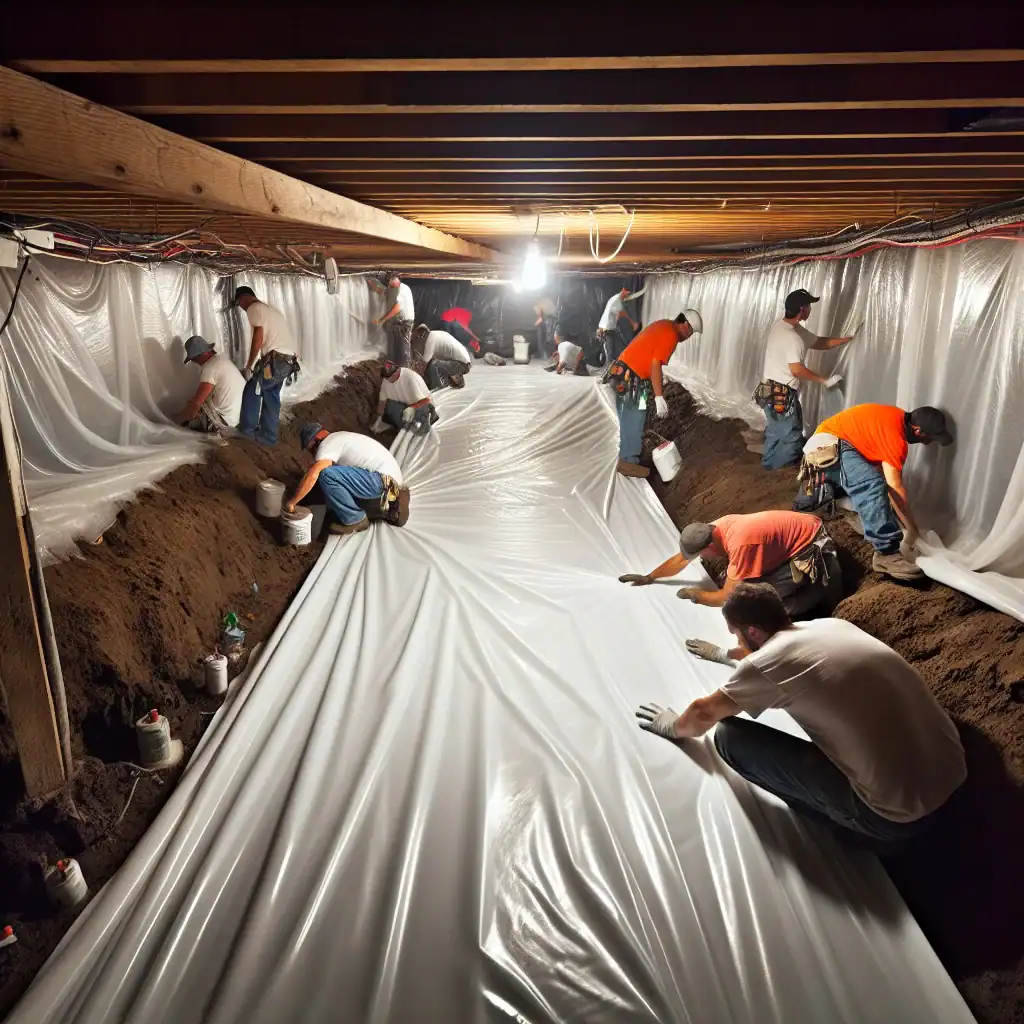
First, we inspect your crawl space to see what we’re dealing with. We’re looking for existing moisture damage, mold growth, insulation problems, and how air is currently moving through the space. You get a clear assessment of what needs to happen and why.
Next, we prep the space. That means removing debris, addressing any mold issues, and making sure the surface is ready for encapsulation. If there’s standing water or drainage problems, those get handled first because sealing moisture inside is worse than leaving it open.
Then comes the vapor barrier installation. We use heavy-duty polyethylene sheeting that covers the floor and runs up the walls, creating a continuous moisture barrier. Seams are sealed. Piers and posts are wrapped. Vents get sealed from the inside because you don’t need outdoor air mixing with conditioned air anymore.
Finally, we install a dehumidifier if your space needs it. In Swepsonville’s climate, most do. The dehumidifier keeps humidity levels below 60%, which is the threshold where mold and rot take off. We use Aprilaire units because they’re built for this specific job and they last.
You’re left with a clean, dry, controlled space that’s doing its job—protecting your home instead of threatening it.

Ready to get started?
This isn’t just laying down plastic. You’re getting a full crawl space transformation that addresses moisture from every angle.
The vapor barrier we install is commercial-grade, not the thin stuff that rips when you look at it wrong. It’s thick enough to walk on during future inspections and tough enough to last 15-20 years when properly maintained. Every seam gets taped. Every penetration gets sealed. We’re creating an actual barrier, not just covering dirt.
Dehumidifier installation is part of the system because passive barriers aren’t enough in North Carolina. Humidity still builds up from temperature changes and minor air leaks. The dehumidifier actively pulls moisture out and keeps levels where they need to be. You’re not checking it constantly—it runs automatically and drains on its own.
Insulation work happens if your rim joists need it. That’s where your crawl space meets your living space, and it’s often uninsulated or poorly insulated. We use closed-cell foam that stops air leakage and adds R-value, which directly impacts your comfort and energy bills.
Swepsonville homes built before 2000 almost always have vented crawl spaces, which made sense under old building codes but creates problems in practice. We’re fixing what was standard practice but never actually worked well in humid climates. Your home gets the upgrade it should have had from the start.
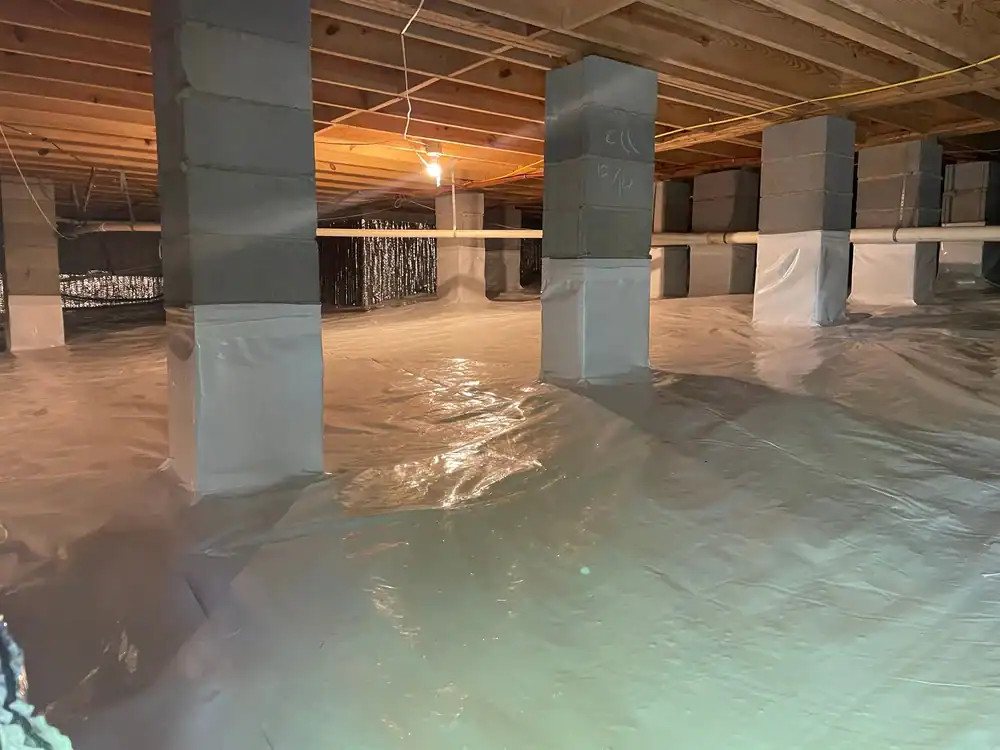
Most Swepsonville homes fall in the $5,000 to $8,000 range for complete encapsulation, but your actual cost depends on square footage, current condition, and what problems need fixing before we can encapsulate.
A 1,200 square foot crawl space with minimal prep work costs less than a 2,000 square foot space that needs mold remediation and drainage correction first. If you’ve got standing water, significant rot, or pest damage, those issues get addressed before encapsulation, which adds to the total investment.
The cost breaks down into materials and labor. You’re paying for commercial-grade vapor barrier, professional installation that actually seals the space, a dehumidifier that’s sized correctly for your square footage, and the expertise to do it right. Cheap encapsulation usually means thin barriers, missed details, and callbacks when moisture problems continue. We price it to last 15-20 years, not to be the lowest quote you get.
Yes, and here’s why. Humid air takes significantly more energy to cool than dry air. When your HVAC system is pulling in humid crawl space air, it’s working harder and running longer to reach the temperature you set on the thermostat.
North Carolina field studies show 15-20% energy savings after encapsulation. For a typical 2,000 square foot home in Swepsonville, that’s $300 to $400 staying in your pocket every year. The savings come from stopping air leakage, reducing humidity load on your HVAC, and eliminating the temperature swings that make your system cycle constantly.
You’ll also notice more consistent temperatures between rooms. First-floor rooms stay more comfortable because you’re not losing conditioned air to an open crawl space. Your floors feel warmer in winter because you’re not standing on a surface that’s exposed to outdoor temperatures from below. The energy savings are real and measurable, not marketing talk.
Most encapsulation jobs in Swepsonville take two to three days from start to finish. Smaller crawl spaces with easy access and no major prep work can be done in one long day. Larger spaces or homes with moisture damage that needs remediation first take closer to a week.
Day one is usually prep work—cleaning out debris, treating mold if present, fixing any drainage issues, and getting the space ready for the barrier. Day two is vapor barrier installation, sealing vents, and wrapping piers. Day three is finishing details and installing the dehumidifier.
We’re not rushing through it. Encapsulation only works if it’s done right, which means taking time to seal every seam, address every penetration, and make sure the barrier is continuous. Fast installation usually means shortcuts, and shortcuts mean moisture finds a way back in. You’re better off with a crew that takes an extra day to do it correctly than one that’s in and out but leaves gaps.
In Swepsonville, you need the dehumidifier. The vapor barrier stops ground moisture, but it doesn’t control humidity that builds up from temperature changes, minor air leaks, or moisture that migrates through foundation walls.
North Carolina’s humidity levels regularly exceed 60%, which is the threshold where mold growth accelerates. Even with a perfect vapor barrier, your crawl space humidity will creep up during summer months without active dehumidification. The barrier reduces the moisture load significantly, but the dehumidifier finishes the job by keeping levels consistently below 50%.
We size dehumidifiers based on your crawl space square footage and install them with automatic drainage so you’re not emptying buckets. Aprilaire units are built specifically for crawl spaces—they handle the temperature range, they run efficiently, and they last. Skipping the dehumidifier to save money upfront usually means dealing with moisture problems later, which costs more to fix than just installing it correctly the first time.
We seal them from the inside as part of the encapsulation process. Vents were designed to let outdoor air circulate through your crawl space, but that’s exactly what causes problems in humid climates like North Carolina’s.
When hot, humid outdoor air enters your crawl space and hits cooler surfaces, moisture condenses. That’s what creates the damp environment where mold grows and wood rots. Sealing the vents stops outdoor air from entering, which eliminates the condensation cycle and lets you control the environment instead.
Your crawl space becomes part of your home’s conditioned envelope rather than an outdoor space under your house. This is how modern building science says crawl spaces should be built, and it’s a significant improvement over the vented approach that’s caused moisture problems in thousands of homes across the region. Sealed vents plus vapor barrier plus dehumidifier equals a controlled environment that protects your home instead of threatening it.
You need it if you’re seeing musty odors in your home, noticing soft or sagging floors, dealing with mold or mildew in living spaces, running a dehumidifier constantly upstairs, or paying higher energy bills than similar homes in your neighborhood.
Those are the obvious signs. Less obvious indicators include condensation on crawl space surfaces during summer, insulation that’s falling down or staying damp, rust on metal components like HVAC ducts or plumbing, and pest problems that keep coming back even after treatment. If your crawl space has standing water after rain or visible mold growth on wood surfaces, you’re past the “should I” question and into “how soon can you start” territory.
Most Swepsonville homes built with vented crawl spaces benefit from encapsulation because the vented approach doesn’t work well in North Carolina’s climate. You can keep treating symptoms—running dehumidifiers, replacing insulation, cleaning mold—or you can fix the underlying problem by controlling moisture at the source. Encapsulation is the fix, not another temporary patch.