

Contact Info
- Greensboro, NC 27406
- Call: 336-707-0498
- Text: 336-707-0498
-
Mon - Fri: 8am - 4pm
Sat - Sun: Closed
Contact Info
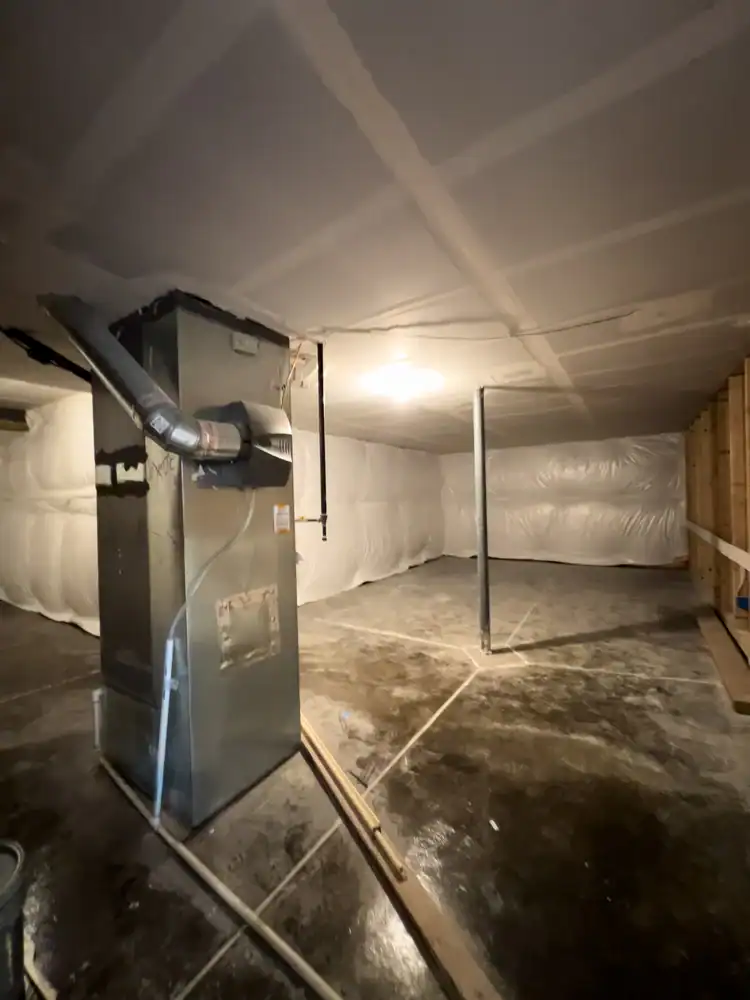
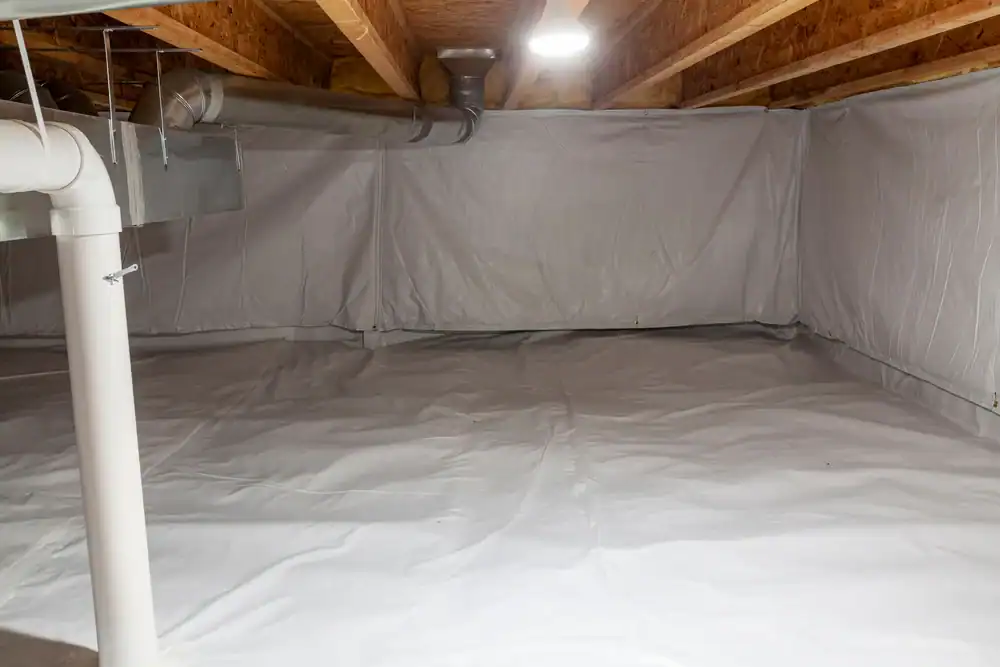
You’ll notice the difference within weeks. The musty smell coming through your vents disappears. Your floors feel warmer in winter because cold air isn’t seeping up through the boards. Your HVAC system doesn’t run constantly trying to fight humidity that’s pouring in from below.
The real payoff shows up over time. Wood joists stay dry and solid instead of rotting from constant moisture exposure. Your energy bills drop by 15-20% because your home isn’t working against itself anymore. Mold doesn’t get the damp environment it needs to spread through your ductwork and into your living space.
North Carolina’s humidity is relentless, especially during summer months when outdoor moisture levels stay high for weeks. When your crawl space isn’t sealed, that moisture moves right up into your home—it’s basic physics. An encapsulated crawl space keeps humidity levels between 40-50% year-round, which is exactly where you want them to prevent structural damage and keep your indoor air clean.
We’ve been handling crawl space problems in the Greensboro area since before most homeowners realized their crawl space even mattered. That’s over 30 years of dealing with North Carolina’s specific climate challenges—the humidity that won’t quit, the temperature swings, the way moisture creeps into every unsealed space.
We’re NADCA certified, which means our team follows national standards for air quality and contamination control. That certification isn’t just a badge—it’s proof that we know how to assess what’s actually happening under your home and fix it correctly.
Troxlers Mill homeowners deal with the same issues we see throughout the region: crawl spaces that were built with ventilation because that’s what building codes required decades ago, before anyone understood that venting actually makes moisture problems worse in our climate. We’ve been sealing and encapsulating crawl spaces long enough to know what works and what’s just a temporary patch.
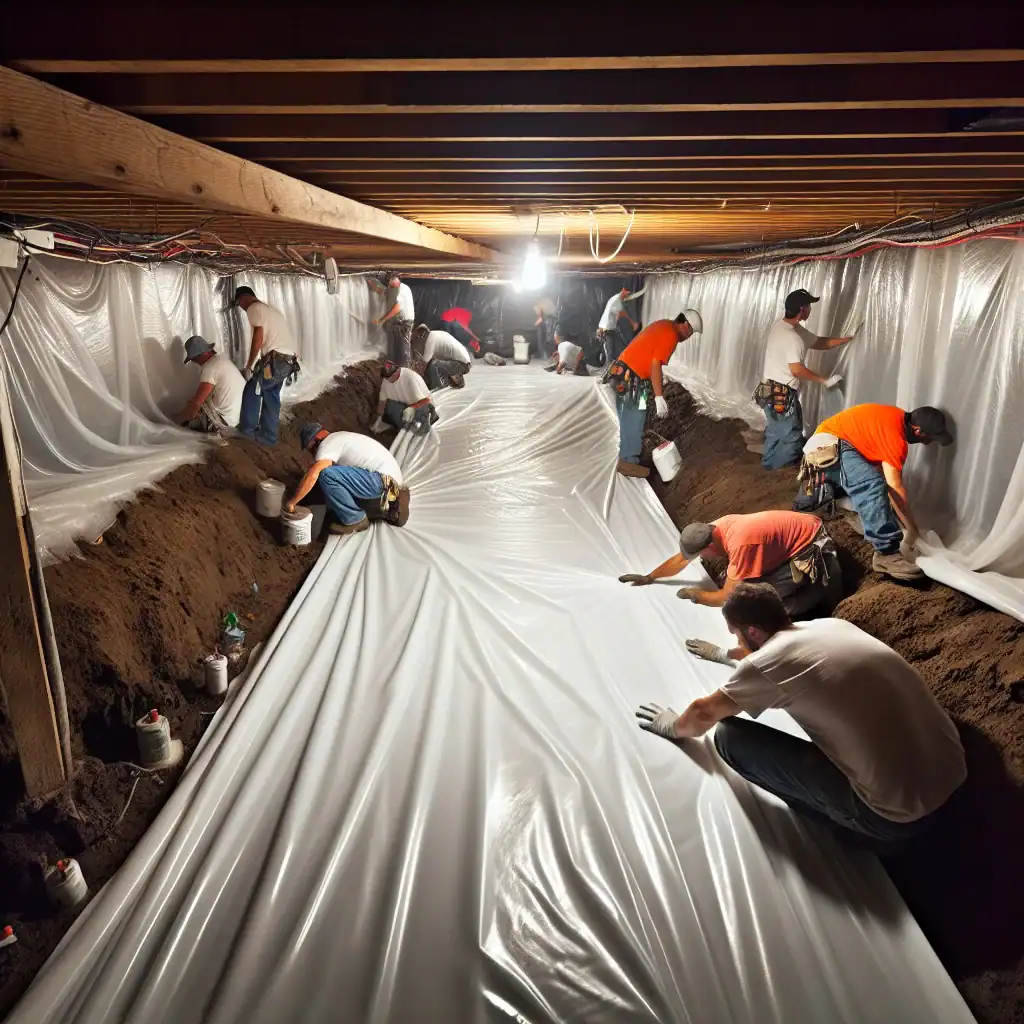
We start with an inspection because every crawl space is different. We’re looking for existing moisture damage, standing water, mold growth, pest activity, and how your current ventilation is set up. This tells us what needs to happen before we can seal anything.
Next comes cleaning and prep work. If there’s debris, old insulation, or contamination down there, it comes out first. We can’t encapsulate over problems—they need to be addressed. Any necessary repairs to joists, vapor barriers, or drainage issues happen during this phase.
Then we install the vapor barrier. This is a heavy-duty liner that covers your crawl space floor and gets sealed to your foundation walls. It’s not the thin plastic you’d buy at a hardware store—it’s thick, durable material designed to last 15-20 years. Every seam gets taped, every penetration gets sealed.
After the barrier is in, we handle insulation if your crawl space needs it, and install a dehumidifier sized correctly for your space. The dehumidifier isn’t optional in North Carolina—our climate demands active moisture control even after encapsulation. Finally, we seal any vents and make sure your crawl space is a controlled environment instead of an open invitation for humidity and pests.

Ready to get started?
Vapor barrier installation is the foundation of the whole system. We use commercial-grade materials that create a complete seal between the ground and your home. This stops ground moisture from evaporating into your crawl space, which is where most of the humidity comes from in the first place.
Dehumidifier installation keeps your crawl space at the right humidity level year-round. In Troxlers Mill and throughout the Greensboro area, outdoor humidity regularly exceeds 60% during summer months. Without a dehumidifier, even a sealed crawl space will eventually have moisture issues. We size the unit based on your square footage and specific conditions.
Crawl space insulation goes on foundation walls, not between floor joists like old methods. This keeps your crawl space inside your home’s thermal envelope, which is more efficient and prevents the condensation problems that happen when warm air hits cold surfaces. Combined with proper moisture control, this is what delivers those 15-20% energy savings.
If your crawl space has drainage issues or needs structural repairs, we handle that too. Encapsulation only works if water isn’t pooling under your house or if your foundation is sound. We’re not just sealing problems in—we’re fixing them first, then preventing them from coming back.
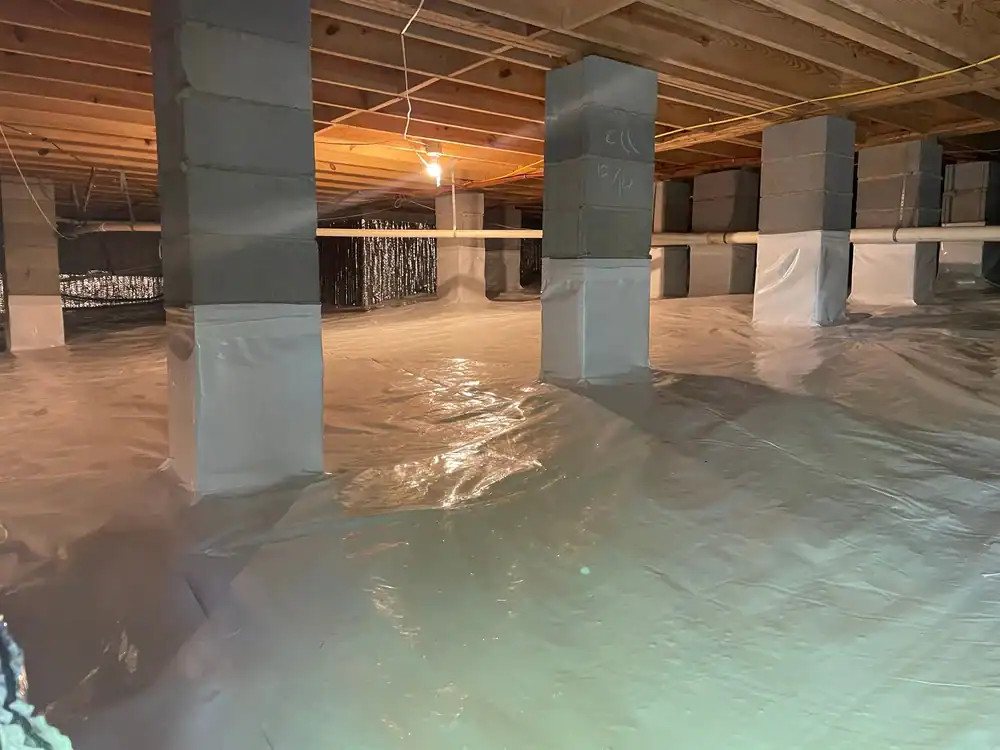
Cost depends entirely on your crawl space size, current condition, and what needs to happen before encapsulation. A straightforward 1,500 square foot crawl space in good condition runs differently than one with standing water, mold remediation needs, or structural repairs.
Most homeowners in the Troxlers Mill area are looking at an investment that pays itself back through energy savings over several years. Field studies in North Carolina show annual heating and cooling savings of 15-20%, which typically means $300-$400 staying in your pocket each year for an average 2,000 square foot home.
The real cost comparison isn’t encapsulation versus doing nothing—it’s encapsulation now versus foundation repairs, mold remediation, and HVAC replacement later. Moisture damage doesn’t fix itself, and it gets more expensive the longer it sits. We’ll give you an exact number after inspecting your specific situation, because anything else would just be guessing.
Most crawl space encapsulation jobs take 2-4 days from start to finish, but that timeline shifts based on what we find during inspection. A clean crawl space with no existing damage moves faster than one that needs mold remediation, debris removal, or structural repairs first.
The actual installation of vapor barrier and dehumidifier is usually a 1-2 day process. It’s the prep work that takes time—cleaning out old insulation, removing contamination, fixing drainage issues, repairing damaged wood. We don’t rush this part because it determines whether your encapsulation actually works long-term.
You won’t need to leave your home during the work. We’re operating in your crawl space, not your living area. Most homeowners don’t even notice we’re there beyond seeing our trucks outside. We’ll walk you through the timeline during your inspection so you know exactly what to expect and when.
Yes, if that smell is coming from your crawl space—which it usually is. That musty odor is mold, mildew, and decomposition happening in the damp environment under your house. An estimated 40% of your crawl space air enters your home through the stack effect, which is why you smell it even though you’re not down there.
Encapsulation eliminates the moisture that causes the smell in the first place. Once we seal your crawl space and install a dehumidifier, humidity levels drop below the 60% threshold where mold and mildew thrive. Within a few weeks, you’ll notice the smell fading as existing mold dies off without moisture to sustain it.
If the smell persists after encapsulation, it’s coming from somewhere else—maybe your HVAC ducts, bathroom ventilation, or a different moisture source. But in most Troxlers Mill homes we work on, the crawl space is the culprit, and sealing it solves the problem permanently.
In North Carolina, absolutely. Our climate doesn’t cooperate with passive moisture control. Even with a perfectly sealed vapor barrier, you’re still dealing with humidity that enters through foundation walls, rim joists, and any access points to your crawl space.
Studies show that encapsulated crawl spaces without dehumidifiers still track outdoor humidity levels during our humid summer months. That means you’re right back where you started when outdoor humidity hits 70-80% for weeks at a time. The dehumidifier is what keeps your crawl space at that ideal 40-50% humidity range regardless of what’s happening outside.
Think of it this way: the vapor barrier stops ground moisture, and the dehumidifier handles everything else. Together, they create an environment where mold can’t grow, wood stays dry, and your HVAC system isn’t fighting a losing battle. One without the other is incomplete in our climate.
A properly installed encapsulation system lasts 15-20 years with basic maintenance. The vapor barrier itself is durable enough to handle that timeframe—it’s not going to tear or degrade if it’s installed correctly and nothing damages it.
The dehumidifier will need replacement before the barrier does, typically every 8-12 years depending on the unit and how hard it works. That’s normal for any mechanical equipment. You’ll also want to check your crawl space annually to make sure nothing has compromised the seal—fallen insulation, pest activity, plumbing leaks.
What kills encapsulation systems early is poor installation or ignoring problems before sealing. If someone encapsulates over standing water, active leaks, or rotted wood, you’re just trapping problems that will get worse. That’s why the inspection and prep work matter so much—they determine whether your system actually makes it to that 15-20 year mark.
We seal them. This sounds wrong if you grew up hearing that crawl spaces need ventilation, but the building science has changed. Vented crawl spaces made sense in dry climates, but in humid areas like North Carolina, vents actually cause the moisture problems they’re supposed to prevent.
Here’s what happens with vented crawl spaces in summer: hot, humid outdoor air enters through the vents and hits your cooler crawl space. That temperature difference causes condensation on every surface—joists, insulation, ductwork. Now you’ve got standing moisture and perfect conditions for mold growth.
Sealed crawl spaces stay dry because you’re controlling the environment instead of letting outdoor air dictate conditions under your home. Your crawl space becomes part of your conditioned space, which is more energy efficient and eliminates the temperature differential that causes condensation. This isn’t experimental—it’s what building codes now recommend for our climate zone.