

Contact Info
- Greensboro, NC 27406
- Call: 336-707-0498
- Text: 336-707-0498
-
Mon - Fri: 8am - 4pm
Sat - Sun: Closed
Contact Info
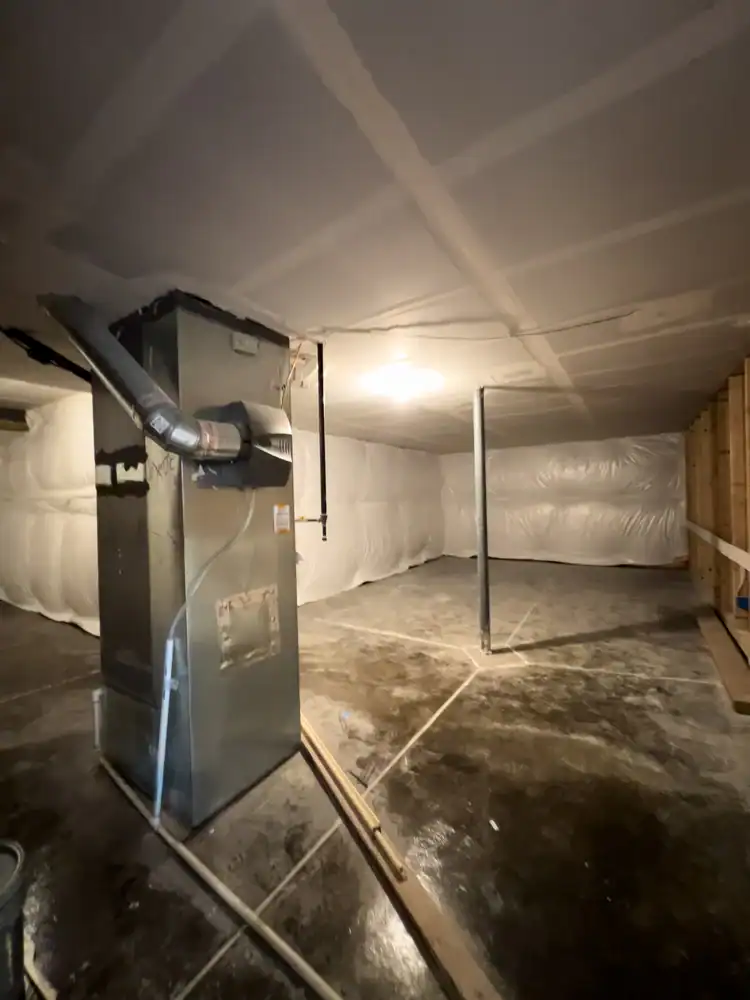
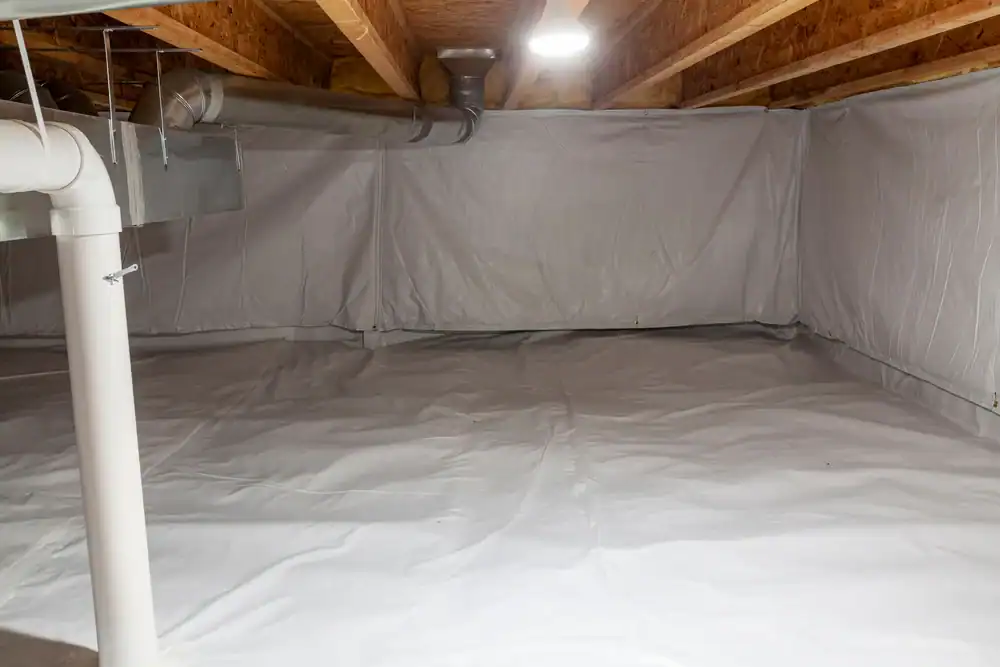
Your floors feel warmer in winter. That musty smell disappears. Your HVAC system stops working overtime just to keep up with humidity pouring in from below.
Crawl space encapsulation seals off the moisture at its source. You’re not just covering up the problem—you’re eliminating the conditions that create mold, attract pests, and rot out your floor joists. North Carolina’s humid summers mean your crawl space is constantly fighting moisture from the ground and outside air. Without proper moisture control, you’re looking at wood decay, higher cooling costs, and air quality issues that affect everyone upstairs.
A properly encapsulated crawl space means controlled humidity levels year-round, lower energy bills, and a home that doesn’t smell like a basement. You’ll notice the difference in comfort, and you’ll see it in your utility costs. Most homeowners in the Greensboro area save between $200 and $300 annually on energy after encapsulation—because dry air is significantly cheaper to heat and cool than humid air.
We’ve been serving Walkertown and the greater Greensboro area since 2011. We’re BBB A+ rated, and owner Rick Watson personally oversees every project. You’re not getting a national franchise that doesn’t understand North Carolina’s climate—you’re working with a local team that’s seen every type of crawl space problem this region throws at homes.
We don’t oversell. We’ve had customers tell us they got quotes from competitors that were double ours for systems they didn’t actually need. Our approach is straightforward: inspect your crawl space, explain what’s happening and why, and give you options that make sense for your home and budget.
Walkertown homes deal with the same moisture challenges we see across the Piedmont—humid summers, temperature swings, and soil conditions that push groundwater toward foundations. We know what works here because we’ve been doing it here for over a decade.
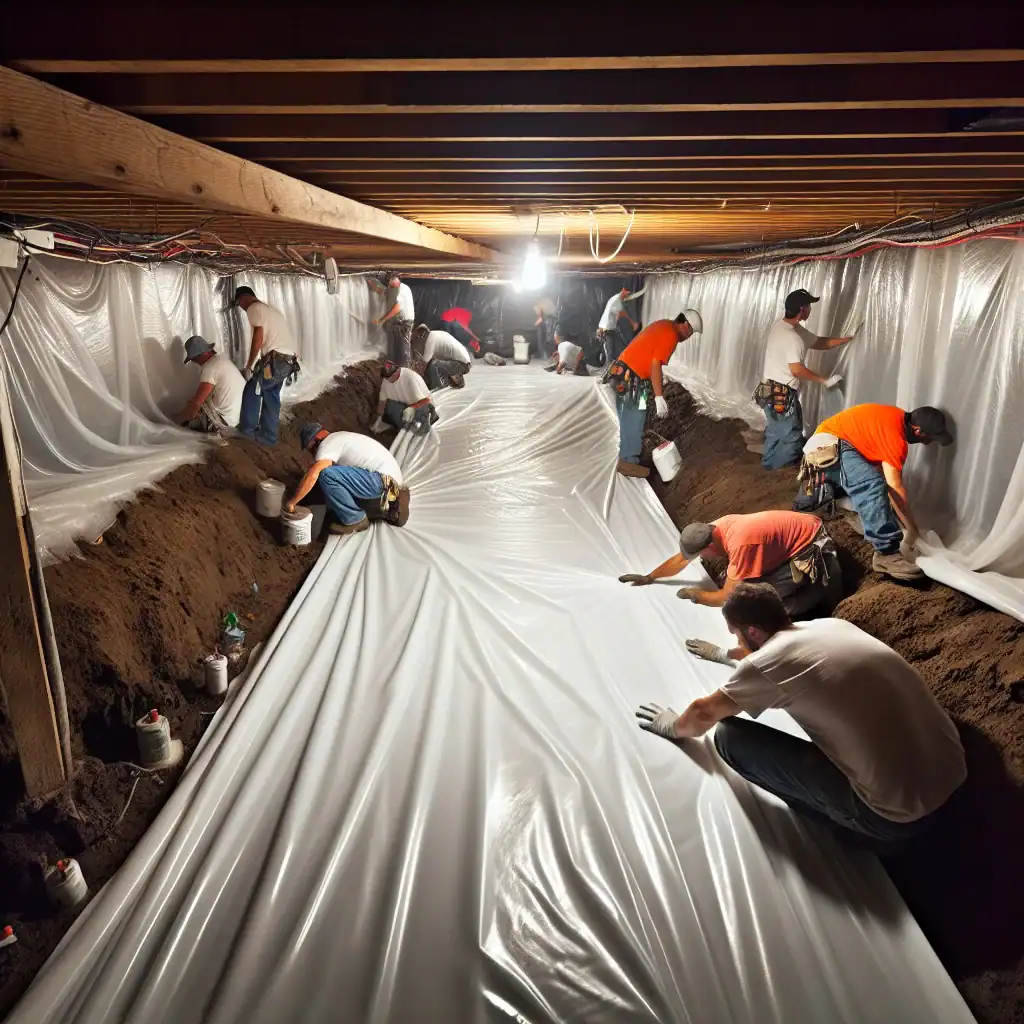
First, we inspect your crawl space to identify moisture sources, existing damage, and any mold or pest issues. You’ll know what you’re dealing with before we start.
Next comes crawl space cleaning—removing debris, old insulation, and anything that shouldn’t be down there. If there’s mold, we address it properly before sealing anything in. Then we install a heavy-duty vapor barrier across the entire crawl space floor and up the foundation walls. This isn’t the thin plastic you’d buy at a hardware store—it’s industrial-grade material designed to block moisture from the ground.
We seal all vents and gaps where outside air has been getting in. This is critical in North Carolina, where humid outdoor air entering your crawl space actually makes moisture problems worse, not better. Then we install crawl space insulation on the walls to improve energy efficiency and regulate temperature.
Finally, we add a dehumidifier installation if your crawl space needs active humidity control. The dehumidifier keeps levels below 60%, which prevents mold growth and wood rot. You end up with a sealed, dry, controlled environment under your home—one that protects your structure and improves your indoor air quality.

Ready to get started?
Crawl space encapsulation isn’t just throwing down a vapor barrier and calling it done. You’re getting a comprehensive moisture control system designed for your specific crawl space and Walkertown’s climate conditions.
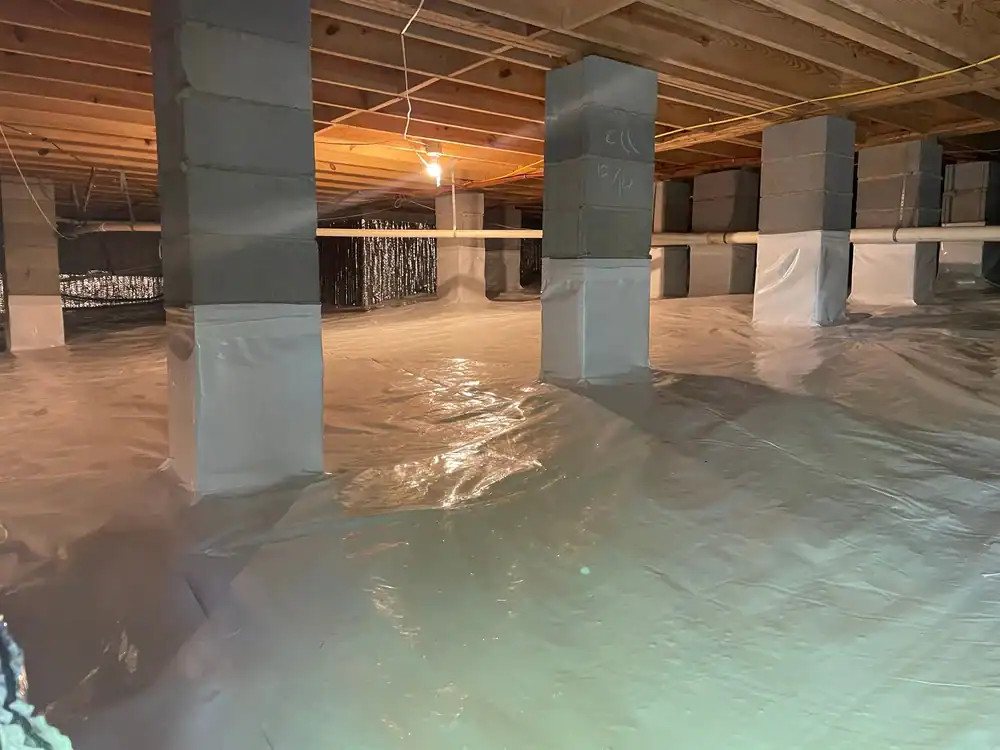
The vapor barrier installation covers every inch of your crawl space floor and extends up the foundation walls, sealed at all seams and penetrations. We close off foundation vents that have been letting in humid air—because vented crawl spaces are outdated building science that actually creates moisture problems in our climate. Wall insulation goes up to create a thermal barrier and keep your floors more comfortable.
If your crawl space has standing water issues or significant groundwater seepage, we’ll address drainage before encapsulation. Sealing in existing water doesn’t solve anything. The dehumidifier we install is sized correctly for your space—not undersized to save money or oversized because it looks more impressive. It’s calibrated to maintain optimal humidity levels without running constantly.
Most Walkertown homeowners invest between $5,000 and $15,000 depending on crawl space size and existing conditions. That’s less than what you’d spend fixing structural damage, remediating serious mold growth, or dealing with pest infestations that thrive in damp crawl spaces. You’re preventing problems that cost significantly more to fix later.
Most homeowners in Walkertown pay between $5,000 and $15,000 for complete crawl space encapsulation, though smaller spaces can run less and larger or more complex jobs can cost more. The price depends on your crawl space size, current condition, whether there’s existing mold or water damage, and what systems you need.
A basic encapsulation for a small crawl space with no major issues might be on the lower end. If you’ve got standing water, significant mold growth, damaged insulation, or structural concerns, you’re looking at additional work before we can even start the encapsulation process. We give you an exact quote after inspecting your specific crawl space—not a range based on averages.
The investment pays back through lower energy bills, prevented repairs, and better home value. You’re spending money now to avoid spending a lot more later on rotted floor joists, mold remediation, or HVAC systems that wear out early from overwork. Most Walkertown homeowners see $200 to $300 in annual energy savings, and you’re protecting against structural damage that could easily cost $10,000 or more to repair.
Yes, and here’s why: humid air takes significantly more energy to heat and cool than dry air. When your crawl space is pumping humid air into your home through the stack effect, your HVAC system works harder and runs longer to maintain comfortable temperatures.
Crawl space encapsulation with proper moisture control typically reduces energy consumption by 10% to 20% according to U.S. Department of Energy data. In Walkertown’s climate, where summers are humid and winters bring temperature swings, that translates to real savings. Most local homeowners report $200 to $300 lower annual utility costs after encapsulation.
You’ll notice the biggest difference during summer months when humidity is highest. Your air conditioner won’t cycle as frequently because it’s not constantly fighting moisture coming from below. In winter, your floors feel warmer because you’re not losing heat to a cold, damp crawl space. The energy savings alone don’t pay for encapsulation immediately, but over 10 to 15 years, you’re recovering a significant portion of your investment while enjoying a more comfortable home the entire time.
Musty odors coming from your floors or lower levels are the most obvious sign. That smell means moisture and likely mold growth. If your floors feel cold in winter or you notice higher humidity inside during summer, your crawl space is probably the source.
Other indicators include visible mold on floor joists or insulation when you look down there, sagging or soft spots in your floors, increased allergy or asthma symptoms among family members, higher energy bills without explanation, or pest problems like rodents or insects. Standing water or damp soil in your crawl space is a clear problem. Even condensation on pipes or HVAC ducts down there tells you humidity levels are too high.
Many Walkertown homes were built with vented crawl spaces because that used to be standard practice. Building science has since proven that vented crawl spaces actually increase moisture problems in humid climates like ours. If your home has foundation vents and you’re experiencing any of the issues above, encapsulation will solve problems you might not even realize are connected to your crawl space. The only way to know for certain what you’re dealing with is a proper inspection.
A vapor barrier alone is just a plastic sheet laid over the crawl space floor to slow moisture coming up from the soil. It’s a partial measure. Full crawl space encapsulation is a complete system that seals your crawl space from all moisture sources and controls the environment.
Encapsulation includes a heavy-duty vapor barrier that covers the floor and extends up the foundation walls, all seams sealed. We close foundation vents, seal gaps and penetrations, add insulation to the walls, and install a dehumidifier to actively control humidity levels. You’re creating a conditioned space that’s part of your home’s building envelope, not an outdoor area that happens to be under your house.
Just installing a vapor barrier without sealing vents means humid outdoor air still gets in during summer. Without a dehumidifier, you can’t control humidity from other sources like plumbing or HVAC condensation. Without wall insulation, you’re still losing energy and dealing with temperature extremes. Full encapsulation addresses every moisture pathway and gives you long-term protection. That’s why it costs more than a simple vapor barrier, but it’s also why it actually solves the problem instead of just slowing it down.
A properly installed encapsulation system should last 15 to 20 years or more with minimal maintenance. The vapor barrier itself is industrial-grade material designed for decades of use. The dehumidifier is the only component that may need replacement, typically after 10 to 15 years depending on how hard it works.
North Carolina’s climate does put more demand on crawl space systems than drier regions. Your dehumidifier will run more during humid summer months, and you’ll want to check it periodically to make sure it’s draining properly and maintaining target humidity levels. The vapor barrier should be inspected every few years for any tears or separation at seams, though damage is rare if it was installed correctly.
The key to longevity is proper installation from the start. Cheap materials or shortcuts during installation mean you’re looking at problems within a few years. We use professional-grade vapor barriers that won’t tear easily, seal every seam and penetration point, and install dehumidifiers sized correctly for your space. You’re not redoing this every five years—you’re setting up a system that protects your home for as long as you own it.
You can technically do it yourself, but most homeowners who try end up calling us to fix problems or redo the work. Crawl space encapsulation looks straightforward until you’re actually under a house dealing with tight spaces, uneven ground, existing moisture issues, and the technical details that determine whether the system actually works.
The vapor barrier has to be installed correctly with proper overlap and sealed seams, or moisture will find its way through. Vents need to be sealed permanently but in a way that doesn’t create structural issues. The dehumidifier has to be sized right for your crawl space volume and properly drained. If there’s existing mold, it needs professional remediation before you seal anything. If you have groundwater issues, those need to be addressed first or you’re just trapping water inside.
Professional installation also means you’re getting materials that actually last. The vapor barrier we use is significantly more durable than what you’ll find at home improvement stores. Our dehumidifiers are commercial-grade units designed for crawl space conditions, not residential models that’ll burn out in two years. Most importantly, you’re getting a system that’s designed for your specific crawl space and Walkertown’s climate. The cost difference between DIY and professional installation is smaller than you’d think when you factor in materials, equipment rental, and your time—and we get it right the first time.