

Contact Info
- Greensboro, NC 27406
- Call: 336-707-0498
- Text: 336-707-0498
-
Mon - Fri: 8am - 4pm
Sat - Sun: Closed
Contact Info
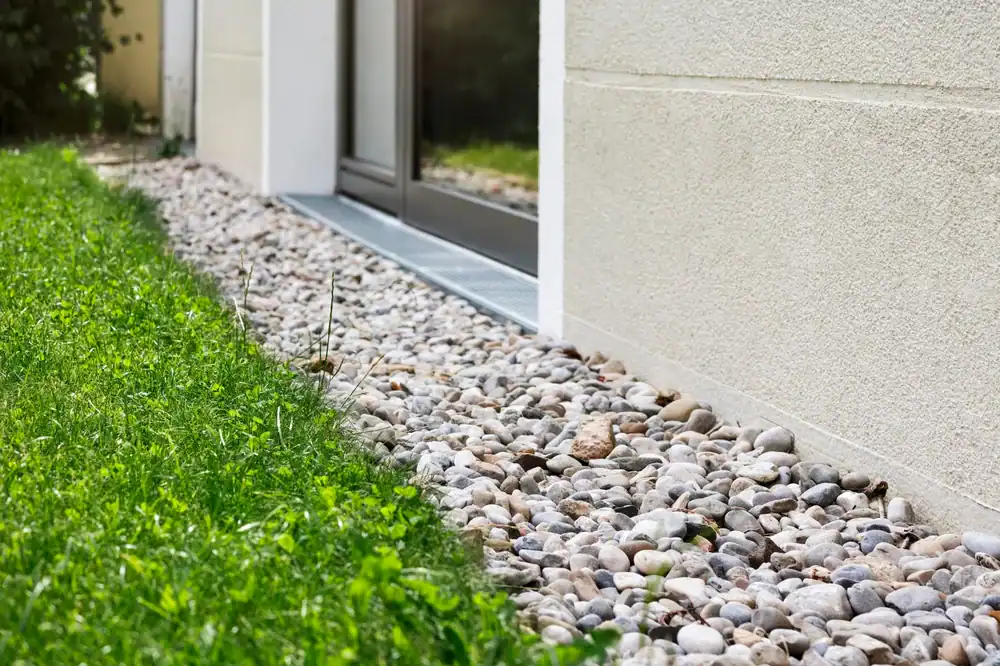
You stop worrying every time it rains hard. No more standing water in your yard. No more moisture creeping into your crawl space or basement.
Your foundation stays dry. That means no cracks from hydrostatic pressure. No settling. No expensive repairs down the road that could’ve been avoided.
The average water damage claim runs nearly $14,000. Just one inch of water in your home costs around $27,000 to fix. A properly installed French drain system costs a fraction of that and actually prevents the problem. You’re not spending money on drainage—you’re avoiding spending tens of thousands on foundation repair, mold remediation, and structural work.
Your property value holds. When you eventually sell, you’ve got a selling point instead of a liability. Buyers notice drainage problems during inspections, and they either walk away or demand price cuts.
We’ve spent over three decades solving moisture and air quality issues for homeowners in the Greensboro area, including Belews Creek. We’re BBB accredited with an A+ rating and NADCA certified. That’s not bragging—it’s proof we do this right.
We know Belews Creek’s clay-heavy soil. It’s dense, it compacts when wet, and it doesn’t let water through. That’s why so many homes here deal with drainage problems. We’ve installed drainage systems in this exact soil type hundreds of times.
French drain installation is a natural extension of what we already do: keep moisture away from your home. We handle crawl space encapsulation, mold remediation, and indoor air quality because we understand how water moves and what it does to your property. Drainage isn’t a side service for us—it’s core to protecting your home’s structure and air quality.

We start with an assessment of your property. Where’s the water coming from? Where’s it going? What’s your soil type, and how deep is the water table? We’re looking at grade, existing drainage, downspouts, and any signs of foundation stress.
Then we map out the system. For foundation protection, that usually means digging down to footer level around your home’s perimeter. For yard drainage, we identify low spots and plan trench routes that move water to a safe discharge point. Every system needs proper slope—one inch of drop for every eight feet of run. Without that, water just sits in the pipe.
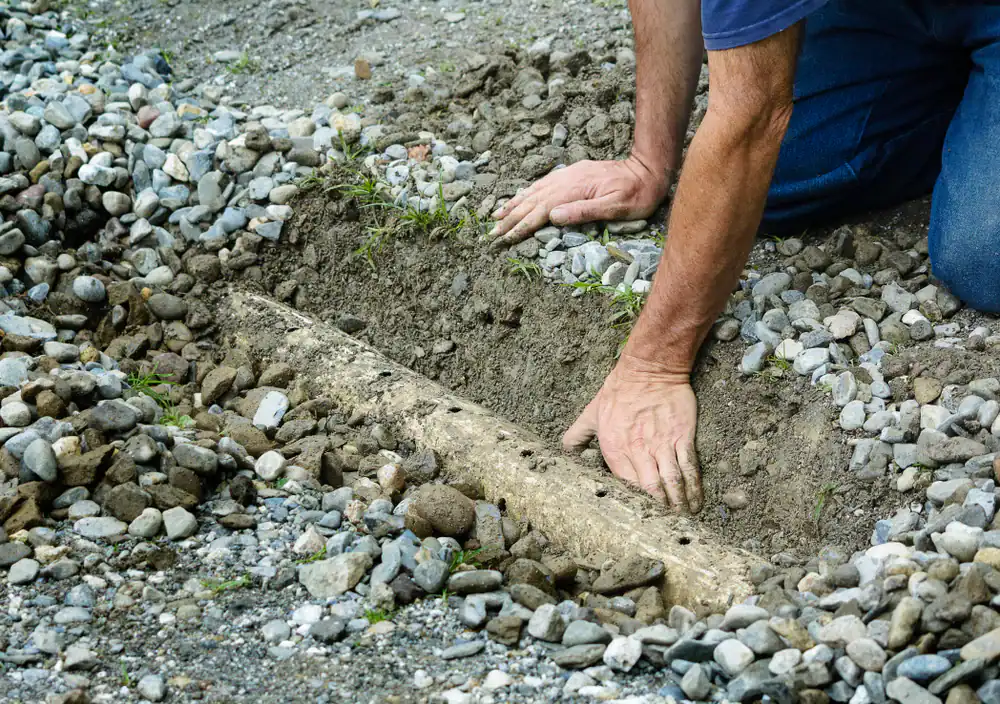
We dig the trench, lay filter fabric to prevent soil from clogging the system, add a gravel base, install perforated pipe, cover it with more gravel, and wrap it all in fabric. Then we backfill and restore your landscape. We also install cleanouts so you can maintain the system long-term.
The whole process typically takes one to three days depending on system size. You’ll see heavy equipment, some disruption to your yard, and then a finished system that quietly does its job for the next 30 to 40 years.
Ready to get started?
You get a system designed for your specific property. We’re not running a one-size-fits-all operation. Your soil type, water volume, and property grade all determine how we build your French drain system.
We install several types depending on what you need. Sub-soil French drains handle groundwater before it reaches your foundation. Foundation French drains wrap your home’s perimeter and catch water at the footer level. Downspout drains move roof water away from your house. Surface drains handle standing water in your yard. Sometimes you need a combination.
In Belews Creek, clay soil is the main challenge. It holds water instead of absorbing it. That creates hydrostatic pressure against your foundation—basically, water pushing on your walls until something gives. Cracks form. Walls bow. Floors settle. A properly installed French drain intercepts that water and moves it away before pressure builds.
You also get professional-grade materials. We use heavy-duty perforated pipe, proper drainage stone, and commercial filter fabric. Cheap installations skip the fabric or use insufficient gravel. That leads to clogs and system failure within a few years. We build systems that last decades because we don’t cut corners on materials.

Most residential installations run between $3,000 and $8,000 depending on system length and complexity. A simple 50-foot exterior drain might cost $2,500. A full perimeter system around a larger home with challenging soil conditions could reach $12,000.
Several factors affect price. Depth matters—digging to footer level costs more than shallow yard drainage. Length matters—more linear feet means more materials and labor. Soil conditions matter—clay requires more effort to excavate than sandy soil. Discharge location matters—if we need to run pipe 200 feet to reach a safe outlet, that adds cost.
Here’s the real question: what’s the alternative cost? Foundation repair averages $4,500 to $10,000 for minor fixes. Major structural work can hit $25,000 or more. Basement waterproofing after the fact runs $3,000 to $10,000 and doesn’t solve the external water problem. Mold remediation costs $1,500 to $5,000 per incident. A French drain installed correctly prevents all of that. You’re not spending money on drainage—you’re avoiding much larger expenses.
A properly installed French drain lasts 30 to 40 years. That’s with correct materials, proper slope, adequate gravel, filter fabric, and professional installation. Cheap systems fail in 5 to 10 years because contractors skip essential components.
What makes a system last? Filter fabric prevents soil from migrating into the gravel and clogging the pipe. Adequate gravel—at least 6 inches below and around the pipe—provides drainage capacity. Proper slope ensures water flows instead of sitting. Quality perforated pipe resists crushing and root intrusion. Cleanouts allow you to flush the system if needed.
What makes a system fail early? Flat pipes with no slope. Insufficient or wrong type of gravel. No filter fabric. Pipes that discharge into areas that don’t drain. Digging too shallow so the system never intercepts groundwater. We see failed systems regularly, and it’s almost always because someone cut corners during installation. When we install a French drain, we’re building it to last decades because doing it right the first time costs less than doing it twice.
You can, but you probably shouldn’t. French drain installation looks straightforward until you’re three feet down and realize you’re not sure about pipe slope, discharge location, or whether you’re about to undermine your foundation.
Here’s what can go wrong. You dig too deep near the footer and compromise your foundation’s support. You don’t maintain proper slope and water pools in the pipe instead of draining. You hit a gas line, water line, or electrical conduit. You discharge water into an area that doesn’t drain, so you’ve just moved the problem. You use the wrong gravel or skip the filter fabric and the system clogs within two years.
The equipment matters too. Proper installation requires a laser level to set grade, a trencher or excavator for efficient digging, and knowledge of local soil conditions. In Belews Creek’s clay soil, hand-digging a 100-foot trench is brutal work. More importantly, if you install it wrong, you’ve wasted money on materials and labor, and you still have a drainage problem. Sometimes paying a professional costs less than fixing a failed DIY attempt.
A French drain is a subsurface system that collects and redirects groundwater. It’s a gravel-filled trench with perforated pipe that intercepts water before it reaches your foundation or pools in your yard. It handles water you don’t see—the water moving through soil.
A trench drain is surface drainage. It’s a channel with a grate on top that catches water flowing across your driveway, patio, or yard. You use it where water runs across hard surfaces or where you need to intercept sheet flow.
Downspout drains specifically move roof water away from your foundation. They connect to your gutters and carry that water to a safe discharge point. Often these tie into a French drain system.
Most properties need a combination. Your roof sheds thousands of gallons during heavy rain—that needs to go somewhere other than next to your foundation. Groundwater needs to be intercepted before it creates hydrostatic pressure. Surface water in low spots needs collection points. We design systems that address all three issues because fixing only one problem usually isn’t enough. Water finds the path of least resistance, and if you don’t control all the paths, you still have drainage problems.
Standing water in your yard after rain is an obvious sign. If water pools for more than 24 hours, your soil isn’t draining. In Belews Creek’s clay soil, that’s common and it’s a problem.
Water in your basement or crawl space means groundwater is reaching your foundation. You might see actual standing water, or just dampness, musty smells, and efflorescence (white mineral deposits on concrete). That’s groundwater wicking through your foundation walls.
Cracks in your foundation, especially horizontal cracks or cracks that widen over time, often indicate hydrostatic pressure from water-saturated soil pushing against your walls. Doors and windows that stick or won’t close properly can mean your foundation is settling or shifting due to soil moisture changes.
Mold growth in your basement or crawl space almost always traces back to moisture. If you’re dealing with recurring mold, you have a water source, and often that’s groundwater or poor drainage around your foundation. Landscaping erosion, especially near your foundation, means water is flowing where it shouldn’t. If you’re seeing any of these signs, you need drainage work. The question isn’t whether to fix it—it’s how soon before the damage gets expensive.
Yes, but they require proper design and installation. Clay soil is exactly why French drains are necessary here. Clay doesn’t drain naturally—it holds water. That’s the problem. A French drain creates an artificial drainage path through soil that won’t drain on its own.
The key is adequate gravel. In clay soil, you need more drainage stone than in sandy soil because you’re creating the only permeable zone for water to move through. We typically use 8 to 12 inches of gravel around the pipe in clay conditions. That gravel acts as a reservoir and drainage channel.
Depth matters too. In clay soil, you often need to go deeper to intercept the water table and relieve hydrostatic pressure. Shallow drains might catch surface water but miss the groundwater causing foundation problems.
Filter fabric is critical in clay. Clay particles are fine and will migrate into your gravel and eventually clog the system. Quality filter fabric prevents that. We wrap the entire gravel bed in fabric to keep clay out while letting water through. Without it, your French drain might work for a few years and then slowly fail as clay infiltrates the system. Clay soil makes French drains more challenging to install, but it also makes them more necessary. Your foundation is dealing with constant moisture pressure that sandy soil wouldn’t create.