

Contact Info
- Greensboro, NC 27406
- Call: 336-707-0498
- Text: 336-707-0498
-
Mon - Fri: 8am - 4pm
Sat - Sun: Closed
Contact Info
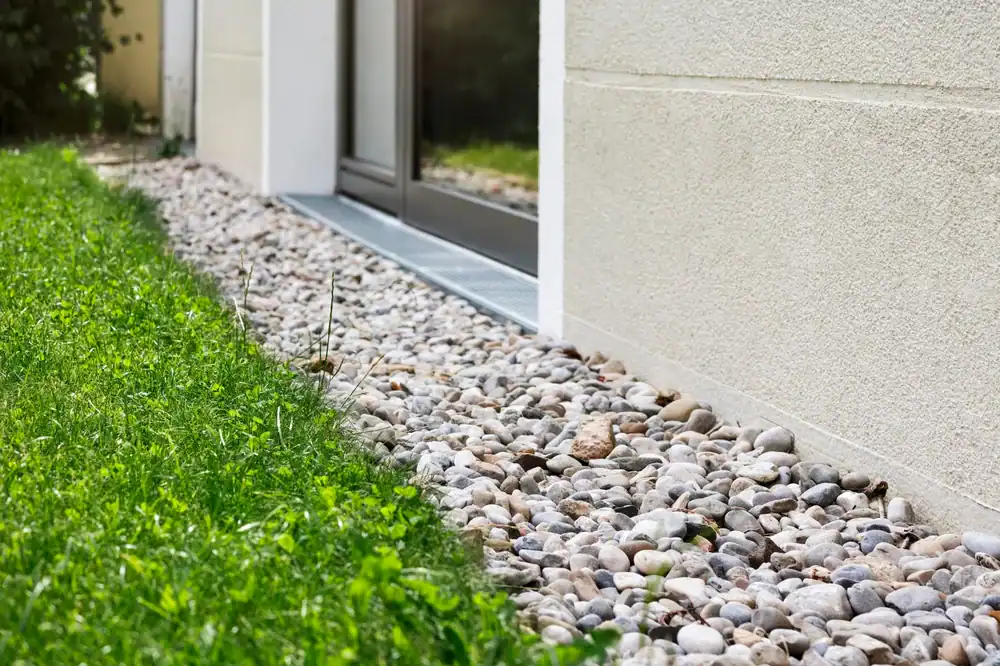
Water finds the path of least resistance. Without proper drainage, that path runs straight toward your foundation, into your crawl space, and eventually into the air you breathe.
A French drain installation redirects that water before it becomes your problem. You get a dry crawl space that doesn’t flood after heavy rain. You avoid the musty smell that creeps upstairs when moisture sits too long underneath your home. Your foundation stops settling unevenly because the soil around it isn’t constantly saturated.
This matters in Colfax because North Carolina’s humidity already puts your crawl space at risk. Add poor drainage to the mix and you’re looking at mold growth, wood rot, and air quality issues that affect your entire house. Up to 75% of the air in your home comes from your crawl space. If that space is wet, you’re breathing the consequences.
French drains handle surface water and groundwater before either one saturates the soil around your foundation. That means fewer cracks, less settling, and a healthier home overall.
We’ve spent three decades helping homeowners in Colfax, Greensboro, and the Triad region solve moisture problems that start underneath their homes. We’re NADCA-certified, which means our team follows national standards for indoor air quality work.
Rick Watson, our lead technician, holds ASCS and CVI certifications. That’s not just alphabet soup—it means he’s trained to assess crawl spaces, identify moisture sources, and install drainage systems that actually work long-term.
We focus on crawl space health because most drainage companies don’t connect the dots between water management and air quality. You might fix the flooding and still have mold. Or you might encapsulate without addressing the water source and end up with a bigger problem six months later. We handle both because one doesn’t work without the other in North Carolina’s climate.

We start with a crawl space inspection to figure out where your water is coming from. Sometimes it’s surface runoff from your yard. Sometimes it’s groundwater seeping up through the soil. Sometimes it’s both. You can’t fix drainage without knowing what you’re draining.
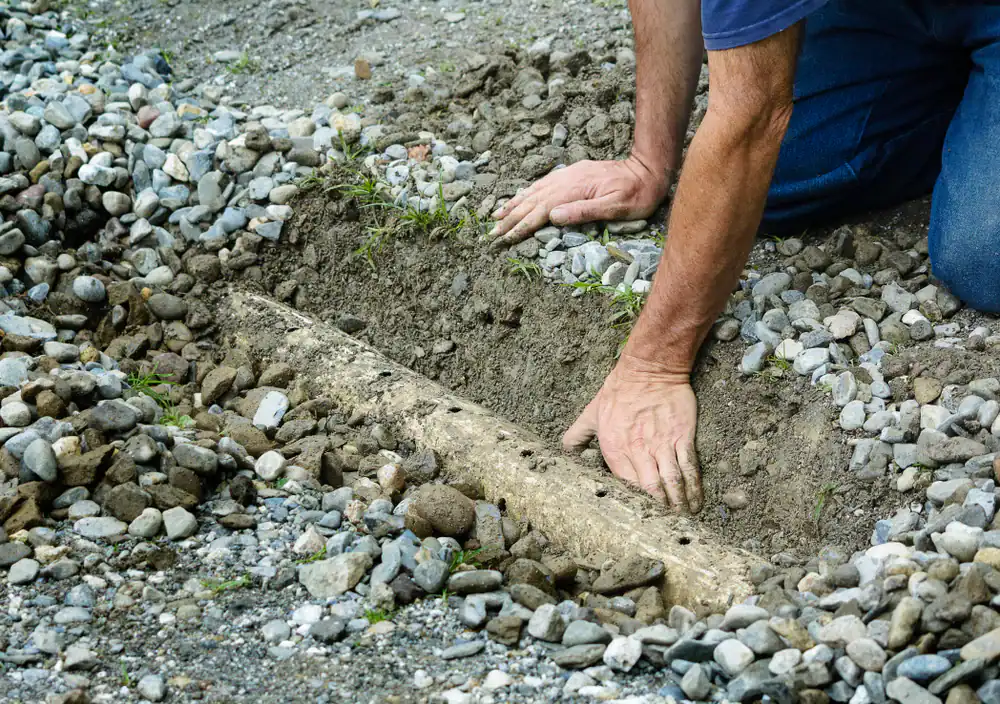
Once we identify the source, we design a French drain system that intercepts water before it reaches your foundation. That usually means digging a trench at least 18 inches deep along the problem area, installing perforated pipe surrounded by gravel, and sloping everything so water flows away from your home. The trench needs a minimum 1% slope—that’s a one-inch drop for every eight feet of horizontal distance.
If you need interior perimeter drainage, we install the French drain inside your crawl space along the foundation walls. This catches water that’s already made it under your house and routes it to a sump pump that pushes it outside. For exterior installations, we dig around the foundation perimeter and install the drain before water ever gets close to your crawl space.
After installation, we test the system to make sure water flows where it’s supposed to go. Then we backfill, grade, and clean up. The whole system is invisible once we’re done, but you’ll notice the difference the next time it rains.
Ready to get started?
French drain installation is one piece of a complete moisture management system. You also need to think about what happens to the water after the drain collects it, and what’s already happening inside your crawl space.
In Colfax, most homes were built with ventilated crawl spaces. That was standard practice for decades, but it’s actually making your moisture problem worse. North Carolina’s outdoor humidity gets pulled into your crawl space through those vents, and when it hits cooler surfaces underneath your home, it condenses. That’s how you end up with standing water even when it hasn’t rained.
Our French drain systems work alongside crawl space encapsulation and dehumidification. The drain handles water coming from outside. Encapsulation seals off humid outdoor air. A dehumidifier keeps indoor humidity between 40-50%, which prevents mold growth and wood rot even during North Carolina’s sticky summers.
You might also need a sump pump if your French drain is collecting more water than gravity alone can move. We install those when necessary, usually in interior perimeter systems where water needs to be lifted up and out rather than just flowing downhill.
This isn’t about upselling you on services you don’t need. It’s about fixing the problem completely so you’re not calling someone else in two years to deal with mold or structural damage that could’ve been prevented now.

Most French drain installations in the Colfax area run between $5,000 and $9,000, but that range shifts depending on how much drainage you need and where it goes. An exterior perimeter drain around your entire foundation costs more than a 20-foot interior drain along one wall.
Depth and length matter. Trenches need to be at least 18 inches deep and wide enough to fit perforated pipe plus gravel on all sides. If we’re digging through clay soil or working around landscaping, that adds time and labor. If your yard has significant slope issues, we might need to install catch basins or channel drains in addition to the French drain itself.
Interior systems that tie into a sump pump usually cost more upfront because of the pump installation, but they’re often the best solution for crawl spaces that flood regularly. You’re paying for equipment and expertise that keeps your crawl space dry year-round, not just a temporary fix that fails after the next heavy rain.
A properly installed French drain lasts 20 to 30 years with minimal maintenance. The pipe itself doesn’t wear out—it’s the surrounding gravel and soil that determine longevity. If the system was installed with the right slope and adequate gravel, water keeps flowing and sediment doesn’t clog the pipe.
Problems happen when contractors skip steps. If there’s no filter fabric around the gravel, soil migrates into the drainage layer and clogs the perforations. If the slope is too shallow, water sits in the pipe instead of draining. If the trench wasn’t deep enough, tree roots eventually invade and block flow.
We install French drains to last. That means proper depth, correct slope, quality materials, and filter fabric that keeps soil out without restricting water flow. You shouldn’t need to think about your drainage system again unless you’re doing major landscaping or adding onto your house. Even then, the existing drain usually just needs to be extended, not replaced.
A French drain stops water from reaching your crawl space in the first place, which is better than trying to remove it after it’s already flooded. If you’re getting surface water flooding—water that runs across your yard and pools around your foundation—an exterior French drain intercepts that before it seeps down into your crawl space.
If you’re dealing with groundwater or a high water table, you need an interior perimeter drain. This catches water that’s coming up through your crawl space floor and channels it to a sump pump. The pump then pushes that water outside, away from your foundation.
Some homes need both. Exterior drains handle rainfall and runoff. Interior drains handle groundwater and seepage. We assess your specific situation during the inspection because there’s no one-size-fits-all answer. What matters is that water gets redirected before it damages your foundation, rots your floor joists, or creates mold that affects your indoor air quality.
French drains and crawl space encapsulation solve different problems, and most Colfax homes need both. The drain manages liquid water—the stuff that flows across your yard or seeps through your foundation. Encapsulation manages water vapor and humidity that come from the ground and from outdoor air entering through vents.
Even with perfect drainage, your crawl space can still have humidity problems. North Carolina’s climate means outdoor air regularly hits 70% to 80% relative humidity during summer. If that air gets into your crawl space through foundation vents, it condenses on cooler surfaces and creates moisture. You end up with the same mold, rot, and air quality issues you’d get from flooding.
Encapsulation seals your crawl space with a vapor barrier on the floor and walls, closes off foundation vents, and conditions the space as part of your home’s envelope. Add a dehumidifier and you keep humidity between 40% and 50% year-round. That’s the range where mold can’t grow and wood stays dry.
Think of it this way: French drains keep water out. Encapsulation keeps humidity out. You need both to actually solve crawl space moisture problems in this climate.
You can dig a trench and lay pipe yourself, but getting the details right is harder than it looks. Slope matters more than most people realize. If your trench drops less than one inch per eight feet, water doesn’t flow—it just sits in the pipe. If it slopes too much in one section and not enough in another, you get pooling and sediment buildup.
Depth is the other issue. Shallow French drains work for surface drainage in a flower bed, but they don’t protect foundations. You need to go at least 18 inches deep, sometimes deeper depending on your foundation depth and frost line. That’s real digging, especially in clay soil.
Then there’s the question of where the water goes. A French drain only works if it has somewhere to drain to. That might be a daylight exit at the low end of your property, a drainage ditch, or a dry well. If your yard doesn’t have natural drainage, you need a sump pump system, which adds complexity.
Professional installation means the system works the first time and lasts decades. DIY installation often means redoing it in a few years when you realize the slope was wrong or the pipe is clogged. For something that protects your foundation and affects your home’s air quality, it’s worth getting right the first time.
French drains and trench drains both move water, but they handle different types of drainage problems. A French drain is buried underground and collects water that’s seeping through soil. It uses perforated pipe surrounded by gravel so water can enter from all sides. You don’t see it once it’s installed.
A trench drain sits at ground level with a grated top. It’s designed to catch surface water—think of the drains you see in driveways, patios, or at the bottom of a sloped yard. Water flows into the grate and gets channeled through solid pipe to a drainage outlet. Trench drains work fast because they’re open to the surface.
Most crawl space flooding problems need a French drain because you’re dealing with groundwater or water that’s already soaked into the soil around your foundation. But if you have a patio that slopes toward your house, or a driveway that channels water straight at your foundation, a trench drain might be part of the solution.
We often install both on the same property. Trench drains catch surface runoff before it becomes a problem. French drains handle subsurface water that’s already in the ground. Together, they create a complete drainage system that keeps water away from your foundation at every level.