

Contact Info
- Greensboro, NC 27406
- Call: 336-707-0498
- Text: 336-707-0498
-
Mon - Fri: 8am - 4pm
Sat - Sun: Closed
Contact Info
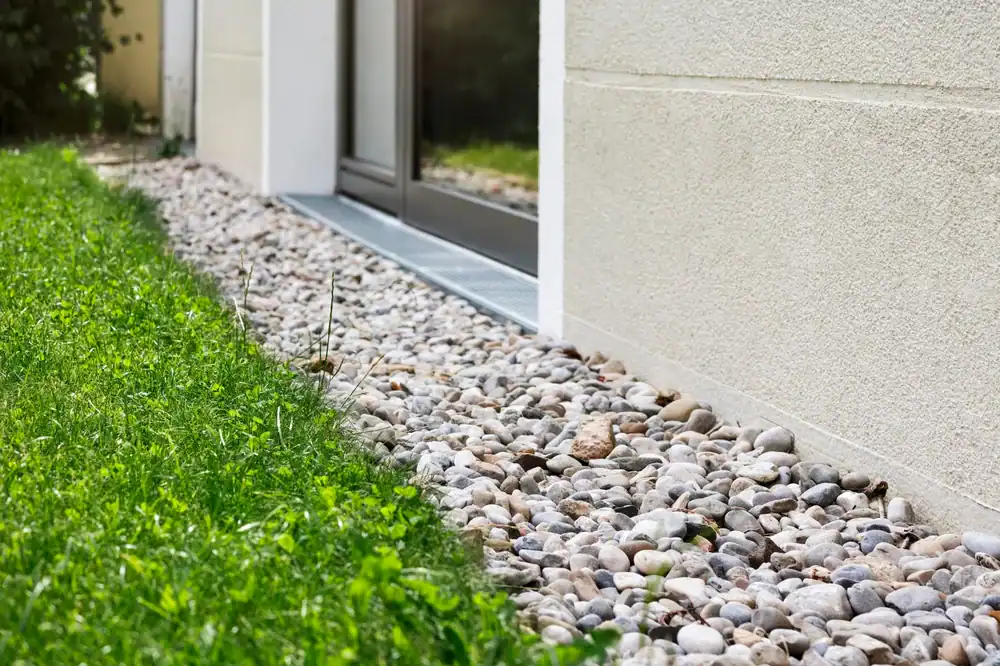
You stop wondering if the next storm will flood your crawl space. Your yard stops turning into a swamp every time it rains. And you’re not dealing with that musty smell that tells you mold is growing somewhere you can’t see.
French drain installation handles the water before it becomes a problem. It redirects runoff away from your foundation, keeps your basement dry, and prevents the kind of soil movement that cracks walls and buckles floors.
In Elon, where clay soil is the norm, this isn’t optional maintenance. Clay expands when wet and shrinks when dry, putting constant pressure on your foundation. A properly installed drainage system stops that cycle and protects your biggest investment from the ground up.
We’ve spent over 30 years working in Greensboro and the surrounding Triad area. We’ve seen what North Carolina’s clay soil does to homes when drainage isn’t handled right.
We started in air quality and crawl space work, which means we’ve been under hundreds of homes dealing with moisture problems. French drain installation became a natural extension—because we kept seeing the same foundation and water issues that could’ve been prevented with proper landscape drainage solutions.
Our team knows Elon’s soil conditions, weather patterns, and the specific drainage challenges homeowners face here. We’re not a national franchise following a script. We’re local, we’re BBB accredited with an A+ rating, and we’ve built our reputation on doing the work right the first time.

We start with an assessment of your property. Where’s the water coming from? Where’s it pooling? What’s your soil doing during heavy rain? This tells us where the trench drain needs to go and how deep we need to dig.
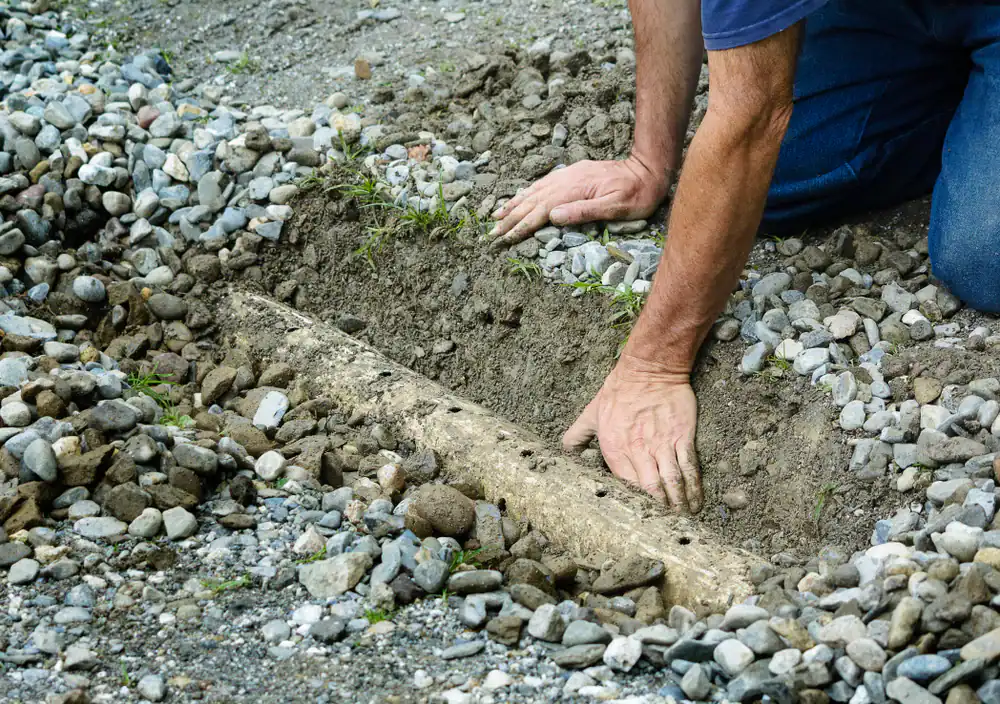
Next, we excavate a trench along the problem areas—usually around your foundation, along the yard’s low spots, or wherever water collects. The trench gets lined with landscape fabric to prevent clay and sediment from clogging the system. Then we lay perforated pipe that captures and redirects water away from your home.
We cover the pipe with gravel for drainage and filtration, then finish with soil or sod so it blends into your yard. The whole system is designed to handle North Carolina’s heavy rains and work for 30 to 40 years with minimal maintenance. Most installations take just a few days, and you’re left with a yard that actually drains instead of flooding.
Ready to get started?
Every French drain installation we do accounts for Elon’s clay soil composition. Clay doesn’t drain like sand or loam—it holds water, swells up, and creates pressure against your foundation. That’s why we don’t use cookie-cutter solutions.
You get a system designed for your property’s grade, soil type, and water flow patterns. We’re talking proper trench depth, the right gravel size, quality perforated pipe, and discharge points that actually move water away from your home—not just into your neighbor’s yard.
We also handle the details most homeowners don’t think about: tying into existing drainage if needed, preventing erosion at discharge points, and making sure the system works during Elon’s wettest months. If your crawl space is already dealing with moisture problems, we can integrate french drain repair with encapsulation work to handle both issues at once.
This isn’t just digging a ditch. It’s engineered landscape drainage that prevents foundation settling, keeps basements dry, and stops the expensive damage that happens when water has nowhere to go.

Most French drain systems run between $20 and $60 per linear foot depending on depth, accessibility, and soil conditions. For a typical residential installation in Elon, you’re looking at somewhere between $3,000 and $10,000 for a complete system.
Clay soil can increase costs slightly because it’s harder to dig and requires more careful installation to prevent clogging. But that upfront cost is a fraction of what you’d pay to repair foundation damage, fix recurring flooding, or deal with mold remediation down the line.
We give you a clear quote after assessing your property. No surprises, no upselling. Just an honest price for drainage that actually works.
A professionally installed French drain can last 30 to 40 years with basic maintenance. The key is proper installation—using landscape fabric to keep sediment out, quality perforated pipe, and the right gravel size for filtration.
The main maintenance is clearing the pipe of sediment buildup every few years. In Elon’s clay soil, you might need to check it more often since clay particles are finer and can work their way into the system over time.
If a French drain fails early, it’s usually because it wasn’t installed correctly to begin with. Cheap materials, wrong slope, or skipping the fabric liner will cut the lifespan in half. That’s why the installation matters as much as the materials.
Yes, if the flooding is caused by surface water or groundwater pressure around your foundation. A French drain intercepts that water before it reaches your basement walls and redirects it away from the house.
In Elon, basement flooding often happens because clay soil doesn’t absorb water—it just holds it against your foundation until it finds a way in. A properly placed exterior French drain removes that pressure and keeps water from ever reaching your basement.
If you’re dealing with a high water table or interior seepage, you might need additional waterproofing like a sump pump or interior drainage. We’ll assess your specific situation and tell you exactly what you need—not what makes us the most money.
Absolutely. Clay soil is actually one of the main reasons homeowners in Elon need French drains. Clay doesn’t drain naturally, so water sits on the surface or pools around foundations instead of soaking into the ground.
Installing a French drain in clay requires a few adjustments—deeper trenches in some cases, more attention to grading, and making sure the discharge point is far enough away that water doesn’t just flow back. We’ve been digging in North Carolina clay for over 20 years, so we know how to work with it.
The trench drain cuts through the clay layer and uses gravel and perforated pipe to create a path for water to flow. It’s one of the most effective ways to handle drainage in clay-heavy soil like what you find throughout the Piedmont region.
If you have standing water in your yard after it rains, water pooling around your foundation, or a damp crawl space, a French drain is usually the right call. It handles subsurface water and prevents it from damaging your foundation or flooding your basement.
Surface drainage solutions like grading, downspout extensions, or channel drains work better if your problem is water running across your yard from a slope or poor grading. Sometimes you need both—a combination of surface drainage and a French drain to handle water at multiple levels.
We’ll walk your property and tell you what’s actually causing the problem. You might not need a full French drain system. Or you might need more than you thought. Either way, you’ll know exactly what you’re paying for and why.
A French drain is buried underground and handles subsurface water—groundwater, water seeping through soil, or runoff that’s soaking into the ground near your foundation. It uses perforated pipe surrounded by gravel to collect and redirect that water.
A trench drain sits at ground level with a grate on top. It’s designed to catch surface water—like runoff from driveways, patios, or areas where water flows across the surface. You see these a lot in commercial settings or at the end of driveways.
For most Elon homeowners dealing with yard flooding or foundation issues, a French drain is the right solution. But if you have a sloped driveway that channels water toward your garage, a trench drain might make more sense. Sometimes a property needs both to handle water coming from different sources.