

Contact Info
- Greensboro, NC 27406
- Call: 336-707-0498
- Text: 336-707-0498
-
Mon - Fri: 8am - 4pm
Sat - Sun: Closed
Contact Info
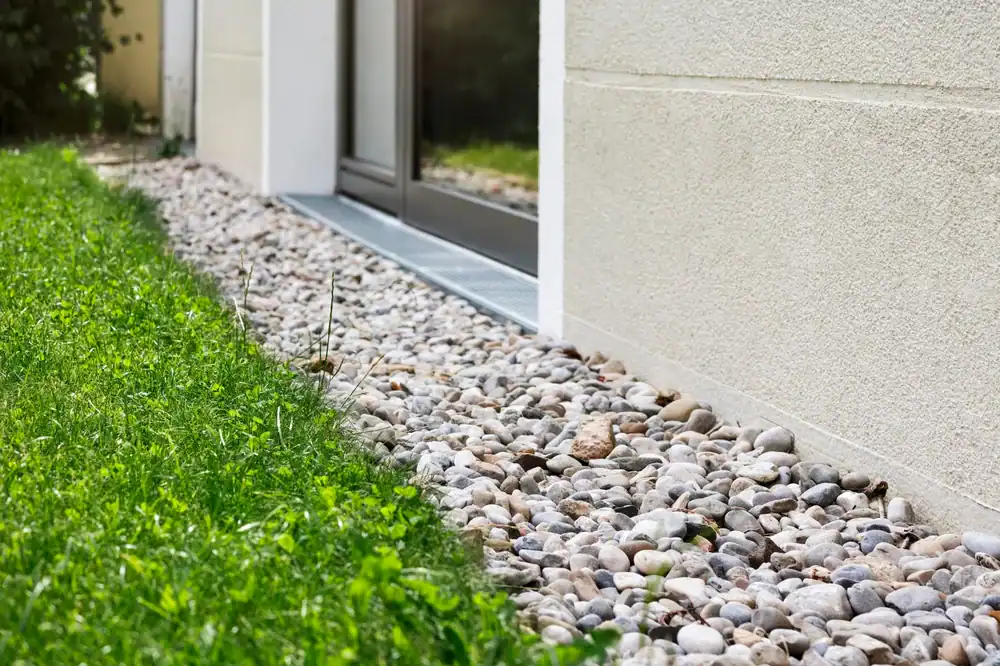
You stop dealing with that musty smell coming up through your floors. Your crawl space stays dry even during North Carolina’s heaviest rainfall, which means mold doesn’t get the moisture it needs to grow.
The air quality inside your home improves because you’re not circulating damp, contaminated air from below. Your foundation stops taking on hydrostatic pressure from saturated soil pushing against it.
Wood rot doesn’t start eating away at your floor joists. Your HVAC system doesn’t have to work overtime trying to dehumidify air that’s constantly being fed moisture from below. You’re not looking at a $15,000 foundation repair bill three years from now because water was allowed to do its damage unchecked.
That’s what proper French drain installation does. It collects groundwater before it reaches your foundation and moves it away from your home through a perforated pipe system buried in gravel. Simple concept, but it has to be done right to actually work.
We’ve spent over three decades solving indoor air quality and moisture problems in Greensboro and surrounding areas like Groometown. We’re NADCA certified, which means our team has gone through the training and certification process that the National Air Duct Cleaners Association requires.
We started focusing on air quality, but that work led us straight to the source of most air quality problems: water and moisture getting into crawl spaces and basements. You can’t fix air quality without fixing drainage.
Groometown sits in Guilford County, where the soil is heavy with red clay. That clay absorbs water during rain, expands, and pushes against your foundation walls. We’ve seen what happens when drainage isn’t handled correctly here, and we know what it takes to get it right in these specific soil conditions.

We start with an inspection of your property to identify where water is collecting and where it needs to go. We’re looking at your grading, your soil type, where your downspouts drain, and how water moves across your property during rain.
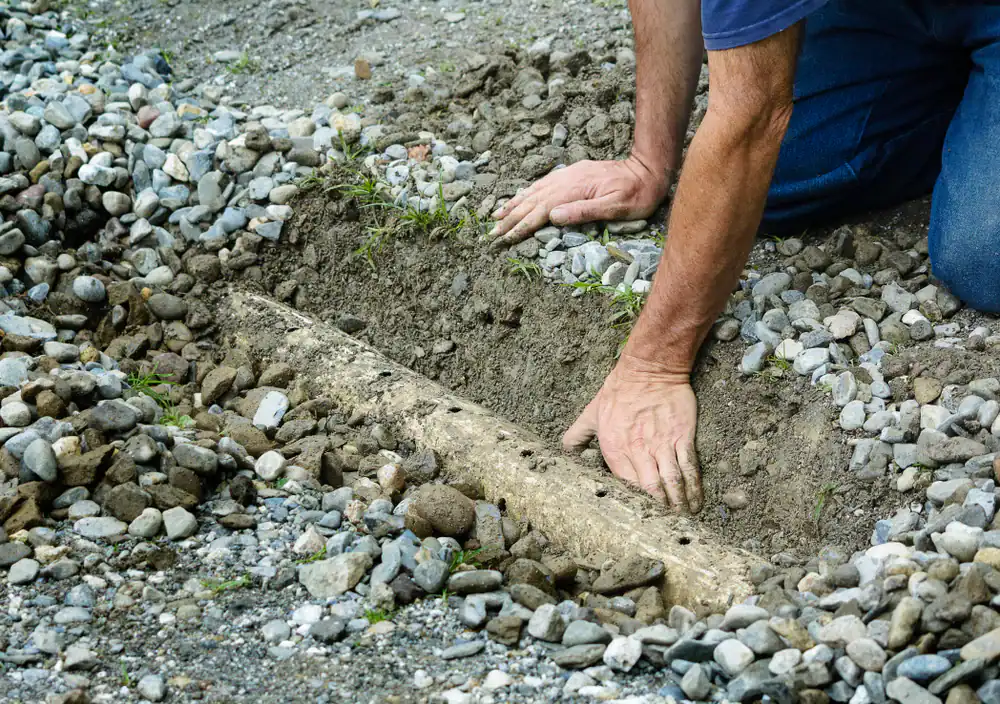
Then we dig a trench around your foundation perimeter or in the specific areas where water is causing problems. The trench gets lined with filter fabric to keep soil and sediment from clogging the system. We lay perforated pipe in the trench, surrounded by gravel that allows water to flow freely into the pipe.
That pipe slopes away from your home, directing water to a safe discharge point away from your foundation. In some cases, that means connecting to a sump pump system if there’s nowhere for gravity to take the water. We make sure the system is buried properly and that your landscaping is restored.
You get documentation of the work with photos showing the installation process. Most installations take one to three days depending on the size of your property and the extent of the drainage problem.
Ready to get started?
You get a properly sloped trench drain system designed for North Carolina’s clay soil conditions. The perforated pipe we install is surrounded by the right type of gravel—not the decorative rock you’d use in landscaping, but drainage gravel that allows water to move freely.
Filter fabric wraps the system to prevent sediment from washing in and clogging the pipe over time. If your property needs it, we’ll connect the French drain to a sump pump system that actively pumps water away when gravity drainage isn’t an option.
Groometown gets its share of heavy rainfall, and the Piedmont soil here doesn’t drain well on its own. Your system is designed to handle the volume of water that comes with those storms. We’re also looking at your overall landscape drainage to make sure surface water isn’t pooling near your foundation.
If you’ve got existing foundation cracks or signs of water intrusion, we’ll talk through whether you need additional waterproofing measures beyond the French drain. Sometimes a French drain is the complete solution. Sometimes it’s part of a larger moisture control strategy that includes crawl space encapsulation or interior drainage.

Most French drain installations in this area run between $3,000 and $10,000 depending on how much linear footage you need and what your property conditions look like. The cost breaks down to roughly $20 to $60 per linear foot.
If you’re just protecting one side of your home where water collects, you’re looking at the lower end. If you need a full perimeter system around your foundation, you’re looking at the higher end. Properties with difficult access, rocky soil, or the need for a sump pump system will cost more.
The real question isn’t what it costs to install a French drain. It’s what it costs not to. Foundation repairs in North Carolina average $4,500 to $15,000 depending on the damage. Mold remediation runs $1,500 to $3,500. Wood rot repair in crawl spaces can hit $10,000 or more if your floor joists are compromised. A French drain is the cheaper option.
A properly installed French drain should last 30 to 40 years before it needs replacement. The pipe itself doesn’t wear out. What happens over time is sediment and soil particles work their way into the system despite the filter fabric, gradually reducing flow capacity.
How long your system lasts depends mostly on installation quality. If the wrong fabric was used, if the trench wasn’t sloped correctly, or if the wrong type of gravel was used, you’ll have problems much sooner. That’s why installation matters more than the materials themselves.
You can extend the life of your French drain by keeping your gutters clean and making sure downspouts aren’t dumping water directly onto the drain field. The less sediment-heavy water flowing into the system, the longer it stays clear. We’ve seen well-maintained systems still working fine after 40 years.
If groundwater is your problem, yes. If you’ve got water pooling under your home after heavy rain or you’re seeing signs of hydrostatic pressure against your foundation, a French drain intercepts that water before it becomes your problem.
But if your moisture issue is coming from poor ventilation, plumbing leaks, or humidity condensation, a French drain won’t fix it. That’s why the inspection matters. We need to know where your moisture is actually coming from.
A lot of crawl space moisture problems in Groometown are a combination issue. You’ve got groundwater seeping in and poor ventilation trapping humidity. In those cases, you need the French drain to stop the water intrusion and you might need crawl space encapsulation or a dehumidifier to handle the humidity. We’ll tell you what you actually need, not just what we can sell you.
You can, but most DIY French drains fail within a few years because the details matter more than people realize. The most common mistakes are using the wrong fabric, using the wrong rock, and not getting the slope right.
If your pipe doesn’t slope at least 1% grade (one inch of drop per eight feet of length), water won’t flow. If you use landscape fabric instead of non-woven geotextile fabric, it clogs fast. If you use river rock or pea gravel instead of drainage gravel, water doesn’t move through it efficiently.
Then there’s the question of where your water goes once it’s collected. If you’re just moving it ten feet away from your foundation, you haven’t solved anything. You need a proper discharge point, and on some properties that means tying into a sump system or running pipe a significant distance. Getting that wrong means you’ve just spent a weekend digging trenches for a system that doesn’t work.
A French drain is buried underground and collects groundwater through perforated pipe surrounded by gravel. You don’t see it once it’s installed. It’s designed to intercept water before it reaches your foundation and redirect it away through subsurface drainage.
A trench drain sits at ground level with a grated top. It’s designed to catch surface water—like water running across your driveway or patio. You’ll see trench drains in front of garage doors or along driveways where water sheets across pavement.
You might need both. If you’ve got surface water running toward your foundation and groundwater seeping into your crawl space, a French drain handles the subsurface problem and a trench drain catches the surface runoff before it soaks into the ground near your home. They work together as part of a complete landscape drainage solution.
If you had a French drain installed years ago and you’re suddenly seeing moisture problems again, your system is either clogged or it’s failed. Common signs are water pooling in areas that used to stay dry, musty smells returning to your crawl space, or visible water intrusion after rain.
Sometimes tree roots grow into the perforated pipe and block flow. Sometimes the pipe collapses if it wasn’t bedded properly in gravel. Sometimes the discharge point gets blocked or the pipe separates at a connection point. Any of those issues stop your system from working.
We can inspect your existing French drain to figure out what’s wrong. In some cases, we can clear a clog or repair a section of pipe. In other cases, the system needs to be replaced because it was installed incorrectly the first time. We’ll tell you which situation you’re in and what it’ll take to fix it right.