

Contact Info
- Greensboro, NC 27406
- Call: 336-707-0498
- Text: 336-707-0498
-
Mon - Fri: 8am - 4pm
Sat - Sun: Closed
Contact Info
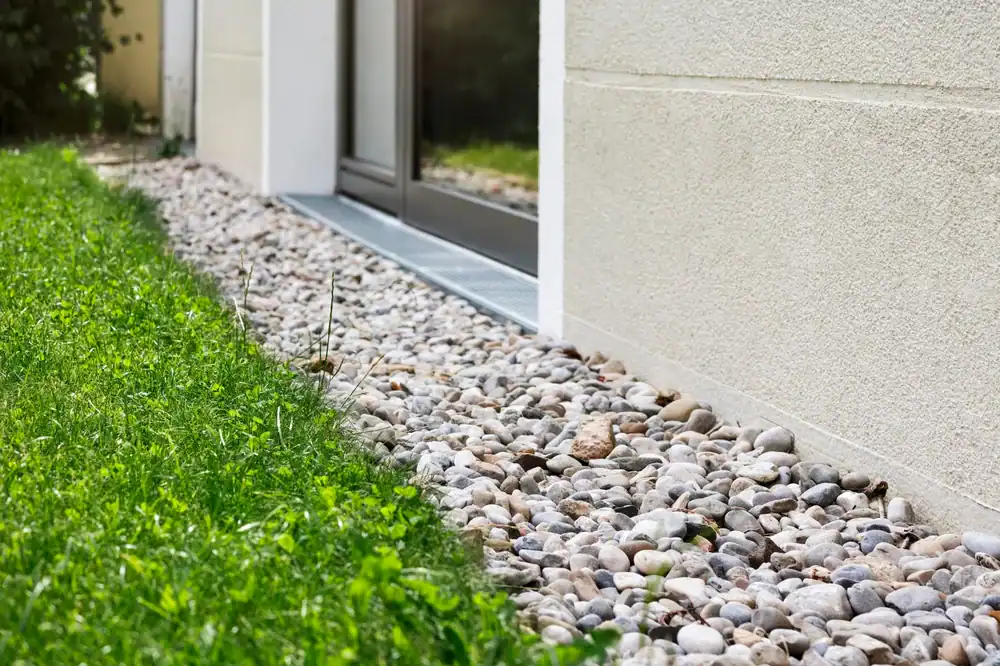
You know what standing water does. It pools in your yard after every storm, creeps toward your foundation, and eventually finds its way into your basement. If you’ve been through the flooding Haw River saw during recent storms, you’ve already lived the worst-case scenario.
A properly installed French drain system redirects that water before it becomes your problem. It collects groundwater through a perforated pipe buried in gravel, then moves it away from your foundation to a safe discharge point. Your yard drains faster, your basement stays dry, and your foundation isn’t sitting in saturated soil.
This isn’t about managing water after it floods your space. It’s about intercepting it before it gets there. The difference is whether you’re calling for emergency repairs or just watching the rain without stress.
In areas like Haw River and Alamance County, where clay soil holds water and storms can dump inches in hours, that difference matters. You’re not just installing a drain—you’re removing the conditions that cause flooding in the first place.
We’ve spent over a decade working with North Carolina soil, water tables, and weather patterns that make drainage a real challenge. We’ve seen what happens when systems are installed wrong—or not installed at all.
Haw River properties face unique drainage issues. The clay-heavy soil doesn’t absorb water well, and when storms hit like they did during the recent flooding, water has nowhere to go except toward your foundation. We’ve worked through those conditions enough times to know what works and what doesn’t.
You’re not getting a national franchise or a crew that learned drainage in a different climate. You’re getting contractors who understand local ground conditions, know how deep the water table sits in your area, and have handled the aftermath of real flooding events here. That experience shows up in how we design your system and where we route your drainage.

We start with an inspection of your property to see where water collects, how it moves across your yard, and where it’s threatening your foundation. That tells us where the French drain needs to go and how deep we need to dig based on your soil type and water volume.
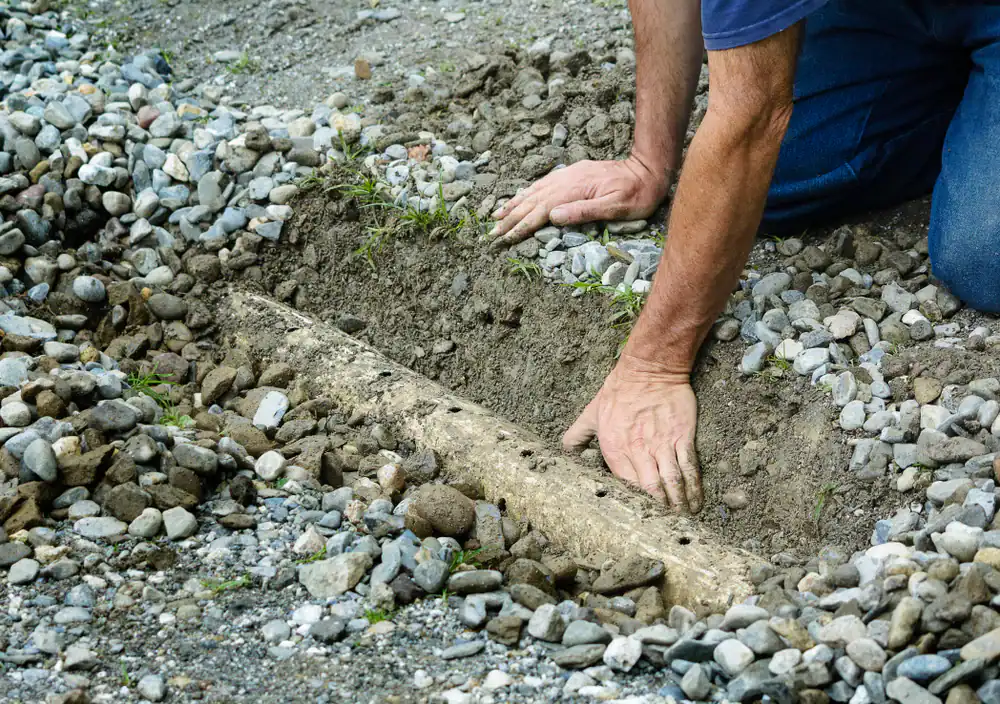
Next, we trench along the problem areas—usually around your foundation perimeter or across low spots in your yard where water pools. The trench depth depends on your specific drainage issue, but it’s typically 18-24 inches for most residential applications. We line it with landscape fabric to prevent soil from clogging the system.
Then we install a perforated pipe surrounded by gravel. The gravel creates a channel for water to flow into the pipe, and the pipe carries it away to a discharge point—either a dry well, a drainage ditch, or another safe area away from your foundation. For properties with severe drainage issues, we’ll connect the system to a sump pump for additional protection.
The final step is backfilling the trench and restoring your landscape. For surface drainage needs, we can install a trench drain with a grate. For buried systems, you won’t even see the drain once we’re done—just a yard that actually drains instead of turning into a swamp.
Ready to get started?
Your French drain installation covers the full system—trenching, proper pipe installation, gravel bedding, landscape fabric, and discharge routing. We’re not cutting corners with thin pipes or shallow trenches that’ll fail in two years. You’re getting a system built to handle North Carolina rain volume.
We also handle foundation French drains specifically designed to protect your basement from water infiltration. These run along your foundation footer and intercept water before it can create hydrostatic pressure against your walls. If you’ve had basement flooding, this is the fix that actually addresses the source.
For properties dealing with surface water issues—like water running across your driveway or pooling near your garage—we install trench drains and surface drainage systems. These capture water at ground level before it has a chance to saturate the soil around your foundation.
In Haw River, where properties saw significant flooding damage recently, we’re also installing yard drains and downspout drainage extensions. Your gutters dump a lot of water in concentrated areas, and if that water sits near your foundation, you’re creating the exact problem a French drain is meant to solve. We route downspouts into the drainage system so roof runoff goes where it should—away from your house.

Most French drain installations in the Haw River area run between $1,650 and $12,250 depending on the length of the system, depth of excavation, and whether you need additional components like sump pumps or multiple discharge points. The average project costs around $5,000.
Exterior French drains typically cost $10-$65 per linear foot for shallow systems. If you need an interior French drain for basement waterproofing, expect $40-$100 per linear foot because of the additional labor involved in cutting through your basement floor. Foundation drains that run along your footer are on the higher end because of excavation depth and the need to work around your foundation.
The cost depends heavily on your property’s specific drainage issues. A simple 50-foot drain to handle a low spot in your yard costs far less than a full perimeter foundation drain with sump pump integration. We give you an exact quote after inspecting your property and understanding what’s causing your water problems.
A properly installed French drain lasts 30-40 years in most cases. The longevity depends on the quality of materials used, how well the system was designed for your soil conditions, and whether it’s maintained over time.
The main failure points are clogged pipes from soil infiltration and crushed pipes from improper backfilling. That’s why we use landscape fabric to wrap the gravel bed—it filters out soil particles before they can enter the perforated pipe. We also use schedule 40 PVC or heavy-duty corrugated pipe that won’t collapse under soil weight.
In North Carolina’s clay soil, drainage systems face more stress because the ground shifts with moisture changes. A system installed too shallow or without proper gravel bedding will fail faster. You’re looking at repairs within 5-10 years instead of decades. That’s the difference between a contractor who understands local soil conditions and one who’s just digging a trench and dropping in a pipe.
Yes, if the flooding is caused by groundwater pressure or surface water seeping through your foundation. A French drain intercepts that water before it reaches your basement walls, redirecting it away from your foundation entirely.
If your basement floods during heavy rain or you see water seeping through foundation cracks, that’s typically groundwater saturation. The soil around your foundation becomes waterlogged, creates hydrostatic pressure, and forces water through any available opening. A foundation French drain relieves that pressure by giving water an easier path—through the drain system instead of through your walls.
For homes in Haw River that experienced flooding during recent storms, a French drain addresses the root cause. You’re not just patching foundation cracks or running a dehumidifier. You’re removing the water before it ever becomes a basement problem. If your flooding is from sewer backup or above-ground water entering through windows, that’s a different issue and requires different solutions.
You can dig a trench and lay pipe yourself, but whether it actually solves your drainage problem depends on factors most homeowners don’t account for—slope calculation, discharge point selection, depth requirements based on your water table, and proper gravel gradation.
The biggest DIY mistakes we see are insufficient slope (water won’t flow), wrong pipe type (collapses or clogs quickly), and poor discharge planning (water just pools somewhere else on your property). We also see drains installed too shallow, which means they don’t intercept groundwater effectively, or without landscape fabric, which means they clog with soil within a few years.
If you’re dealing with a simple surface drainage issue in a small area and you understand grading, a DIY approach might work. But for foundation protection or basement waterproofing, the cost of getting it wrong—continued flooding, foundation damage, mold remediation—far exceeds the cost of professional installation. In areas like Haw River where flooding has caused serious property damage, this isn’t the project to experiment with.
A French drain is buried underground and handles subsurface water and groundwater. A trench drain sits at ground level with a grate on top and captures surface water before it has a chance to soak into the soil.
You’d use a French drain to protect your foundation from groundwater pressure or to drain a yard that stays soggy after rain. The water enters through a perforated pipe surrounded by gravel, so you don’t see the drain itself—just improved drainage across your property.
You’d use a trench drain across a driveway, in front of a garage door, or along a patio where surface water runs across hardscaping. The grate captures water at the surface and channels it into a pipe that connects to your drainage system or a discharge point. For many Haw River properties, the best solution is both—trench drains to handle surface runoff and French drains to manage groundwater. They work together to keep water away from your foundation from multiple angles.
If water pools in your yard even when your gutters are clean and functioning, you need a French drain. If water only collects near your downspouts or you see erosion directly below gutter discharge points, extending your downspouts might solve the problem.
Gutters handle roof runoff—they collect water and move it to downspouts. But if those downspouts dump water right next to your foundation, you’re just concentrating the problem in one spot. That’s when we extend downspouts and connect them to a French drain system so roof water gets routed away from your foundation entirely.
In Haw River’s clay soil, even properly functioning gutters won’t solve groundwater issues. If your yard stays wet for days after rain, or you see water seeping into your basement during storms, that’s groundwater saturation. No amount of gutter improvement will fix that—you need subsurface drainage to intercept water below ground level. We can assess your property and tell you exactly what’s causing your drainage issues and whether it’s a gutter problem, a grading problem, or a groundwater problem that requires a French drain.