

Contact Info
- Greensboro, NC 27406
- Call: 336-707-0498
- Text: 336-707-0498
-
Mon - Fri: 8am - 4pm
Sat - Sun: Closed
Contact Info
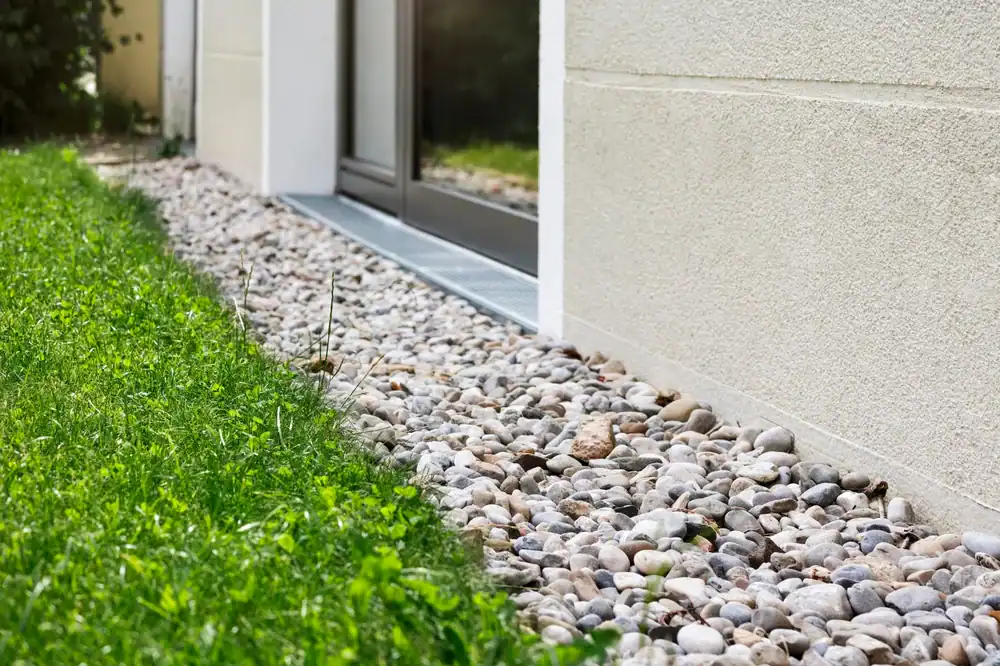
You stop worrying every time the forecast calls for rain. No more towels on the basement floor. No more musty smell creeping up through the house.
A properly installed French drain system redirects groundwater before it ever touches your foundation. That means no hydrostatic pressure building up against your basement walls. No cracks forming in your foundation from North Carolina’s clay soil expanding and contracting with every wet-dry cycle.
Your crawl space stays dry. Your foundation stays stable. And you’re not dealing with mold growth, rotting floor joists, or that sinking feeling when you see dark clouds rolling in.
The difference is permanent. French drains last 30 to 40 years when installed correctly, which means this isn’t a band-aid fix you’ll be redoing in five years.
We’ve been working in the Greensboro and Kernersville area for over 30 years. We started with crawl space moisture control and indoor air quality, which means we’ve been dealing with water intrusion issues since before most drainage companies existed around here.
We know what Kernersville’s clay soil does to foundations. We’ve seen how the valley drainage patterns in this part of the Piedmont Triad create basement flooding that other areas don’t deal with. And we understand that when you’re getting 80+ inches of rain some years, you need drainage solutions built for North Carolina weather, not generic systems.
Rick Watson holds ASCS and CVI certifications from the National Air Duct Cleaners Association. Our work gets inspected by HVAC companies who tell homeowners they don’t need to replace anything because we did it right the first time.

We start with your property’s specific drainage problems. Where’s the water coming from? Where does it pool? What’s your soil type, and how deep is the water table?
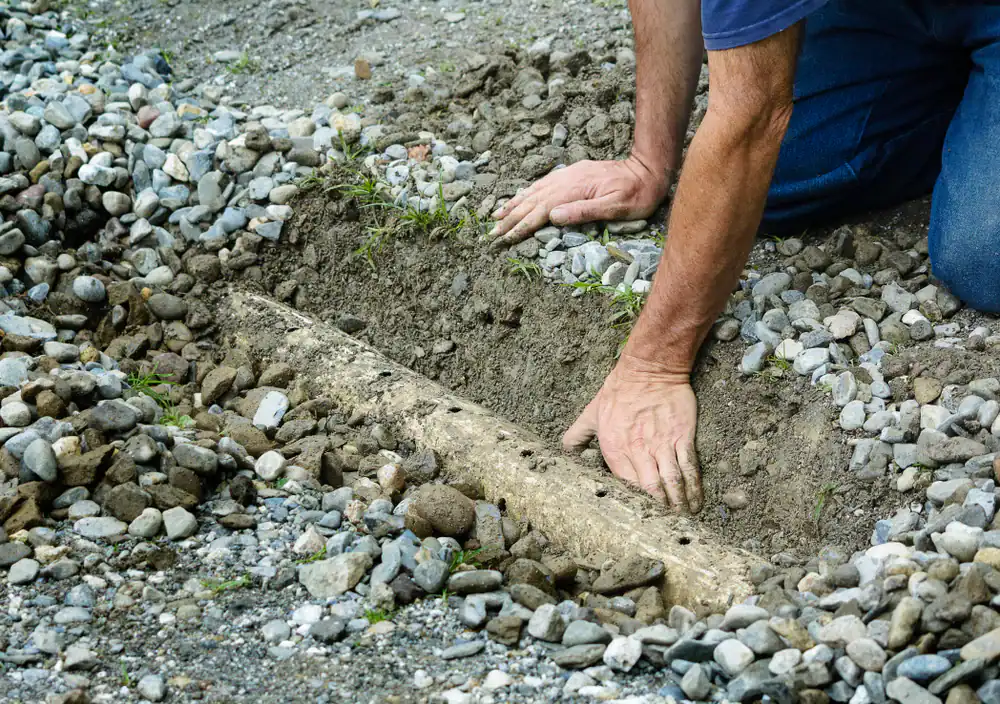
Then we map out the trench route. French drains work by creating a below-grade pathway that intercepts groundwater before it reaches your foundation. We dig the trench at the right depth and slope—usually running it away from your home toward a safe discharge point.
The trench gets lined with landscape fabric to prevent soil from clogging the system. We lay perforated pipe surrounded by gravel, which filters water into the pipe while keeping sediment out. The whole system gets wrapped and buried.
Most residential installations finish in hours, not days. You’re looking at a system custom-built for your property’s water volume, soil conditions, and drainage needs. We’re not guessing—we’re engineering a solution based on how water actually moves across your land.
After installation, surface drainage improves immediately. Water that used to sit against your foundation now has somewhere to go.
Ready to get started?
Every French drain system we install gets customized to your property. That includes the depth of the trench, the type of perforated pipe, the grading and slope, and where the water discharges.
You’re getting contractor-grade trenching work, not a shovel-and-hope approach. The system includes proper gravel bedding, landscape fabric wrapping, and drainage pipe designed to handle North Carolina’s heavy rainfall without backing up or overflowing.
In Kernersville, we’re dealing with clay soil that swells when wet and shrinks when dry. That puts constant stress on foundations. A French drain installation reduces that pressure by intercepting water before it saturates the soil around your home. You also get protection against soil erosion, which is common here when water runs off improperly graded yards.
We handle trench drain installations for surface water issues too. If you’ve got standing water in your yard or water flowing toward your house during storms, a surface drainage system works alongside your French drain to move that water away fast.
This isn’t just about preventing basement flooding. It’s about protecting your foundation from cracks, your crawl space from moisture damage, and your property value from the kind of water damage that scares off buyers.

Most residential French drain installations in Kernersville run between $2,500 and $5,000. That covers about 90% of typical jobs.
The actual cost depends on how much linear footage you need, how deep we have to dig, and what your soil conditions look like. French drains are usually priced between $20 and $60 per linear foot. Shallow systems in easy-to-dig soil cost less. Deeper installations around foundations or in heavy clay cost more.
If you need additional surface drainage work, a trench drain system, or waterproofing around your foundation, that changes the scope. But for a standard perimeter French drain that stops water from reaching your basement or crawl space, you’re in that $2,500 to $5,000 range. We give you an exact price after looking at your property—no guessing, no surprises.
A properly installed French drain lasts 30 to 40 years. That’s with the right materials, correct installation, and basic maintenance.
The longevity comes down to a few things. First, the pipe needs to be surrounded by gravel and wrapped in landscape fabric so soil doesn’t clog it. Second, the system needs proper slope so water flows instead of sitting in the pipe. Third, you need a clean discharge point that doesn’t back up.
Most failures happen because someone cut corners during installation. Cheap pipe, no fabric, wrong slope—that’s how you get a system that fails in five years. When it’s done right, you’re looking at decades of reliable drainage. The only maintenance is occasionally checking the discharge point to make sure it’s not blocked by leaves or debris.
Yes, if the flooding is caused by groundwater or surface water running toward your foundation. That’s what French drains are designed to fix.
When it rains, water saturates the soil around your home. That creates hydrostatic pressure against your basement walls, which forces water through cracks, seams, and any weak points in your foundation. A French drain intercepts that water before it ever reaches your foundation walls. It redirects the flow away from your house to a safe discharge area.
If your basement floods because of a high water table, a failed sump pump, or interior plumbing issues, a French drain helps but might not be the complete solution. We assess where the water’s actually coming from before recommending the fix. Most basement flooding in Kernersville comes from exterior drainage problems, which means a French drain installation solves it permanently.
A French drain is buried underground and handles groundwater. A trench drain sits at surface level and handles water running across your yard or driveway.
French drains use perforated pipe surrounded by gravel. They’re installed below grade to intercept water moving through the soil. You don’t see them after installation—they’re completely buried. They’re ideal for foundation drainage, crawl space moisture control, and preventing water from saturating the soil around your home.
Trench drains have a grated top and a channel that collects surface water. You see them in driveways, patios, and low spots in yards where water pools. They’re designed to catch water before it flows somewhere you don’t want it. Both systems can work together. If you’ve got surface water running toward your house and groundwater seeping into your basement, you might need both a trench drain and a French drain to handle the full problem.
You can, but most DIY French drains fail because of improper slope, wrong materials, or poor placement. It’s not just digging a trench and dropping in some pipe.
The trench needs to be deep enough to intercept groundwater but not so deep you hit the water table. The slope has to be consistent—usually a 1% grade minimum—so water flows instead of pooling. The pipe needs to be perforated correctly, surrounded by the right size gravel, and wrapped in fabric that filters soil without clogging.
Then there’s the discharge point. If you drain into a low spot that doesn’t actually move water away from your property, you’ve just relocated the problem. In Kernersville, you’re also dealing with clay soil that’s difficult to dig and shifts seasonally. A poorly installed French drain can actually make drainage worse by creating a trench that holds water instead of moving it.
Professional installation costs more upfront, but it works for 30+ years. DIY jobs often need to be redone within a few years, which ends up costing more in the long run.
It depends on the scope of work and where the water discharges. Most residential French drain installations don’t require a permit, but there are exceptions.
If you’re discharging into a stormwater system, a wetland, or a protected area, you’ll likely need approval from the city or county. If the installation involves major grading changes or affects drainage on a neighboring property, permits might be required. And if you’re doing foundation work at the same time, that could trigger building permit requirements.
We handle this during the initial assessment. Before we dig, we confirm whether your specific installation needs any permits or approvals. Most straightforward perimeter drains around homes don’t require permits in Kernersville, but it’s always better to check than to assume. The last thing you want is to install a drainage system and then have to rip it out because it wasn’t done to code.